


Winter tyres and winter driving in Denmark: rules, all-season tyres and bridge crossings
In Denmark, a car's tyres must suit the actual and expected road conditions. There is no general requirement to fit winter tyres on fixed dates, but you must not drive with tyres that are clearly unsuitable for the conditions. For a winter trip that may involve snow, slush or ice, suitable tyres and the ability to change your plans are therefore essential. Also check the forecast, traffic information and any restrictions on bridge crossings.
This guide covers ordinary passenger cars, the choice between all-season and winter tyres, and practical questions about rental cars, tyre pressure, storage and your route. Information was checked on 11 November 2026. The current situation on a road or bridge must always be checked close to departure.
Are winter tyres compulsory in Denmark?
The rule concerns road conditions. Danish road traffic law was clarified on 1 July 2025 to make the driver's responsibility for suitable tyres explicit. The Danish Road Traffic Authority explains that you must consider both the conditions at departure and those expected during the journey.
You cannot therefore decide solely by looking at the month or a dry parking area. Conditions on a return journey later that day may differ. If roads become wintry during the trip and your tyres are unsuitable, you must not continue driving. Plan how to interrupt the journey safely and contact roadside assistance when necessary.
In its October 2026 guidance, the Danish Road Safety Council confirms that Denmark has not introduced a general winter-tyre requirement. Driving with clearly unsuitable tyres can result in a fine of DKK 1,000 per tyre. That is a possible penalty following an assessment of the circumstances, rather than an automatic charge for having summer tyres on a particular date.
M+S and 3PMSF: what do the markings mean?
Markings on the tyre sidewall tell you more than a marketing name. The Road Traffic Authority describes M+S, MS and M&S as winter-tyre markings. 3PMSF is the symbol showing a three-peaked mountain and a snowflake, also known as the snow-grip marking. It indicates particular suitability for demanding winter conditions.
The term all-season does not by itself determine the tyre's category. Look at the actual product's markings. The authority recommends 3PMSF for severe winter conditions. A marking does not replace checks for wear, damage and correct fitting. Source: the authority's tyre guidance.
When requesting a quotation, ask for the product name, size, load and speed ratings, and markings. This lets you compare the same tyre across different offers. A snowflake in an advertisement is less precise than confirmation of the product that will actually be fitted.
All-season tyres or winter tyres: choose for your driving
| Your driving | Option to investigate | Key question |
|---|---|---|
| Mixed use with flexibility to postpone trips | All-season tyres with relevant winter markings | Does this tyre suit the vehicle and expected conditions? |
| Frequent driving in winter conditions | A separate winter set, preferably with 3PMSF | How will changes and storage be arranged? |
| Rental car for a winter journey | A confirmed winter-suitable tyre specification | What is actually supplied, and are supplements included? |
| Onward travel into another country | Tyres suitable for the entire route | Which local rules apply on the travel date? |
This comparison provides a framework for choosing. It does not identify a test winner or a tyre suitable for every car. The specific product must be approved for the vehicle and appropriate for the conditions in which you intend to drive.
All-season tyres may be worth considering if you want one set for mixed use and can adapt your journeys when conditions become difficult. They avoid seasonal changes between two sets, but pressure, wear and condition still need checking. Workshop visits and replacement may still be necessary during the year.
A separate set of winter tyres is worth investigating if you drive frequently in winter or regularly need to travel on snowy or icy days. You also need a summer solution and somewhere to keep the unused set. Michelin's comparison describes all-season tyres as a compromise and distinguishes them from tyres developed for more demanding winter driving.
Compare total costs over the expected period of use: tyres, wheels if required, fitting, seasonal changes and storage. Do not decide solely on the price of four loose tyres. Ask the workshop to explain why its proposed solution suits your particular journeys.
Tread depth and lifespan: when should winter tyres be replaced?
The minimum legal tread depth is 1.6 mm. The Danish Road Safety Council and FDM recommend replacing winter tyres before the tread falls below 3 mm. Distinguish the legal minimum from the recommendation for winter use. Source: the council's winter guidance.
How long do winter tyres last? There is no number of years or kilometres that applies to every set. Continental identifies factors including driving style, use, climate and road conditions. Age is one part of the assessment; visible damage, uneven wear and changes in handling also require attention.
Have tyres examined if you are uncertain about a crack, bulge or uneven wear. Plenty of tread does not prove that an old or damaged tyre is suitable for the journey. Likewise, a product model name does not establish a particular tyre's production date or history.
Before a long trip, arrange an assessment of your existing set in good time. If a particular size needs ordering, it is easier to resolve that at home than on a travel day. Keep information about the fitted tyres so you can describe them when contacting a workshop.
Winter tyre pressure
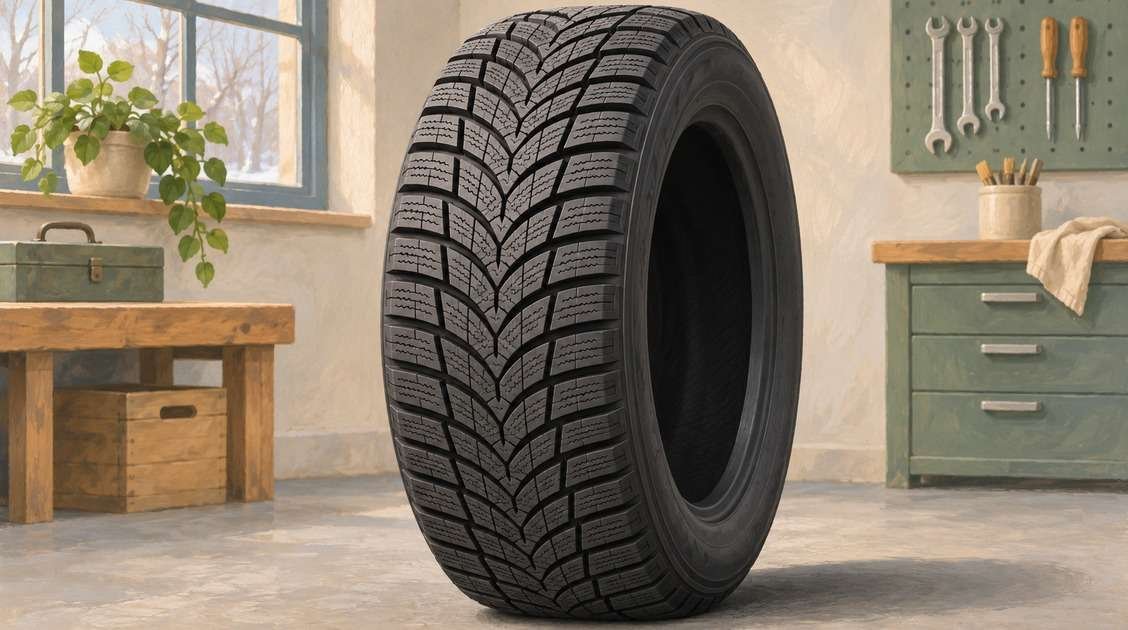
Use the vehicle manufacturer's specified pressure for the actual wheel size and load. This is normally found on the vehicle's label and in its manual. A figure printed on the tyre sidewall is not a substitute for the vehicle's instructions. A general recommendation to use the same number of bar in every winter tyre is therefore insufficient.
Check pressure according to the manufacturer's cold-tyre procedure and with a suitable gauge. Temperature changes can affect pressure. Investigate a warning; resetting an alarm is not the same as fixing its cause. Follow the vehicle's instructions if pressure monitoring needs calibration after an adjustment or wheel change.
Winter tyres for a Tesla Model 3
Choose winter tyres for a Tesla Model 3 using the car's version and wheel configuration. Advice for another model year or wheel size may not apply. Have the specific tyre-and-wheel combination confirmed as suitable for the vehicle.
Tesla's current Model 3 manual refers to the vehicle's pressure information and distinguishes between different tyre-pressure monitoring systems. It describes checking cold tyres and warns against releasing air from warm tyres to reach a cold-pressure figure. A separate manual covers Model 3 vehicles from 2017-2023.
Use the relevant manual and your car's own information instead of a universal number from an article. If wheels or accessories have been changed, establish which instructions apply to the fitted configuration. Keep roadside assistance details and the recommended puncture procedure available too.
Storing winter tyres between seasons
Choose a clean, dry and cool indoor location protected from sunlight, heat and substances that could damage rubber. Clean the tyres, let them dry and inspect them before storage. This is also a useful time to have possible damage assessed.
The storage method depends on whether the tyres are mounted on wheels. Michelin's storage guidance distinguishes complete wheels from unmounted tyres. Unmounted tyres should stand upright and must not be hung or stacked. Follow the manufacturer's instructions for the set you own.
If you use a tyre storage service, ask what the agreement includes. Are tread and damage checks part of the service, how is your set recorded, and how do you book a seasonal change? Establish what happens if you want to collect the tyres or change workshops. A clear agreement is more useful than simply seeing storage listed on an invoice.
Keep the receipt and set description with the car's other paperwork. This makes checking dimensions and arranging the next season easier. Storage does not restore a worn tyre, and time spent stored still counts towards its age.
Renting a car in Denmark in winter
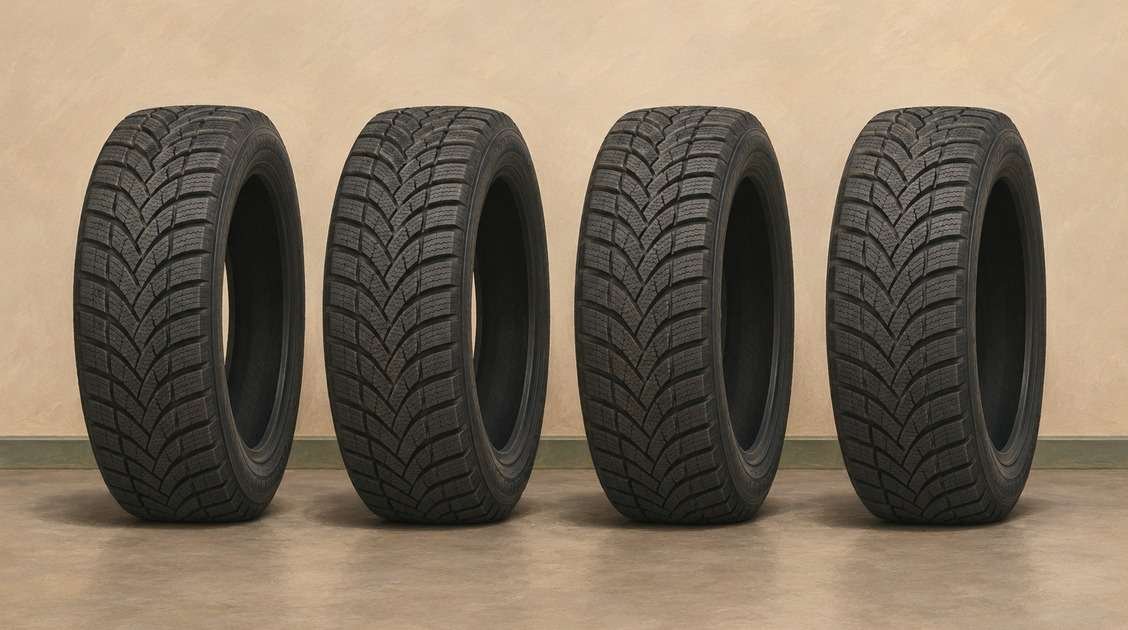
Book for the whole journey. Tell the rental company if you intend to drive in rural areas, cross the bridges or continue into another country. Ask for written confirmation of tyres and winter equipment, including any supplements. A reserved vehicle category does not necessarily establish the actual tyre specification.
Forbrug.dk, the Danish consumer information service, recommends a written agreement and highlights booking equipment such as winter tyres in good time. At collection, inspect the car with the rental company, have existing damage recorded and establish whom to contact if problems arise.
Read the conditions for tyre and wheel damage, excess payments, roadside assistance and cross-border travel. Insurance packages do not necessarily include the same cover. If agreed equipment is missing, have the problem resolved before departing. A vehicle being ready at the desk does not establish that it is suitable for your planned route.
The guide to car rental in Denmark helps you work through the total price. Consider additional drivers, collection and return times, fuel or charging, and fees. These items are easier to manage when known before departure.
Forecasts and traffic reports: use both
DMI's slippery-road information shows risk based on weather conditions. It is not a record of which roads have currently been salted. DMI refers users to the Danish Road Directorate for the actual traffic situation.
On Trafikinfo, check winter traffic information and reports along the route. The Road Directorate identifies the winter traffic layer as the place to find slippery-road information. Use it alongside the forecast and the signs and conditions encountered on the journey.
Check both outward and return travel. A morning museum outing may end after dark, with different weather by then. Allow time to drive according to conditions and take breaks. A navigation service's estimated arrival is not a guarantee that the same journey time is achievable in winter weather.
| What do you need to know? | Where to check | How to use the information |
|---|---|---|
| Risk of wintry road conditions | DMI | Assess expected conditions for both directions |
| Current traffic and winter reports | The Road Directorate's Trafikinfo | Check incidents and reports along the route |
| Storebælt traffic and weather | Storebælt's own traffic page | Check current restrictions and status |
| Crossing Øresund | Øresundsbron's traffic information | Check status and possible disruption |
| Equipment on the supplied rental car | Rental company and collection inspection | Confirm tyres, assistance and agreed equipment |
The table shows where to begin your checks. It does not describe a live warning for your travel date. Check the sources again before departure and during a break if conditions change. Let a passenger handle the phone while the car is moving, or stop somewhere safe.
Storebælt and Øresund: allow for wind and possible restrictions
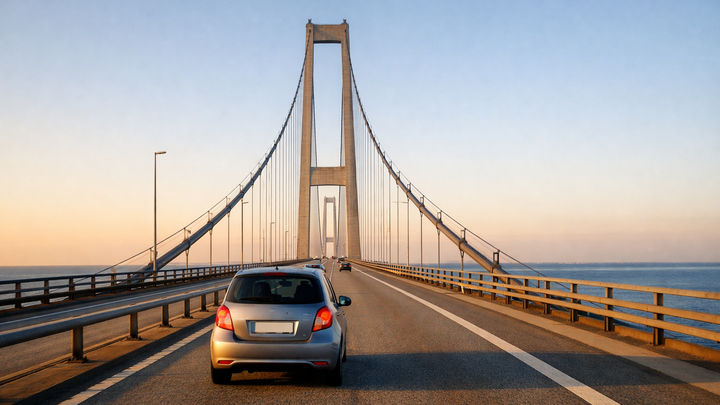
The bridge operators' own traffic reports matter even when the rest of the route looks straightforward. Storebælt provides traffic and weather information. Follow current signs, speed restrictions and any rules affecting your vehicle type. If towing a caravan or trailer, or driving another wind-sensitive vehicle, pay particular attention to what a restriction covers.
Øresundsbron states that exceptional circumstances including weather, maintenance or accidents can lead to closure. A crossing normally open around the clock is therefore not a guarantee of passage on a particular winter day. Check the approach roads and the journey beyond the bridge too.
Do not turn a delay into pressure to recover lost time afterwards. If you have a flight, ferry or timed admission, the time allowance should reflect the consequences of missing it. On a longer winter journey, staying closer to the departure point the night before may be worth considering.
If travelling from Jutland towards Zealand, the Odense directory can help identify a planned stop on Funen. Confirm parking and opening hours before travelling. A stop is useful when it fits naturally into the route; it should not create a lengthy extra detour in poor weather.
Give your winter itinerary room to change
Separate driving time, breaks and the visit itself. A short winter day fills quickly if you must collect a rental car, drive a long distance, eat and reach a museum before it closes. Choose fewer stops if the journey would otherwise become rushed.
On a city break, park legally and leave the car while walking or using public transport. Read the guide to parking in Denmark before arrival. Pay particular attention to signs, time limits, registration and payment at the actual parking location.
Choose a restaurant near the end of the day's route. The directory of restaurants in Copenhagen can help identify options that avoid another drive after the day is finished. For a Jutland base, compare accommodation in Aarhus and ask the property directly about access, parking and any charging facilities.
You can also use the rankings of popular places to choose a small number of stops. Check distances and access instead of adding every interesting place to one day. A workable winter route leaves room for an outing to move or be dropped.
Before getting behind the wheel
Check tyre condition and pressure, visibility, lights and the equipment you need. Make sure windows and mirrors are clear, and learn how the car's demisting and other relevant functions work. This particularly matters with an unfamiliar rental car.
Keep warm clothing, a charged phone and the relevant roadside assistance contact details accessible. Pack so essential items can be reached without emptying the entire boot. Food and drinks can be practical preparations for a long journey that takes more time than expected.
Decide beforehand what would make you change the trip: official advice against travelling, a closed bridge or conditions beyond what you or the vehicle are prepared for. It is easier to make that decision at home than to let a lunch reservation become a reason to continue an unsuitable journey. Follow official instructions and obtain help if you cannot proceed safely.
Questions and answers about winter tyres and roads
Denmark has no general mandatory fitting date for winter tyres on passenger cars. Tyres must suit the conditions. Check the actual and expected situation over the entire journey.
That depends on the individual tyre and conditions. Check markings and condition. The term all-season in an advertisement does not alone establish suitability for your winter trip.
The Road Traffic Authority describes M+S as an approved winter-tyre marking and recommends 3PMSF for severe winter conditions. The suitability rule still applies. Assess Denmark and any onward destination separately.
The Danish Road Safety Council gives a figure of DKK 1,000 per tyre if police assess the tyres as clearly unsuitable for the actual conditions. It is not a date-based charge.
The legal minimum is 1.6 mm. The Danish Road Safety Council and FDM recommend replacing winter tyres before they fall below 3 mm. Damage and the rest of the tyre's condition also matter.
Use the pressure information for your vehicle, wheel configuration and load, together with the relevant manual. This guide cannot give one figure applicable to every version and aftermarket wheel setup.
Lifespan depends on use, storage, wear and damage, among other factors. Have the set assessed if you are uncertain. The number of seasons alone does not establish whether a tyre is ready for a long trip.
Follow the manufacturer's guidance. Michelin advises standing unmounted tyres upright rather than hanging or stacking them. Keep them clean, dry and protected from sunlight, heat and harmful substances.
Confirm that with the rental company. Obtain written confirmation of tyres, equipment and supplements, then inspect the supplied car. Also disclose any intended travel across a national border.
Use Storebælt's and Øresundsbron's own traffic information close to departure. Check the forecast and Trafikinfo for the rest of the route as well. Follow current signs and instructions while travelling.
Official sources and manufacturer guidance
Rules and guidance checked on 11 November 2026. Traffic status and forecasts are continuously changing information.
Danish Road Traffic Authority: clarification of winter-tyre rules
Danish Road Traffic Authority: tyre types, markings and requirements
Danish Road Safety Council: winter tyres, fines and tread depth, 8 October 2026
DMI: slippery-road information and its scope
Danish Road Directorate: finding slippery-road information
Trafikinfo: current traffic reports
Storebælt: traffic and weather
Øresundsbron: traffic information
Forbrug.dk: rental agreements, equipment and vehicle inspections
Tesla: tyre care and pressures, Model 3
Read also

How do I park in Denmark and use a parking disc?
Learn what 3 timer means, how to set a parking disc and pay in Denmark. Check city prices, Sunday rules, registration and parking charges.
Do I need AutoPASS in Denmark, and how do I pay bridge tolls?
Find out where Denmark charges road tolls, whether your bizz works and which lane to use. Check rental cars, bikes, discount agreements and payment.
0 comments
Log in to leave a comment