


🛣️ Storebælt and Øresund Bridges: How Much the Crossing Costs and How to Cut Expenses
Roads in Denmark are toll-free for passenger cars, but two key bridges — Storebælt and Øresund — can easily eat up a noticeable part of your road-trip budget. These crossings are exactly where many drivers experience “price shock”, especially when they realize the real cost of a return trip and not just a one-way crossing. At the same time, tariffs depend on vehicle length, type (car or motorhome) and payment method, and prices are regularly indexed.
In this article, we’ll break down the approximate cost of crossing the bridges for different travel scenarios, show how discount programs actually work, and when it makes sense to consider ferries or alternative routes — with a clear reminder that you must always check up-to-date prices on the official bridge operators’ websites.
🌍 Where Storebælt and Øresund are located — and why you end up using them
For route planning, geography matters just as much as the numbers in the price list.
Storebælt (Great Belt Bridge) connects the islands of Zealand and Funen, effectively linking the Greater Copenhagen area with the rest of Denmark. It is the main east–west corridor inside the country: if you drive from Copenhagen to Odense, Jutland or further on to Germany, you’ll almost certainly end up on Storebælt.
Øresund Bridge connects Copenhagen (Denmark) and Malmö (Sweden) and is the main land corridor between the two countries. On the Danish side you join the bridge close to Copenhagen Airport (Kastrup), and on the Swedish side you arrive directly in Malmö.
🚗 Typical route scenarios
- Germany → Denmark → Sweden/Norway. The classic road trip: you enter Denmark from Germany, cross the country east–west via Storebælt, then continue to Sweden via Øresund. That’s the “two bridges in a row” combo.
- Travelling within Denmark. Routes like “Copenhagen → Odense → Jutland” and back almost always use Storebælt.
- Expats and commuters Copenhagen–Malmö. For those who live in one city and work in the other, Øresund is a daily routine rather than a one-off attraction.
💡 Is it possible to manage with only one bridge?
Sometimes, yes. For example, if you’re willing to enter Scandinavia by ferry (Germany–Sweden) and then only use Øresund, or, conversely, use Storebælt and the Elsinore–Helsingborg ferry instead of Øresund. But for most “direct” routes between Germany, Denmark and southern Sweden/Norway, at least one of the bridges is almost unavoidable.
💳 Base tariffs: how much each bridge crossing costs
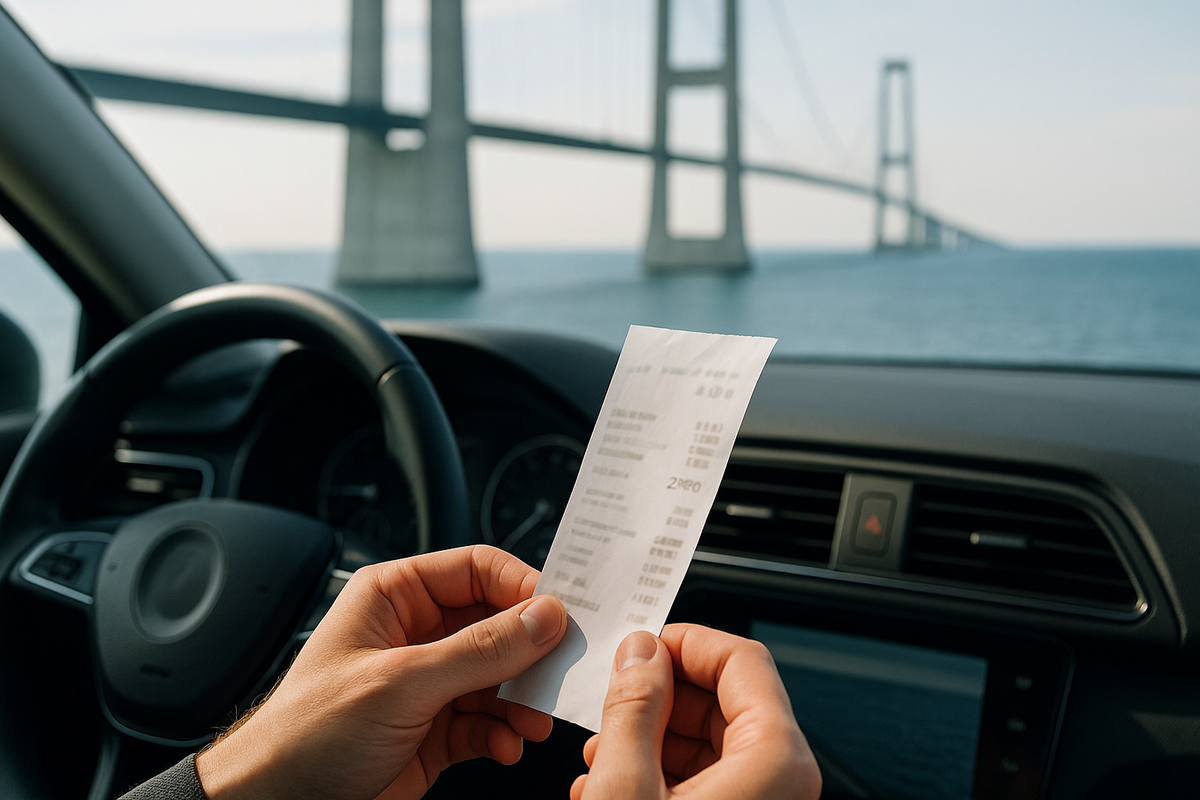
The goal of this section is to give you ballpark figures, not to replace the official price list. Tariffs depend on: vehicle length or overall length of the car+trailer; category (weight, vehicle type); payment method (cash/card, automatic payment, contract).
Always double-check current prices on the official Storebælt and Øresund websites, especially considering indexation and announced tariffs for upcoming years.
🚘 Storebælt: price range
For a standard passenger car up to 6 meters, as an approximate reference for 2025:
- base tariff for private customers paying by card is around 230–270 DKK per one crossing;
- with automatic payment (bizz/number plate) and a Storebælt Private Agreement, the price is reduced, but from 2025 EU rules cap the discount at roughly 13% off the base price (it used to be significantly higher).
For motorhomes and longer combinations, tariffs depend strongly on length. For a motorhome around 8–10 meters, the cost can reach 600+ DKK per crossing without special agreements, while under specific “motorhome agreements” or similar programs it can be reduced by almost half.
🌉 Øresund: price range
For a standard car up to 6 meters:
- a standard one-time crossing without contracts is around 460–500 DKK;
- with ØresundGO, the price per trip drops by more than 60%, to roughly 180 DKK per crossing (exact figures depend on the year and published price list).
For motorhomes 6–10 meters, the base Øresund tariff often ends up around 900–1 000 DKK per crossing without discounts, with a noticeable reduction under ØresundGO.
👉 Simple rule of thumb:
- For most tourist itineraries, assume at least two crossings (round trip) per bridge if you return via the same corridor.
- Don’t forget to convert DKK/SEK into your home currency and add your bank’s conversion fee.
📊 Short summary table (passenger car up to 6 m)
| 🌉 Bridge | 💸 Approx. toll without discounts* | 🔻 With discount/contract** | 📝 Comment |
|---|---|---|---|
| Storebælt | ~230–270 DKK | ~200–230 DKK (Private Agreement, bizz/licence plate) | Discount is limited by an EU directive (up to ~13%). ([TollGuru][1]) |
| Øresund | ~460–500 DKK | ~180–200 DKK with ØresundGO | ØresundGO gives >60% savings, but there is an annual fee. ([Øresundsbron][2]) |
* All numbers are approximate guidelines.
** Actual values depend on the year, contract type and vehicle length.
💼 How to really reduce costs: BroBizz, Storebælt Private Agreement, ØresundGO and other discounts

The key to saving money is not chasing random promotions, but setting up the right payment method before you hit the road.
🧾 Storebælt: Storebælt Private Agreement and automatic payment
For private customers, Storebælt offers the Storebælt Private Agreement:
- you link a transponder (e.g. BroBizz) or number-plate payment to your contract;
- you use automatic lanes (bizz/number plate) at the toll plaza;
- you get a lower price compared to paying by card or cash.
After the EU rule changes, the discount is around up to ~13% off the base price, but for a round trip and especially for motorhomes this already adds up to a noticeable saving.
🌐 Øresund: ØresundGO and other contracts
ØresundGO is the primary product for private drivers:
- annual fee of about 365 DKK;
- over 60% off each crossing;
- no strict minimum number of trips, but the contract becomes really attractive if you cross at least a few times per year.
For commuters and regular travellers there are additional contracts such as ØresundPENDLARE and ØresundPENDLARE+, offering even better conditions for frequent crossings.
🔄 The mechanics: transponder, number plate and toll lanes
- Both bridges have separate lanes for cash/card and for automatic payment (transponder or number plate recognition).
- On Øresund, automatic lanes are usually marked clearly (often in green/blue), while card-payment lanes are in separate corridors.
- Typical mistakes: entering the wrong lane and losing your discount; failing to link your vehicle’s number plate to the contract; entering the wrong length category for your car or motorhome and being charged a higher rate.
📌 When do discounts actually pay off?
- One-off transit “Germany–Norway” using both bridges once. Often it’s easier just to pay the standard tariff or buy single online tickets: setting up contracts only for one crossing may not pay off.
- Return trips over the same bridge within a year. It already makes sense to calculate the benefit of ØresundGO or a Storebælt Private Agreement.
- Regular journeys (commuting, family visits, second home). Contracts are almost always worth it: you lower the price of every crossing and have a predictable annual budget.
💡 Practical tip: estimate how many times you will cross each bridge in a year — and base your decision on ØresundGO/BroBizz/Private Agreement on that number.
⛴️ Alternatives to the bridges: ferries, detours and combined routes
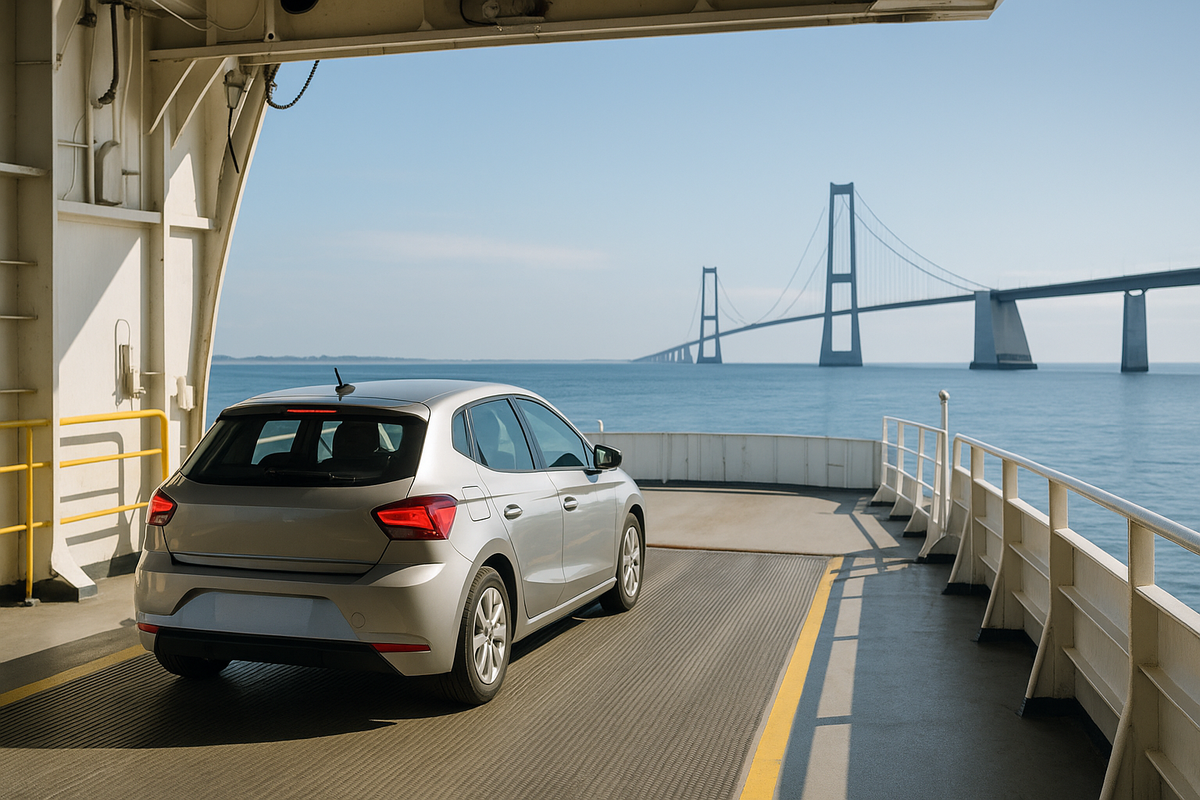
Bridges are not the only option. For certain routes, ferries or alternative corridors can be more attractive in terms of price, logistics or overall travel comfort.
🚢 Storebælt: bridge versus ferry
For some itineraries through Denmark, you can choose between crossing via Storebælt or using one of the domestic or international ferry lines (e.g. at the German–Danish border or between Danish islands).
- The bridge offers predictable travel time (around 10–15 minutes on the bridge itself plus approach/exit).
- A ferry may be similar in price or slightly cheaper, but: you’re bound to departure times and boarding; it can be a convenient break on a long driving day: time to eat, rest and let kids walk around.
🇩🇰↔️🇸🇪 Øresund: bridge or Elsinore–Helsingborg ferry
The classic alternative to Øresund Bridge is the Helsingør (Denmark) – Helsingborg (Sweden) ferry:
- for a standard car, the ferry can be cheaper or similar in cost to the bridge;
- in terms of time, it’s usually longer, but you get a proper pause;
- don’t forget about additional road tolls and environmental zones in Sweden if you continue your journey further inland.
🧭 Combined routes via Germany and Sweden
For long-distance trips, such as Central Europe → Norway/Northern Sweden, it’s worth comparing alternative corridors:
- entering Scandinavia via German–Swedish ferries (for example, combining Puttgarden–Rødby and Øresund, or other routes);
- planning an itinerary that uses only one bridge instead of two;
- comparing total costs, including: bridge tolls, ferry tickets (with or without cabin), fuel, toll roads and low-emission zones in other countries, hotel savings if you sleep on the ferry.
💡 Important: calculate the total cost of the route, not just the bridge price. Sometimes a “pricey” Øresund plus a shorter route through Sweden is actually cheaper and faster than a long detour with multiple ferries.
📋 Practical tips: how to budget for the bridges and avoid nasty surprises

To wrap up, here’s a practical checklist so that bridge tolls become a predictable budget line instead of an unpleasant surprise.
🧮 Before your trip
- Check current prices
- Go to the official Storebælt and Øresund websites and open sections for prices and discounts for private customers.
- Pay attention to prices announced for the next year and to any seasonal adjustments.
- Factor in currency and bank fees
- Most tariffs are listed in DKK (sometimes Øresund also quotes SEK as a reference).
- Banks charge conversion fees, so the actual amount debited can differ from the “ideal” rate you found in a converter.
- Decide on contracts
- Estimate how many times you plan to cross each bridge within a year;
- if more than once or twice, calculate the benefit of ØresundGO/Storebælt Private Agreement against the annual fee;
- for motorhomes, check if there are special “motorhome agreements” that apply to your vehicle length.
🚦 When crossing the bridge
- Choose the correct lane
- Cash/card, transponder, number-plate recognition — each system has its own lanes;
- know in advance which lane you need so you don’t have to change lanes at the last second.
- Check your length and vehicle category
- A car with a roof box, bike rack or trailer may fall into a different length/height category;
- this information is usually in your vehicle documents or available from your rental company.
- Keep payment confirmations
- A paper receipt or electronic confirmation is useful if a card charge later looks suspicious or higher than expected.
💰 Budget planning
- Include the double cost of each bridge when planning round trips and add a 10–15% buffer for indexation and exchange-rate fluctuations.
- Calculate a separate scenario for motorhomes: vehicles 6–10 meters long pay significantly more than cars under 6 meters.
- Remember that roads in Denmark are toll-free for passenger cars: you pay specifically for the bridges and, if relevant, for environmental/low-emission zones in certain cities and for heavy vehicles.
🧷 Storebælt and Øresund are expensive but completely predictable expenses. Once you understand the geography of your route, verify current prices, calculate the value of ØresundGO/BroBizz and consider ferry alternatives, the bridges become a planned part of your Scandinavian logistics — not a budget shock that ruins your impression of Denmark and its neighbours.
❓FAQ
🙂 Denmark does not have a national toll motorway system for passenger cars, but two major infrastructure projects — Storebælt and Øresund — are financed through dedicated tolls on these bridges.
🙂 For a passenger car up to 6 m, use about 230–270 DKK for Storebælt and about 460–500 DKK for Øresund as rough one-way benchmarks without discounts. For 6–10 m motorhomes, expect 600–900+ DKK per crossing on each bridge if you don’t use contracts or special agreements.
🙂 Storebælt Private Agreement and automatic payment offer a modest but reliable discount; ØresundGO gives more than 60% off the standard Øresund price in exchange for an annual fee. Such contracts are particularly attractive if you cross the bridges several times per year or commute on the Copenhagen–Malmö route.
🙂 Alternatives include ferries (such as Elsinore–Helsingborg and various Germany–Denmark/Sweden routes) and overland corridors via Sweden or Germany. They may win on price or comfort, but they require more time and careful calculation of total trip costs.
🙂 Check current tariffs on the official websites, factor in exchange rates and bank fees, decide on contracts in advance, get your vehicle length/category right and treat bridge tolls as a separate budget item rather than an afterthought.

0 comments
Log in to leave a comment