


🌲 Camping among lakes and forests of Central Jutland: trails, kayaks, active holidays
Central Jutland is Denmark without the sea, but with so much water and greenery that you will easily forget about the sea. Here you have the chain of Silkeborg Lakes, the country's longest river Gudenå, the hilly forest Rold Skov and the Rebild Bakker valleys. Instead of the North Sea wind – calm lake surfaces, forest trails, kayaks, a campfire and morning mist over the water.
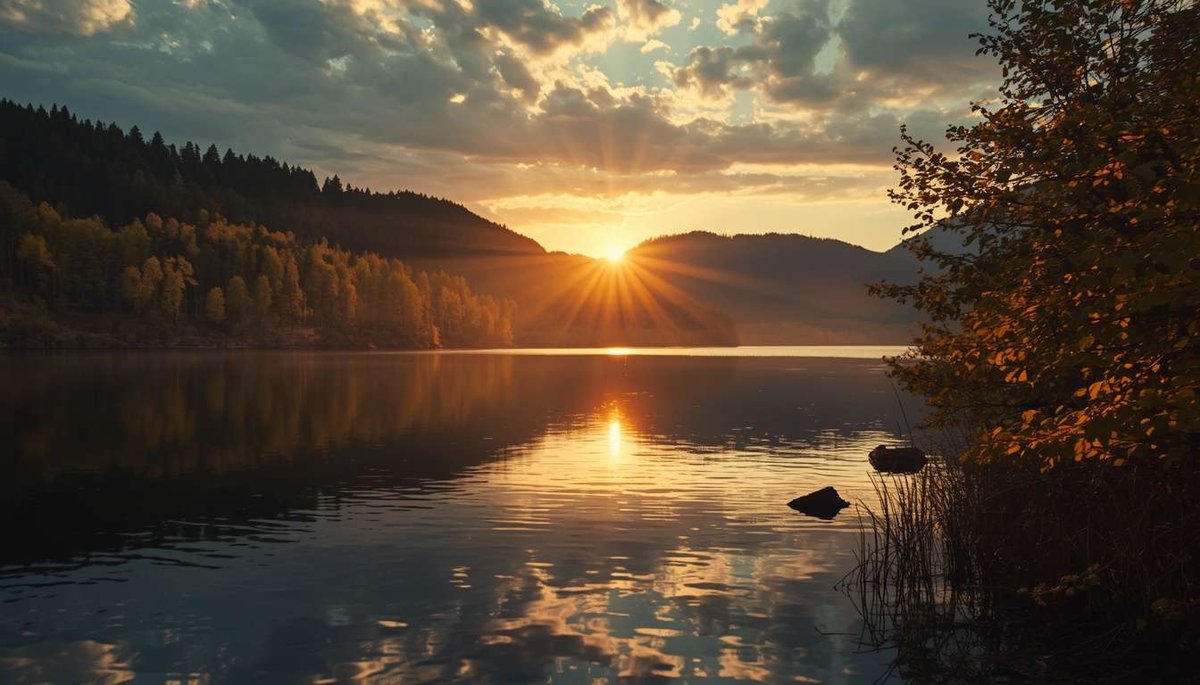
Many people, when planning their first trip to Denmark, automatically look at the west coast and beaches. But those who feel closer to kayaks, forest and fire in a stove rather than wind in the face almost always fall in love with these "inland" regions. Here it's easier to shelter from strong winds, easier to combine camping with cities like Aarhus and Silkeborg, and still live literally by the water.
Let's look at where to stay with a tent or in a cabin if you want to:
- paddle a canoe or SUP on the lakes and Gudenå;
- hike forest trails and hills;
- try wild camping and sleeping in shelters;
- plan a weekend route from Aarhus or Aalborg.
🧭 Where the sea ends and the "land of lakes and forests" begins
If you look at the map of Denmark, Silkeborg and its surroundings are often called the outdoor capital of the country: the city is surrounded by lakes and forests, and the Gudenå river connects all the waterways into a single network of routes. This is where popular canoe, kayak and SUP paddles on Gudenå and the Silkeborg Lakes begin.
A little further north, in Rold Skov and Rebild Bakker, the landscape changes: deep forests, springs, hills, heather slopes. This is one of the greenest and most "forested" corners of the country, where you can easily organise a 10–20 km trek, a night in a shelter and then catch a train to Aalborg in the morning.
And all this – within a couple of hours by car or public transport from Aarhus, Aalborg and even Copenhagen (if you are ready to travel to Jutland by train).
🏕️ Campsites by the Silkeborg Lakes: live by the water
🚣 Skyttehusets Outdoor Camp – a house right on the lake shore
Skyttehusets Outdoor Camp stands right on the shore of the Silkeborg Lakes, between Silkeborg and the town of Ry. The campsite has its own small marina, boat docks and a harbour for canoes and kayaks. From here you get about 25 km of connected lakes, which you can kayak, SUP or boat on.
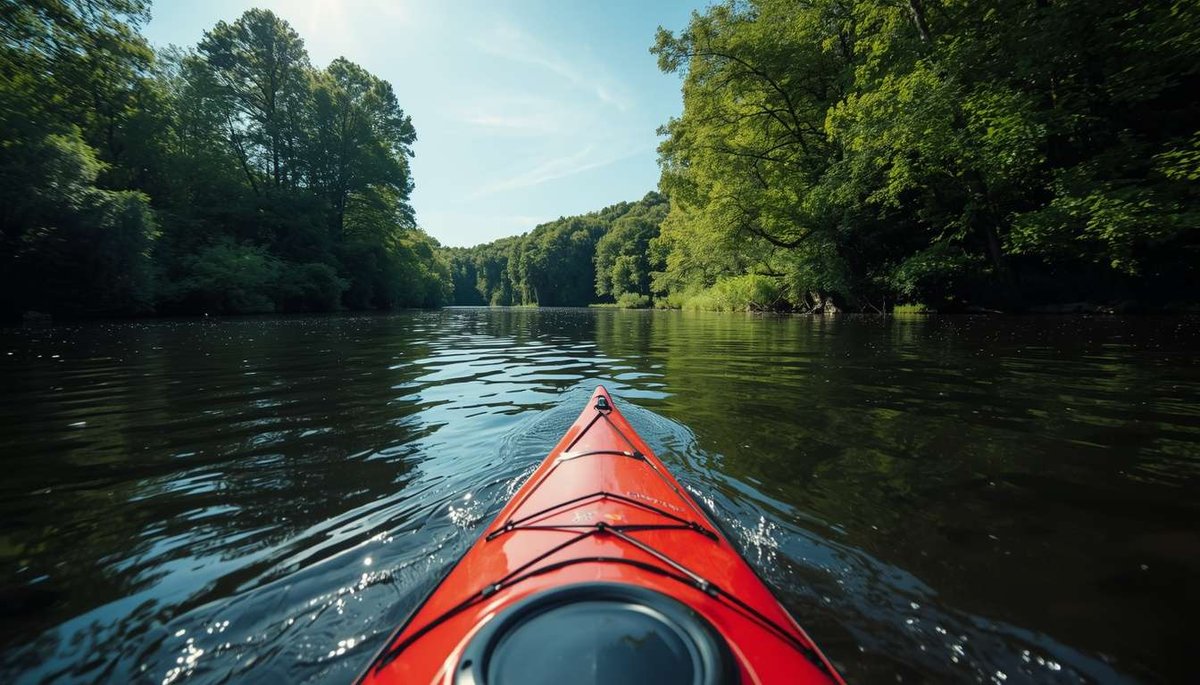
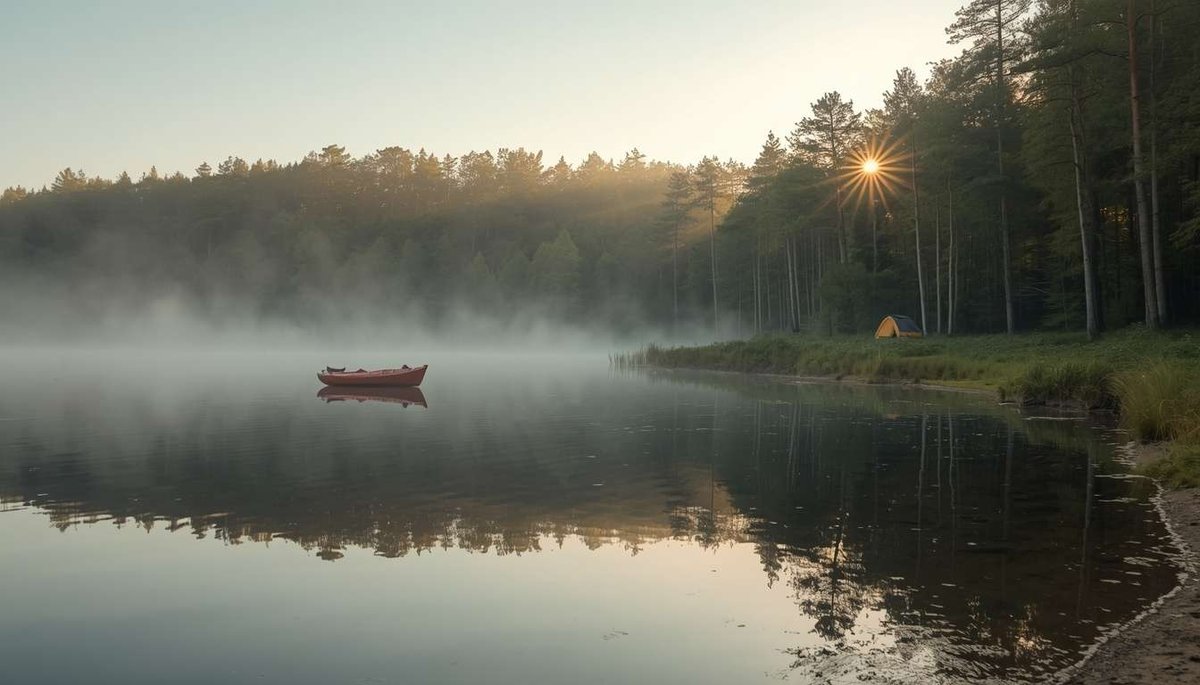
The atmosphere here is "forest + water": tents and cabins stand among the trees, wooden piers lead down to the water, and in the morning from your sleeping bag you see the mist over the lake and hear the splash of birds. This is a great option if you want to:
- wake up by the water and immediately go out on a SUP or kayak;
- combine camping with walks to Himmelbjerget (one of Denmark's most famous "mountains") and forest trails;
- stay at a small, intimate campsite rather than a huge family resort.
Skyttehusets suits couples, active groups and families with school-aged children who are already confident on trails and in a boat without panic.
🛶 Ly Outdoor Camp – a base for kayaks, SUP and short trips to Silkeborg
Ly Outdoor Camp is located right by Gudenå, in the green zone of Silkeborg. The campsite is minutes from the water, and it positions itself as an outdoor camp: you can rent canoes, SUPs and kayaks, including through an automated Kayakomat. The centre of Silkeborg is about 1.5 km away, so you are simultaneously in the forest and almost in the city.
The format is ideal if you:
- want to come without your own gear and rent everything on site – from canoes to SUPs;
- plan a route like "1–2 nights in a campsite + paddling down the river with overnight stays in shelters";
- like being able to cycle or walk 10–15 minutes to a café, museum or supermarket in Silkeborg.
Ly Outdoor Camp is often chosen by those who value the combination of "wild shore" + "city within walking distance".
🌳 Bryrup Camping – between lakes, forest and cycle paths
Bryrup Camping is located south of Silkeborg, between lakes and forest. Within walking distance from the campsite: several lakes, canoe, kayak and SUP rental, MTB trails, running and walking routes, and a cosy "toy" railway line of the old Bryrup–Vrads train.
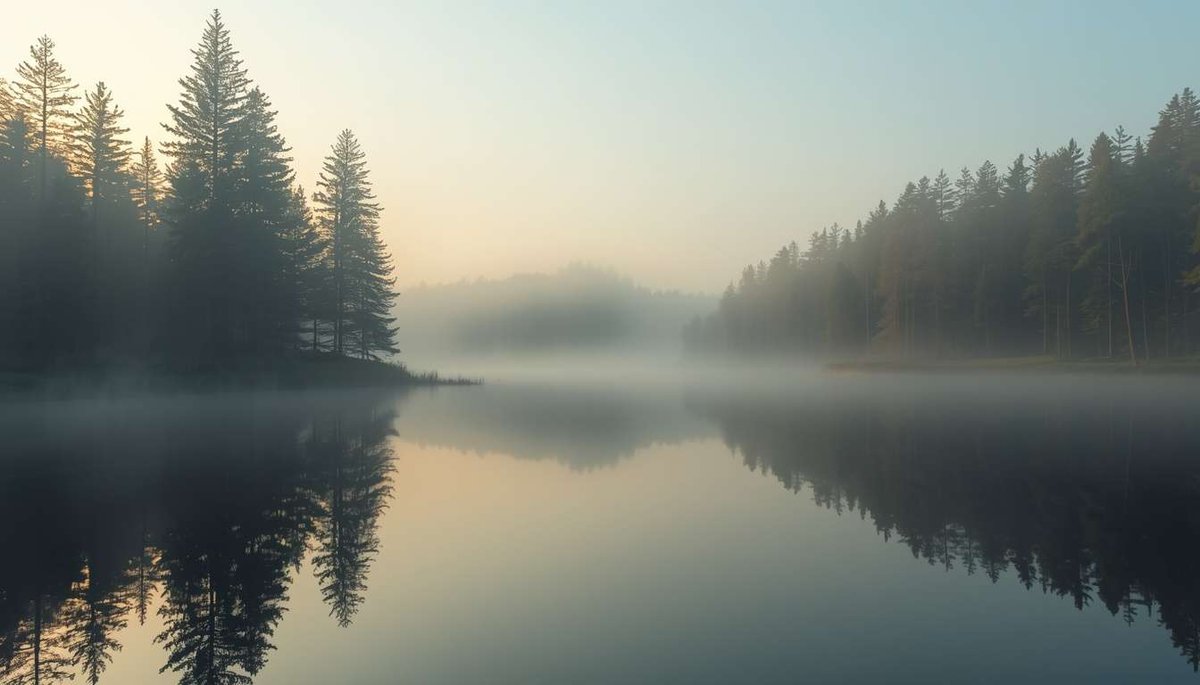
This is a great option for families who want to:
- combine swimming in lakes, short paddles and cycling;
- explore the surroundings (AQUA Aquarium & Wildlife Park, Labyrinthia, small zoos and parks);
- have children's infrastructure on site while still being able to head out on trails right from the tent.
In atmosphere, Bryrup is a classic green family campsite: morning bread in the shop, children on the playground, adults with an MTB trail map.
🚣 Gudenå: camping on Denmark's longest river
The Gudenå river (about 149 km long) is the longest in Denmark and the "backbone" of central Jutland. It connects a chain of lakes and towns, and along its banks there are dozens of campsites, shelters and primitive campsites.
On the southern stretches between Tørring and Lake Mossø, special rules apply: the number of boats is limited, some sections have permitted seasons and permit requirements, but this is compensated by very calm, beautiful water and well‑developed infrastructure for overnight stays and landings.
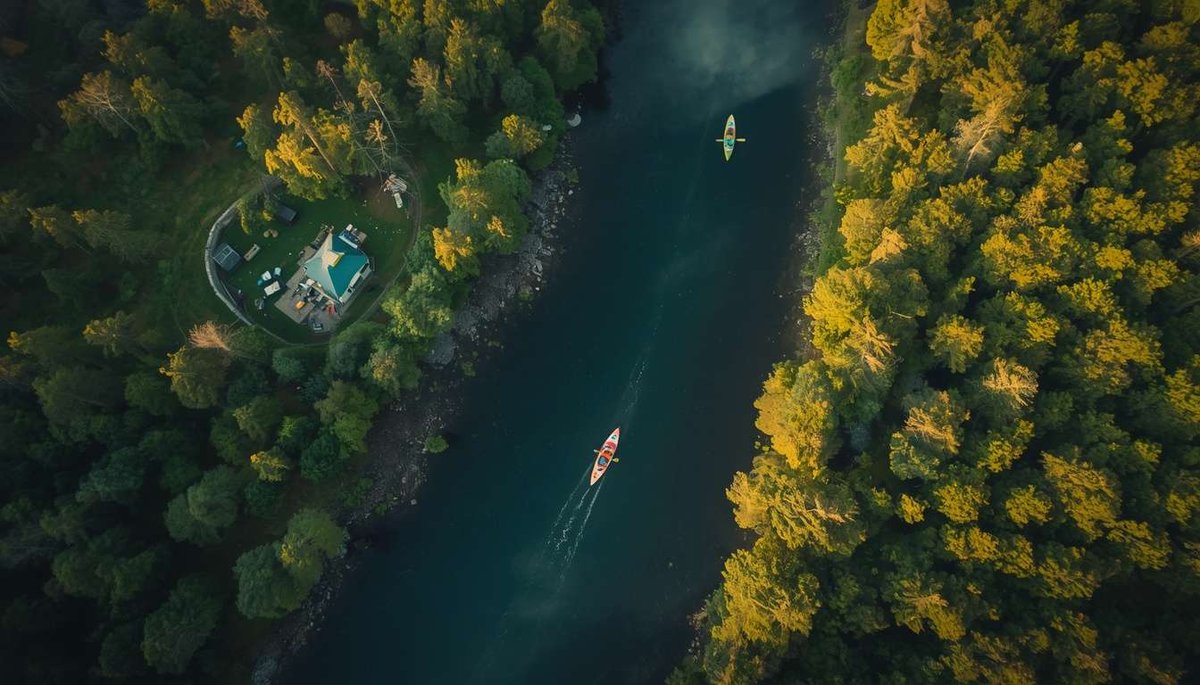
⛺ Gudenå Camping & Kanoudlejning – a base for paddling trips and excursions to towns
Gudenå Camping stands right on the riverbank and combines a classic campsite with canoe rental. It's a convenient starting point if you want to:
- go on a one‑day paddle and return to the same campsite;
- do a "2–3 day route along the Gudenå with overnight stays in different places";
- combine water activities with trips to Aarhus, Silkeborg, Horsens and other towns in Eastern and Central Jutland.
Many canoe operators on the Gudenå work on a scheme: you start from a point like Gudenå Camping or Tørring, paddle 15–20 km a day, sleep in a campsite or primitive campsite, and on the evening of the third or fourth day they pick up the boats and return you to your car or train.
If you have limited time, you can do this:
- day 1: arrival, evening walk and first night at a campsite;
- day 2: paddle downstream, overnight at another campsite or shelter;
- day 3: morning finish and return to the city.
🌲 Rold Skov and Rebild Bakker: forest, hills and "wild‑style" overnight stays
Rold Skov forest and Rebild Bakker hills are further north, but still part of the "inland" route through Jutland. Here you find:
- one of Denmark's largest forest areas;
- hilly heather fields and valleys;
- a network of trails of varying lengths and difficulties.
🏕️ Rebild Camping Safari – campsite at the forest entrance
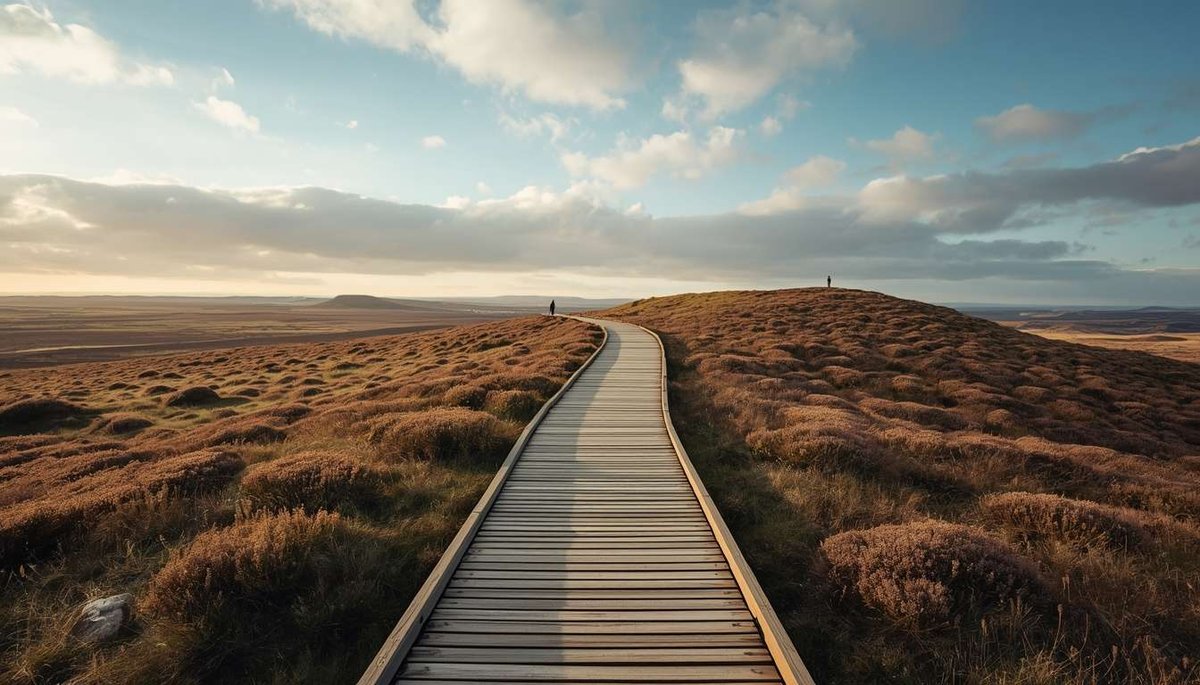
Rebild Camping Safari is literally positioned between Rold Skov forest and the Rebild hills. The campsite description emphasises that it is "in the heart of Central Jutland", in a green zone with direct access to trails and viewpoints.
It is a logical base if you:
- plan a couple of days of hiking with light daypacks;
- want children to be able to walk in the forest and hills, not just sit by the water;
- choose the format "by day – trails and views, by evening – a warm shower and a proper kitchen".
From here it is easy to get to Aalborg and back: you can combine train/bus and walking routes if you are without a car.
🌿 Shelters and "sleeping wild" in Rold Skov
Rold Skov is also good because different forms of overnight stays in the forest are officially permitted here. In the state‑owned part of the forest, you can sleep on the ground in a sleeping bag, under a tarp or in a hammock (with careful treatment of trees), and in several designated areas – pitch a tent for one or two nights.
The Danish Nature Agency gives four main formats:
- sleeping directly on the forest floor (without a tent) where permitted;
- small primitive campsites with a couple of tables and sometimes a fire pit;
- large primitive campsites that need to be booked for groups;
- "free tent camping" zones (fri teltning) where small tents are allowed for 1–2 nights.
On the official Naturstyrelsen map, shelters, primitive campsites and forests with free tent camping are marked. In Rold Skov there are enough of them to put together a route "campsite → 1 night in a shelter → return to civilisation" without complex logistics.
🏕️ Types of accommodation: campsite, shelters, primitive campsites
If you are coming specifically for the nature of Central Jutland, you can combine the formats:
- classic campsites (Bryrup, Ly Outdoor Camp, Skyttehusets, Gudenå Camping, Rebild Camping Safari) – hot shower, kitchen, sometimes a café and shop, cabins and huts;
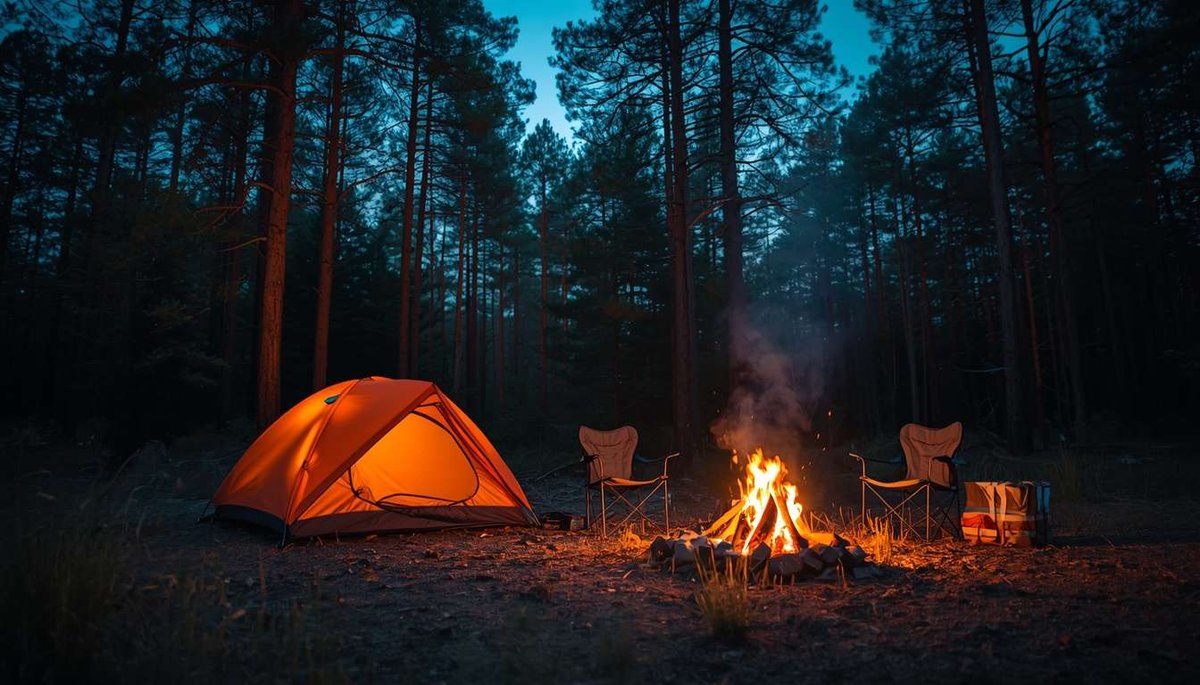
- shelters – wooden lean‑tos with three walls, usually free or very cheap; you sleep in a sleeping bag, watch the fire and listen to the forest;
- primitive campsites – clearings with minimal facilities (sometimes a toilet, table, fire pit);
- free tent camping (fri teltning) – camping in a tent directly in the forest in designated areas, one or two days, no reservation.
A good scenario: fly/arrive to Aarhus or Aalborg, spend the first night in a lakeside campsite, then do one push with a night in a shelter in the forest, and return to a campsite for the final night with a hot shower and time for the city.
📊 Table: campsites and forest areas of Central Jutland (text version)
📊 Campsites and forest bases: each option at a glance
The table helps you quickly see which places best suit your plans for water and trails.
| Place | Location | Water/nature format | For whom and why |
|---|---|---|---|
| Skyttehusets Outdoor Camplakes | Between Silkeborg and Ry, right on the Silkeborg Lakes | Marina, canoe/kayak/SUP rental, forest around. | Couples, families & groups who want to live by the water and hike to Himmelbjerget. |
| Ly Outdoor Campriver+lakes | Silkeborg, bank of the Gudenå River | Canoe/kayak/SUP rental, quick access to the city. | Those who want both nature and city nearby, as well as plan a paddle on Gudenå. |
| Bryrup Campinglakes | South of Silkeborg, between several lakes | Lakes, forest, MTB trails, canoe and SUP rental. | Families & active travellers combining water, bikes, and trips to parks/attractions. |
| Gudenå Campingriver | Bank of the Gudenå River in Central Jutland | Paddling base, canoe rental, access to East Jutland towns. | Those building a 2–3 day river route and wanting a convenient "starting" base. |
| Vestbirk Campingriver+lakes | Vestbirk area, on Gudenå and surrounding lakes | Canoes & kayaks, fishing, two large tent fields by the water. | Families & groups wanting a full day on the water and overnight right by the lake. |
| Rebild Camping Safariforest | Rold Skov / Rebild Bakker | Forest trails, hills, heather, classic campsite. | Lovers of hiking, trail running, and "forest" holidays. |
| Shelters in Rold Skovshelter | Various points inside Rold Skov | Wooden lean‑tos, fire pits, simple infrastructure. | Those ready to sleep in a "semi‑wild" format with minimal facilities. |
| Free tent camping zonesforest | Selected forest areas across Denmark | Overnight in a tent for 1–2 nights without booking, following Naturstyrelsen rules. | Experienced campers wanting maximum freedom and not afraid of basic conditions. |
🧭 Weekend route planner
Choose your starting city, duration and focus — get a sample itinerary you can later adjust for flights and weather.
🗺️ Map: campsites and lakes of Central Jutland
🧳 When to go and how many days to plan
For the lakes and forests of Central Jutland, a simple logic works well.
- From May to September, the water is warm enough (or still warm), canoe and kayak rentals are operating, and most campsites are open.
- In July and early August, demand for campsites and boats is higher, especially on weekends and during Danish school holidays – book in advance.
- In May–June and late August–September, there are fewer people, softer prices and it's easier to find free spots, even if you plan a route along the Gudenå with overnight stays at different points.
By length of stay:
- 2–3 days – ideal "reconnaissance" format: one day on the water, one day on forest and trails.
- 4–5 days – allows for a linear river route with 2–3 overnight stays.
- One week – lets you combine lakes, Gudenå, Rold Skov and one city like Aarhus at the start/finish.
✅ Pre‑trip checklist for camping by lakes and in forests
✅ Pre‑trip checklist for camping by lakes and in forests
Tick these off to avoid forgetting the basics for water, forest and overnight stays outside the city.
- I have checked the campsite's opening dates and the rental season for canoes/kayaks on my chosen section of Gudenå or the lakes.
- I have a lightweight waterproof jacket, a warm fleece and clothes I don't mind getting wet on the water.
- I have dry bags or at least sturdy plastic bags for documents, electronics and dry clothes in the boat.
- I have a headlamp and an extra light source for overnight stays in shelters and primitive campsites.
- I understand the fire rules in the region and have checked whether there are official fire pits at campsites/in the forest.
- I have checked the Naturstyrelsen website for a map of shelters, primitive campsites and free tent camping zones in my chosen area.
- I have checked transport: how to get to the start and back from the finish (trains, buses, shuttle services from rentals).
- My food and water supply is calculated considering that some sections along the river and in the forest have no shops.
❓ FAQ: camping and active holidays among the lakes and forests of Central Jutland
In most lakes and sections of the Gudenå, swimming is allowed, but you need to use common sense: check local water quality signs, don't go far in strong currents, watch children carefully and consider water temperature. There are almost no lifeguards on the lakes and river, so you are responsible for your own safety.
On calm sections of the river and lakes, many routes are designed for beginners and families: canoe rental providers give life jackets and a short safety briefing. Start with short day sections (15–20 km) and assess your strength, rather than immediately planning a multi‑day trip.
Yes, some campsites, such as Skyttehusets Outdoor Camp, Ly Outdoor Camp and Bryrup Camping, offer canoe, kayak and SUP rental on site, sometimes with their own harbour or marina. This is convenient if you come without your own gear and want to get on the water spontaneously.
On the Danish Nature Agency (Naturstyrelsen) website there is an interactive map of shelters, primitive campsites and forests where free tent camping is permitted. The rules are also described there: how many nights you can stay, what tent size is allowed, whether you can light a fire, and how to handle trash and noise.
A car makes life much easier, but many routes can be done with public transport: trains and buses from Aarhus go to Silkeborg and the surrounding area; Rold Skov and Rebild Bakker are easily accessible from Aalborg. After that – on foot, by bike or with a transfer from the boat rental. Specific options are best checked in Danish timetable apps before travelling.
With toddlers, it's easier to start with lakeside campsites (Bryrup, campsites around Silkeborg) that have proper toilets and safe water entry. River paddles and overnight stays in shelters are best left until the child is old enough to sit calmly in a boat and follow basic safety rules.
Most rentals charge by the day or hour, and the price often includes life jackets and boat delivery to the finish line. Price ranges vary widely depending on route length and season, so it's worth checking rates from several rentals on your section of the Gudenå in advance to get an idea of the costs.
Yes, this is one of the most interesting formats: the first night you spend in a lakeside campsite (Skyttehusets, Ly Outdoor Camp, Bryrup), the next day you head into the forest with light backpacks and sleep in a shelter or primitive campsite, then return to civilisation. The key is to check the overnight map in advance and not overestimate your strength in terms of kilometres.
It's important to remember that "wild camping" in Denmark is actually quite regulated: you cannot sleep just anywhere. You may only use official forests with free tent camping and marked shelters/primitive campsites, follow the rules on duration of stay, number of tents and fire handling. Violations can lead to fines, so it's best to rely on information from Naturstyrelsen.
If you love water, kayaks and SUP, a logical start is the lakes around Silkeborg and campsites on their shores. If you prefer forest, hills and trekking without mandatory water every day, start with Rold Skov and Rebild Camping Safari. Ideally, combine both regions into a 4–5 day route and see which format suits you better, then plan your next trip.

0 comments
Log in to leave a comment