


Where and when can you see the northern lights in Denmark?
In brief. You can see the northern lights in Denmark, but this is a rare opportunity requiring suitable geomagnetic activity, darkness and sufficiently clear skies. Look for an open northern horizon away from street lights: in North Jutland, on Møn or on Bornholm. NOAA's short-term aurora forecast helps assess developments in the near future, while DMI provides the weather forecast. NOAA normally offers 30–90 minutes of lead time; there may be no lead time when the model falls back on Kp. Information checked 3 November 2026: DMI, NOAA.
Can you see the northern lights in Denmark itself?
Yes. During strong geomagnetic disturbances, the auroral region expands and the lights can be seen much further south than usual. However, travelling to Denmark is not the same as visiting the usual auroral zone. A place name, a calendar month and a paid hotel room do not secure a sighting. NOAA explains the mechanism; checked 3 November 2026.
It is more useful to treat the lights as a possible bonus on a trip you already want to make. If they are the main purpose of your holiday, separately compare bases for the northern lights in northern Scandinavia. This guide covers watching in Denmark itself, excluding Greenland and the Faroe Islands.
What should you know before heading out?
| Fact | What it means for your plan | Source and check |
|---|---|---|
| The northern lights are relatively rare in Denmark | They cannot be promised on a particular night | DMI, 3 November 2026 |
| Kp uses a scale from 0 to 9 | It is an activity index, not a percentage chance | NOAA: viewing tips, 3 November 2026 |
| OVATION normally gives 30–90 minutes of lead time; there may be none when it falls back on Kp | Check the map's time, not just its colour | NOAA: forecast, 3 November 2026 |
| Darkness and a sufficiently clear sector of sky are needed | A high index does not remove clouds | DMI: questions and answers, 3 November 2026 |
| Møn and Nyord have Dark Sky Park and Community status | The status concerns preserving dark skies | VisitDenmark, 3 November 2026 |
| Rejseplanen searches stations, stops and addresses | Search the outward and return journeys separately | Rejseplanen: help, 3 November 2026 |
| Land managed by Naturstyrelsen is open to pedestrians around the clock | This is not general permission to walk on all private land | Naturstyrelsen, 3 November 2026 |
When should you look for the northern lights in Denmark?
Choose the dark part of the day and follow activity immediately before setting out. A long winter night leaves more time for watching, but does not create an aurora. Light summer nights and a bright Moon make faint displays harder to see. DMI explains viewing conditions, checked 3 November 2026.
Autumn, winter and early spring are more practical for this kind of evening plan than travelling solely for the lights in midsummer. This is guidance based on darkness, rather than a fixed season with an opening date. Do not wait until midnight if suitable conditions have already developed; check forecast updates rather than an invented timetable for the phenomenon.
To choose between a winter trip and long summer evenings, use the comparison of the northern lights and light nights.
Where can you find dark skies and an open northern horizon?
Start with the nearest safe spot with an open view, rather than the most distant name on the map. A good stargazing site may be unsuitable for an aurora low on the horizon if trees block the north.
| Area | Why consider it? | What to check on site |
|---|---|---|
| North Jutland and Skagen | The northern part of the country, with the option of an open coastline | Direction of view, lights and the return route; visiting Skagen does not automatically mean going to the tip of Grenen |
| Bulbjerg | VisitDenmark shows a local example of the northern lights | Wind, a safe observation point and distance from the edge |
| Møn and Nyord | Protected darkness and the option of a separate stargazing plan | Whether the northern horizon is open; Dark Sky does not increase solar activity |
| Bornholm, around Hammershus | VisitDenmark recommends the local night sky for stargazing | Path access, terrain, the northern sky and the return route |
Sources on geography and the night sky: VisitDenmark: places to watch, Møn and Nyord, Grenen, checked 3 November 2026. The table helps you choose an area; it neither ranks the chances of a sighting nor confirms round-the-clock access to every site.
On Møn, you do not need to descend below Møns Klint to watch the sky. Choose a permitted open spot that you have inspected in daylight. On Bornholm, the dark landscape around Hammershus likewise does not make a cliff edge a suitable night-time viewing point. For other daytime nature outings, use the guide to winter routes in national parks; the link does not imply that Møn and Bornholm are national parks.
Is it possible from Copenhagen?
During a strong display, being in a city does not in itself rule out a sighting, but street lights interfere with a faint glow. Instead of making a long journey without knowing the conditions, find a legally accessible spot with less light pollution and a view north. DMI explains the importance of an open northern horizon, checked 3 November 2026.
How do you read Kp and the forecast without treating them as a promise?
Separate the space weather forecast from the ordinary weather forecast. Kp describes disturbances in Earth's magnetic field on a planetary scale. The aurora map shows the expected region of activity, while local cloud cover determines whether you can see the relevant part of the sky.
1. Open the NOAA Planetary K-index. Establish whether you are looking at a measured index or a forecast, and check its time interval. A three-hour Kp value is not a minute-by-minute sensor above Skagen.
2. Go to NOAA Aurora: 30 Minute Forecast. Select the Northern Hemisphere; check the date, time and the auroral region's position relative to Denmark. The normal lead time is 30–90 minutes, but there may be none when the model falls back on Kp. If the data are not updating, use another current official product rather than an old image.
3. Open DMI for your chosen place and evening time. Compare cloud cover, precipitation and wind; a lack of rain is not proof of clear skies.
4. Check DMI warnings and your return arrangements. NOAA times may be in UTC: compare them with local time in Denmark, including the date after midnight.
5. Once at your viewing point, compare the map with the real sky. An updated forecast helps you decide whether to stay or return, but does not guarantee a result.
Index description: NOAA, checked 3 November 2026. NOAA stresses that the relationship between Kp and latitude is approximate, so this guide gives no universal threshold claiming that “at Kp X the lights are visible throughout Denmark”.
How do you plan a viewing trip without a car?
Choose a base and viewing point connected by a walking route you have checked, so you can return somewhere warm. Public transport may take you to a town, but that does not confirm a night service to a dark stretch of coast.
For Skagen, first find the connection from your station in Rejseplanen, then check the viewing point's address separately. For Møn, enter the actual address on the island, rather than just Vordingborg; for Bornholm, also account for reaching the island and the local journey to your accommodation. Do not use a summer bus timetable as the basis for a winter evening.
Check in this order: accommodation address → viewing point → a separate late-night return search → walking sections and lighting → an alternative way back. Rejseplanen accepts a station, stop or address and either a departure or an arrival time: official help, checked 3 November 2026. Establish whether taxis are available at night before setting out.
What might a relaxed evening look like?
This is an example plan, not a timetable for an event: inspect access to the site during the day, and save your route and return time. In the evening, compare the forecasts with the actual sky. In suitable conditions, head out for a short viewing session with the option to return indoors; under solid cloud, keep another winter plan in Denmark instead.
Budget for your own purchases: the outward and return journeys, local transport, accommodation if needed, and food. There is no fixed tariff for a “northern lights evening”, and a paid excursion does not buy the weather.
What should you take, and when should you stay indoors?
What to take
- Warm layers
- Protection from wind and moisture
- Shoes with a grippy sole
- Hat and gloves
- A torch for the route
- A charged phone and spare power
- An offline map
- Water or a warm drink
- An agreed return route
For photos, add a stable support if you already know how to use it. This is a preparation list, not legally required equipment.
Choose level ground away from roads, cliff edges and breaking waves. Show a companion your route, avoid shining bright lights into other observers' eyes, and follow local signs. Round-the-clock pedestrian access to land managed by Naturstyrelsen does not automatically extend to all private land; checked 3 November 2026.
Landslides can occur at Møns Klint. In October 2023, Naturstyrelsen described storm damage to the stairways and the access restrictions that followed at the time. This is a historical example, rather than a notice of a current closure. Choose a straightforward viewing spot away from the cliff instead of looking for a descent in the dark. Naturstyrelsen: storm damage in October 2023, checked 3 November 2026. For a coastal trip, use the plan for wind and rain.
Why does a camera see more colour than your eyes?
A faint aurora may look pale or greyish, while a camera records colour. Do not treat the brightness of someone else's photograph as a promise of what you will see yourself. DMI explains the difference, checked 3 November 2026.
If your phone offers it, try night mode with a stable support. Use the photograph as a supplement to watching; a coloured patch alone does not prove an aurora. Keep your torch out of the frame, check whether the glow comes from a town, and compare several images with the real sky.
Questions and answers
Yes, with suitable magnetic activity, darkness and sufficiently clear skies. This is a rare opportunity, rather than a daily winter programme. DMI, checked 3 November 2026.
None. The relationship between Kp and the auroral region is approximate, and visibility also depends on location, light and cloud cover. NOAA, checked 3 November 2026.
During the dark part of the day with a suitable forecast. Winter offers more hours of darkness, but there is no fixed starting time. DMI, checked 3 November 2026.
Choose an area based on an accessible dark site, a view north and a way back. Møn and Bornholm are also interesting for stargazing; none of these areas guarantees an aurora. VisitDenmark, checked 3 November 2026.
No. The status concerns preserving darkness and reducing light pollution, rather than the frequency of solar disturbances. VisitDenmark: Dark Sky, checked 3 November 2026.
Plan using the full address and check the return journey separately for the night you want. A daytime route does not confirm a late return. Rejseplanen: journey search, checked 3 November 2026.
There is no general permission covering all land. Naturstyrelsen allows visits on foot to its state-owned land around the clock; follow signs and local restrictions. Naturstyrelsen, checked 3 November 2026.
In low light, the eye distinguishes colours less well, and a visible aurora may look greyish. A photograph and your own visual impression can differ. DMI, checked 3 November 2026.
Sources
1. https://www.dmi.dk/vejr-og-atmosfare/temaforside-lysfanomener-pa-himlen/nordlys-et-fanomen-primart-for-de-arktiske-egne, checked 3 November 2026.
2. https://www.spaceweather.gov/products/aurora-30-minute-forecast, checked 3 November 2026.
3. https://www.spaceweather.gov/phenomena/aurora, checked 3 November 2026.
4. https://www.spaceweather.gov/content/tips-viewing-aurora, checked 3 November 2026.
5. https://www.dmi.dk/kontakt/spoergsmaal-og-svar/lysfanomener-pa-himlen, checked 3 November 2026.
6. https://www.visitdenmark.com/denmark/plan-your-trip/dark-sky-mon-and-nyord-gdk1102186, checked 3 November 2026.
7. https://www.rejseplan.dk/bin/help.exe/eox?L=&tpl=help_query, checked 3 November 2026.
8. https://naturstyrelsen.dk/regler-og-tilladelser, checked 3 November 2026.
9. https://www.visitdenmark.dk/danmark/oplevelser/natur/beaches/se-paa-stjerner, checked 3 November 2026.
10. https://www.visitdenmark.dk/danmark/explore/grenen-i-skagen-gdk640520, checked 3 November 2026.
11. https://www.spaceweather.gov/products/planetary-k-index, checked 3 November 2026.
12. https://www.dmi.dk/, checked 3 November 2026.
13. https://www.dmi.dk/varsler, checked 3 November 2026.
14. https://www.rejseplanen.dk/, checked 3 November 2026.
15. https://naturstyrelsen.dk/nyheder/2023/oktober/trapperne-paa-moens-klint-er-oedelagt, checked 3 November 2026.
Author: Undreaz.
Information checked 3 November 2026.

Read also

What does hygge mean, and how can you experience it in Denmark?
Understand Danish hygge and plan a quiet moment on your winter trip, alone or with others. Everyday ideas for food, company and comfort without a shopping list.
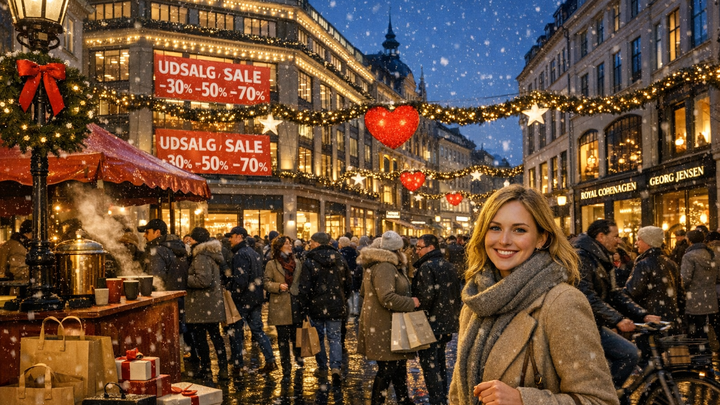
How should you plan Copenhagen winter sales shopping in 2026/27?
Plan winter shopping in Copenhagen: check each retailer's 2026/27 offers, holiday hours, exact prices, return terms and travel costs with your purchases.
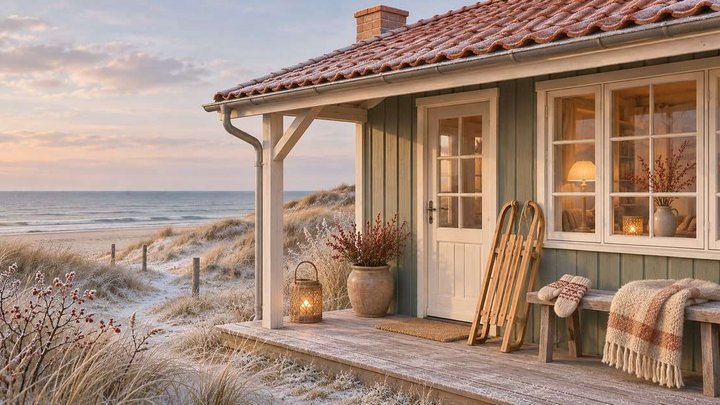
What can you do in Denmark in winter?
Explore Denmark in winter with museums, Christmas lights, coastal walks and dark skies. Choose one base for three or four days and plan for the weather.
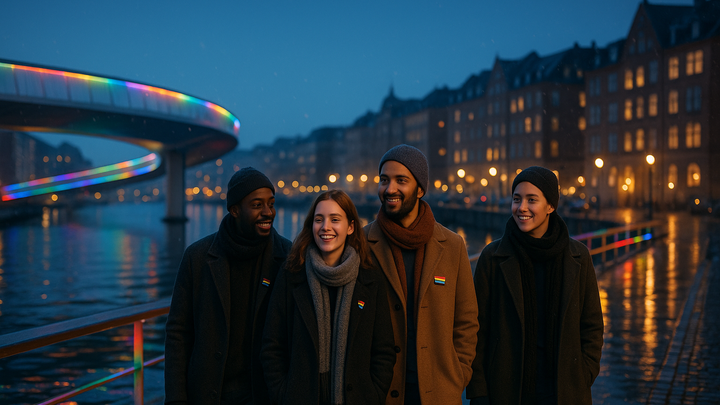
When is Copenhagen Winter Pride 2027, and how should I plan my visit?
Plan Copenhagen Winter Pride 2027 with dates, programme status and checks for tickets, language and access. Build two or three evenings and a budget.
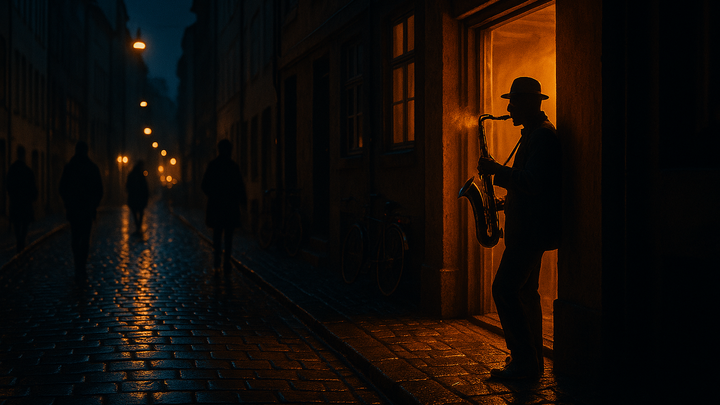
How do I find Vinterjazz 2027 concerts and plan what to spend?
Find Vinterjazz 2027 concerts with dates, free admission and ticket conditions. Plan two or three evenings, your return transport and a full group budget.
Where can you find the Copenhagen Light Festival 2027 map and dates?
Check Copenhagen Light Festival 2027 dates and the status of its map. Plan a short walk, warm break, photos, your own budget and the journey home.
0 comments
Log in to leave a comment