


⛴️ Ferries between Scandinavian countries: how to read fares and avoid overpaying
Many travellers think of a ferry as “an expensive boat” that mysteriously costs as much as half the flights. In Scandinavia, though, ferries often replace a plane, a train and one hotel night all at once. They link Denmark and Norway, Sweden and Finland, and let you come up from mainland Europe through Germany and Denmark with a car, campervan or bike – sometimes even with a dog. The problem is that booking pages look intimidating: base fare, vehicle surcharge, cabin add‑ons, seasonal fees, dynamic pricing. This article breaks down what is actually included in the price, which routes exist, and where the real savings hide.
🚢 The main ferry routes in Scandinavia
Within Scandinavia there are several “axes” served by larger ferries:
– Denmark–Norway: crossings from northern Jutland to southern and western Norway, plus a night route between the capitals.
– Sweden–Finland: classic night ferries between Stockholm and Finnish ports, often via islands and archipelagos.
– Denmark–Sweden / Norway–Sweden: shorter crossings and routes that are naturally combined with road trips.
– Domestic routes within each country: ferries to islands and across fjords that become part of a wider itinerary.
📊 Main ferry directions and formats
| Route | Duration | Day/night | Highlights |
|---|---|---|---|
| Denmark–Norway (Jutland–southern Norway) | From 2–3 up to 8–9 hours depending on ports. | Both daytime and evening/night sailings. | Convenient if you drive from mainland Europe to Norway. Often cheaper and easier than driving all the way round by road. |
| Copenhagen–Oslo (between capitals) | About 17–19 hours. | Classic overnight “evening–morning” sailing. | A mini‑cruise: cabins, restaurants, time on deck and one hotel night saved. |
| Stockholm–Finnish ports (including islands) | Roughly 10–16 hours depending on route. | Mostly night sailings. | Beautiful runs through archipelagos, popular as “cruise plus transport” between Sweden and Finland. |
| Short domestic routes in DK/NO/SE | From 20–30 minutes to 2–3 hours. | Usually frequent daytime sailings. | Essential road links: to islands, across fjords and into remote regions. |
When you look at the map, the key is to see a ferry not just as “expensive sea time”. It can cut a huge detour by road, simplify life with a car or campervan and give you memories that a one‑hour flight never will.
💶 What goes into a Scandinavian ferry fare
A Scandinavian ferry ticket is almost always made up of several layers:
– Passengers: base fare per adult and child, sometimes with family or child discounts.
– Vehicle: a supplement for car, trailer, motorbike or campervan, based on length and height.
– Cabin: compulsory on night crossings and optional on some daytime routes.
– Season: summer highs, holidays and weekends are more expensive than shoulder seasons and midweek dates.
– Flexibility: as with flights, fully flexible tickets are noticeably more expensive.
– Promotions and advance booking: the lowest lead‑in fares are often tied to specific dates and early sales.
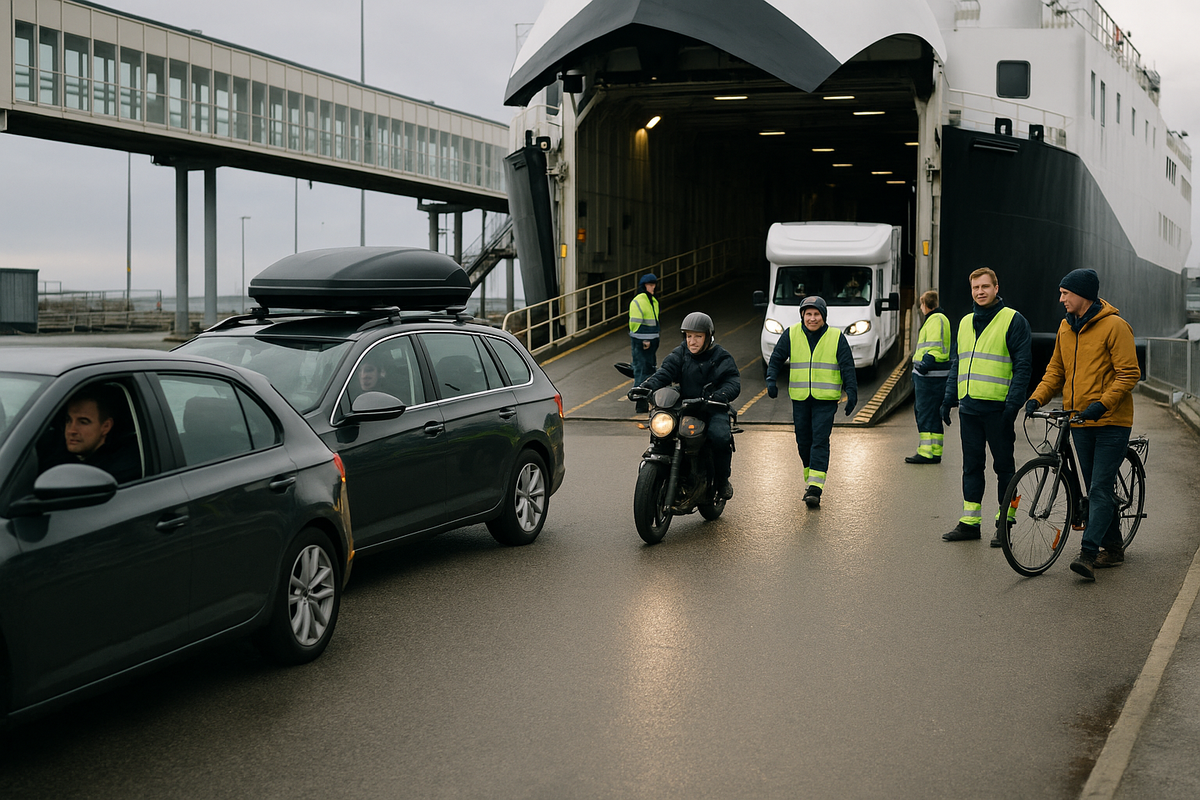
Many travellers make the same mistake: they only look at the “from” price on the first screen, do not click through to the cabin and vehicle stages, and are shocked by the final total. To compare routes honestly you always need to go as far as the last step before payment.
🧩 Interactive fare builder: what exactly are you paying for?
🧩 What makes up your ferry price?
Select your travel format to see the main fare components.
🚶♀️ Foot passenger
- You only pay for passengers plus any mandatory fees.
- On night sailings a cabin is added on top: the higher the class and the fewer people in it, the higher the price.
- On daytime routes you can often skip a cabin and stay in public areas, which reduces costs significantly.
- Good option if you combine ferries with trains and coaches and do not travel with a car.
🛌 Cabins: when to save and when not to
On night ferries a cabin is almost always compulsory, but cabin type has a big impact on price.
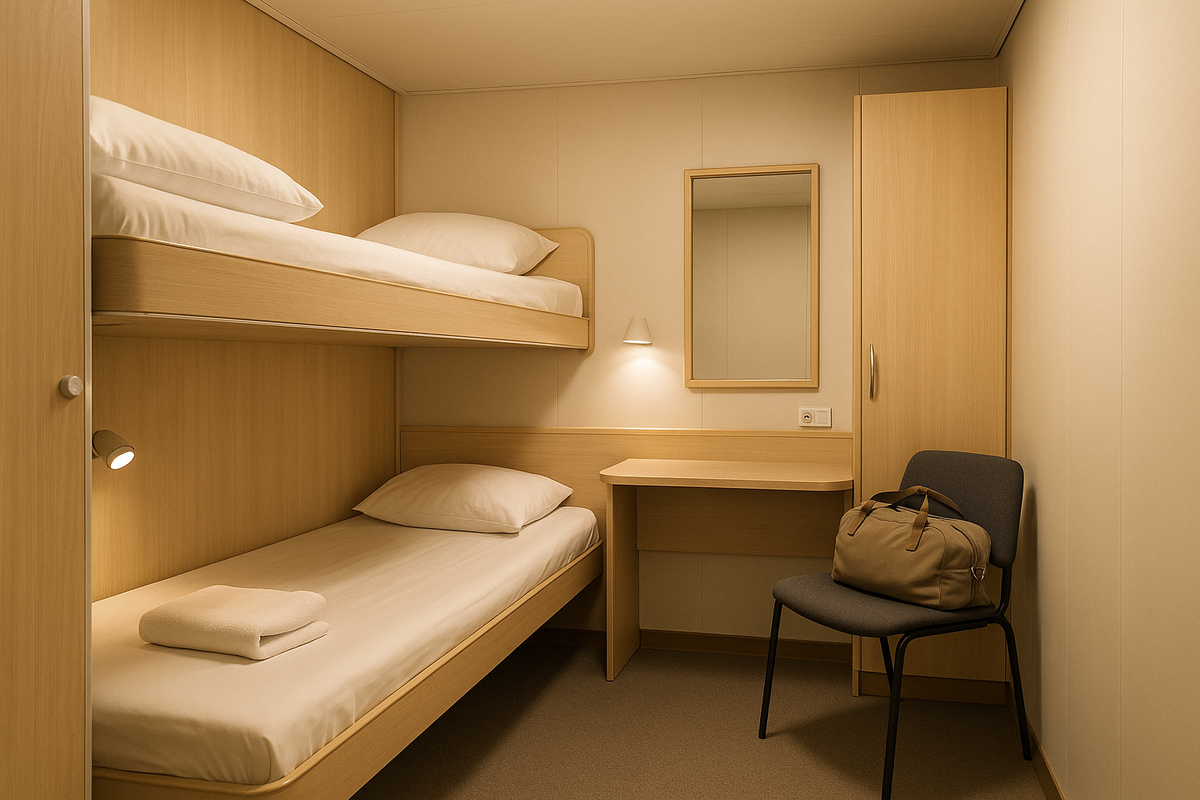
– Inside cabins without a window are usually substantially cheaper than outside cabins with the same number of berths. If you plan to sleep soon after departure, the lack of a view is rarely a problem.
– Cabins higher up and nearer the bow are often more expensive: that is partly status, partly demand. In rough weather many people actually feel better mid‑ship.
– Premium cabins with double beds and extra space are lovely, but can quickly blow the budget. Often it makes more sense to book a simpler cabin and spend the difference on good dinners or experiences ashore.
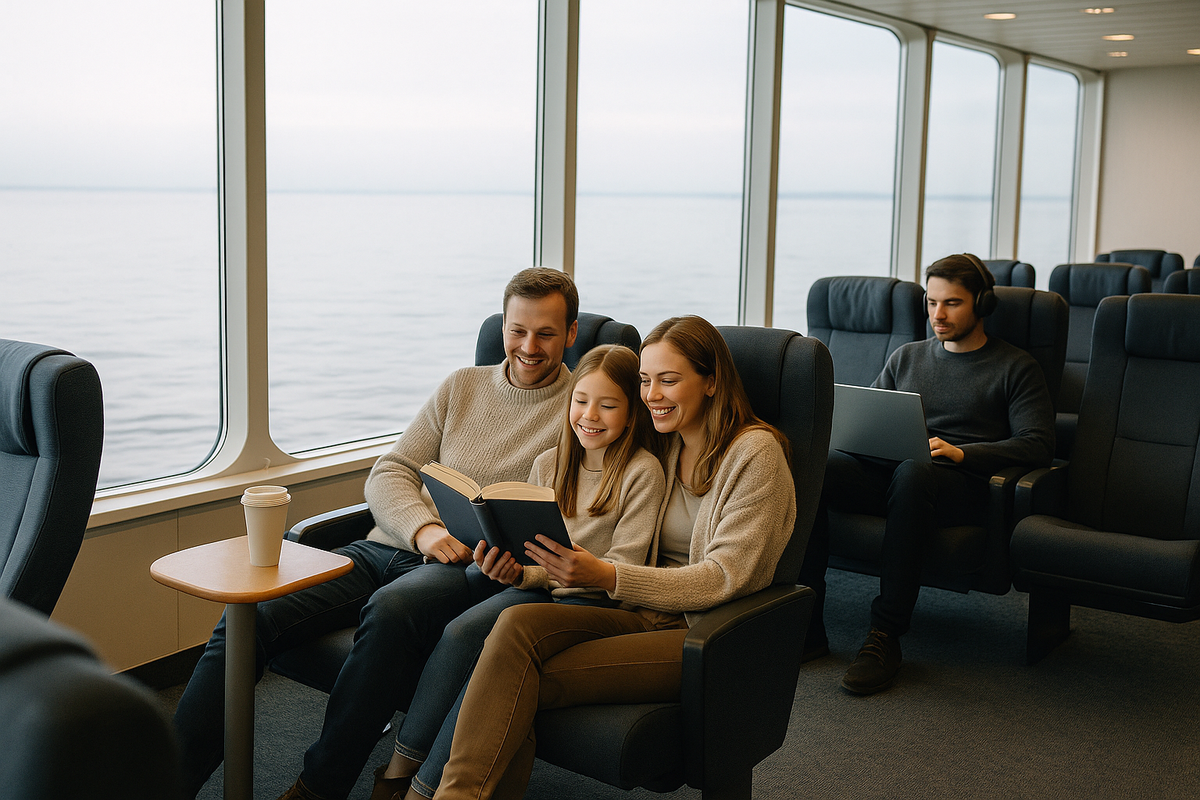
On daytime routes a cabin may be optional. For three to five hours many travellers are happy with lounges and public areas. On seven to nine hour daytime crossings a small cabin turns into a handy base: you can nap, change clothes, work in quiet or put children down for a proper rest.
⚖️ Comparison: night ferry vs flight plus hotel
⛴️ Night ferry
- Transport and “hotel” in one ticket: you sleep in a cabin and save one night in a city hotel.
- Often city‑to‑city: ports can be closer to the centre than airports, with simpler transfers.
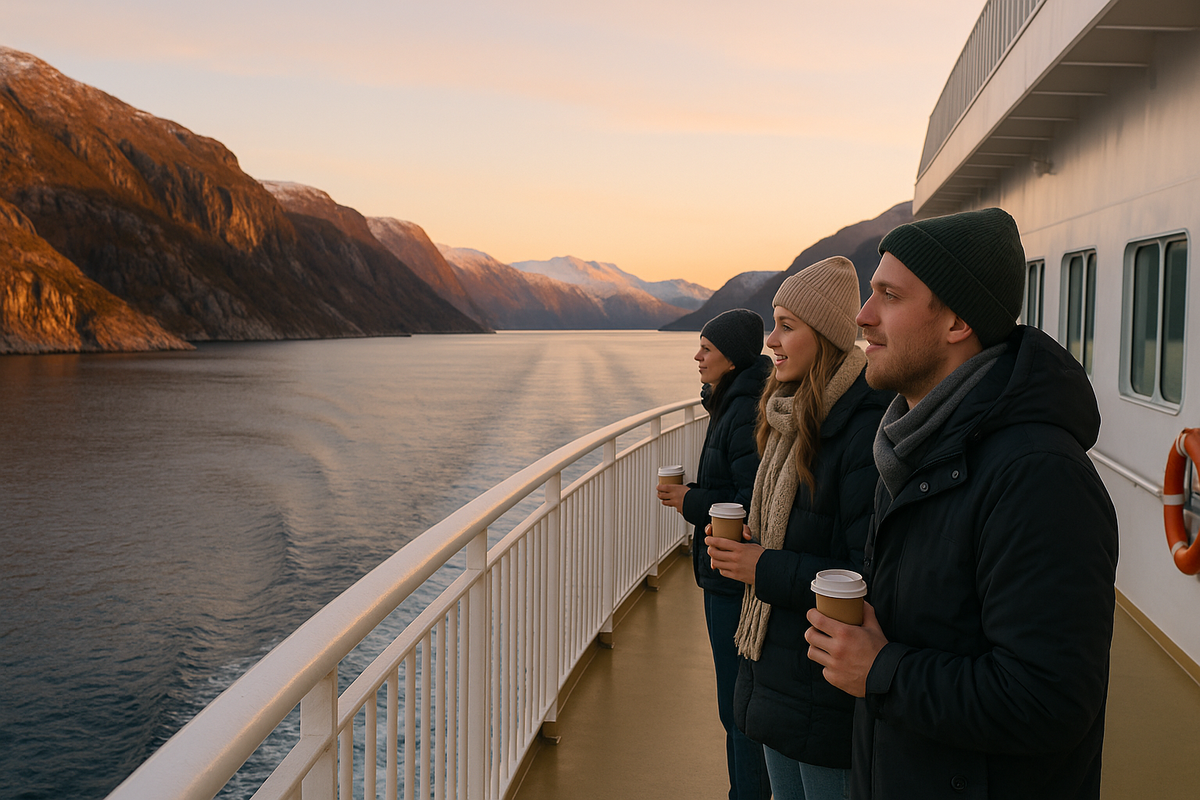
- Decks, restaurants, sometimes a sauna – the crossing becomes a mini‑event in your trip.
- Downside: easy to spend more on food and entertainment on board than planned.
✈️ Flight plus hotel
- Faster if you only count pure travel time, but transfers to and from airports reduce the advantage.
- More flexibility in departure times and easier to fit tight connections.
- You sleep in a normal hotel bed with stable temperature and noise levels.
- Downside: trips to airports, queues at security and baggage claim add stress and eat time.
In many real‑life cases the choice looks like this: if you travel without a vehicle and your priority is speed, a flight plus hotel can be the simplest option. If you travel with a car or camper, want a “sea” chapter in your Scandinavian trip and are happy to devote a night to the crossing, a ferry gives a very different experience and sometimes genuine savings.
💡 Practical tips: how not to overpay for a Scandinavian ferry
– 🗓️ Check prices on neighbouring dates. The same route can cost very different amounts depending on day of week and departure time.
– ⏰ Book early on popular routes. The best lead‑in fares for night sailings in high season are published well in advance.
– 🚗 Pay attention to vehicle length and height. Moving into the next fare band can add tens of euros to the ticket.
– 🛌 Pick a cabin to match your actual plans. If you are going straight to sleep, an inside cabin is often the sensible choice. If you expect to spend half the night in the bar, there is little point in paying for a suite.
– 🍽️ Decide in advance whether you want meals on board. Pre‑booked packages can be cheaper than paying à la carte, but not always – do the maths for your group.
– 🧾 Check change and cancellation rules. A slightly more expensive flexible fare can work out cheaper if your plans are not set in stone.
– ⏳ Avoid razor‑thin onward connections after ferries. A small delay on the crossing can easily destroy the savings on a cheaper flight or train.
🧾 Checklist: how to save on ferries without losing comfort
🧾 Checklist: how not to overpay for a ferry
- 📅Check neighbouring dates and day versus night sailings. Shifting by a day can save a noticeable amount.
- 👨👩👧Compare family packages against buying separate adult and child tickets.
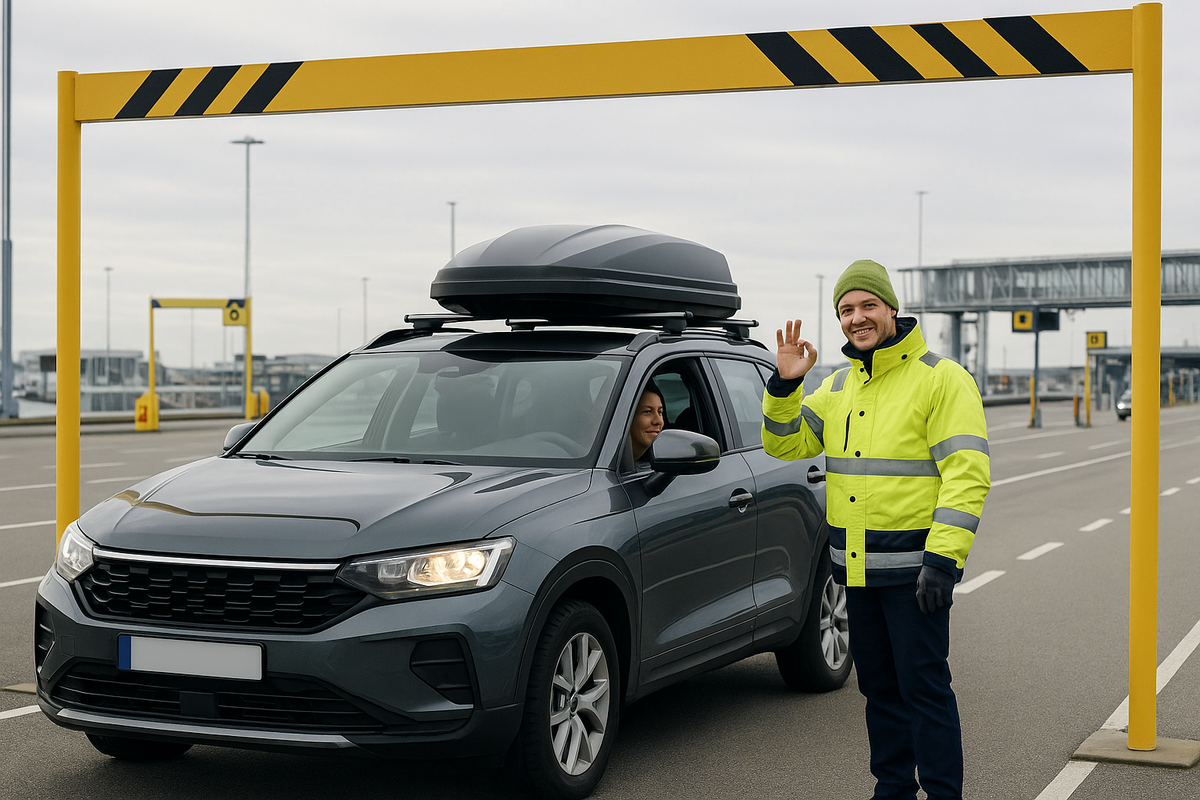
- 🚘Measure your car or campervan including racks and towbar to know which length band you fall into.
- 🛌On night routes avoid paying for a cabin class you will not really use. A simple cabin plus a good breakfast is often enough.
- 🍴Decide in advance whether on‑board meal packages are good value for your group or if a light snack from shore is enough.
- 🧳Read the small print on changes and refunds. A flexible ticket can be cheaper overall if plans change.
- ⏳Leave buffer time after the ferry. Missing a cheaper onward ticket because of a delay is more expensive than an extra hour of waiting.
❓FAQ
Because the initial “from” price is usually the very lowest passenger fare without a vehicle, cabin or seasonal surcharges. As you add travellers, a car or camper and select cabin and dates, each extra layer appears in the total. To compare routes fairly you need to look at the final price on the last booking step, not the first headline number.
On most night routes a cabin is mandatory for safety and comfort reasons and sleeping in lounges is not allowed. Where it is technically possible, you still need to think about how long the crossing is and how you cope without a bed. After eight to ten hours in a chair it is easy to lose a whole day recovering.
The further you travel with a car or camper, the more sense a ferry makes compared with a very long detour by road or with separate flights. Night routes between capitals and longer crossings from Denmark to Norway can be competitive once you factor in hotel nights and fuel. For foot passengers a ferry can be more expensive than a flight, but it offers a unique experience and saves one hotel.
Fares are divided into bands by vehicle size. If you exceed the limit for one band, even slightly, you move into the next one and pay more. That is why it is worth measuring your car including roof box, bikes and towbar, rather than guessing from memory.
If you enjoy spending time in your cabin, watching the sea and waking up to a view, an outside cabin that costs more can still feel worth it. If your plan is to have dinner, sleep and simply arrive rested, an inside cabin without a window is usually more rational and kinder to the budget.
On popular routes and in high season it usually pays to book in advance: cheaper fare buckets and the best cabins are sold first. Last‑minute offers do exist but are not something to rely on, especially if you are tied to specific dates, travel with a vehicle or have children with you.

0 comments
Log in to leave a comment