


🕯️ Winter in Scandinavia: stay in the city centre or rent a cabin in the countryside?
“Winter in Scandinavia” sounds like a postcard: soft light from street lamps, snow on rooftops, aurora in the sky, fire in the fireplace. Then you open the map and hit the classic dilemma: should you book a warm hotel in the city centre – or take the risk and move out to a house in the forest or by the sea?
On one side there is the pull of a fireplace, sauna, silence and “real hygge”. On the other – a short day, wet snow, wind from the sea and the fear of “being stuck in a forest with no bus and no shop”. This article looks at when, in winter, it makes more sense to stay in the centre of Copenhagen, Oslo, Stockholm or Helsinki – and when a cabin in the countryside really turns the trip into a fairy tale rather than a logistics puzzle.
One thing is crucial to understand: in winter Scandinavia works a bit differently. Daylight is shorter, transport is less frequent, some hiking routes are effectively “closed”, but in exchange you get other joys – saunas, winter markets, ice rinks, snowy forests and hot soup in the cabin after a walk.
🌗 What changes in winter: darkness, weather and daily rhythm
A winter day in Copenhagen, Oslo, Stockholm or Helsinki is not “eternal night”, but there really aren’t many bright hours. In December–January you may have around 6–7 hours of semi‑daylight; the rest is twilight or dark. In northern Norway and Finnish Lapland it is darker still, but you can have the aurora at night.
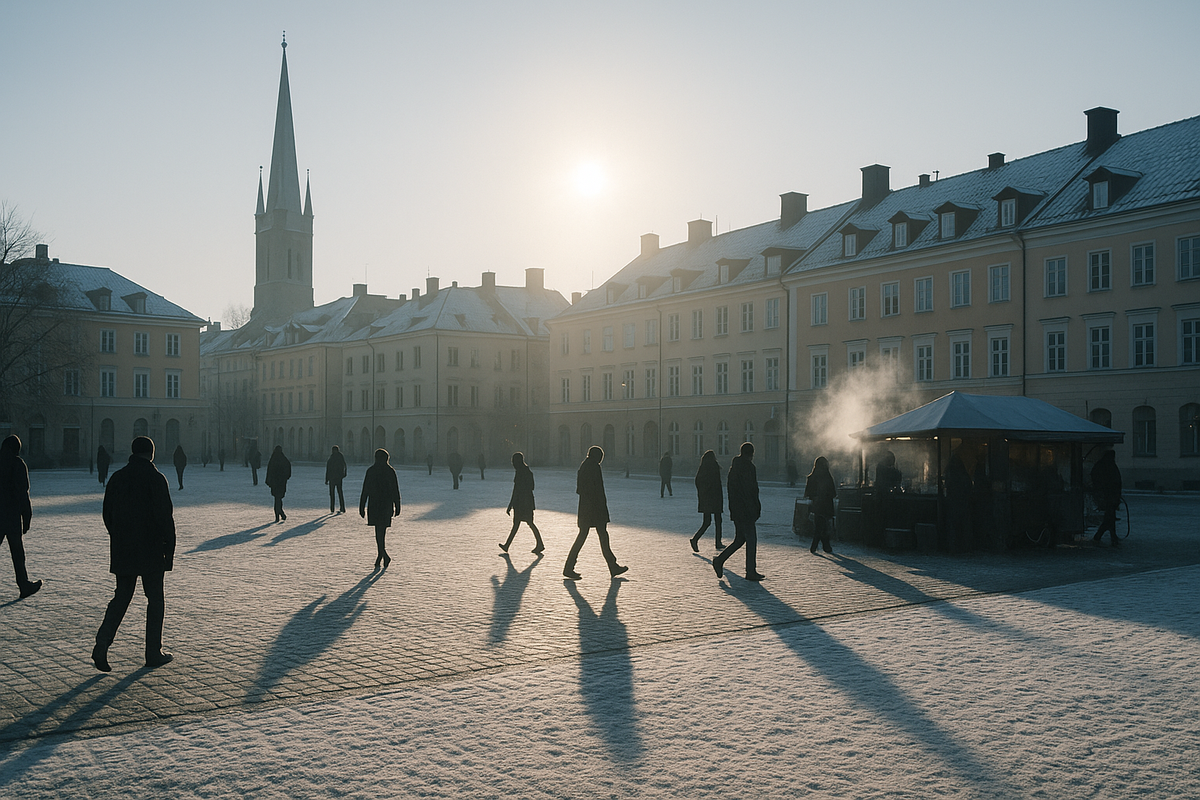
This directly affects your choice of base:
– if you stay in the centre, you can “catch” every hour of light – you step out of your hotel and you’re already among museums, waterfronts and cafés;
– if you stay in a cabin outside town, you have to factor in travel time and accept that driving unknown winter roads in the dark will be slower and may feel less comfortable.
Add to that the way the weather behaves:
– Denmark and southern Sweden in winter are often about “wind, damp and grey rain” rather than pure snowy postcards;
– Norwegian fjords and mountains can give you sunshine on snow, but with a higher risk of storms and closed sections of road;
– Finland and northern Sweden are closer to “proper winter” with stable snow, but also with frosts where a walk without the right clothing quickly turns into a challenge.
All of this needs to be lined up with your style of trip: short city break, a week in a cabin, or a combination.
📊 Winter city hotel vs countryside cabin
| Aspect | City hotel | Cabin in the countryside |
|---|---|---|
| Logistics |
|
|
| Weather and plans |
|
|
| Budget |
|
|
| Hygge level |
|
|
🏙️ Hotel in the city centre in winter: when it’s a lifesaver, not a compromise
A city hotel is the most logical choice if you:
– are travelling to Scandinavia in winter for the first time and aren’t sure how you’ll handle it;
– are planning a short break (a long weekend or 3–4 days) and want to see as much as possible without a car;
– enjoy museums, cafés, bars, architecture and Christmas lights;
– are wary of winter driving, don’t feel confident on snow/ice or simply don’t want to hire a car.
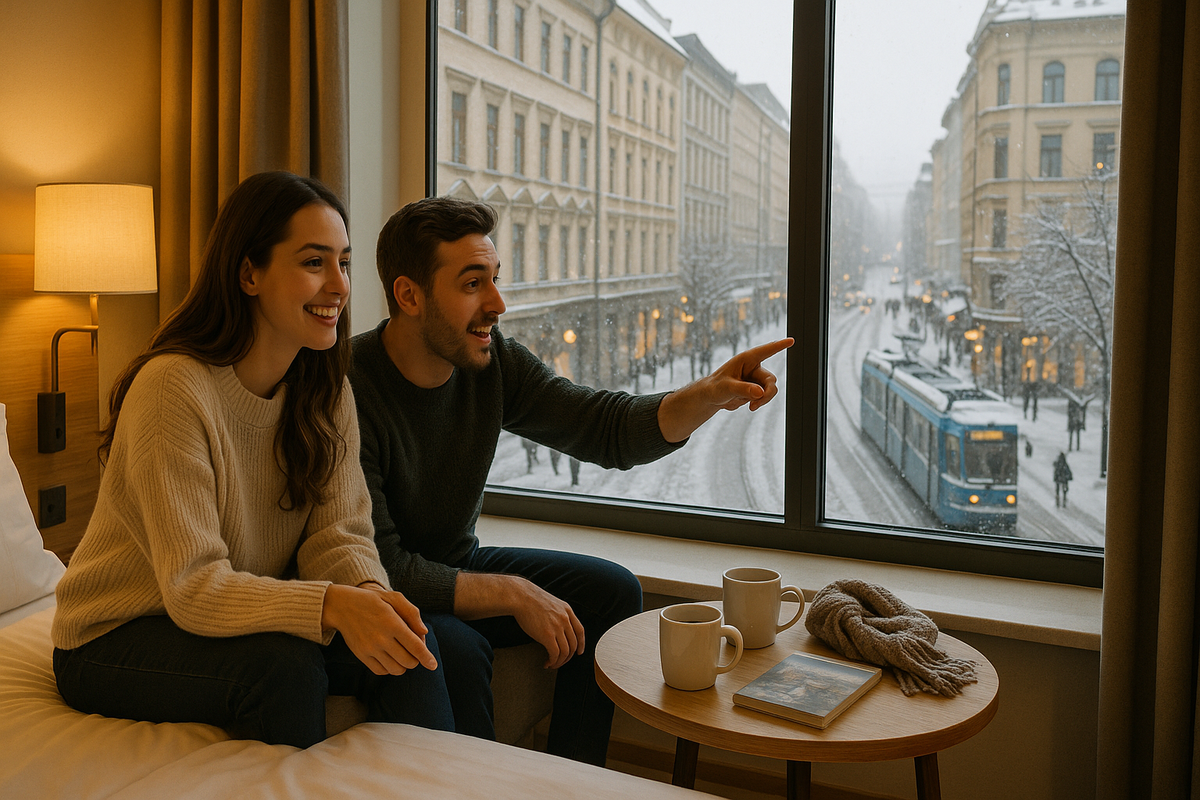
Pros of a central hotel in winter
– Minimal transfers. You land, catch the train/metro, step out in the centre and walk to your hotel. No extra “hour on a country road in the dark”.
– In bad weather you can always “dive into” the nearest museum, shopping centre, covered market or indoor pool. In a cabin you may just have forest and snow around you.
– Evening life is 5–10 minutes’ walk away: lights, bars, cafés, concerts. In a cabin, evenings are you, your kitchen, the fire and maybe a quiet walk under the stars.
– You don’t have to think about getting back in the dark. This matters especially in Oslo and Stockholm in winter, when it gets dark fast after about 16:00.
Cons of a city hotel
– You don’t really get that “my own place” feeling: you live in a room, not in a house. There is no fireplace to gather around.
– For a family with children, one room can feel cramped; apartments and cabins win here.
– Food is almost entirely “out”: hotel breakfast plus cafés, or just restaurants and fast food. The budget climbs.
Country‑specific notes
– In Denmark, Copenhagen is a very convenient winter base: metro, trains and buses work well; you can do easy day trips to nearby towns and castles and come back to your hotel at night.
– In Norway, Oslo or Bergen in winter are a good starting point if you want day cruises on fjords but don’t feel ready for mountain driving.
– In Sweden, winter Stockholm offers a mix of city and close‑by nature (islands, parks), and you can live in the centre and do everything by public transport.
– In Finland, a hotel in Helsinki or Tampere in winter is an ideal launchpad: saunas, restaurants, winter festivals, skating rinks – and nature that’s still easy to reach by train.
🧳 Is a city hotel your winter format?
🏙️ Winter in the city: is it your style?
Tick the boxes. If most answers are “yes”, a city‑centre hotel in winter is likely to suit you better than a remote cabin.
- I don’t enjoy driving on snow and ice, or I don’t want to hire a car in winter.
- Museums, cafés, bars and “city life” are just as important to me as nature.
- The trip is short (3–5 days) and I want to see a lot without complex logistics.
- The darkness makes me a bit uneasy and I want to spend evenings in bright, busy places.
- I’m happy to spend more on eating out so I don’t have to cook.
🏡 Cabin in the countryside: winter fairy tale with footnotes
A winter cabin is the image everyone has in mind: forest or dunes, snow, silence, fireplace, blanket, kettle on the stove, private sauna, kids building a snowman, adults reading and watching the flames. In Scandinavia this can be:
– a Danish sommerhus by the sea or in the forest;
– a Norwegian hytte in the mountains or by a fjord;
– a red wooden house in the Swedish forest;
– a Finnish cabin with sauna on a lake shore or in Lapland.
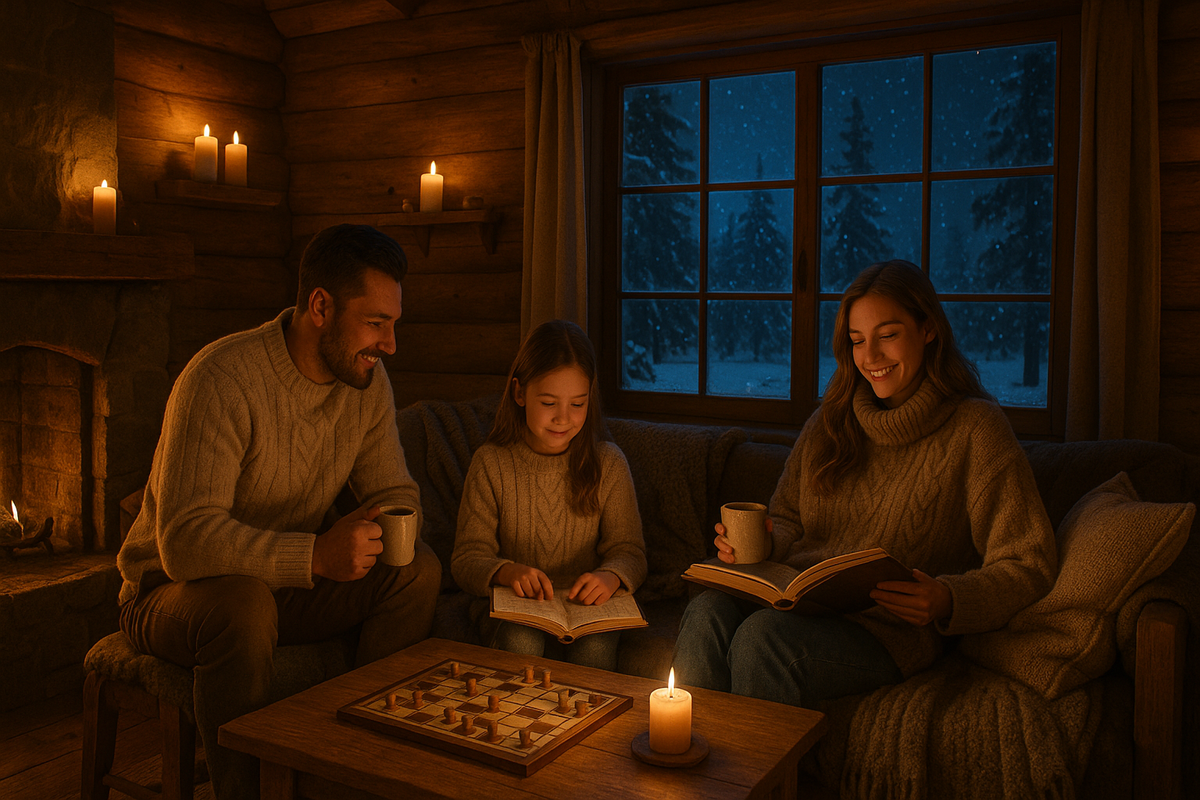
When a cabin is a great idea in winter
– You have at least 5–7 days and don’t want to sprint between cities.
– You enjoy cooking, slow evenings at home, playing games, sitting in the sauna.
– You’re fine with the idea that some days you might just “stay in the cabin” if the weather turns.
– You are ready to hire a car or have chosen a cabin within walking distance of a bus/rail stop and a shop.
Things to think through in advance
– Transport. In Denmark some sommerhus areas are half‑empty in winter and buses may run only a few times a day or only on weekdays. In Norway, mountain roads can be closed in heavy snow. In Finland and Sweden winter roads are generally well maintained, but you’ll still drive more slowly.
– Daylight. If the nearest town or trailhead is 40–60 minutes each way, you lose a big chunk of your daylight to travel. That’s fine if your main goal is “living in the cabin”, but not ideal if you want a packed sightseeing programme.
– Food and shops. In a cabin you will almost certainly cook for yourself. That means planning a big shop on the way in, checking where the nearest supermarket is and remembering that winter opening hours can be shorter, especially on weekends and holidays.
– Utilities. In many sommerhus and cabins, electricity and heating are billed by the metre. The more you use electric heaters and heat pumps, the bigger the bill. A fireplace helps reduce electric use, but you also need to know how to use it safely.
❄️ Mini‑cases by country
– “Winter in a sommerhus without a car” (Denmark). It sounds cosy, but if your cabin is far from a station and shop you may end up spending most of your time on an “island” with no easy way into town. For a first winter trip to Denmark without a car, it’s safer to combine: 2–3 nights in Copenhagen + 3–4 nights in a sommerhus that is clearly reachable by train and bus.
– “Cabin in Lapland vs hotel in Rovaniemi” (Finland). A cabin gives you forest, silence, private sauna, your own snowdrift and maybe the aurora right outside. A city hotel gives easy access to Santa parks, tours, restaurants and shops. The sweet spot is 2–3 nights in town + 3–4 nights in a cabin, rather than choosing one instead of the other.
🌲 Popular winter cabin regions
🇩🇰 Denmark: winter in a sommerhus
North Zealand and the milder stretches of the Jutland coast are good options if you want the sea but still need access to trains and shops.
In winter people tend to choose houses with a fireplace and sauna rather than simple “beach cottages”.
sommerhus • sea without crowds🇳🇴 Norway: hytte and fjell
Mountain areas and “gentle” fjords: cabins near cross‑country ski tracks, snowmobile routes and viewpoints.
A car is very useful, though roads are normally well maintained in winter.
hytte • fjords • skiing🇸🇪 Sweden: forest and red cabins
Småland, Dalarna and other forest regions: classic red houses in the snow, with trails, frozen lakes and small towns nearby.
forest • cabins • quiet🇫🇮 Finland: lakes and Lapland
In the lake districts you’ll find cabins with sauna right by the water, winter swimming holes, skis and snowshoes.
In Lapland you get cabins in the forest with trails, northern lights and winter activities close by.
sauna • snow • aurora🚍 Transport in winter: buses, trains and a short day
In winter public transport in Scandinavia keeps running, but:
– timetables can be thinner, especially at weekends and in rural areas;
– the last bus back to “your” village may leave while it’s still light, and you really don’t want to miss it;
– in northern regions heavy snow can mean delays and cancellations.
In the big cities (Copenhagen, Oslo, Stockholm, Helsinki) things are relatively simple: metro, trams, commuter trains and buses run frequently, and any changes are easy to check in an app.
Outside the cities you need to:
– check specifically the winter timetable, not just rely on what you saw in summer reviews;
– allow buffer time for connections (train + bus, bus + walking);
– accept that late at night, especially after 22:00–23:00, there may be few or no services.
🚦 Winter daylight planner
🧠 How to decide: city, cabin or a mix of both?
Simplified, the logic looks like this:
– Short break (3–4 days), first winter in Scandinavia, no car. A hotel or apartment in the city centre is the safest bet: you’re not dependent on roads or weather, you can change plans on the fly and there isn’t really enough time to “settle into” a cabin.
– A week or more, you love nature, are happy to cook and will have a car. Then a winter cabin is a great option, especially in Finland, Sweden and Norway, where cabin and sauna culture is strong.
– You want both city buzz and cabin hygge. The ideal compromise is “2–3 nights in the capital + 3–5 nights in a cabin”. For example: Copenhagen + a sommerhus in North Zealand, Oslo + a hytte by a fjord, Rovaniemi + a forest cabin.
❓FAQ
It can be, but only if you choose very carefully: walking distance to a bus or train stop, a supermarket not too far away and a winter timetable you’ve checked in advance. For a first trip – especially with children – it is usually safer to start with a city base or a mixed city + cabin setup.
Many travellers point to Finland and Sweden: lots of cabins by lakes and in forests, good winter maintenance of roads and stable “proper” winter conditions. Norway has fantastic cabins too, but the terrain is more demanding and there are more road‑ and weather‑related nuances. Denmark has a milder winter climate, so less “snow fairy tale”, but it is easier to combine a house with city days.
In the cities, central streets and pavements are usually cleared and gritted quickly, so it’s easier to stay on your feet and you don’t have to think about parking and access roads. In a cabin you may be shovelling snow yourself, and the lane up to the house can be slippery. If you’re nervous about ice, a city base gives a bit more peace of mind
It depends on your group. For a couple, a hotel often works out cheaper: once you factor in heating and a hire car, a cabin can cost more. For a family of 3–5 people, a cabin starts to win: nightly cost is divided, you have a kitchen and can save on food, whereas two hotel rooms in winter can be very expensive.
You will, but you need to be realistic about daylight. If you spend 2 hours a day on the return journey and have only 6–7 hours of usable light, you’re left with maybe 4–5 hours “on the ground”. That’s fine if you’re not trying to tick every museum. If you want an intense city programme, it’s better to base yourself closer in.
The best solution is usually a combination. A forest cabin gives you quiet, sky, sauna and the feeling of a private base. A city hotel gives easy access to Santa attractions, tour pickups, restaurants and shops. A common pattern is 1–2 nights in town to settle in and do the practical stuff, then 3–4 nights in a cabin once you’ve found your feet.
This is where a cabin should shine: fireplace, sauna, books, board games, long dinners, short walks in the snow around the house. It’s worth planning not only routes but also a “home programme”: pack games and films, think of a few dishes that are enjoyable to cook together and that make it feel like a cosy, intentional day rather than a failure.
For a short trip (3–4 days) a hotel or apartment in the city is easier: fewer logistics, everything close by, plenty of backup indoor plans for bad weather. For a week or more, many families prefer a cabin: separate bedrooms, play space, the option to go outside right from the front door and less worry about noise for neighbours. A mixed “city + cabin” trip often turns out best for everyone.

0 comments
Log in to leave a comment