


🚉 Trains, planes or ferries: the best way to travel within Scandinavia
Imagine the classic Scandinavian picture: you fly into Copenhagen, want to see Norway’s fjords, drop by Stockholm and, if possible, sail over to Helsinki. On the map everything looks close, but in reality the questions start: fly or take the train, spend a night on a ferry or avoid 16–18 hours at sea, choose “more expensive but faster” or “slower but calmer”.
This article looks at how to choose between train, plane and ferry on key routes between Denmark, Norway, Sweden and Finland, how time, price, comfort and season change the equation, and when night trains and ferries really save money and energy – and when they simply eat into your precious holiday time.
🧭 How to choose transport within Scandinavia
Even before you open booking websites, it helps to answer a few honest questions:
– do you care more about saving time or saving money;
– do you enjoy the journey itself (views from the train, an evening on deck) or is transport just a way to “teleport”;
– are you happy with early departures, night trains/ferries and living by a timetable;
– how do you react to delays: calmly, or does every connection feel stressful.
Below is a short checklist to help you see what type of traveller you are, and which mode of transport will usually sit in your comfort zone.
🧾 Checklist: which transport suits you?
Tick the points that apply to you. It will be easier to see when to choose plane, train or ferry.
- I care more about saving time than money – I want as many hours “on the ground” as possible.
- I am fine with night flights/trains and can sleep reasonably well while travelling.
- I enjoy the journey itself: views from the train window, time on deck, slow travel.
- I get stressed about connections and prefer direct routes, even if they cost a bit more.
- I am ready to sacrifice some comfort (very early starts, night in a seat) if the saving is substantial.
- I am travelling in winter and I am worried about delays due to storms and snow.
Next we will look at the specific routes where the choice between train, plane and ferry comes up most often, and see how journey time, comfort and budget change.
🚆✈️⛴️ Key routes: what is faster, what is cheaper, what is more pleasant
For most travellers within Scandinavia everything revolves around four capital–to–capital links: Copenhagen–Oslo, Oslo–Stockholm, Stockholm–Helsinki and Copenhagen–Stockholm.
Below is a simplified table with indicative journey times and the general character of each route. Exact prices and timetables change, but the overall logic stays roughly the same.
| Route | Train | Plane | Ferry |
|---|---|---|---|
| Copenhagen–Oslo | Around 8–9 hours, usually with 1–2 changes.A full day on the move, decent scenery, but no night train. | About 1 hr 10–20 min in the air, roughly 4–5 hours door‑to‑door.Many daily departures. | Roughly 17–19 hours, an overnight ferry centre‑to‑centre.Mini‑cruise and hotel night in one. |
| Oslo–Stockholm | About 5–6 hours on a direct train.Comfortable, scenic and without changes. | Around 1 hour in the air, roughly 3–4 hours including airports.Good option with a tight timetable. | No direct ferry.The sea is not used as the main axis on this leg. |
| Stockholm–Helsinki | No passenger trains – there is the Baltic Sea in between.A land route would require a huge detour. | About 1 hour in the air, around 3–4 hours total.The fastest way. | Roughly 16–18 hours, usually an overnight sailing.Classic “cruise ferry” with cabin and entertainment. |
| Copenhagen–Stockholm | Around 5–6 hours, often without changes.Very handy: centre‑to‑centre, many departures. | About 1 hr 10–15 min in the air, roughly 3–4 hours including airports.Plenty of daily flights. | No direct ferry.You can combine train + ferry via other ports, but then it is its own trip. |
🛳️ Copenhagen–Oslo: mini‑cruise ferry, quick flight or long train
On the Copenhagen–Oslo route you realistically have three options: plane, train with changes and an overnight ferry.
The plane is the obvious choice if you are counting hours. The flight itself takes just over an hour, but you need to allow for getting to the airport, security and baggage claim: in total plan on 4–5 hours hotel‑to‑hotel. Ticket prices vary a lot depending on date and time of departure.
The train is for those who like watching the world through the window and dislike airports. The journey takes around 8–9 hours, almost always with changes in Sweden. It is not a night train: you spend a whole day travelling and still pay for a hotel at your destination. This format works well if you have spare days and prefer slow travel to “ticking boxes”.
The ferry is a world of its own. Departure is usually in the evening, arrival in the morning: you spend the night in a cabin, save one hotel night and get a mini‑cruise with views of the Kattegat and a particularly beautiful approach into the Oslofjord. The journey takes about 17–19 hours, but psychologically it often feels easier: you have dinner, walk on deck, go to bed, and wake up already sailing into the fjord.
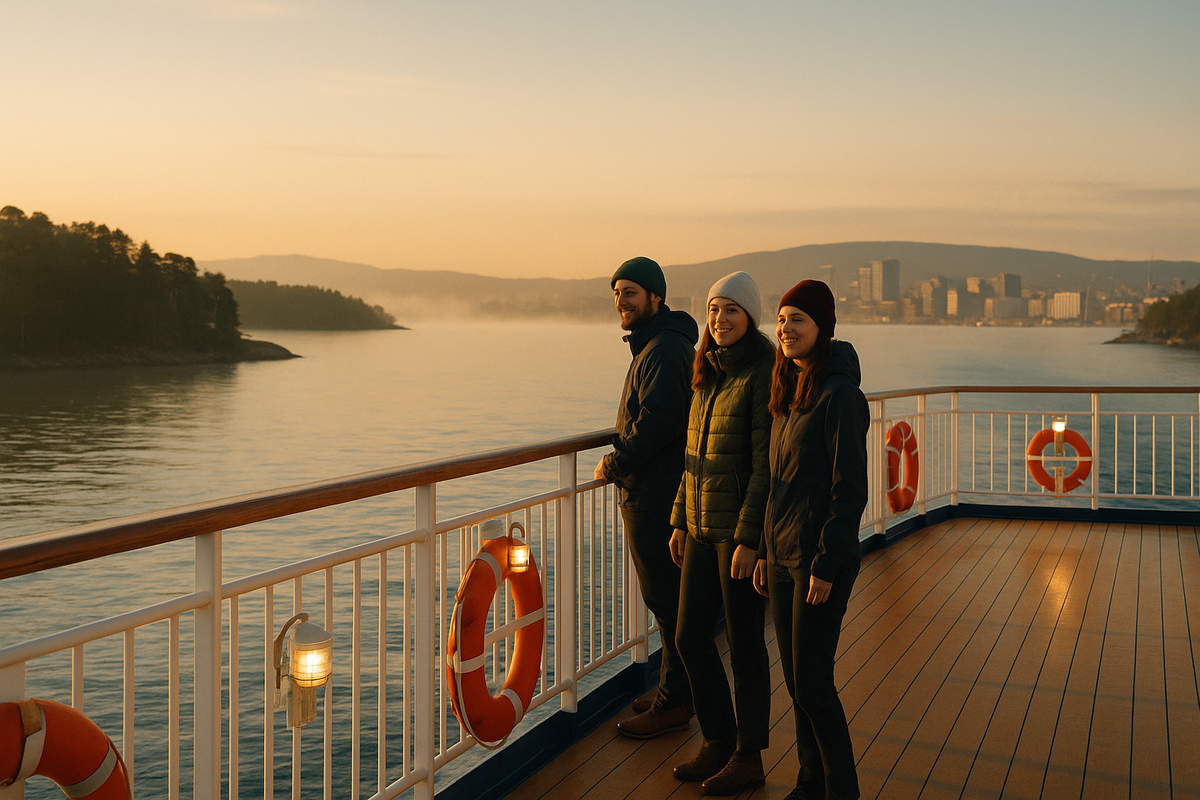
When each option wins:
– if you are short on days and have a packed programme – take the plane;
– if you love travelling as a process and want endless views – take the day train;
– if you fancy a memorable experience and don’t mind a night at sea – the ferry is perfect, especially in summer and shoulder seasons.
🚄 Oslo–Stockholm: a textbook case where the train rivals the plane
The railway between Oslo and Stockholm is one of those routes where the train comes close to the plane in total travel time and wins in comfort. Fast trains take around 5–6 hours, with no changes, decent leg room, sockets and views of lakes and forests.
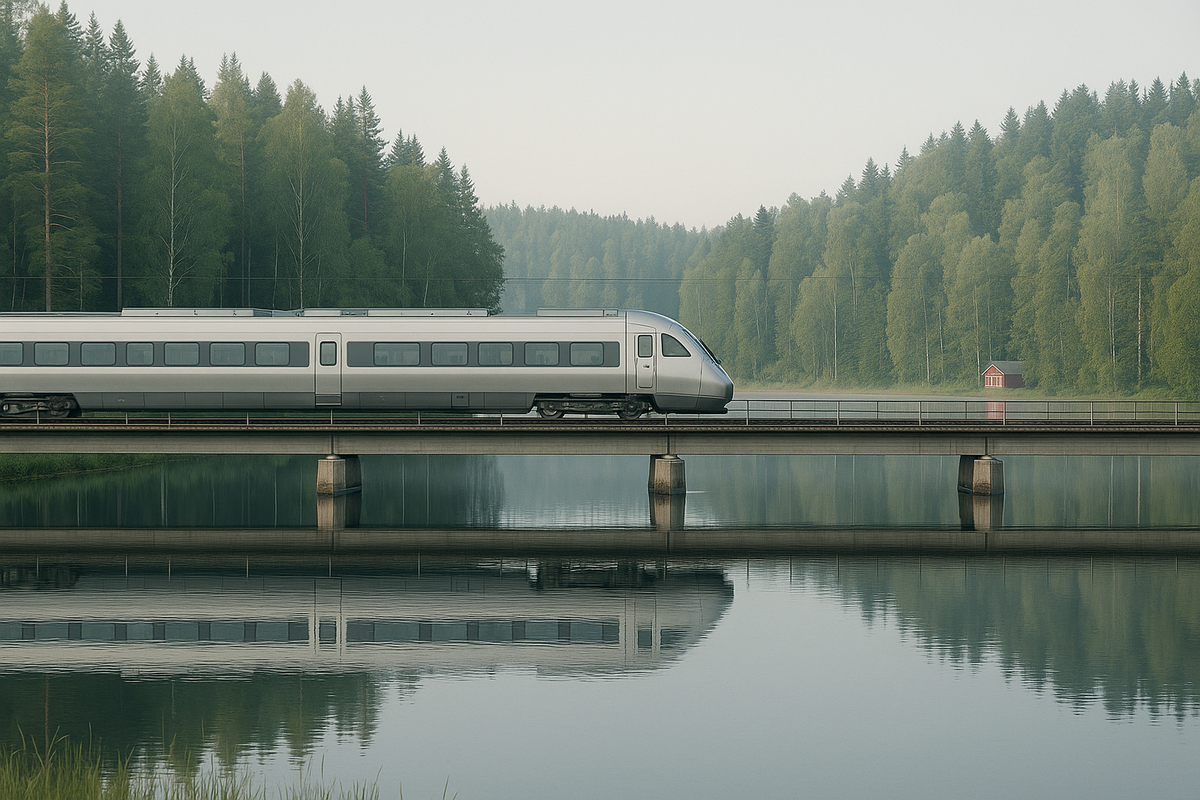
The plane itself flies for about an hour, but with journeys to and from airports, security and waiting around, you are again at roughly 3–4 hours door‑to‑door. Add in baggage fees and the cost of getting to airports that can be some way out of town.
The train is a clear winner if you value a calm experience:
– you board in the centre of one city and step off in the centre of the other;
– there is no separate checked baggage charge for normal luggage;
– you can work, read or stare out of the window instead of running between terminals.
The plane wins when you are very tight on time (for example, you have only 2–3 days in Stockholm and do not want to spend half a day on the train) and have found a cheap, convenient direct flight.
⛴️ Stockholm–Helsinki: classic “night ferry versus plane”
Between Stockholm and Helsinki you effectively have two options: a quick flight and an overnight ferry.
The plane is the most pragmatic choice: about an hour in the air and around 3–4 hours centre‑to‑centre including airports. For those who want maximum time ashore, this is the logical option.
The night ferry is part of the journey in its own right. It takes about 16–18 hours, most sailings leave Stockholm in the evening, you sleep in a cabin and arrive in Helsinki (or vice versa) in the morning. On board there are restaurants, bars, sometimes a sauna and simple entertainment. Many travellers see this segment not just as transport, but as a “mini‑cruise between two capitals”.
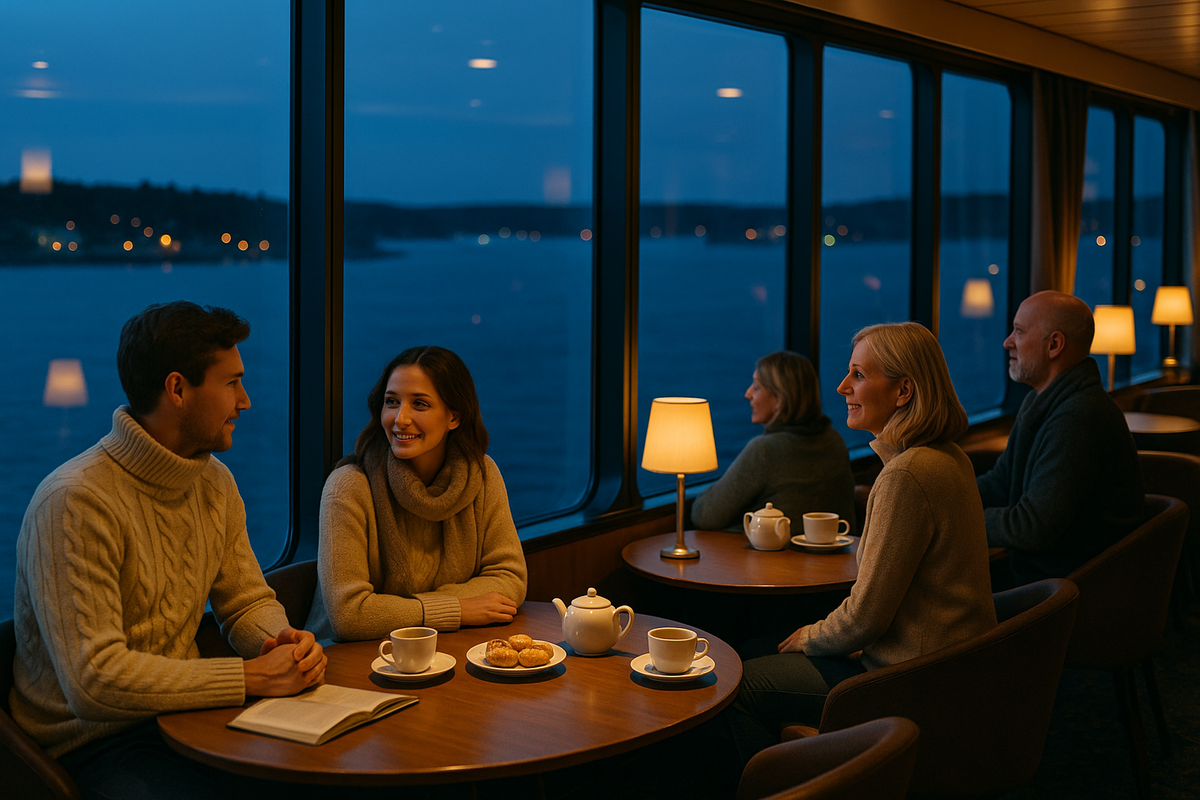
A rational way to choose:
– if your holiday is short and your programme dense, flying makes more sense;
– if you want the “Swedish‑Finnish ferry” experience, are happy to spend a day and like the idea of a night in a cabin instead of a hotel, go for the ferry, especially in summer or during the white‑night season.
🚄🚀 Copenhagen–Stockholm: a near‑perfect case for the train
Here the train often beats the plane once you look at the whole picture. Fast trains cover the distance in about 5–6 hours, many departures are direct and both departure and arrival are from the main central stations. In time this is only slightly longer than “plane + airport journeys”, but feels much more civilised:
– you do not have to arrive two hours early;
– security is far lighter‑touch than at airports;
– you arrive right in the city centre.
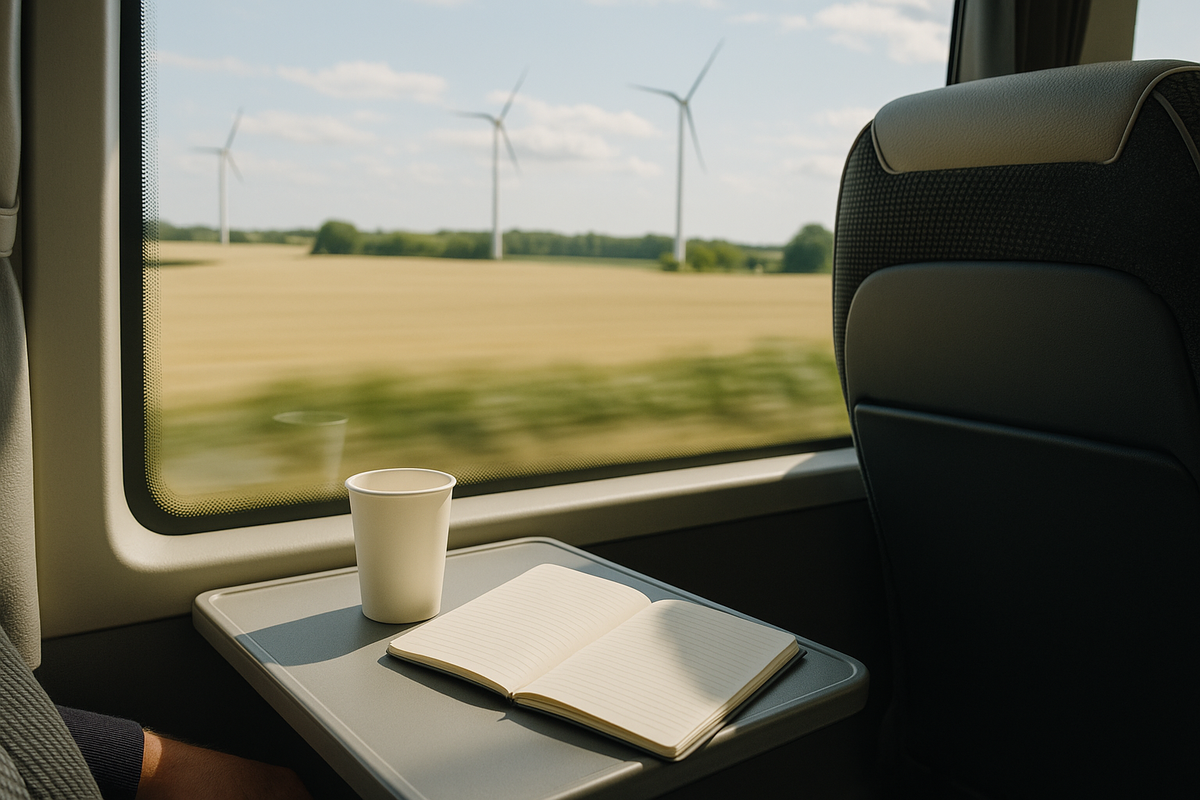
The plane itself takes just over an hour, but if you add trips to Kastrup and Arlanda, check‑in and baggage claim, the time saving is not dramatic. Many travellers pick the train here specifically for the feeling that the journey continues, rather than breaking the day into airport fragments.
🕰️ Night trains and ferries: when are they really worth it?
Night trains and ferries in Scandinavia are loved for two things:
– they let you cover a long distance “while you sleep”;
– they save you one hotel night.
But there are important nuances:
– decent cabins and proper sleeper berths need to be booked well in advance, especially in summer and over holidays;
– on the night before a long hike or an important meeting, many people prefer not to risk it – sleep on board is rarely as good as in a proper bed;
– timetables are rigid: if you miss your evening sailing, the next one may only be the following day.
Night ferries are particularly logical on routes where the sea truly lies between cities (Stockholm–Helsinki), or when the crossing genuinely replaces a hotel and rewards you with a beautiful fjord entrance (Copenhagen–Oslo). On land routes between Scandinavian capitals there are fewer night trains, and it is often easier to plan comfortable day journeys instead.
❄️ Winter, storms and time buffers
In winter weather starts working against tight connections. Storms on the Baltic and in the straits can delay ferries or change schedules; snow and ice affect railways and airports. Scandinavian infrastructure is well adapted to cold and snow, but it isn’t immune to disruptions and longer delays.
Basic guidelines:
– avoid planning “ferry → plane” or “train → plane” connections with less than 3–4 hours’ buffer in winter;
– try not to schedule crucial activities (expensive tours, one‑off excursions) immediately after an overnight journey;
– build at least one “elastic” day into a long winter itinerary in case something slips.

| Connection | Minimum buffer in summer | Recommended buffer in winter |
|---|---|---|
| Plane → train | 2 hoursIf flights are on time and there is just one station to reach. | 3–4 hoursWith extra time for delays and baggage. |
| Plane → ferry | 3 hoursYou need to arrive before boarding starts. | 4–5 hoursBetter to get to the port early and stay relaxed. |
| Train → plane | 2–2.5 hoursIf timetables are stable. | 3 hours or moreEspecially if it is the last flight of the day. |
| Ferry → train/plane | 3 hoursThe ferry can arrive slightly late. | 4–6 hoursStorms and ice increase the risk of delays. |
🔍 Short decision guide by travel style
– If this is your first big Scandinavian trip and you want to “see it all” in 7–10 days, it often makes sense to mix modes: take a plane on one leg, a train on another and add one ferry crossing as an experience.
– If you travel slowly, love railways and hate airports, put trains between capitals at the centre of your plan and treat ferries as an extension of the journey, not just transport.
– If you are watching your budget, look not only at ticket prices but also at how many hotel nights you save with overnight journeys, and how many days are “eaten up” by long daytime flights with awkward connections.
❓FAQ
For a short holiday the plane usually wins: it saves a whole day. If you look only at price, with early booking the night ferry can compete with a “flight + hotel” combination, because you combine transport and a night’s accommodation. The train is a compromise for those who do not like airports and are not in a hurry, but it is rarely both the cheapest and the fastest at the same time.
If you value time and have a tight schedule, flying is more logical: within half a day you are already walking around the city. The night ferry makes sense when the crossing itself is part of the dream trip: you are happy to spend a full day, want to see the archipelagos, sit on deck in the evening and do not mind swapping a classic hotel night for a cabin.
The system copes well with snow and cold, but breakdowns, ice and storms do still cause disruption. In winter it is safer to plan “train → plane” and “train → ferry” connections with at least 3 hours of buffer. If it is the last flight of the day or an expensive ferry, add another hour or so just in case.
Most of the time it does save one hotel night: you pay for the cabin but not for a room in the city. However, if you book a top‑end cabin with a window and have dinner in the à‑la‑carte restaurant, the total can end up similar to “flight + hotel”. It is worth calculating the full cost of 24 hours of travel, not just comparing ticket prices.
If you are not under time pressure, the train is very attractive: you board in the centre, step off in the centre 5–6 hours later, without airport security queues, with decent space and a changing landscape outside the window. The plane makes sense when you have found a good fare on a direct flight, are only going for a couple of days and want to minimise time spent travelling.
In total journey time, train and plane often end up surprisingly close: about 5–6 hours on the train versus around 3–4 hours including airports. In many cases the deciding factor is not speed but style: if you dislike airports and want to see the countryside, pick the train; if you care about airline points or a specific early/late departure suits your onward plans, choose the plane.
Within each country – yes: trains are excellent in Norway, Sweden and Finland, and Denmark is well linked to southern Sweden. But between Sweden and Finland the sea still has to be crossed by plane or ferry. If you are set on a completely “flight‑free” trip, you will need extra days and some careful planning of Baltic crossings.
On the most popular routes and for night departures, it is best to book 1–2 months ahead, especially for summer dates and major holidays. The closer you get to departure, the fewer cheap fares are left, and for peak weekend or holiday sailings there may simply be no cabins or sleepers available. For spontaneous trips it is easier to rely on frequent daytime trains or on flights with many daily departures.

0 comments
Log in to leave a comment