


🌌 Northern lights or white nights: how to choose your Scandinavian season
In northern Scandinavia you are essentially choosing between two completely different worlds. In winter you get dark skies, green and violet ribbons of aurora, crisp snow and minus temperatures. In summer you get “evening that never ends”, soft sun at midnight, endless sunsets and the luxury of hiking in the mountains at 2 a.m. without a head torch.
Many travellers try to “cheat”: arrive once and catch both aurora and white nights. In reality that almost never works. The seasons overlap only slightly and need different routes, clothing and budgets. It makes far more sense to be honest with yourself: decide what matters more — chasing aurora or chasing long daylight — and build the trip around that instead of trying to sit on two chairs at once.
🌗 What you are really choosing: darkness or light
The northern lights and white nights are not just two “effects”, but two completely different ways of living on the road.
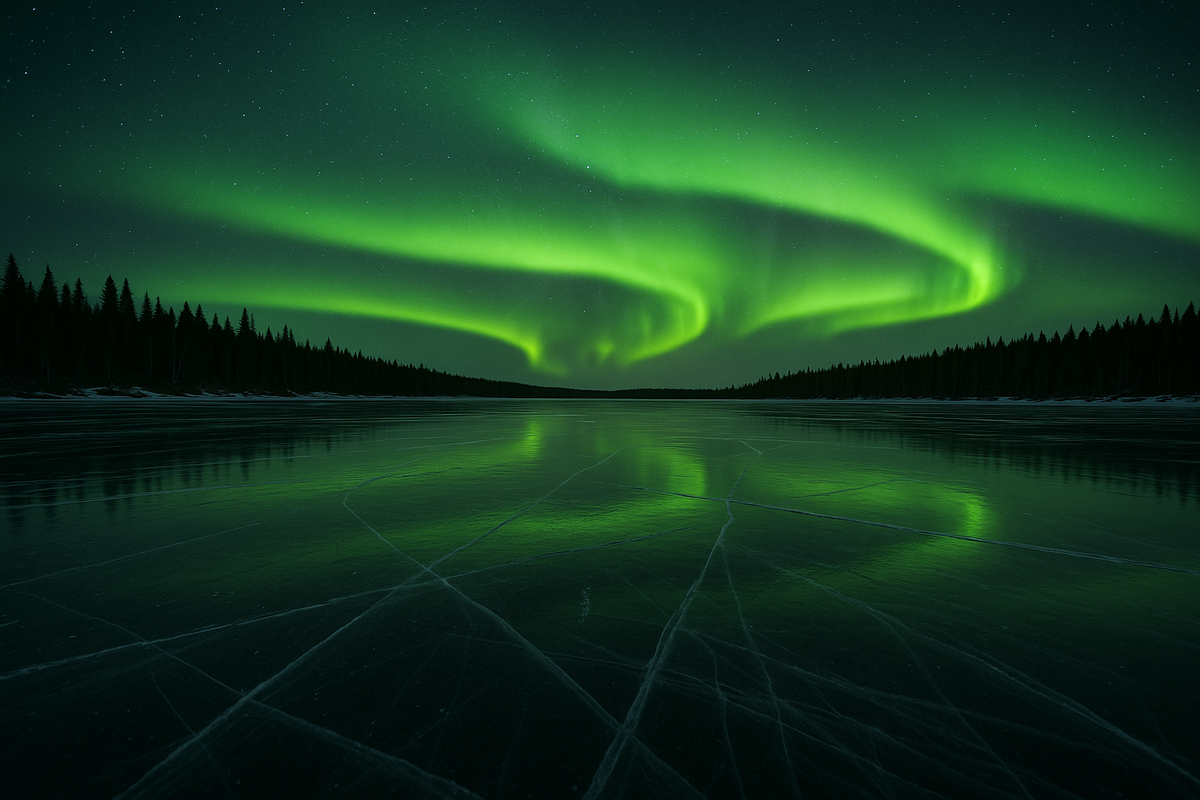
Aurora means:
- dark sky, early sunset, long evenings;
- cold, snow, ice, mandatory warm layers;
- focus on night‑time trips, tours and cloud forecasts;
- a base in the far north: Lapland, Tromsø, Lofoten, Abisko and similar.
White nights mean:
- very long daylight, often 18–24 hours of usable light;
- mild weather, hiking, kayaking, road trips on ice‑free roads;
- life outside until late at night, festivals and a summer atmosphere;
- a wider choice of regions — from capitals to northern archipelagos.
🌗 Comparing formats: northern lights vs white nights
| Criteria | Northern lights | White nights |
|---|---|---|
| Season |
|
|
| Geography |
|
|
| Weather |
|
|
| Activities |
|
|
| Best for |
|
|
📅 Season calendar: when to go and where
In broad strokes:
- September–October: start of aurora season, still relatively mild, lots of cloud but beautiful autumn colours.
- November–February: the darkest, “deep winter” period, high aurora chances, but cold and often overcast, especially by the coast.
- March–early April: still a strong window for aurora, but with longer days and softer weather — a favourite compromise for many travellers.
- Late May–July: white nights and midnight sun, up to 24 hours of daylight north of the Arctic Circle.
- August: no longer white nights, but still soft summer — great for hiking, poor for aurora (the night is too bright).
By country and region, the pattern looks like this.
Norway:
- North (Tromsø, Lofoten, Alta, Senja): aurora from late September to early April, white nights and midnight sun roughly from late May to mid‑July.
- Central Norway and the fjord region (Ålesund, Geiranger, Bergen): aurora is possible but rarer and needs clear skies; white nights feel more like very long sunsets in June.
Sweden:
- Lapland (Kiruna, Abisko): one of the most stable areas in terms of astronomy: many clear nights, aurora from September to April, almost constant day in summer.
- Stockholm and the south: aurora is a rare fluke; white nights show up as very short, pale nights in June, with late sunset and very early sunrise.
Finland:
- Lapland (Rovaniemi, Levi, Ivalo, Inari): classic “aurora hunting” from late September to March, polar night around December, midnight sun in summer.
- Helsinki and the south: white nights and soft evenings in June; aurora is highly unlikely because of latitude and light pollution.
📅 Insert: season calendar by region
| Region | Northern Lights | White Nights / Midnight Sun |
|---|---|---|
| Tromsø, Lofoten Islands, Northern Norway |
|
|
| Kiruna, Abisko (Swedish Lapland) |
|
|
| Finnish Lapland (Rovaniemi, Levi, Inari) |
|
|
| Capitals: Oslo, Stockholm, Helsinki |
|
|
| Copenhagen and Denmark in general |
|
|
📍 Bases for aurora hunting: where to find “green skies”
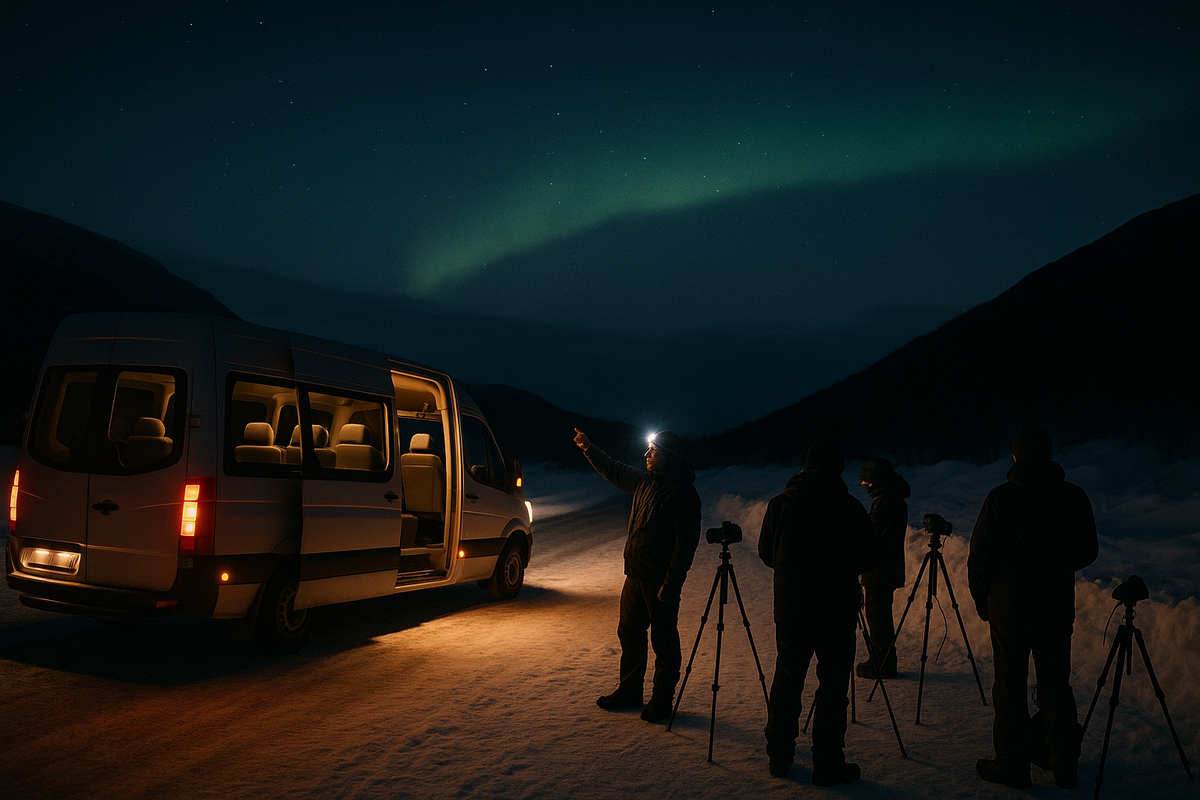
If aurora is your main goal, look straight at northern Lapland and northern Norway.
Norway:
- Tromsø is the classic hub: solid infrastructure, many tours, an airport, and the chance to combine sea and mountains. Auroras are often visible in the surrounding areas; tours drive out specifically to escape clouds and city lights.
- The Lofoten Islands offer dramatic landscapes, mountains dropping into fjords and photogenic fishing villages. It is beautiful in any weather, but cloudier than inland regions; often the aurora frames the jagged peaks on night photos.
- Alta, Senja and other northern areas offer a quieter experience: fewer people, more edges‑of‑the‑world feeling, but trickier logistics.
Sweden:
- Abisko and the surrounding valley are famous for stable weather. Thanks to local geography, a “blue hole” of clearer sky often forms above the valley even when the coast is cloudy. It’s one of the best choices if you are worried about cloud cover.
- Kiruna and villages nearby make a convenient base with an airport, winter activities and night‑time aurora trips.
Finland:
- Rovaniemi is an easy first step, especially with children: Santa, winter activities, comfortable hotels. For bright aurora you’ll get better results if you travel a little further into darker areas.
- Resorts like Levi, Ylläs and Ruka combine skiing, saunas and guided aurora tours.
- The Ivalo and Lake Inari region feels wilder: fewer people, more silence and genuinely dark skies.
🌞 Where to catch white nights and the midnight sun
For white nights you don’t have to go all the way north of the Arctic Circle, although the effect is strongest there.
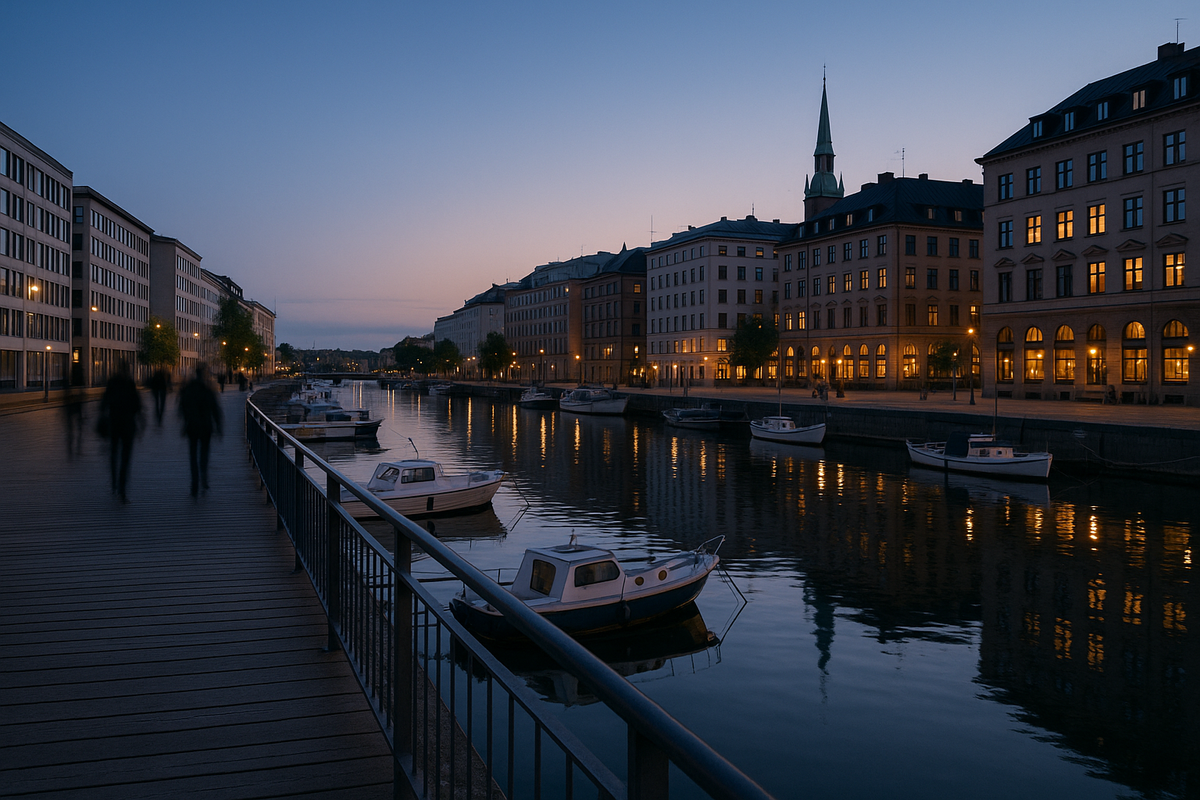
- In the capitals (Oslo, Stockholm, Helsinki) and even Copenhagen, June brings the feeling that the day never quite finishes: sunset is late, twilight is bright and full darkness is short. This is ideal if you want a mix of city life, museums, bars and gentle evening trips into nature.
- Northern Norway (around Bodø, the Lofoten Islands, Tromsø and the Helgeland coast) is where the sun in summer simply circles lazily above the horizon. It’s perfect for hiking, kayaking, fishing and staying in cabins by the water.
- Swedish and Finnish Lapland in summer means boardwalks through bogs and pine forests, cabins by lakes, and the novelty of going for a midnight walk without a torch. Farther north in June the sun may not set at all; farther south it only grazes the horizon.
💸 Budget: winter vs summer
Winter “aurora missions” are almost always more expensive in terms of clothing and activities, but Lapland’s infrastructure is tuned for this type of tourism.
In winter you pay for:
- cold‑weather clothing (if you don’t have your own, you hire suits, boots and mittens locally);
- aurora tours, snowmobiles, husky safaris, snowshoes;
- accommodation at peak season (especially around Christmas and New Year);
- pricier travel into remote regions.
In summer you pay for:
- high demand in certain regions (Lofoten and parts of Norway are very expensive in July);
- accommodation in peak European holiday season (July–August);
- but you save on gear — normal outdoor clothing is enough.
Many people also forget that winter means more time indoors — cafés, restaurants, museums — which eats into the budget. In summer, white nights let you spend long days on trails, viewpoints and public beaches, where you spend more on snacks and less on tickets.
🧥 Weather and how it feels: cold vs light
- If you genuinely hate cold, December–January in Lapland can be tough: very little daylight, –15 to –25 °C, biting wind. Magical, but demanding.
- A softer option for aurora is late February–March: days are longer, there are more daytime activities, temperatures more often sit around –5 to –10 °C, while green bands in the sky are still very much alive.
- For white nights the most comfortable window is late June–early July: strong light, high but not yet extreme tourist pressure, and relatively mild temperatures. You still need to be ready for rainy, windy days, especially on the coast.
Think too about whether you cope better with constant gloom or constant light. Some people find it hard to sleep when the sun never really sets — they need a sleep mask and heavy curtains. Others struggle with the darkest weeks of winter and feel better if they plan more structure into the daylight hours so they do not drift aimlessly between hotel and café.
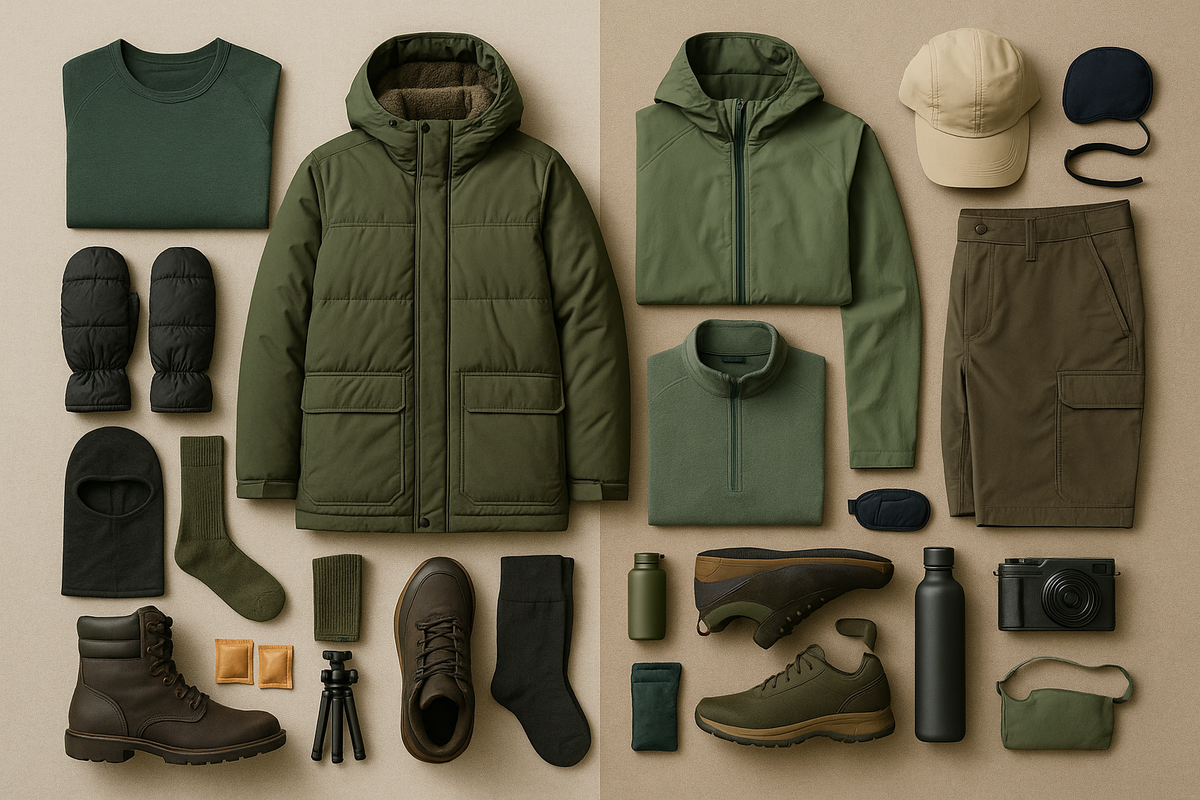
🧾 Checklist: you hate cold but want the northern lights anyway
🧾 Checklist: how to see the northern lights without freezing
- 📆Aim for late February–March or late September–October: lighter and usually milder than deep winter.
- 📍Choose bases with good infrastructure: Tromsø, Rovaniemi or large Lapland resorts where you can get back indoors quickly.
- 🚐Book minivan tours rather than long static sessions in open fields: you can warm up in the vehicle between aurora “sets”.
- 🧥Do not skimp on outer layers: thermal underwear, fleece, a proper down jacket, windproof trousers, warm boots and mittens are essentials, not extras.
- 🧖Pick accommodation with a sauna or hot tub: knowing you can dive into heat afterwards makes cold nights much easier mentally.
- ⏱️Avoid ultra‑long tours: 3–4 hours are often more comfortable than 6–8 unless you are a hardcore winter fan.
- 😴Keep the following day light on activities if you had a late‑night aurora hunt and went to bed very late.
🧭 How to decide: typical scenarios
💑 Romantic trip
- If your dream is a fairy‑tale cabin, snow and aurora, pick Lapland or northern Norway in late February–March. Focus on a cosy base, sauna and one or two aurora nights rather than chasing it every evening.
- If you imagine walking hand in hand through bright streets at midnight, sitting on a pier and watching the water, go for white nights in June: Oslo, Stockholm, Helsinki plus day cruises or short trips into the fjords and archipelagos.
👨👩👧 Trip with children
- For small children, summer is much easier: long days, playgrounds, hikes, zoos and beaches. White nights feel more like “very late evening” — the main challenge is making bedrooms dark enough for sleep.
- Winter Lapland with aurora is better if parents are genuinely OK with cold. Put more emphasis on Santa, huskies and soft winter activities and treat aurora as a bonus, not an obligation.
📸 Photographer and aurora hunter
- If aurora is your main priority, choose weather‑stable areas (Abisko, parts of Lapland) and plan for at least 3–5 nights.
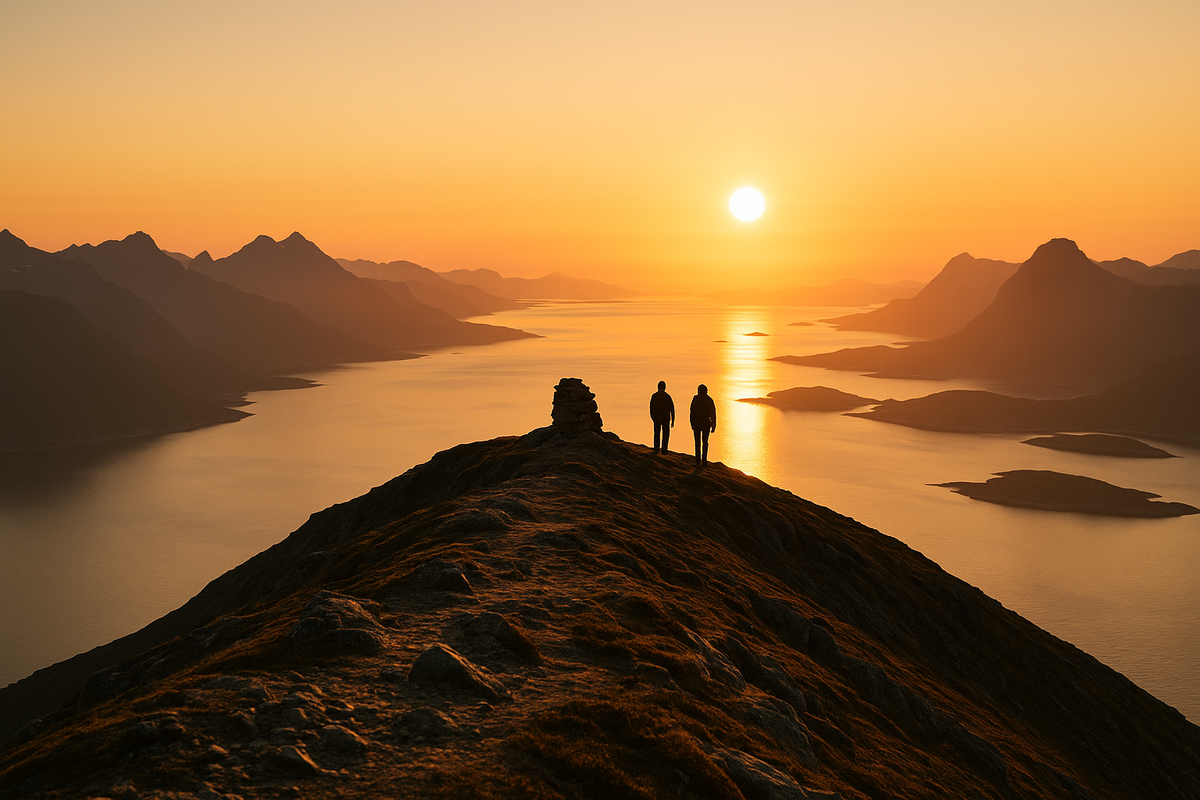
- If you care more about landscapes and light, white nights in June are unbeatable: northern Norway, Swedish and Finnish Lapland with the chance to walk ridgelines at midnight in golden light.
💰 Budget‑conscious traveller
- In winter you really feel the cost of gear and tours. You can keep it down by travelling in the shoulder season (March or late September) and walking more on your own, but there is always the risk of cloud or low solar activity.
- In summer, white nights make room for more walking, public transport and picnics, and fewer paid attractions. But accommodation in July can be expensive — look instead at May, early June or late August if money is tight.
❓FAQ
Almost never in any meaningful way. Auroras need dark skies; white nights literally remove darkness. In late April or late August you might combine fairly long days with some darkness at night, but aurora is weaker and white nights have not yet started (or are already over). It is better to choose one priority.
No, there are no guarantees: it all depends on cloud cover and solar activity. You can improve your odds by choosing clearer regions and spending 3–5 nights there, but no operator can honestly promise 100%.
In Oslo, Stockholm, Helsinki and especially Copenhagen the chances are tiny: the latitude is too low; light pollution too high. In a very strong storm you might catch something on camera, but it is not a sensible goal to plan a trip around.
Ideally 3–5 nights in a good region. With only one or two nights it’s very easy to get nothing but cloud. With several attempts your chances rise sharply, and you have time to enjoy local daytime activities too.
Yes, in many areas. In Tromsø, Rovaniemi, Kiruna and larger resorts there are organised tours that pick you up in a minibus and drive out to darker skies. A car becomes useful only if you want total independence, a remote cabin or multi‑day road trips.
The best compromises are March (sometimes early April) and late September–October. You still have a reasonable chance of aurora, but with softer temperatures and longer days. March usually feels more reliably wintery than autumn, with snow underfoot and more options for daytime activities.
For classic white nights and proper midnight sun, aim for June, roughly around the solstice. If you want slightly less extreme light, look at late May or early July: nights are still very bright, but your body has an easier time adjusting.
Yes, as long as you prepare. Bring a good sleep mask, try to choose accommodation with blackout curtains and keep a fairly consistent sleep schedule even if it looks like late afternoon outside. Many people report that after a couple of days their body adapts and “eternal evening” becomes more pleasant than unsettling.

0 comments
Log in to leave a comment