


🚂 Night trains Helsinki–Rovaniemi and Stockholm–Narvik: romance or harsh reality?
Night trains in Scandinavia sound perfect on paper: a light dinner, the gentle sway of the carriage, you fall asleep to the rhythm of the tracks and wake up beyond the Arctic Circle or among snow‑covered mountains. In reality, the picture is less postcard‑like: snoring neighbours, queues for the shower in the morning, a fight for early bookings and the big question — is this actually more convenient and better value than a night ferry or a short flight?
In this article we look at two of the most iconic routes — Helsinki–Rovaniemi and Stockholm–Narvik — and at Scandinavian night trains in general: what the different carriages are like, how prices work, who this format suits, and when it is more honest to pay for a normal hotel and daylight transport.
🧾 Checklist: is a night train right for you
🧾 Checklist: is a night train right for you?
Tick what applies to you. If there are lots of ticks, a night train will probably suit you well.
- I see the journey as part of the trip and like a bit of travel romance.
- I sleep reasonably well in new places and do not need total silence to fall asleep.
- I am happy to go to bed and wake up earlier than usual to save a day and a hotel night.
- Compact space in a compartment and noise from neighbours do not frighten me.
- I plan the trip 1–3 months in advance and can book tickets early while there is choice.
- I am fine with bringing earplugs, a sleep mask and a warm layer in case the carriage feels cool.
If you ticked most boxes, chances are you will really enjoy the idea of going to sleep in the city and waking up in a northern fairy tale. If not, it may be worth looking more seriously at night ferries or classic flights and hotels.
🚂 Helsinki–Rovaniemi: the train to Santa
The night train from Helsinki to Rovaniemi is often called the train to Santa. In winter the carriages fill with families, couples and groups of friends heading for Santa Claus Village, northern lights tours and the snowy forests of Lapland.
The train leaves Helsinki in the evening and takes about twelve hours. That gives you time for dinner, to settle in your compartment, have a look out of the window and then go to bed. In the morning you either catch an early pastel sunrise over white fields, or wake up in the dark with the clear feeling that you are already in a different world.
Typical carriage types on this route are:
– second‑class seats (cheapest, but proper sleep is difficult);
– couchettes or simple sleeping compartments without private bathroom (two to four berths, solid basic comfort);
– sleeping compartments with private shower and toilet (often on the upper level of double‑decker cars, the most comfortable and the most expensive).
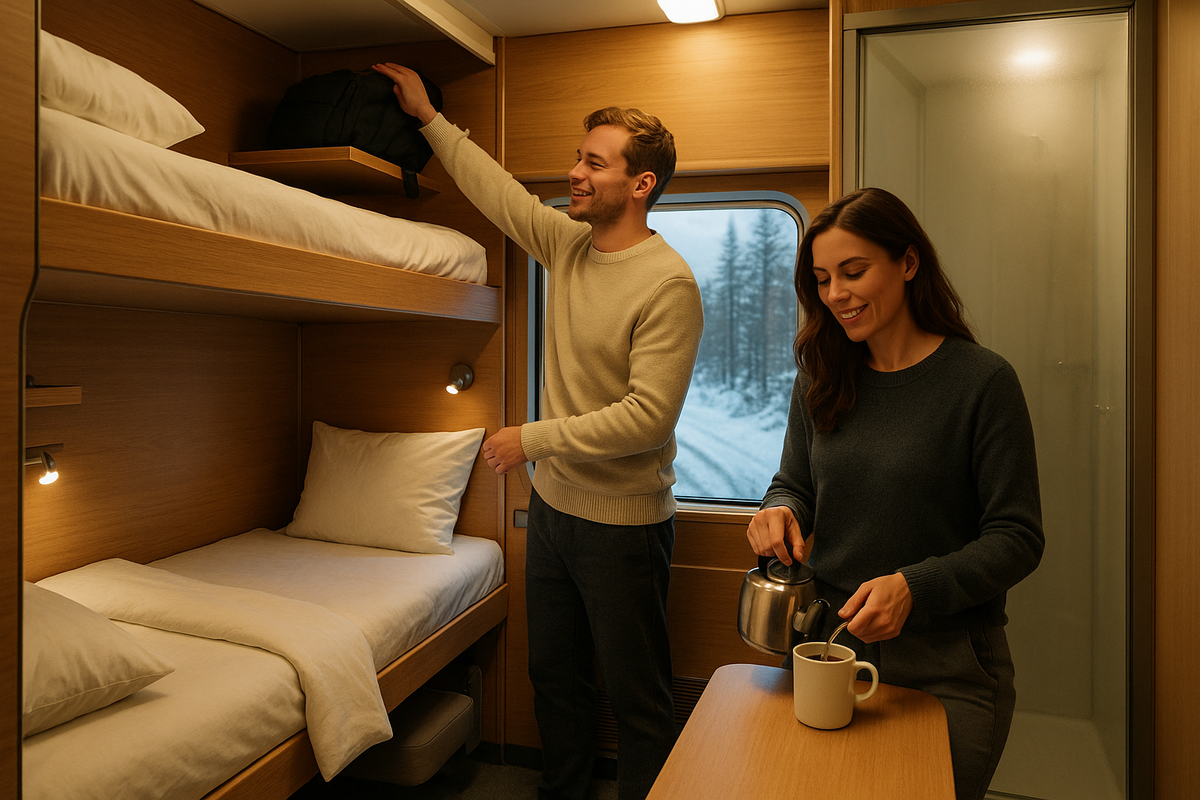
The earlier you book for winter, the more choice you have and the more obvious the price difference becomes. Around Christmas and peak winter season the cheapest options disappear weeks in advance — people plan this train as carefully as flights.
🚆 Stockholm–Narvik: to snow, mountains and the Lofoten gateway
The Stockholm–Narvik line has a different mood. It is a long northern journey: out of the Swedish capital, through forests and lakes, past mining towns and on to the far north on Norway’s coast.
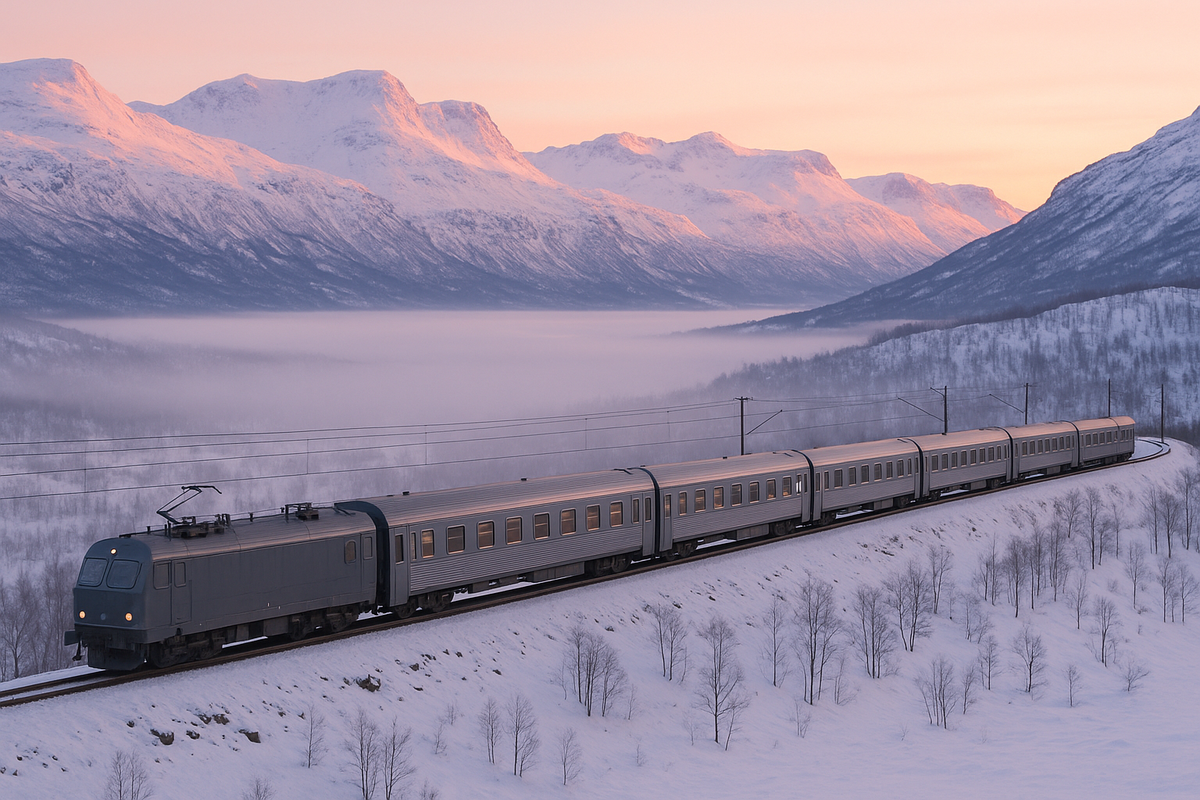
The trip can take up to 18–20 hours. A large part of it is in darkness, especially in winter, but dawn and morning in the mountains and far north of Sweden are often among the strongest memories of the whole holiday. From Narvik many travellers continue by bus towards the Lofoten Islands, so the night train is a key chapter in a longer route, not just a way to get from A to B.
Carriage types here are broadly similar:
– seated coaches for those who want to save as much as possible;
– couchettes with bunks, a compromise between price and the ability to lie flat;
– sleeper compartments with different berth counts, which you can book out as a private cabin or share with fellow travellers.
This route is especially loved by those heading north for snow, skiing, winter landscapes and who do not mind spending almost a full day on the move in exchange for views and atmosphere.
📊 Table: popular night routes and who they suit
| Route | Approx journey time | Main seat types | Peak demand | Best suited for |
|---|---|---|---|---|
| Helsinki–Rovaniemi | About 12 hours, evening to morning. | Seat coaches, sleeper cabins without bathroom, sleepers with private shower and toilet. | December to March, Christmas and school holidays. | Families with children, couples, northern lights and winter wonderland fans. |
| Stockholm–Narvik | Around 18–20 hours with a long night section. | Seat coach, couchettes, sleeper cabins. | Winter and spring for snow and skiing, summer for hiking and Lofoten trips. | Experienced travellers who enjoy long journeys and northern scenery. |
| Helsinki–beyond Rovaniemi (deeper into Lapland) | Up to 14–15 hours depending on final station. | Sleepers of different comfort levels plus standard seating. | Mid‑winter, New Year period. | Those who want to get even further away from cities and crowds. |
Timetables and rolling stock change over time, but the idea is the same: the more popular the winter route, the fiercer the competition for good sleeper cabins — and the more it pays to book early.
🛏️ Types of carriages and how pricing works
On most Scandinavian night trains the pattern is similar.
– Seat carriages. The budget option, fine if you can sleep on planes and coaches. At night the coach can be noisy and you are likely to arrive tired. The price is usually comparable with a daytime train or intercity coach.
– Couchettes. The halfway house: several bunks in an open compartment, simple mattresses and basic bedding. You can lie down and stretch out, but there is less privacy than in a real sleeper cabin.
– Sleeper cabins. A closing door, one to three beds, often softer mattresses and more space for luggage. In some trains you also get a private bathroom with shower, in others facilities are shared within the carriage. That is the level where the night train starts to feel like a tiny moving hotel.
Prices depend heavily on:
– season (holidays and high winter versus ordinary weekdays);
– booking time (months ahead or last minute);
– comfort level (seat versus private sleeper).
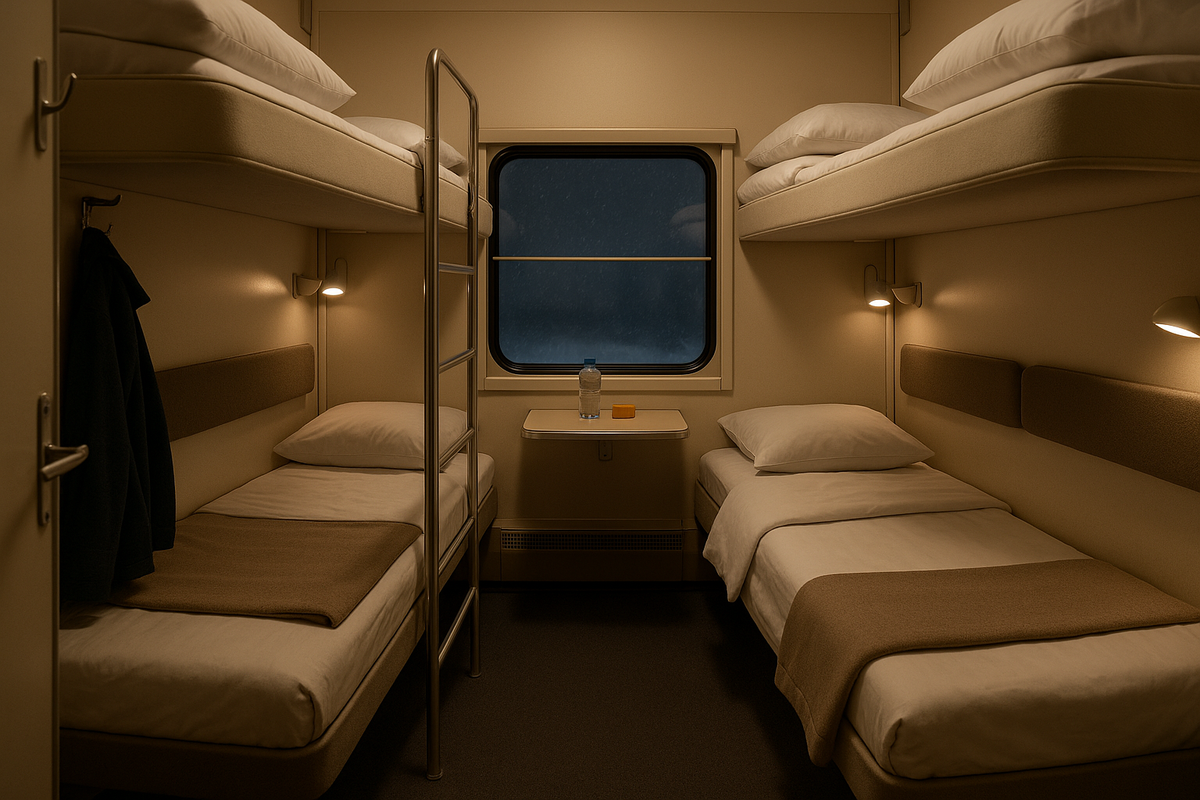
Very often a basic seat costs roughly the same as a budget flight, while a good sleeper cabin is closer to a flight plus a mid‑range hotel. That is why it is important to do the maths for the whole scenario, not just compare ticket prices line by line.
🎟️ Interactive picker: which carriage to choose
🎟️ Which carriage type suits you?
Tap a button to see the strengths and weaknesses of each option.
💺 Seat
- Good for maximum savings: the cheapest way to travel overnight.
- Works best if you are used to sleeping on planes and coaches.
- Downsides: you are likely to arrive tired, especially on routes longer than ten hours.
- Choose a window seat if you can and bring a neck pillow.
✅ Advantages of night trains
– Save daylight hours: you do not spend a whole day in transit but wake up at your new destination.
– Possible saving on accommodation: one cabin night can replace a mid‑range hotel.
– Real travel experience: morning views from the window, stations along the way, the feel of a long journey.
– Centre‑to‑centre format: you leave the city and arrive in the city, with no extra trips to airports.
⚠️ Drawbacks and hidden snags
– Sleep quality is unpredictable: noise, jolts and stops may disturb even a normally sound sleeper.
– Early arrivals: you often reach the city before breakfast, long before hotel check‑in.
– High demand: the best cabins for peak dates sell out quickly.
– Price is not always budget‑friendly: in popular periods a comfortable sleeper can cost as much as a flight plus hotel.
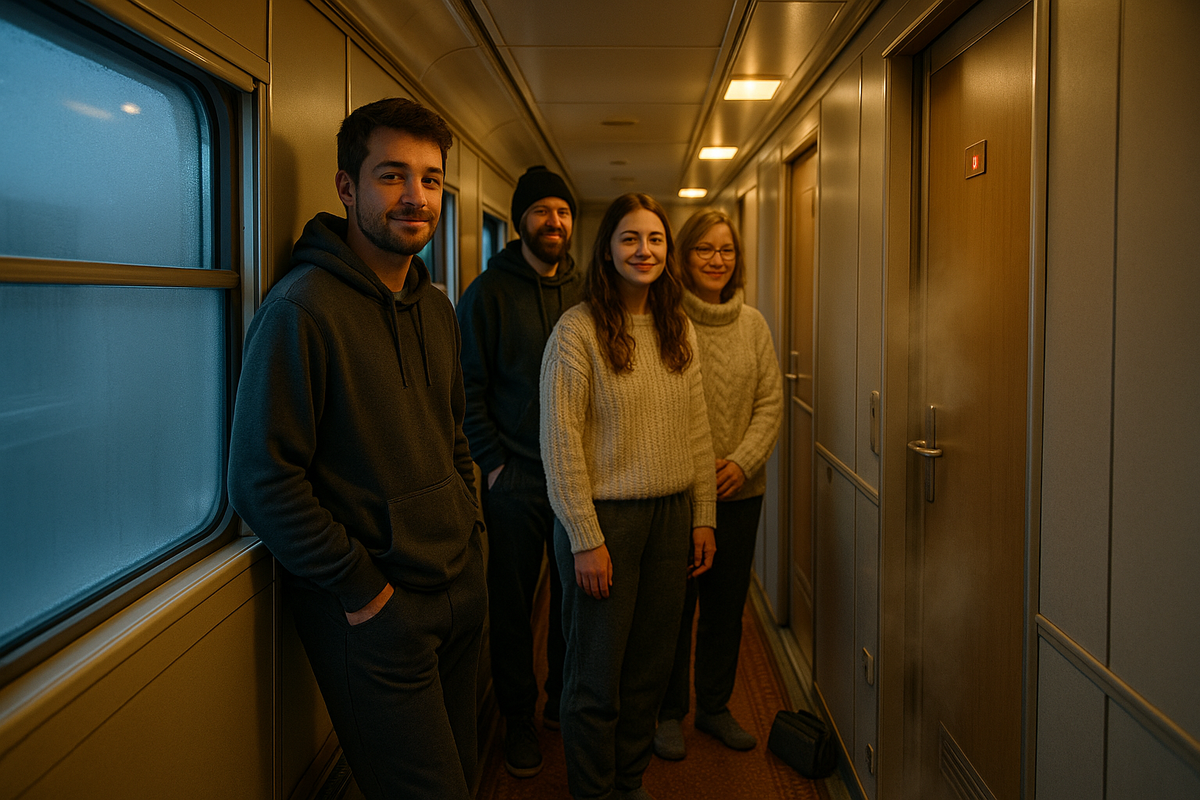
🎒 Checklist: what to pack for a night train
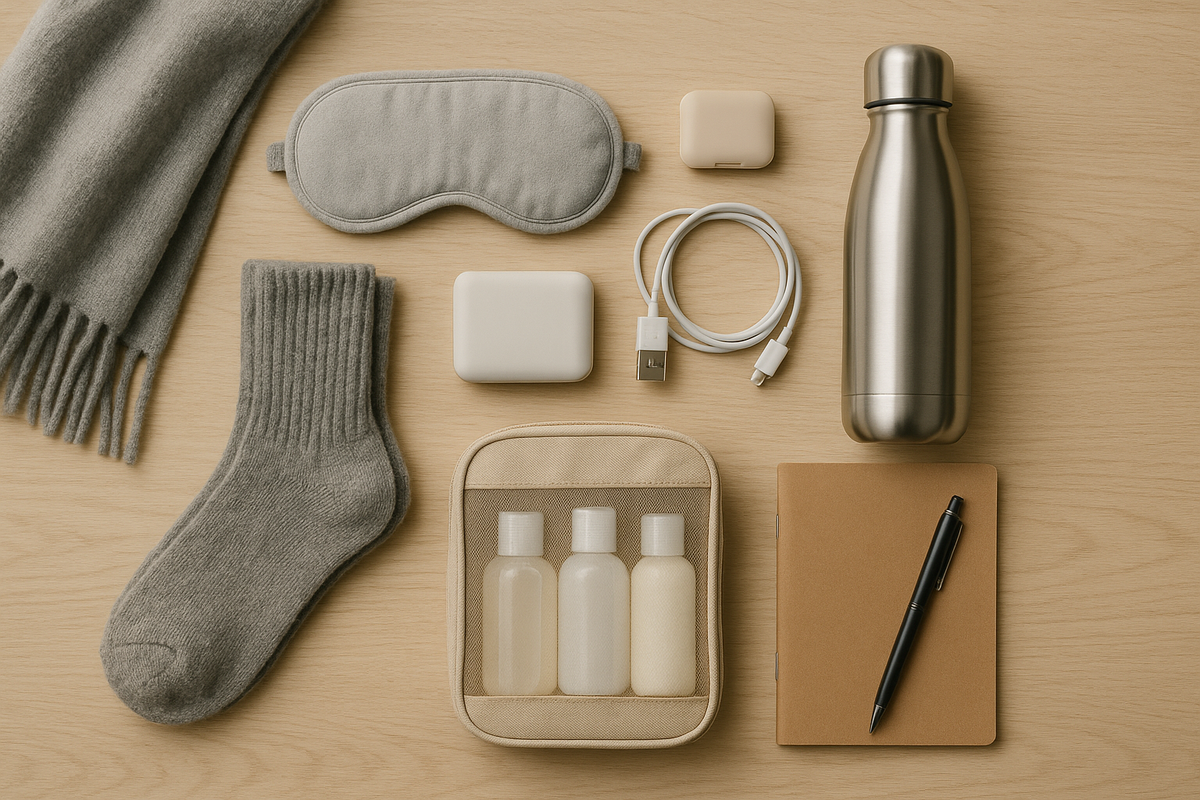
🎒 Checklist: useful bits for a night train
- 😴Sleep mask and earplugs for corridor light and late night conversations.
- 🧦Warm socks and soft slippers so you do not walk the carriage in outdoor shoes.
- 🧥A light fleece or hoodie: the carriage can feel cooler or warmer than you expect.
- 🔌Power bank and chargers: sockets are not always one per person.
- 🍎A small snack and water, especially if you arrive very early and cafés are still closed.
- 🧴Mini wash kit: toothbrush, toothpaste, wet wipes, hand cream.
- 📄A small organiser bag so you do not have to drag your full suitcase up and down the corridor.
✈️ Night trains versus night ferries and short flights
In practice the choice between night trains, night ferries and short flights usually comes down to a handful of questions.
Night trains:
– pros: centre‑to‑centre travel, often more scenic than a flight, strong sense of journey;
– cons: sleep is never quite like at home and comfortable cabins are not cheap.
Night ferries:
– pros: more space to walk around, bars and restaurants, sometimes a sauna;
– cons: you are tied to a specific departure, storms can affect comfort and on‑board spending can quietly inflate the budget.
Short flights:
– pros: minimal time in transit, easy to fit into a tight itinerary, plenty of departures;
– cons: trips to and from airports, security, baggage and that feeling of yet another flight.
A common compromise looks like this: you take a night train one way, for the experience and to save a day, and fly or sail back in daylight to rest and change the rhythm.
❓FAQ
On the most popular routes, yes — especially around Christmas and in peak winter. The first to go are usually the cheaper sleepers and family cabins. If you know your dates, it is worth checking tickets at least one to two months ahead, and earlier for New Year.
Some people manage, but for most it is a compromise. If your journey is longer than eight or nine hours and you have a busy day ahead, it is safer to look at a couchette. Seats work best when you are young, flexible and happy to trade sleep for savings.
If your budget allows and you are travelling in the cold season, it makes a noticeable difference: you avoid going down the corridor at night and it is much easier to get ready in the morning. For couples and families it is almost always money well spent. If you are travelling solo and relaxed about shared facilities, a standard sleeper may be enough.
Choose a shorter route, book the most private cabin you can, arrive at the station without rushing and avoid scheduling anything demanding for the following morning. Earplugs, a sleep mask and familiar nightwear help your brain treat the cabin more like a temporary bedroom and less like a random place.
Sometimes they are, sometimes they are not. It depends on season, comfort level and what kind of hotel you would book anyway. Very often seats and couchettes are clearly cheaper than a flight and decent hotel, while a good private sleeper is closer in price but wins on time and experience.
A night train is more compact and intimate, with fewer distractions, but a stronger feeling of land and distance. On a ferry you have more space to move, more ways to spend the evening, but you feel the sea more and are more exposed to stormy weather. Some people sleep better to the rhythm of the tracks, others to the sound of waves.

0 comments
Log in to leave a comment