


🎟️ Museum City Cards in Scandinavia: When They Pay Off and When They Don’t
Scandinavian museum city cards look like the perfect product: you pay once and get “everything included” for museums and public transport. In reality, many travellers honestly admit they didn’t break even, rushed through museums out of obligation, and overpaid for convenience. In expensive cities like Copenhagen, Oslo, Stockholm and Helsinki, the “card or no card” question directly affects your trip budget. This article helps you unpack formats, prices and real-life scenarios, so you understand when a card is a useful tool and when it’s just an expensive souvenir.
🧾 What Are Museum City Cards and How Do They Work in Scandinavia?
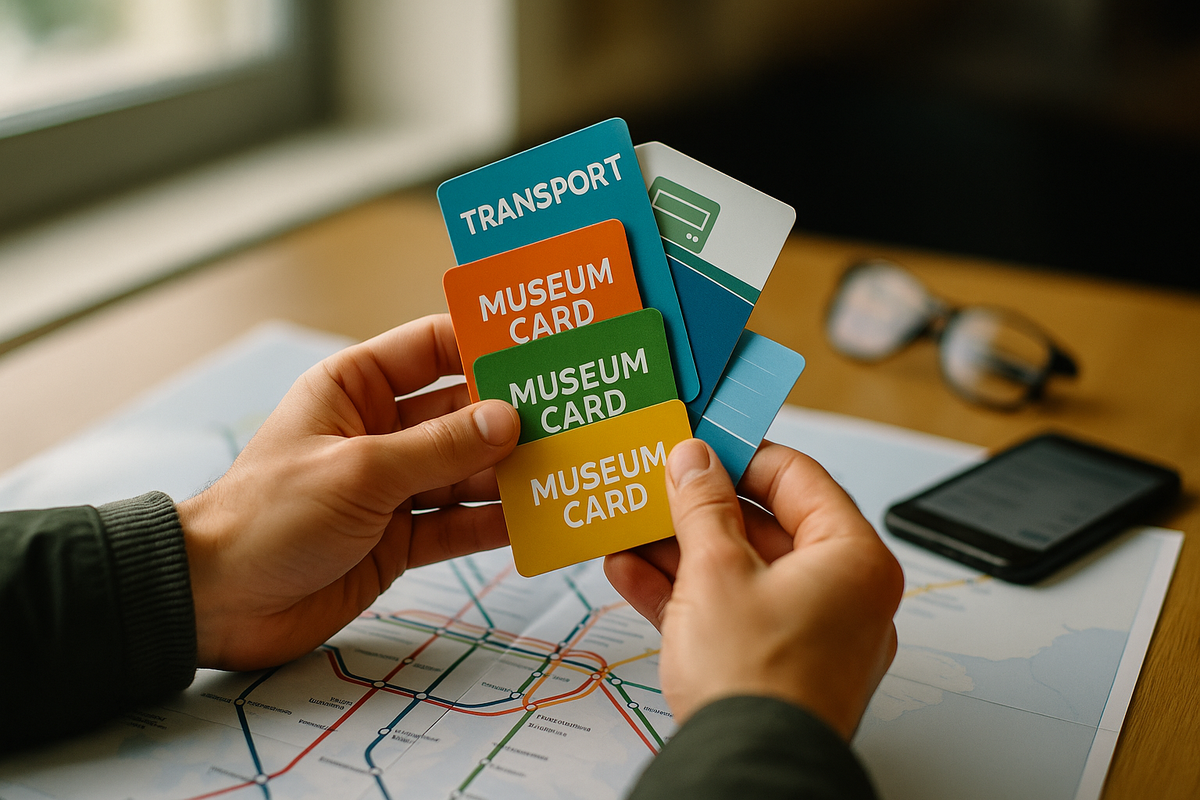
In essence, a museum city card is a time-based package — usually for 24 / 48 / 72 hours and longer — which typically includes:
- access to a range of museums and attractions (often 20+ places, including the priciest ones);
- public transport in selected zones (metro, trains, buses, city ferries);
- extra options: canal cruises, viewpoints, discounts on tours and in restaurants.
For Scandinavia, these cards have a few specific features:
- 💸 High base price. For example, a 24-hour Oslo Pass for an adult costs around 520 NOK, 48 hours about 770 NOK, 72 hours about 920 NOK.
- 🎨 Focus on expensive museums. In Copenhagen, the Copenhagen Card covers entry to dozens of museums and attractions plus the entire public transport network in the metropolitan area, so in theory it has strong savings potential.
- 🚆 Transport as a key value driver. In many cards the main added value is not only museums, but also unlimited travel on expensive local transport.
Why do many travellers fail to break even?
- They planned for 4–5 sights a day but in reality managed 2–3.
- An evening arrival or early departure “ate up” part of the paid period.
- Some museums turned out to be closed or on shorter hours.
- With kids, the actual pace was much slower than planned.
Bottom line: a card is only financially attractive for those who are genuinely ready to keep a fairly dense sightseeing pace and use public transport actively, not just “have the option”.
🏙️ Copenhagen, Oslo, Stockholm, Helsinki: Which Cards Exist and What Matters Most
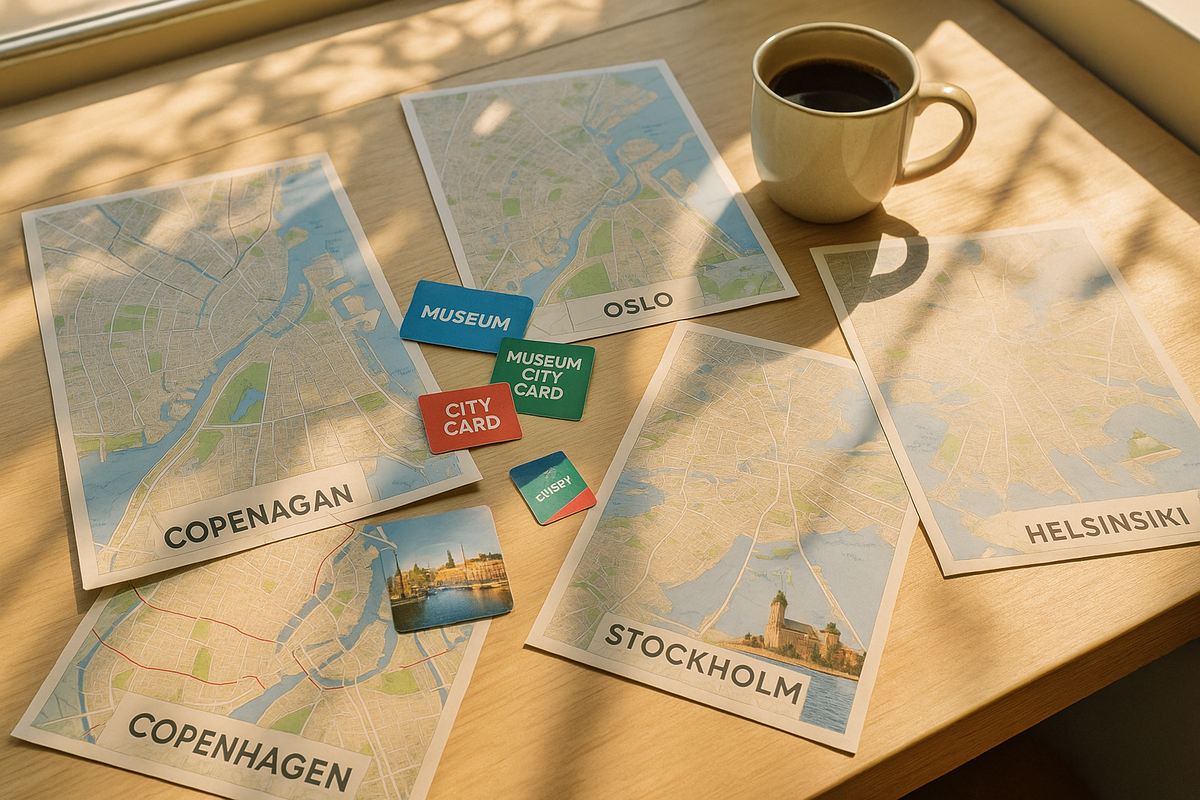
Below is a simplified overview of four key cards. Prices are indicative for adults for 24–72 hours and may change; always check current prices on official websites before you buy.
💼 Overview of the Main City Cards
| 🏙️ City / Card | ⏱️ Duration & price (approx.) | 🚆 Transport | 🏛️ Key included sights | 📌 Notes |
|---|---|---|---|---|
| 🏙️ Copenhagen Copenhagen Card |
24–72 h: ~500–900 DKK (options beyond 72 h available) |
Yes, metro, trains and buses in Greater Copenhagen | Tivoli, canal tour, castles in North Zealand, main museums and galleries | Maximum value if you use public transport actively and visit 3–4 paid sights per day |
| 🏙️ Oslo Oslo Pass |
24 h ~520 NOK, 48 h ~770 NOK, 72 h ~920 NOK | Yes, full public transport network in the Oslo zones | Museums on Bygdøy peninsula, Munch, National Museum, outdoor and maritime museums | Good value if you visit 3+ museums per day and use public transport a lot |
| 🏙️ Stockholm Go City Stockholm Pass |
1–3 days: from ~800–900 SEK for 1 day (all-inclusive version) | Often without regular public transport, but canal cruises and tours are included | Vasa Museum, Skansen, royal sights, archipelago cruises | Best value for those who like guided tours and cruises, not just classic museums |
| 🏙️ Helsinki Helsinki Card / City / Region |
Helsinki Card 24/48/72 h — 51/62/73 €; City & Region versions slightly more expensive | Variants: museums only or museums + inner/region public transport | Suomenlinna, design and architecture museums, city museum, viewpoints | Good balance for those who mix museums, design, and trips across the city |
⚠️ All prices above are indicative; before buying a card, always check current tariffs and the list of included sights on the official websites, as conditions and prices are updated regularly.
📊 Typical Use Scenarios: When a Museum City Card Really Pays Off

A city card doesn’t pay off “by default”, it works for specific behaviour patterns. Roughly speaking, you can fit most trips into three scenarios, and it’s easy to map your plans onto them.
🏃♂️ “Museum Marathon”
- 3–5 museums / attractions per day.
- Active use of public transport: moving between districts, going to a peninsula/suburb (Bygdøy in Oslo, castles in Denmark, islands in Stockholm, etc.).
- Day starts around 9–10 a.m., and you’re ready to spend the whole day in the city “on your feet”.
In this scenario, Copenhagen Card, Oslo Pass and Helsinki Card almost always give a clear financial upside: the cost of two–three expensive museums + a daily transit pass is already close to or above the price of the card.
☕ “Relaxed Pace”
- 1–2 paid sights per day, the rest is walking, neighbourhoods, cafés.
- Transport: partly on foot, 1–2 short trips per day.
Here the card often comes out at break-even or a slight loss: you’re paying for potential that you don’t fully use. In many cases it’s more rational to buy a normal transit pass and 1–3 museums as separate tickets.
👨👩👧 “With Kids”
- You need breaks, child-friendly and interactive museums, zoos, aquariums.
- Real pace: 1–2 paid sights per day, the rest is playgrounds, parks, pools.
- Children often have discounts or free entry up to a certain age.
A card can be good value if the family deliberately plans dense days (for example, a “Bygdøy day” in Oslo with 3–4 museums in a row), but buying it “just in case” with children is risky — flexibility and extra breaks significantly cut the daily museum count.
💰 Scenario Summary Table
| 🧭 Scenario | 🏛️ Museums per day | 🚆 Transport use | 💶 Likely card value | 📌 Comment |
|---|---|---|---|---|
| 🧭 Museum marathon | 3–5 paid sights | Active: 3–6 rides per day, possible trips to suburbs | High: often 20–30% savings or more | Makes sense to buy a 48–72 h card and plan the route in advance |
| 🧭 Relaxed pace | 1–2 sights | Partly: walking + 1–2 short rides | Medium or low: often break-even or slight loss | Usually separate tickets + day pass / single tickets are better value |
| 🧭 With kids | 1–2 sights, focus on kids’ and interactive venues | Depends on route, often 2–4 rides/day | Depends on age and discounts, often “on the edge” | Makes sense only for pre-planned “dense” days |
💡 Mini-algorithm for your own trip:
- Make a list of specific museums and attractions you definitely want to visit, with ticket prices.
- Add the cost of transport for your real scenario (day pass vs single tickets).
- Add it up and compare with the cost of the relevant card for the same period.
- If the savings margin is minimal (5–10%), remember the risk: skipping just one planned museum can push the card into a loss.
📆 Real 2–3 Day Itineraries: Why Many People Don’t Manage to “Break Even”

On paper, it’s easy to fit 4–5 sights into each day. In reality, your pace is influenced by late arrivals, early departures, weather, queues, kids, tiredness, and the simple desire to sit in a café.
Example 1. 🎨 “Active Copenhagen: 48 Hours with the Copenhagen Card”
- Day 1:
- Morning: Rosenborg Castle + the King’s Garden.
- Day: canal tour + Christiansborg.
- Evening: Tivoli.
- Day 2:
- Morning: National Museum.
- Day: Louisiana or Kronborg (day trip).
- Evening: walk around Nyhavn.
With a card: all of the above plus transport are included.
Without a card: the combined cost of tickets and transport for two days is often close to or higher than the 48-hour Copenhagen Card price, so the card typically gives solid value here.
Example 2. 🌧️ “Relaxed Stockholm: 3 Days with Go City Stockholm Pass”
- Day 1: Gamla Stan, one museum (e.g. Nobel Prize Museum).
- Day 2: Vasa Museum + walk on Djurgården, no extra attractions.
- Day 3: Skansen or ABBA Museum, the rest is cafés and walks.
Originally the plan included 4–5 attractions with cruises, but due to weather and fatigue they managed only 3–4 sights for the entire period.
Result: the card hardly paid off, especially if public transport was used sparingly.
Example 3. 🧒 “Family in Oslo with Oslo Pass, 24 Hours”
- Plan: Bygdøy peninsula (3–4 museums) + city centre.
- Reality: 2 museums, the rest of the time went to playgrounds, cafés and transfers.
Some museums offer discounts or free entry for children, so the actual family savings with a set of passes can be lower than expected.
Main takeaway from these cases:
- A card pays off when you have a clear itinerary and stick to a relatively dense pace.
- An emotional “just in case” purchase almost always leads to the feeling that the product didn’t live up to expectations.
🚫 When a Museum City Card Is Almost Certainly Not Worth It
There are several “red flags” where the odds of not breaking even are very high:
- Non-museum-focused trip. If your plan is “stroll neighbourhoods, visit one or two big sights and that’s it”, separate tickets are usually more rational.
- Less than 48 hours in the city. Evening arrival, morning departure, only one full day — for most cards that’s too little time to come out ahead.
- Accommodation in the centre and minimal transport use. If you intentionally walk everywhere and don’t plan trips to distant districts, the transport part of the card won’t pay for itself.
- Many places on your wish list are not covered by the card. For example, some private museums, temporary exhibitions, specific viewpoints.
- Shorter hours and seasonal closures. In winter, during holidays or in low season, you may simply not have enough open sights to run a dense program.
📌 Alternatives to a city card:
- A regular public transport pass for 24–72 hours without museums.
- Separate tickets to 1–3 key museums you genuinely want to see.
- A focus on free and low-cost activities: parks, neighbourhoods, waterfronts, modern public spaces, free exhibitions.
✅ Summary and Checklist: Buy a Museum City Card or Skip It?

Here’s a short checklist to help you decide in 2–3 minutes.
- How many paid sights per day do you realistically want?
- 3+ per day → a city card is usually worth considering.
- 1–2 per day → separate tickets are often better value.
- How many “full” days do you have in the city?
- 2–3 full days (not counting “arrived/left” days) → a good basis for a 48–72-hour card.
- Less than 1.5–2 full days → it’s very hard to break even.
- How do you plan to get around?
- Lots of public transport, trips to suburbs/peninsulas → the card gains value via transport.
- Mostly on foot in the centre → the transport component will lie unused.
- Do you have 4–6 expensive museums/attractions on your personal must-see list?
- Yes → sum their ticket prices and compare with the card.
- No → you’ll probably be fine with 1–3 separate tickets.
- Are you travelling with children?
- Factor in kids’ discounts and free entry: it’s often cheaper to buy one adult card + kids’ tickets, rather than a full family set of cards.
- Are you ready for a dense sightseeing pace?
- If the answer is “no, we prefer slow walks”, the card is very likely not going to pay off.
🧠 80/20 rule: If the combined cost of your “must-see” museums + transport is at least 20–25% higher than the card price, it’s worth buying the card and enjoying the convenience. If the margin is under 10–15%, any disruption (late arrival, fatigue, a sick child) can easily push the card into a loss.
❓FAQ: Short Answers to Key Questions
💬 Ideally before the trip, when you plan your programme and can estimate your number of sights and rides
💬 In that case, a city card rarely pays off — a transit pass plus 1–3 separate museum tickets is usually the better option.
💬 Typically no: standard transit passes are almost always cheaper than a museum card used only as a travel pass.
💬 With 3–5 paid sights per day and active use of public transport, city cards generally give noticeable savings and reduce time spent in ticket queues.
💬 Not always — it’s often more economical for adults to use a card while kids use discounted or free tickets, especially if they tire quickly and skip some museums.

0 comments
Log in to leave a comment