


🥘 Local Cuisine Without Fine Dining: Where to Eat Tasty and Casually in Scandinavia
In Scandinavia, everyone loves to talk about high-end gastronomy and Michelin restaurants, but the reality for most travellers looks very different. You want proper local food, a sane bill and a relaxed atmosphere where your winter jacket doesn’t look out of place.
This article is about that “second layer” of Nordic food culture — bistros, smørrebrød bars, buffets, food halls and street food where people in Denmark, Norway, Sweden and Finland actually eat in everyday life. By the end, you’ll have a clear picture of formats, typical price levels and practical cues: where to go, what to look for on the sign and in the menu, and how not to feel “out of your league”.
🥘 Local Cuisine Without Fine Dining: What a “Place for Locals” Looks Like
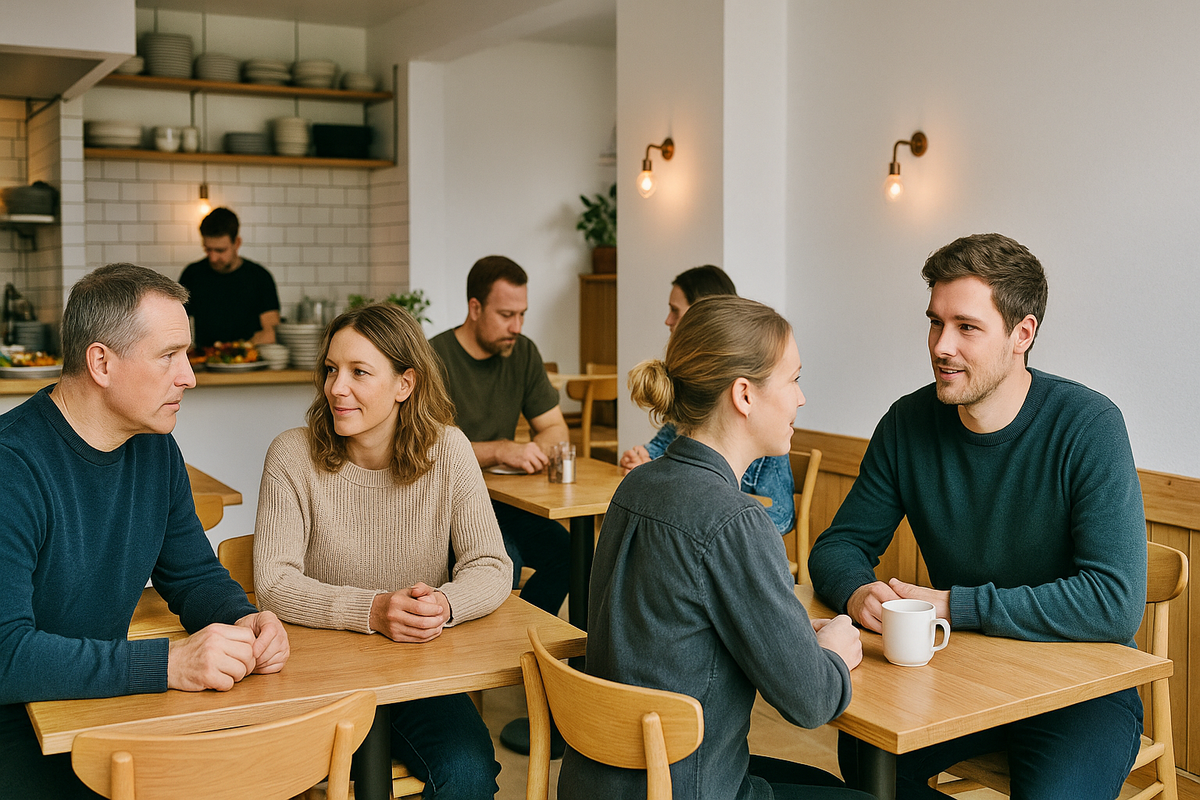
🧱 What We Mean by Local Food Without the Fuss
In the Nordic context, “local cuisine without fine dining” means any format where:
- the focus is on food and basic comfort, not on stars and concept;
- there is no strict dress code — your tourist outfit is absolutely fine;
- the check is predictable: you roughly know the amount before you sit down.
Most often this is:
- small bistros with a short menu;
- smørrebrød bars with open sandwiches;
- family-run cafés;
- market food courts and urban food halls;
- buffets and canteen-style “all you can eat”;
- lunch bistros close to offices and residential areas.
Interiors can be very minimalistic: wooden tables, simple tableware, self-service at the counter. The key is fresh produce and straightforward dishes.
🌍 How It Looks by Country
- Denmark. Smørrebrød, fish and meat bistros, food halls in big cities. Often modern Scandi design, lots of younger guests, strong focus on quality ingredients.
- Norway. Simple fish dishes, soups, stews, canteens at transport hubs and office districts. Interiors are modest, portions are very hearty.
- Sweden. Historic culture of the “Swedish table” and lunch buffets, strong fika tradition — coffee and pastry, lots of daytime formats.
- Finland. Lunch bistros with a clear “soup + main + salad bar” pattern, homely soup places, modest cafés close to office blocks.
General rule: the simpler the place looks and the more locals you see there on a weekday at lunchtime, the higher the chance you’ve found the right spot.
🍽️ Key Formats: Smørrebrød, Buffets, Lunch Bistros, Food Courts and Street Food
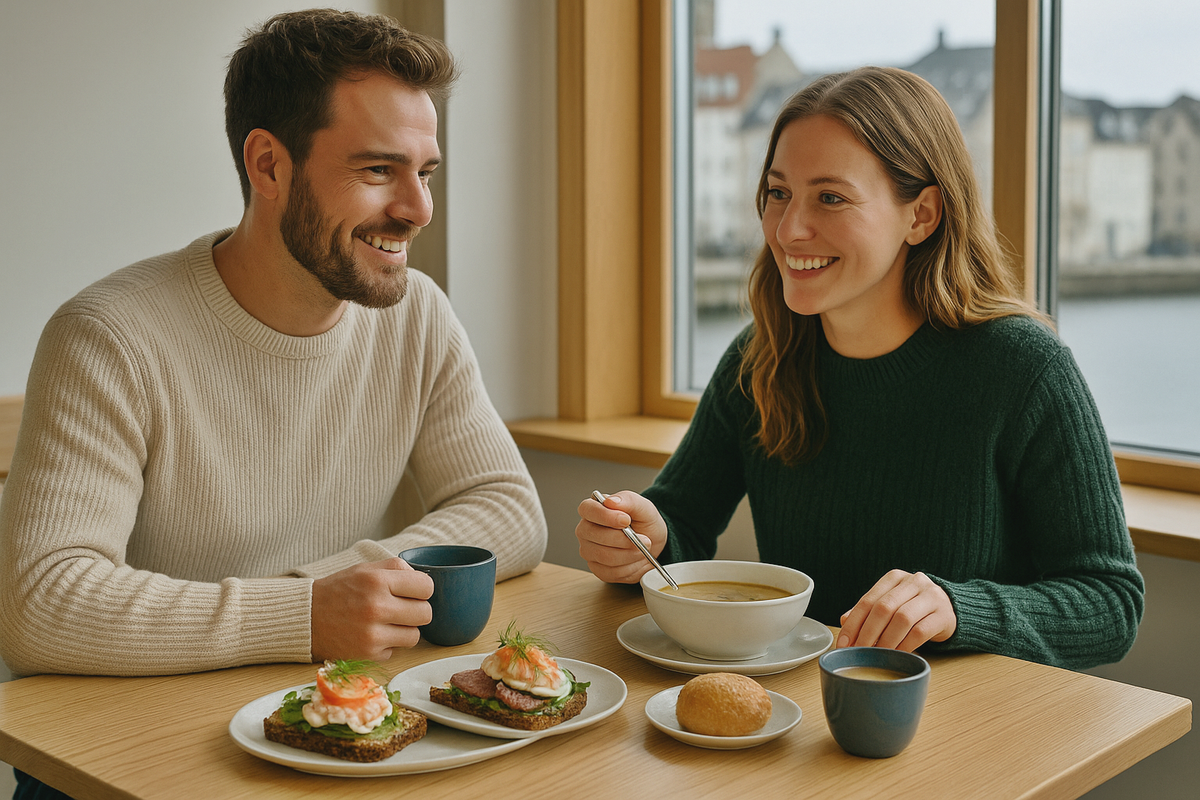
Below are the main formats through which it’s easiest to get to local food without fine dining.
🥪 Smørrebrød Bars (Primarily Denmark)
Smørrebrød are open sandwiches on dense rye bread with layered toppings: herring, shrimp, pâtés, roast beef, eggs, fried onions, pickles and so on.
How it works:
- you choose items from the counter or a menu (usually 2–3 pieces per person);
- order at the counter, pay immediately, and food is brought to you or you take it yourself;
- the spectrum runs from very simple canteens to stylish bistros.
The upside: you get a very Danish product without committing to an expensive set menu, and 2–3 smørrebrød = a full, filling lunch in terms of calories.
🥗 Swedish Buffet and “Smörgåsbord”
You’ll see buffets:
- in hotels (primarily breakfasts, sometimes dinners);
- in daytime restaurants and canteens;
- on ferries and occasionally in office areas.
Principle:
- fixed price per person;
- self-service, sometimes time-limited;
- drinks may be included or charged separately.
It’s a convenient format if you want one sitting to cover lunch and a later snack: salad bar, hot dishes and dessert in one go.
🍲 Finnish Lunch Bistros
Key word — lounas. It usually means:
- a simple daytime format “soup + main + salad bar”;
- very often a fixed price with water/coffee included;
- maximum of local flavours with no complicated plating.
Typical scenario: you show up around 11:00–13:30, choose the dish of the day, get your food quickly and eat in a calm room full of office workers and local residents.
🍴 Markets, Food Halls and Food Courts
Urban food halls and markets:
- bring together dozens of small concepts under one roof;
- work on the “everyone buys from their own stall, we share tables” model;
- remove the stress of “choosing the wrong place” — you can come with a group and everyone gets what they want.
You’ll usually find:
- Nordic fish and seafood;
- local sausages and meat dishes;
- soups, stews, modern takes on traditional recipes;
- a few international options (same “safety net” as a supermarket).
🌭 Nordic Street Food
Street food is particularly visible:
- in harbour areas;
- around markets and food halls;
- near festival grounds and cultural venues.
It can be:
- hot dogs and sausages with local sauces and pickles;
- fish sandwiches and fish & chips;
- soups in cups, fried fish, meat stews;
- pastries and buns for fika-style coffee breaks.
It’s not always the absolute cheapest option, but very often a quick and atmospheric way to eat something local.
📊 Formats at a Glance: What to Look For and What to Expect
| 😋 Format | 🌍 Country / focus | 💶 Approx. price | 🪑 Atmosphere | 🍛 What to try |
|---|---|---|---|---|
| 🥪 Smørrebrød bar | Denmark (Copenhagen, major cities) | Approx. €12–20 for 2–3 smørrebrød | Small bistro or canteen, many locals | Herring, prawns, roast beef, egg & shrimp |
| 🥗 Swedish buffet | Sweden, Norway, ferries across the region | Approx. €18–30 per person | Self-service, large choice, families and groups | Salad bar, meatballs, fish, hot stews |
| 🍲 Lunch bistro (lounas) | Finland, major cities | Approx. €12–18 for “soup + main + salads” | Office crowd, calm daytime vibe | Fish soups, stews, potatoes, casseroles |
| 🍴 Food hall / food court | All capitals, especially Denmark & Sweden | Approx. €12–20 per main dish | Open space, shared tables, mix of locals and tourists | Fish & seafood, modern takes on classics |
| 🌭 Street food | Harbours, markets, festival areas | Approx. €8–15 per portion | Quick, outdoor or under a canopy | Hot dogs, fish & chips, fish sandwiches, soups |
💶 What It Costs to Eat Locally: Denmark, Norway, Sweden, Finland
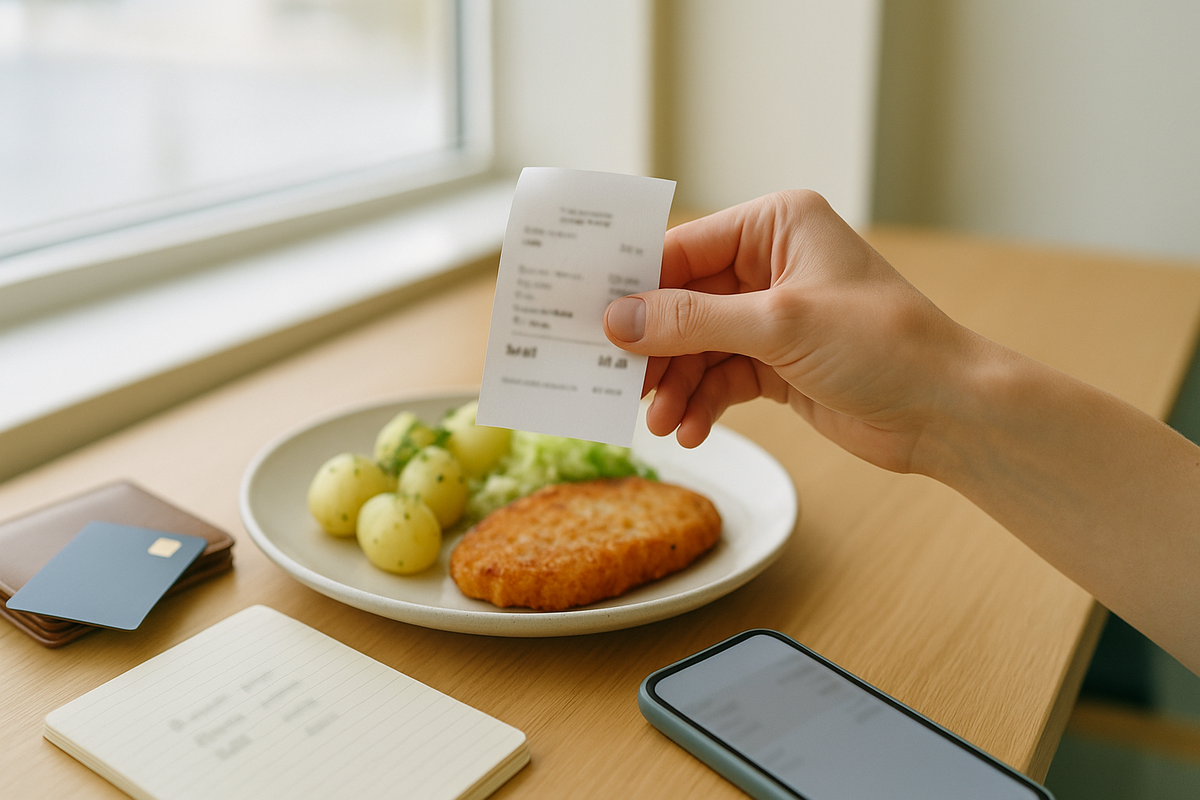
The figures below are broad ranges for capitals and large cities, assuming decent mid-range places and no alcohol. In smaller towns, checks may be slightly lower; in ultra-touristy hotspots, higher.
| 🏙️ Country | 🍽️ Format | 💶 Average check | 🍛 Sample combo | 📌 Comment |
|---|---|---|---|---|
| 🇩🇰 Denmark | Smørrebrød bar | €12–20 | 2–3 smørrebrød + water/coffee | Hearty lunch, very good value for “localness” |
| 🇩🇰 Denmark | Food hall / market | €14–22 | Fish or meat main + side | Very common in Copenhagen and Aarhus |
| 🇳🇴 Norway | Cafeteria / buffet | €18–28 | Soup + hot dish, sometimes salad bar | Higher baseline prices in general |
| 🇳🇴 Norway | Street food | €10–17 | Hot dog, fish & chips or burger | Good option for a fast, filling bite |
| 🇸🇪 Sweden | Daytime buffet / lunch | €12–18 | “Swedish table” with hot dishes and salads | Great if you like to sample many things |
| 🇸🇪 Sweden | Café with local dishes | €12–20 | Hot main + fika (coffee & bun) | Convenient “food + coffee” format |
| 🇫🇮 Finland | Lounas bistro | €12–18 | Soup, main, salads, water/coffee | One of the best value formats in the region |
| 🇫🇮 Finland | Market / food court | €12–19 | Fish soup or fried fish + side | Lots of local fish and northern produce |
💡 Note. Prices and formats change; it’s always worth checking current ranges via recent reviews and online menus shortly before your trip.
📍 Where to Look for “Tasty, Fast, Without Fuss”

🧭 Location Types That Most Often Work Well
- City markets and food halls. Classic solution for your first contact with local food: many formats in one place, you can see the counters, compare prices and portion sizes, and pick a comfort level that suits you.
- Cafés and bistros in residential and semi-residential districts. Five–fifteen minutes away from the hyper-central streets prices are often softer, guests are mostly locals, and menus are simpler and more honest.
- Canteens and cafeterias at museums, cultural centres, universities. Not always a culinary revelation, but very often clean, fresh food at sane prices, with a clear bill and calm atmosphere.
- Cafeterias on ferries, at train and bus terminals. In Norway and Finland these can be genuinely solid spots for soups, casseroles, hot dishes and baked goods.
🧾 How to Tell a “Honest” Place from a Tourist Trap
Pay attention to:
- Who is eating there. If at lunchtime most guests are locals, office workers, families — that’s a strong positive sign.
- Menu length. A short menu with a couple of clear options and a “dish of the day” is usually more reliable than a list of 50 items.
- Languages in the menu. English is fine; but when the menu is immediately in 6–8 languages and dish names are overly generic, that’s a red flag.
- Service model. Counter ordering, self-service and visible kitchen/serving area often mean honest pricing, versus “tourist restaurants” on the main drag.
💡 Pro tip. If you’re unsure, just look inside for a minute: check the room, the counter and the plates being carried out. If everything is clear visually and feels straightforward, chances are you’ve found the right place.
⏰ Lunches, Dinners and Reservations + ✅ Quick Checklist
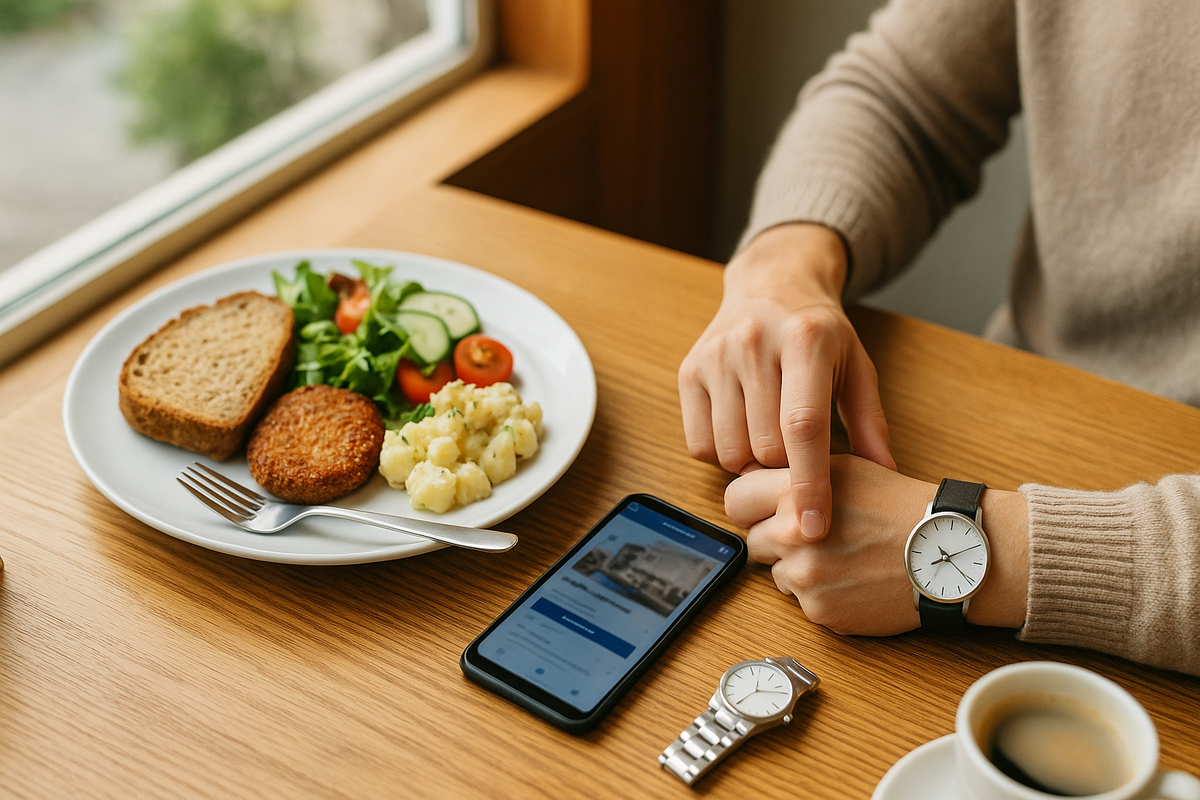
⏰ How to Use Time of Day to Your Advantage
- Lunch instead of dinner. Across the region, daytime deals are noticeably better value: same or very similar dishes, but on a lunch price.
- Watch the clock. The lunch window is usually around 11:30–14:00/15:00; arriving an hour late often turns a “good lunch deal” into a full-price dinner.
- Build your route around food. It’s practical to plan your walk so that by lunchtime you are in an area with a lunch bistro, buffet or food hall — not hunting for something on the fly in a random place.
On reservations:
- in most bistros, food halls and smørrebrød bars you won’t need a booking at lunchtime;
- Friday and Saturday evenings in popular venues are better booked in advance, especially in capitals;
- if you want one or two slightly “nicer” dinners (still not fine dining), it’s worth reserving a table online.
✅ Quick Checklist: How to Eat Locally and Casually in Scandinavia
- Look for formats, not stars. Smørrebrød bar, lunch bistro (lounas), Swedish table, market, food hall, street food — these keywords should be on your radar.
- Aim for lunch. The best time for local food that’s still affordable is the middle of the day, not the evening.
- Step off the main tourist street. A 5–10 minute walk into a residential area often takes 20–30% off your bill.
- Watch the crowd. Lots of locals and office workers on weekdays is one of the strongest indicators you’re in the right place.
- Don’t be afraid of simple presentation. Trays, self-service and basic interiors in Scandinavia often mean honest, home-style food, not low quality.
- Plan at least one budget meal per day. Breakfast or dinner from a supermarket plus one good lunch/dinner in a local place is a very workable strategy.
- Remember prices are dynamic. Before travelling, double-check current ranges via recent reviews and menus to adjust your food budget.
❓FAQ
💬 The sweet spot is the lunch window, roughly 11:30–14:00, when special daytime offers are available.
💬 In practice, Norway tends to be the priciest, followed by Denmark, while Sweden and Finland are slightly softer on the wallet.
💬 Yes, good food halls and markets offer a very representative slice of local cuisine and work well as a “quick gastro onboarding”.
💬 On weekdays at lunch, usually not, but for Friday and Saturday evenings in popular places it’s safer to book.
💬 Look for a majority of locals at lunch, a short menu, straightforward dish names and a generally simple, unpretentious setup — that combination rarely lies.

0 comments
Log in to leave a comment