


🍂 Golden Autumn in Scandinavia: Where and When to Catch the Best Colors
Scandinavian “golden autumn” is not a whole month, but a short, very bright window that shifts every year depending on latitude, altitude, and weather. The key thing to understand: “September or October?” really is the main question, and the answer for Norway, Sweden, Finland, and Denmark will be different. Below you’ll find a schematic map of the regions, a week-by-week calendar, car-free trip ideas from the capitals, and practical tips on clothing, gear, and safety. After reading, you’ll clearly understand where and when to go to hit peak colors instead of bare branches.
🗓️ When Golden Autumn Arrives in Scandinavia: The General “Window” by Region
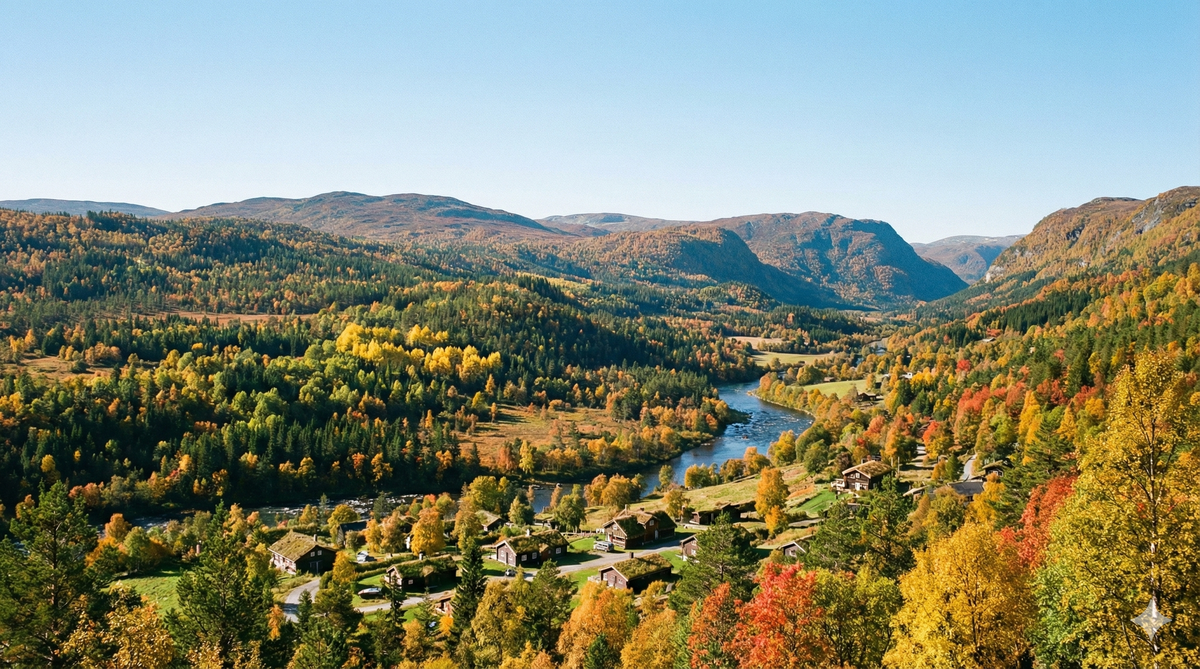
In Scandinavia, autumn arrives in waves: from north to south and from the mountains down to the sea. So it’s more accurate to think not “in September or in October”, but “at which latitude and at what elevation”. For orientation people often use:
- ruska — a popular Finnish word for the period of bright autumn colors (especially in Lapland).
- peak fall foliage — the short time when colors are at their maximum and leaves are still on the trees.
🍁 What Is “Peak” and Why It’s Short
Peak usually lasts 5–10 days, when 70–90% of foliage has already turned color and has not yet been blown down by wind and rain. One windy cyclone can “erase” the picture in a day, while a warm autumn can shift the timing and extend the season by a week or two.
🧭 Week-by-Week Calendar (Quick Planner)
- 1–10 September: high plateaus and mountain areas color up first; in the north it’s still green-yellow, but the real peak is usually ahead.
- 11–20 September: the most reliable window for Lapland (northern Finland/Sweden/Norway) — often this is where the “fireworks” happen.
- 21–30 September: “golden mean” for inland forests, valleys, and lake districts; the north is already shifting into the late phase.
- 1–10 October: a great balance for central regions and city trips with nature side-trips.
- 11–20 October: most often the best time for southern areas and coastal cities, including Denmark.
- after 20 October: higher risk of bare branches; in return you get more dramatic coastal weather (wind, clouds, waves) and a stronger “city + museums + food” mood.
📊 Mini Timeline by Region
| 🌍 Region | 📆 Typical peak dates | 🍂 Colors and weather | ⚠️ Risk of missing the peak |
|---|---|---|---|
| 🧭 North (Lapland, northern national parks) | mid–late September | tundra-like red/orange tones, yellow birch; nights are chilly, weather can be quite sharp | medium (short window) |
| 🧭 Center (lakes, valleys, inland forests) | late September–first week of October | classic “golden” palette, more mixed forests; more comfortable for daytime hikes | medium |
| 🧭 South + cities and coasts (Oslo/Stockholm/Helsinki/Denmark) | first–second week of October | milder temperatures, “city parks” and beech forests; storms can quickly knock leaves down | medium/high (by late October) |
🍂 Planning pro tip: if you’re taking 7–10 days off, pick a region with variation in elevation (valley + hills/plateau) — this way you increase your chances to see “different stages” of autumn in one trip.
🗺️ Autumn Map of Regions: Norway, Sweden, Finland, Denmark
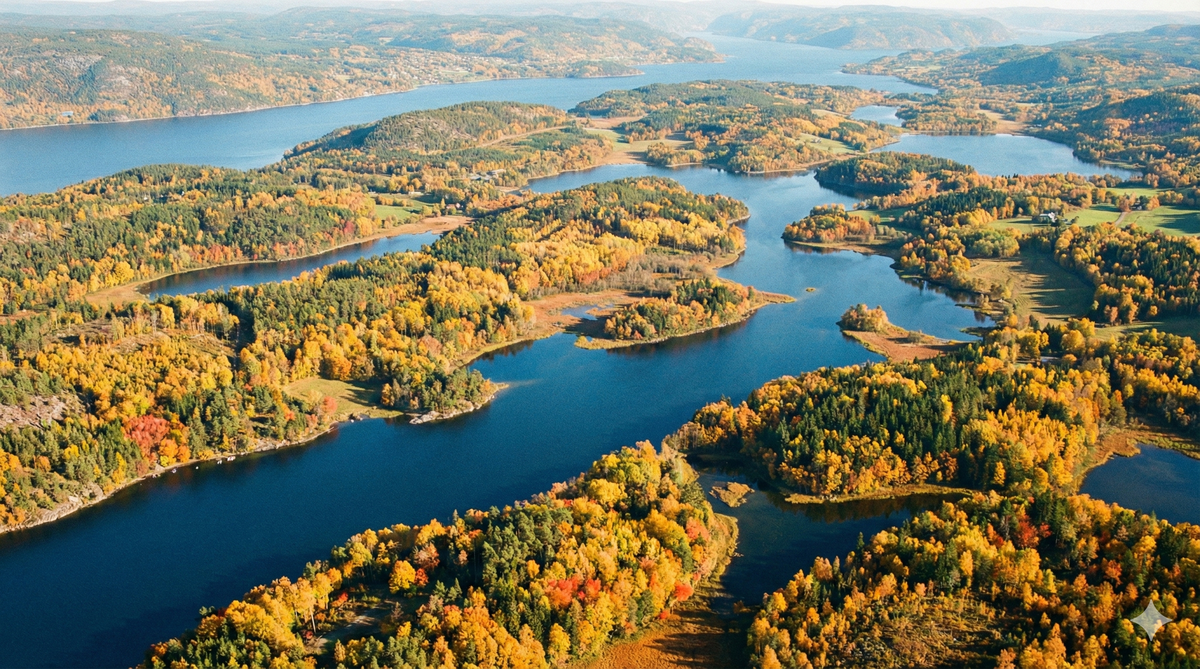
Below is an “autumn atlas”: 2–4 destinations per country to answer “where exactly to go”, not just “to Scandinavia”.
🧩 Schematic Map (How to Read the Regions)
NORTH ↑
-
NO:
Lofoten / north Fjords / Hardanger Jotunheimen and plateaus
-
SE:
Lapland Dalarna / Värmland Archipelago / west coast
-
FI:
Lapland Lakeland region Forests around Helsinki
-
DK:
North Zealand Central Jutland Coasts and dunes
SOUTH ↓
🇳🇴 Norway
- North and Lofoten: birch-covered slopes, fjell landscapes, often a mix of autumn colors and clear nights (sometimes already with a chance of northern lights).
- Western fjords and Hardanger: fjords + valleys + orchards/slopes; autumn looks “3D” here thanks to relief and water.
- Inland plateaus and national parks, Jotunheimen and nearby areas: autumn for hiking, panoramas, passes; beautiful, but weather changes fast.
🇸🇪 Sweden
- Swedish Lapland: early colors, tundra and sparse birch woods, lots of “clean lines” for photography.
- Forest heartland: Dalarna/Värmland and lakes: textbook “golden autumn” — forests, mirror-like lakes, cozy trails.
- Stockholm archipelago and west coast: islands, coastal walks, atmospheric storms and softer autumn closer to October.
🇫🇮 Finland
- Finnish Lapland, areas like Rovaniemi–Pyhä–Saariselkä: the main stage for ruska — bright, high-contrast, very photogenic.
- Lakeland: mixed forests, islands, water like a mirror; comfortable for gentle hiking and family trips.
- Forests around Helsinki: quick “after-work” outings for expats and locals who want autumn without long logistics.
🇩🇰 Denmark
- Central Jutland, Aarhus–Silkeborg area: beech forests, hills, lakes; autumn is mild and “European-style”, ideal for short car-free breaks.
- North Zealand, near Copenhagen: parks and forests within easy reach by public transport; perfect for “morning in the forest, evening in the city”.
- Coasts and dunes: less about foliage highlights, more about autumn atmosphere: wind, sea, dramatic skies.
📋 Atlas Table (Quick Comparison)
| 🌍 Country | 🗺️ Region | 🌲 Landscape type | 👥 Best for | 📆 Approx. peak dates |
|---|---|---|---|---|
| 🇳🇴 Norway | North / Lofoten | mountains, birch trees, sea | photography, active hiking | mid–late September |
| 🇳🇴 Norway | Fjords / Hardanger | fjords, valleys, slopes | photography, couples, “city + nature” | late Sept – early Oct |
| 🇳🇴 Norway | Jotunheimen / plateaus | high trails, panoramas | experienced / intermediate hikers | September |
| 🇸🇪 Sweden | Lapland | tundra, birch trees | photography, northern trails | mid–late September |
| 🇸🇪 Sweden | Dalarna / Värmland | forests + lakes | families, beginners, photography | late Sept – first half of Oct |
| 🇸🇪 Sweden | Archipelago | islands, coastline | walks, photography, relaxation | 1st–2nd week of October |
| 🇫🇮 Finland | Lapland | ruska, hills, wetlands | photography, hiking | mid–late September |
| 🇫🇮 Finland | Lake district | forests, water, islands | families, slow-paced routes | late Sept – early Oct |
| 🇫🇮 Finland | Helsinki surroundings | forests, day-hike trails | expats, weekend trips | 1st–2nd week of October |
| 🇩🇰 Denmark | Central Jutland | beech forests, hills | everyone, no car needed | 1st–2nd week of October |
| 🇩🇰 Denmark | North Zealand | parks, forests | day trips, families | 1st–2nd week of October |
| 🇩🇰 Denmark | Coasts / dunes | sea, wind, dramatic views | mood photography | October (flexible) |
If this is your first autumn in the region: for a “can’t go wrong wow-effect” most people choose Lapland in mid-September or central forests/lakes in late September–early October; for the mildest weather — Denmark and southern cities in the first half of October.
🎯 When Exactly to Go: Balancing Colors, Temperatures, and Crowds

Choosing dates means balancing three variables: color, weather, and people. The ideal strategy is not to hunt for “the perfect day”, but to build an itinerary that works across several scenarios (sunny/cloudy/rainy) ☁️.
🌡️ Practical Logic by Zone
- North (Lapland, northern Norway/Sweden): the best window is usually mid–late September: colors are strong, and daytime temperatures are still manageable for hiking.
- Center (Norwegian fjords and valleys, forested Sweden, Finnish Lakeland): late September–first half of October gives the most stable “beautiful + walkable” combination.
- South and cities (Oslo/Stockholm/Helsinki, Denmark): typically first–second week of October; after that the risk of “everything has fallen” grows after windy days.
👥 Tourist Flow: What to Expect
- September: more photographers and hikers in the north; in the cities it’s often calmer and cheaper than in summer.
- October: more comfortable for “urban” trips (culture, food, parks), but peak foliage becomes more capricious.
📊 Choice Matrix (For Your Goal)
| 👤 Profile | 🧭 North: best window | 🌌 North: pros | ⚠️ North: risks | 🏙️ South/cities: best window | 🌟 South/cities: pros | ⚠️ South/cities: risks |
|---|---|---|---|---|---|---|
| 📷 Photographers | mid–late September | maximum contrast, “clean” colours | wind/rain can cut the peak | 1st–2nd week of October | parks, architecture, reflections after rain | leaves can fall very quickly |
| 👨👩👧👦 Families | late September | fewer people, still pleasant to walk around | chilly evenings | 1st week of October | milder weather, lots of city activities | unpredictable foliage |
| 🥾 Beginner hikers | late September | longer daylight, less ice | abrupt weather changes | 1st–2nd week of October | many easy routes close to cities | wet trails, short days |
Key advice: if your priority is foliage 🍁, don’t bet everything on the last dates of October; at the end of the season it’s better to frame the trip as “autumn mood” (sea, cities, coziness) rather than a guaranteed peak.
🚆 Autumn Without a Car: Easy 1–2 Day Routes from the Capitals

A Scandinavian bonus for tourists and expats: near each capital you’ll find natural areas that are realistically reachable by public transport as a there-and-back day trip. Below are universal ideas that usually work well even without a rental car.
📋 Day Trip Table (1–2 Days)
| 🏙️ Capital | 🗺️ Where to (region/park) | 🚆 How to get there (type of transport, travel time) | 🥾 Route type |
|---|---|---|---|
| 🏙️ Oslo | Oslo Marka (forest area around the city) | metro/train, usually 20–45 min to the trailheads | easy–moderate |
| 🏙️ Oslo | Lakes/hills in the suburbs + loop along the trails | train/bus, often 40–80 min | moderate |
| 🏙️ Stockholm | Nature reserves near the city | metro/bus, usually 20–60 min | easy |
| 🏙️ Stockholm | Archipelago (island day trip) | ferry/bus+ferry, often 45–90 min | easy (walks) |
| 🏙️ Helsinki | National parks within bus reach | bus, usually 40–70 min | easy–moderate |
| 🏙️ Helsinki | “Morning hike + evening in the city” | transport both ways on the same day | easy |
| 🏙️ Copenhagen | Forests/parks in the suburbs | suburban train, usually 15–40 min | easy |
| 🏙️ Aarhus | Central Jutland (forests/lakes) | train/bus, often 30–70 min | easy–moderate |
🇳🇴 From Oslo
- Oslo Marka: start at metro/suburban train termini and plan a 6–12 km loop; in autumn, routes with viewpoints and lakes work especially well.
- Day template: morning — transport to the trailhead, daytime — loop hike, evening — back to the city and a warm dinner (yes, it’s a perfect day for an autumn “detox” 🍲).
🇸🇪 From Stockholm
- City parks and reserves: a good option for those who want maximum color with minimum “hiking heroism”; paths, oaks/maples, and water nearby look great in photos.
- Archipelago: if foliage is no longer perfect, the islands often save the trip with atmosphere: granite, sea, windy sky, and sunsets 🌅.
🇫🇮 From Helsinki
- Nearby national parks and forest zones: ideal for “half a day in nature”; bring a thermos, snacks, and pick a trail that goes past lakes.
- Combo “morning hike + evening in the city”: morning in the forest, afternoon walk, evening — city saunas/restaurants; a great balance for a short break.
🇩🇰 From Copenhagen / Aarhus
- Copenhagen: focus on nearby beech forests and parks — they look “cinematic” even on overcast days; convenient for expats wanting a 3–5 hour escape.
- Aarhus: benefits from its Central Jutland surroundings: lakes and beech woods are close by, and logistics are often easier than you’d expect; “city + forest” fits comfortably into one day.
Pro tip for car-free trips: choose routes where the start and finish are tied to different stops/stations — this way you avoid walking the same path twice and get more “scenes” for the same number of steps 📍.
🧰 Practical Tips: Gear, Safety, Protecting Your Tech + Mini FAQ
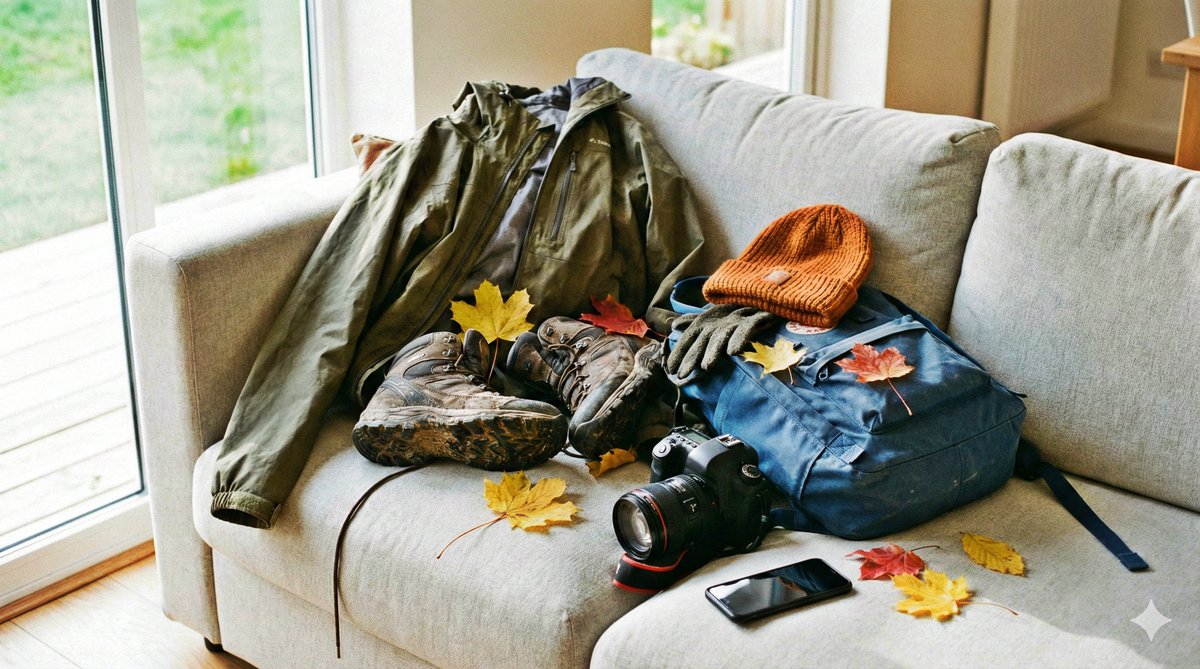
In Scandinavian autumn those who “pack flexibly” win: the weather can change three times a day, and the best shots usually go to people with dry socks and a charged phone.
🧥 Gear for Autumn Hiking and Shooting
- Layering system: base layer (wicks moisture) + insulating layer + windproof/rain shell.
- Footwear: waterproof boots/trainers appropriate for the season and spare socks (a small thing that saves the day).
- Warm extras: hat, gloves, buff — even in September in the north they really matter.
- Daylight: bring a small flashlight/headlamp, especially if you plan to stay for sunset.
🧾 One-day checklist: layers + rain shell, spare socks, water/snack, offline map, headlamp/flashlight, basic first-aid kit, dry bag/plastic bag for spare clothes.
📸 Protecting Your Gear
- From rain: a rain cover for your camera/backpack or at least a simple waterproof sleeve; a microfiber cloth for the lens is essential.
- From cold: keep your power bank and spare battery close to your body (batteries drain much faster in a cold backpack).
- From slips and falls: most accidents happen on wet roots and rocks — better to stow the camera in your pack on technical sections and take it out at viewpoints.
🧠 Planning and Flexibility (to Actually “Catch” Peak)
- Plan B for rain: museums, viewpoints with short walks, city parks, SPA/saunas — in autumn this is not “giving up” but a normal strategy.
- Buffer day: if your goal is ruska/peak foliage, build in at least one flexible day you can move around according to the forecast.
- Local status check: before heading out, check forecast, wind, and any trail/ferry warnings; especially important on the coast and in the mountains.
❓FAQ
✅ Most often the best window is mid–late September, and the peak lasts about a week.
✅ In most years it’s the first–second week of October, but parks can shift by a few days depending on the weather.
✅ Yes, there are parks and natural areas near the capitals that are easy to reach by train, metro, or bus.
✅ Take layers and a rain shell, waterproof footwear, water and snacks, a flashlight, an offline map, and basic protection for your gear.
✅ Don’t cancel the trip completely — switch to “city + short walks + museums/saunas” and use your buffer day for nature.

0 comments
Log in to leave a comment