


🚗 Car or public transport: what’s cheaper and easier for 7–10 days in Scandinavia
Scandinavia looks like the perfect place for road trips: quiet roads, views over fjords and lakes, small villages far from any railway line. At the same time, public transport works brilliantly: fast trains, airport expresses, night services and ferries where you can board with just a rucksack. Some travellers insist that “without a car Scandinavia makes no sense”, others happily explore everything by rail and bus. This article helps you weigh up the two options over 7–10 days and match your transport to your travel style.
🚦 What are you really choosing between?
In practice you are deciding several things at once:
– how much freedom you need (spontaneous stops, remote cabins, changing plans on the go);
– how ready you are to plan tickets and timetables in advance;
– which season and what kind of roads you will face (fjords, mountain passes, winter Lapland or calm cities);
– how many people you travel with and how you share the costs.
For solo travellers a car is almost always more expensive than trains. For a group of three or four, the numbers change quickly.
🚘 When a car is genuinely useful
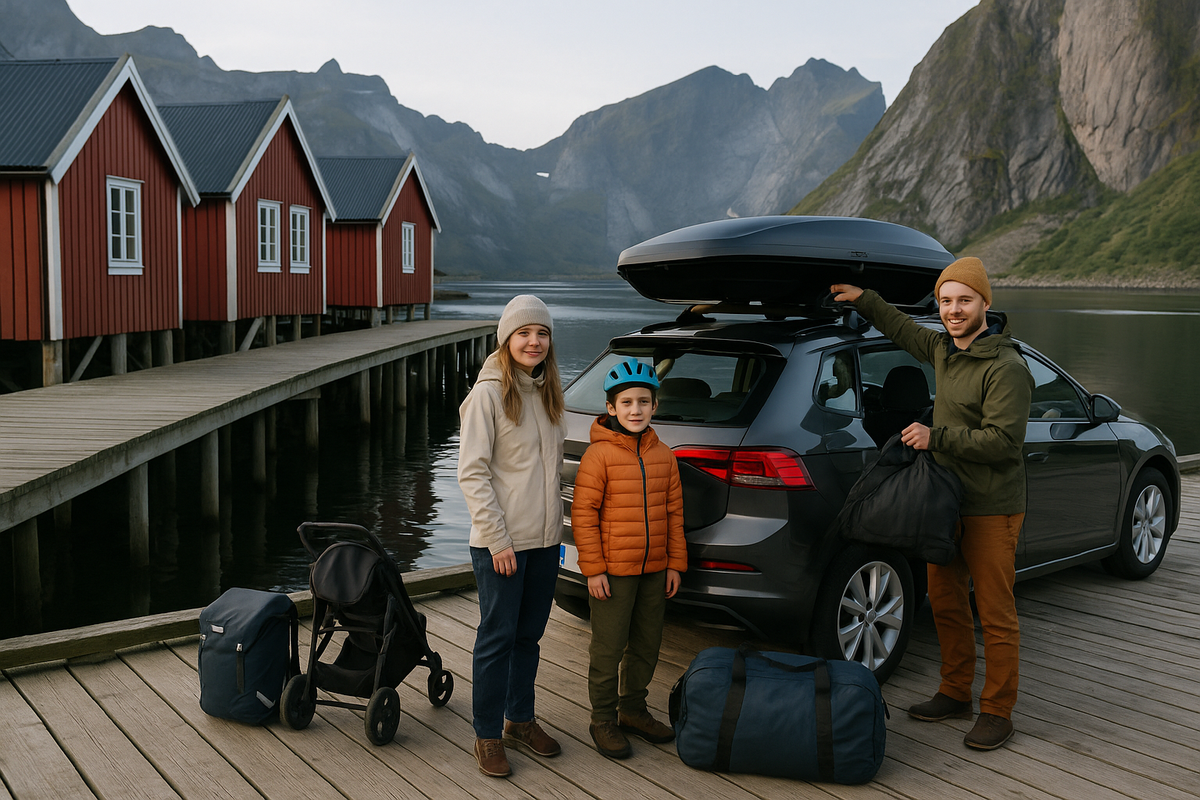
– You want to explore fjords, valleys and tiny villages where there are no trains and buses run only a few times a day.
– You plan to stay in sommerhus, rorbu or lakeside cabins, easier reached by gravel road than with a suitcase from a bus stop.
– You like to stop wherever the view is stunning: a beach, lighthouse, trailhead, little farm shop.
– You travel as a family or group, sharing rental and fuel between three–four people.
– You bring lots of gear: children’s kit, sports equipment, fishing tackle.
In these scenarios a car becomes a moving base camp. You are not tied to the 16:20 bus – you decide yourself when to leave and where to sleep.
🚉 When trains and buses win
– Your route focuses on capitals and larger cities: Copenhagen, Oslo, Stockholm, Helsinki, Aarhus, Bergen, Gothenburg. Parking there is expensive and sometimes scarce.
– You travel in winter, especially in Norway or the north of Sweden/Finland, and do not want to think about black ice, snowdrifts and chains.
– You go alone or as a couple and prefer minimum admin: buy a pass and ride.
– You want to use night trains or ferries, combining transport and accommodation.
– You feel safer when locals are driving on unfamiliar, slippery roads.
Here public transport saves nerves: you don’t hunt for parking at every museum, don’t pay congestion charges and don’t panic if the sat‑nav is confused.

📊 Comparison table: car vs public transport for 7–10 days
| Aspect | Car for 7–10 days | Trains and buses |
|---|---|---|
| Budget |
|
|
| Route freedom |
|
|
| Stress and responsibility |
|
|
| Cities vs nature |
|
|
💰 Money: what does a 7–10 day car trip actually cost?
Very roughly:
– compact car hire: 45–80 € per day depending on season and country;
– fuel: 1.8–2+ € per litre, consumption 6–8 l/100 km;
– toll bridges and ferries: from a few tens to a couple of hundred euros for a full itinerary (especially if you cross major straits with a car);
– city parking: 2–5 € per hour in central zones, sometimes more.
Even with a modest plan, a car for 7–10 days easily ends up at 600–1000+ € all‑in. Divide this by the number of travellers – that’s your real price of “freedom” per person.
Rail and bus passes look different:
– regional or national passes for a week often cost roughly the same as 2–3 days of car hire;
– a night train or ferry saves one hotel night;
– in cities, 24‑ or 72‑hour tickets pay off after 3–4 rides per day.
🧮 Calculator: car or public transport for your specific trip
🧮 Rough budget check: car vs public transport
Insert your own numbers (any currency) and see what is cheaper per person.
🧭 Route scenarios: where a car is a must, and where it’s just luggage
🏞️ “Fjords and backroads”
Classic car territory: western and northern Norway, the far north of Jutland, the Finnish and Swedish lake districts. Bus services might be morning and evening only, the nearest supermarket 15 km away, and the trailhead starts at a car park with no public bus stop. If you want to sleep in cabins by the water and stop at waterfalls along the way, a car gives that freedom.
🏙️ “Capitals and big cities”
For a chain like “Copenhagen – Oslo – Bergen – Stockholm – Helsinki” trains and ferries make much more sense. You arrive in the centre, avoid parking charges and can choose hotels or apartments within walking distance of the station. You’ll still see nature – through day trips, city islands and national parks an hour away.
⚓ “Combo: car + trains”
Sometimes it’s smartest to rent a car only for part of the journey. For example: fly to Copenhagen, spend three days car‑free, take a train or ferry to Bergen, hire a car there for 4–5 days around the fjords and return it in Bergen. That way you avoid paying for a vehicle in capitals and skip long, monotonous motorway stretches.
❄️ Winter: when it’s safer to let locals drive
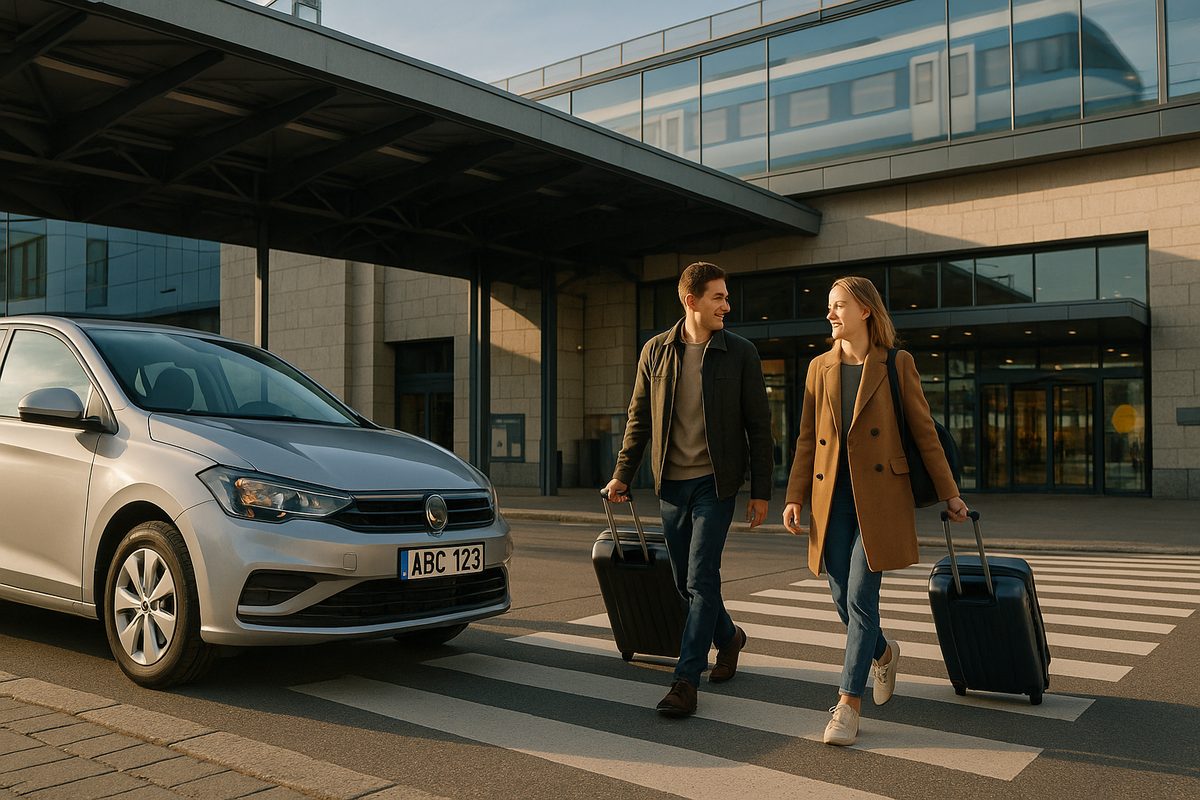
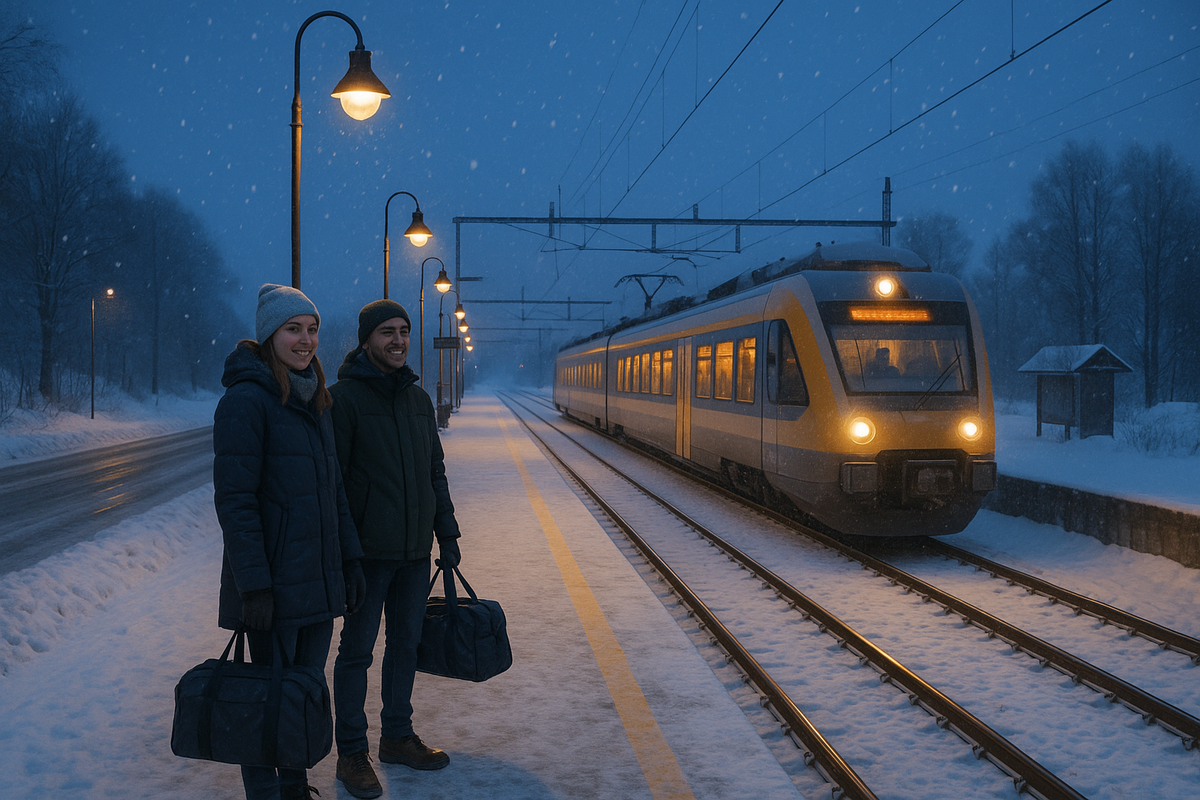
Winter Scandinavia is magical, but beneath the postcard lies ice, snowdrifts and very short daylight. If you have little experience of winter driving at home, mixing a hire car, mountain roads and snowstorms can become a stressful quest.
Trains and buses in winter:
– run on prepared tracks and roads; snow rarely stops them entirely;
– take you to ski resorts and winter villages without worrying about chains;
– let you look at the northern lights and snow from the window rather than through a frozen windscreen.
🧾 Winter driving checklist
🧾 Checklist: are you ready for winter driving?
- 🧊I know how to drive on ice and snow, react calmly to skids and brake early.
- 🛞When picking up the car I check: proper winter tyres/studs, ice scraper and brush.
- 🕒I plan generous time buffers: 200 km in winter is not the same as 200 km in summer.
- 🌨️I follow local advice: if locals cancel trips because of a storm, I do the same.
- 📍I know in advance whether my accommodation has parking and how snow is cleared there.
- 📱I have offline maps and an app showing road conditions and closures.
- 🧥There is warm clothing, a flask and spare snacks in the car in case I have to wait for help.
🌱 Environment, toll zones, bridges and ferries
Scandinavian capitals are tightening environmental rules:
– low‑emission zones where older diesel cars are restricted or banned;
– toll tunnels and bridges that add dozens of euros to a journey;
– paid parking almost everywhere you actually want to stop.
With public transport you pay for a pass once and stop thinking about bridges and fines. Cars become noticeably more expensive on itineraries with several ferries and long toll bridges – budget a separate line for this.
❓FAQ
A comfortable range is 150–250 km per day, including photo stops and short walks. Roads are often scenic and you will not want to rush at 120 km/h. In mountains and in winter aim even lower. If your plan includes many 400+ km days, you will remember motorways more than fjords.
No. Trains, buses and tourist coaches connect major cities and many fjords. Without a car it is harder to reach the tiniest villages, cabins and trailheads with no regular service. Decide honestly whether those “white spots” on the map are essential for your first trip.
Toll bridges and ferries, city parking, surcharges for extras (second driver, child seats, insurance upgrades) and one‑way rental fees for returning the car in another city. All of this can easily add 20–40% on top of the base rental price.
Yes, if you stay in larger winter hubs and use transfers to activities. Most tours for northern lights, snowmobiles and huskies are run by local operators who pick you up from town or your hotel. A car only becomes useful if you want to explore surrounding villages on your own.
Roads are clear and traffic usually calm, but the issues are different: expensive parking, one‑way streets and lots of cyclists and pedestrians to watch. If you dislike parking puzzles, leave the car outside the centre or plan city days entirely on public transport.
If you are new to the region and want to see capitals plus a couple of easy nature spots, it is usually cheaper and simpler to start with trains, buses and ferries. If you have already done the cities and dream of a fjord cabin or a string of coastal campsites, it makes sense to plan at least part of the itinerary with a hire car.

0 comments
Log in to leave a comment