


🏠 Sommerhus, rorbu, igloo, camping: which type of accommodation fits your trip?
When you plan your first trip to Scandinavia, the world of accommodation looks like a row of strange words: sommerhus, rorbu, hytte, glass igloo, glamping, farm stay… In the photos everything is just “pretty cabins by the water”, but in real life these formats differ a lot in comfort, price, season and whether you need a car.
This article breaks down six key types of countryside accommodation in Scandinavia in simple language: where you find them, what they usually include, how much they cost and who they suit. At the same time we’ll look at the best regions for “a place in nature” rather than just a hotel in the capital.
🔎 Why it’s worth understanding the different accommodation types
Scandinavians are used to spending their holidays in cabins and campsites – it’s a culture of its own. A visitor who simply opens a booking site and sets the filter to “entire home” can easily misfire:
– booking a glass igloo and then being surprised there’s no kitchen;
– choosing a small cabin on a campsite where showers and toilets are in a shared block;
– renting a Danish sommerhus 2 km from the sea while expecting “first line” beachfront;
– paying hotel‑level prices for a rorbu and then finding out it’s compact and right above the working harbour.
If you understand what you’re actually looking at, it becomes much easier to match the format to your scenario: winter evenings by the fire, summer on the beach, fishing with friends or chasing the northern lights.
🏡 Sommerhus in Denmark: a holiday home to “live like the Danes”
A sommerhus is a classic Danish holiday home. Usually it’s a separate hut or modern cottage in a small settlement by the sea, forest or fjord, with a terrace, fireplace and a small garden.

Where they are common
– West and North Jutland: long beaches, dunes, wind, surfing.
– North Zealand: holiday homes by the sea not far from Copenhagen.
– Funen and the smaller islands: mild climate, fields, orchards, cosy coves.
– Bornholm: Baltic island with beaches, cliffs and bike routes.
Typical facilities
In most sommerhus you’ll find:
– a full kitchen (hob, oven, dishwasher, basic cookware and tableware),
– a living room with a large table and sofa,
– a wood‑burning stove or fireplace, sometimes a heat pump,
– 2–4 bedrooms, often with bunk beds,
– a terrace with outdoor furniture and a barbecue.
Pros
– A “home of your own”: you can cook, dry clothes and stay for weeks.
– Great option for a family or group of 4–6 people.
– Large choice near the sea and in quiet villages.
Cons and hidden costs
– Electricity and heating are often charged by the metre, sometimes water too.
– Final cleaning and bed linen/towels may be extra.
– In summer many houses are rented weekly “Saturday to Saturday”.
Without a car?
On Zealand and parts of Funen you can base yourself in a sommerhus and use trains/buses plus a bike. In West Jutland it’s more difficult without a car: villages are spread out, and the supermarket or footpaths can be quite far away.
💬 Typical “miss”
“We booked a sommerhus ‘by the sea’, but it turned out to be a 20‑minute walk through the village, and in winter the electricity bill added up quickly because we were using the fireplace and electric heaters.”
📊 Сomparison of accommodation formats
| Format | Where you find it | Comfort level | Budget (from 💸 to 💸💸💸💸) | Car needed |
|---|---|---|---|---|
| Sommerhus | Denmark: Jutland, Zealand, Funen, Bornholm sea / forest | Full house with kitchen, fireplace, 2–4 bedrooms | 💸💸–💸💸💸 (summer more expensive) | Useful, but sometimes possible with public transport |
| Rorbu / sjøhus | Norway: Lofoten, Senja, coast and fjords waterfront | Compact cabins on the pier; kitchen not always fully equipped | 💸💸💸–💸💸💸💸 | Highly recommended, especially outside the most touristic areas |
| Glass igloo / dome | Lapland (Finland, Sweden, Norway) northern lights | Capsule‑style room, often without kitchen, focused on view and sky | 💸💸💸💸 | Often a transfer/shuttle, but a car gives freedom |
| Campsite (tent / hytte) | All countries, especially coasts and lakes nature | From tent pitch to simple cabin without bathroom | 💸–💸💸 (depends on type) | Easier with a car or campervan, but some sites are near towns |
| Glamping | Popular coasts, archipelagos, lakes view + comfort | Luxury tent with bed, sometimes bathroom and breakfast | 💸💸💸 | Often needed, but some sites offer transfers |
| Farm stay | Rural Scandinavia: fields, farms, lakes countryside | House on or near a farm, with kitchen and simple rustic decor | 💸💸–💸💸💸 | Almost always needed |
⛵ Rorbu in Norway: fisherman’s cabin right over the water
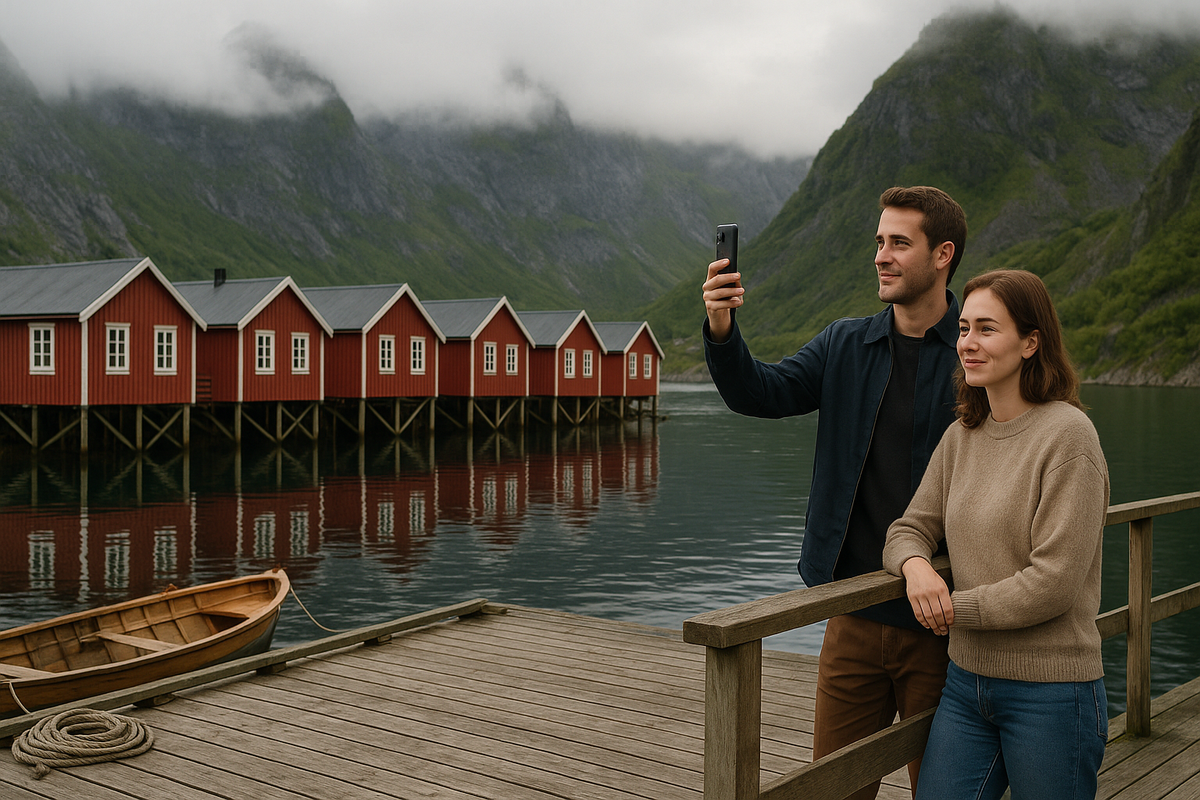
A rorbu (or sjøhus) is a traditional Norwegian fisherman’s cabin built on stilts above the water, often painted red or yellow. Most of them are now converted into holiday rentals.
Where to look
– Lofoten and Vesterålen: the most “postcard‑like” cabins with sharp mountain peaks and harbours.
– Northern and western coast of Norway: small fishing villages, coves and fjords.
– Fjord regions in the south: rorbu‑style cabins can sometimes be found on the shore.
Facilities
– Kitchen (sometimes compact but with hob and basic equipment).
– Bedrooms with bunk beds or narrow “berth”‑style beds, often on a mezzanine.
– Boat dock, the option to rent a boat or go fishing.
Pros
– Maximum “living in a postcard” feeling: view from your window straight over the fjord or harbour.
– Great base for fishing and boat trips.
Cons
– Interior is often compact: it’s not a villa but a working fisherman’s cabin.
– Stairs, walkways and piers are not always ideal for very small children.
– In season prices are high and cheaper options sell out early.
💬 Typical “miss”
“We expected our rorbu to be a cosy cottage, but it turned out to be a fairly simple cabin with bunk beds and boats under the window – beautiful, but not exactly ‘luxury’ for the price.”
❄️ Glass igloos and domes: watching the northern lights from your bed
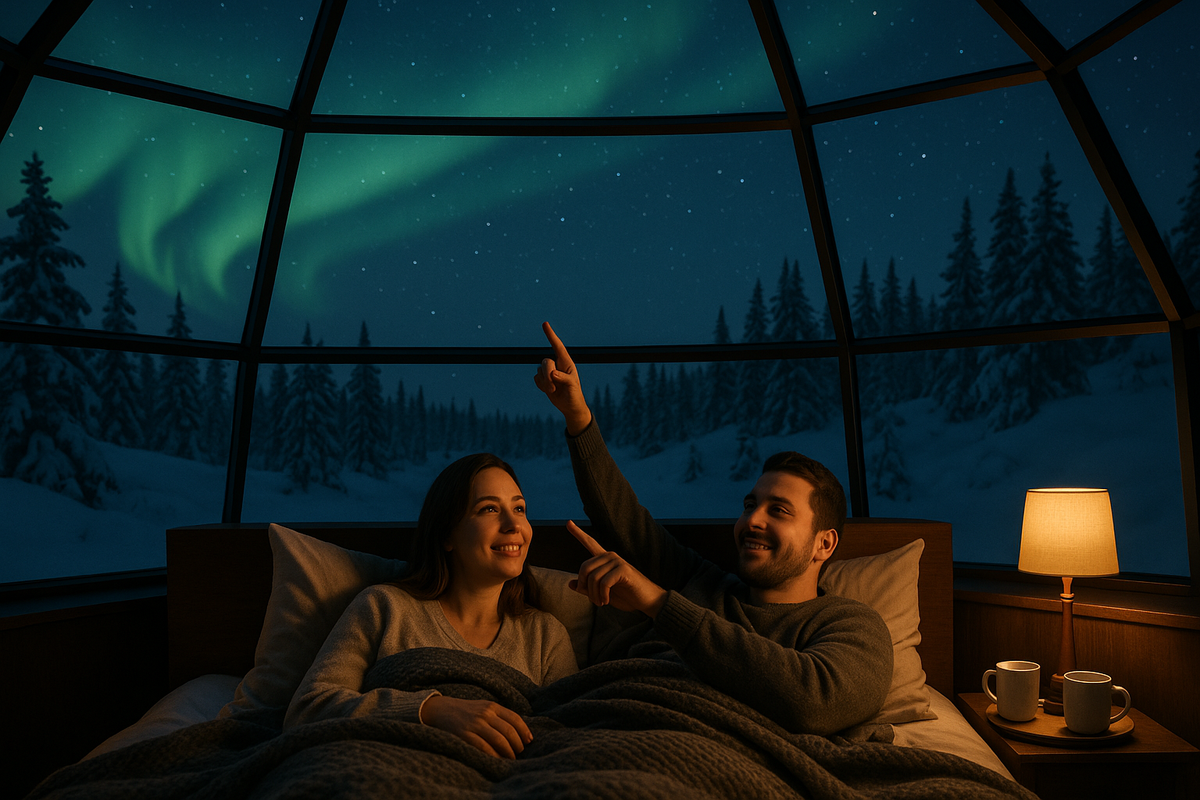
Glass or partly glass igloos and dome cabins are a “once in a lifetime” type of stay. They’re built so that you can see the sky – northern lights, stars, Arctic dawn – right from your bed.
Where to look
– Finnish Lapland: around Rovaniemi, Saariselkä, Levi and other winter resorts.
– Norwegian and Swedish Lapland: small clusters of domes and panoramic cabins.
Facilities
– Bed with panoramic windows or a transparent roof.
– Sometimes a small private bathroom inside, sometimes shared facilities in a separate building.
– Dinner/breakfast often included, because there is no kitchen for self‑catering.
Pros
– Maximum romantic and “Instagram‑friendly” format.
– Ideal for a couple who want “that one special night under the aurora”.
Cons
– Very expensive per night, especially in peak aurora season.
– Almost never a proper kitchen, making it harder to save on food.
– Often remote: you need a car or paid transfer.
💬 Typical “miss”
“We thought the igloo would be a cosy little house for several days, but in reality it was mainly a bed and a shower – no hob, no kettle – so we had to eat in the on‑site restaurant every time.”
🏕️ Campsites and hytte: from tent pitch to simple cabin
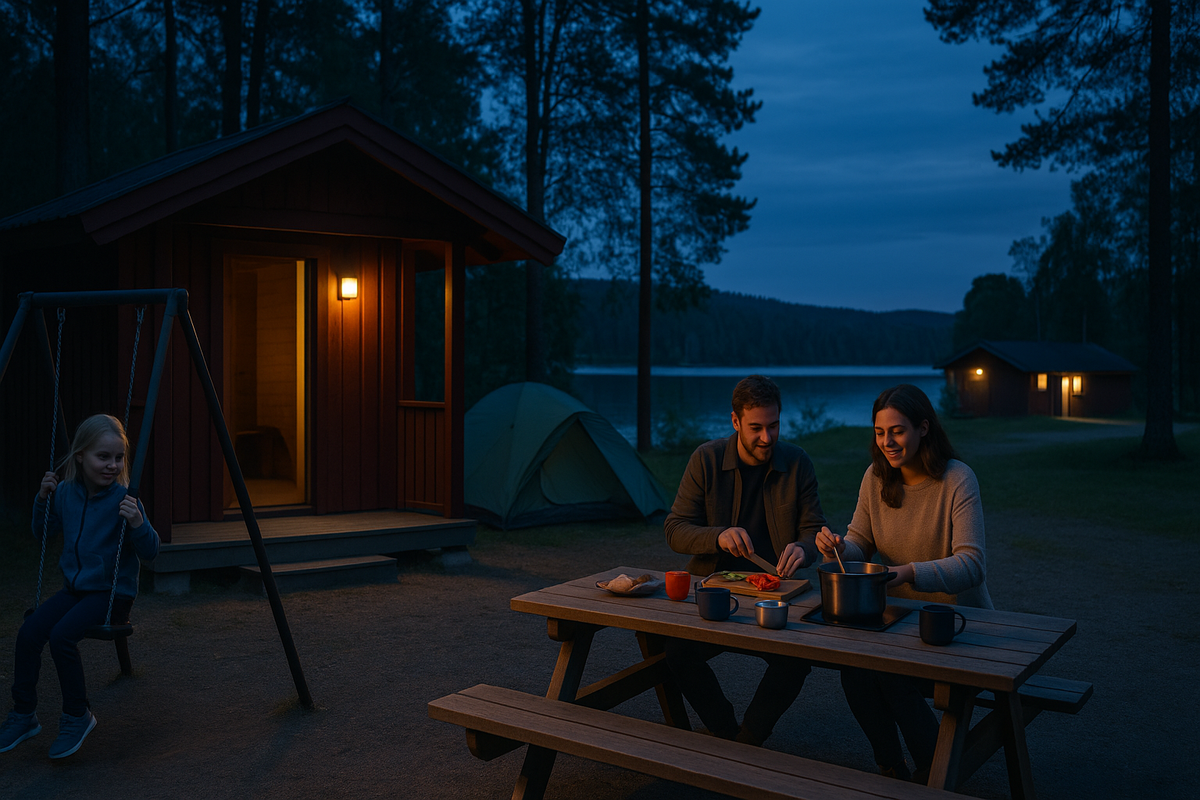
A Scandinavian campsite is not only tents. Very often it’s a complex with:
– pitches for tents and motorhomes,
– simple cabins (hytte) without private bathroom but with beds and a small kitchenette,
– sometimes more comfortable cabins with their own shower and toilet.
Where and why
– Denmark: campsites by beaches, fjords and lakes, including very family‑oriented ones (pools, trampolines, playrooms).
– Norway and Sweden: sites along roads, by lakes, in national parks and by fjords.
– Finland: lakeside sites and holiday villages with saunas and cabins.
Pros
– Flexible budget: you can choose between tent, basic cabin or a more comfortable cottage.
– Often fantastic locations by water, forest and trails.
– Children usually love the “camp” feel, playgrounds and other families next door.
Cons
– Showers and toilets may only be in shared blocks.
– Popular campsites in high season need to be booked well in advance.
– Without a car many campsites are hard to reach, apart from those close to cities.
✨ Glamping: a luxury tent instead of a hotel
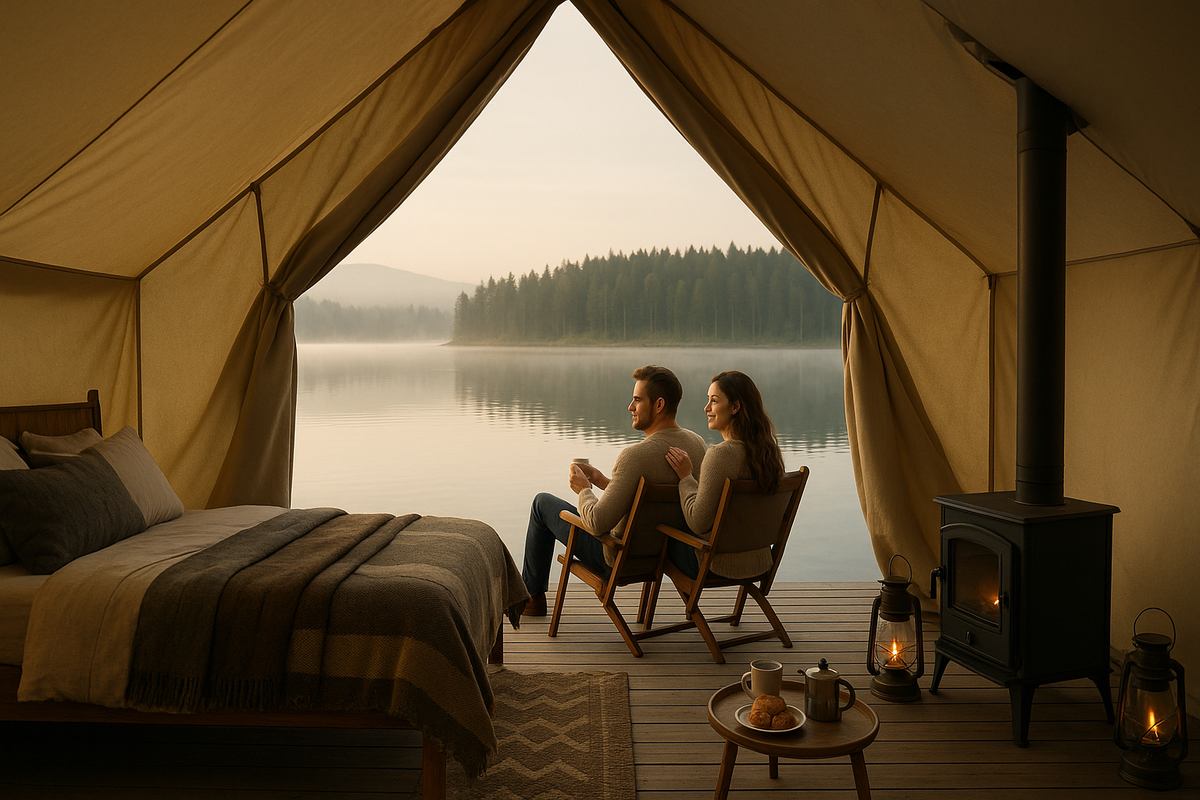
Glamping is essentially living in a tent – but sleeping in a real bed, with proper bedding, often a stove or heater and a beautiful view.
Where you find it
– Danish coasts: luxury tents on seaside campsites.
– Swedish forests and lake regions: domes and canvas lodges.
– Norwegian fjords and coast: tents and domes at scenic viewpoints.
– Finnish lake districts: dome cabins by the water.
Facilities
– Real bed, sometimes a small heater, rugs and seating.
– Bathrooms are often in a shared block, though some units have private facilities.
– Breakfast is often included; sometimes dinner or food baskets as well.
Pros
– Very pretty and photogenic: a “wow factor” without having to pitch your own tent.
– Nature and quiet, but not total sacrifice of comfort.
Cons
– Weather‑dependent: rain and wind are still very noticeable and can feel chilly.
– Not always a kitchen for cooking your own meals.
🚜 Farm stays and agritourism
Farm stays are accommodation on a working or former farm: a separate holiday house or part of the main farmhouse.
Where to look
– Rural Denmark: Funen, southern Jutland, small islands.
– Swedish regions like Småland or Dalarna: red cabins in a landscape of lakes and forests.
– Finnish lake districts: lakeside cottages with sauna and jetty.
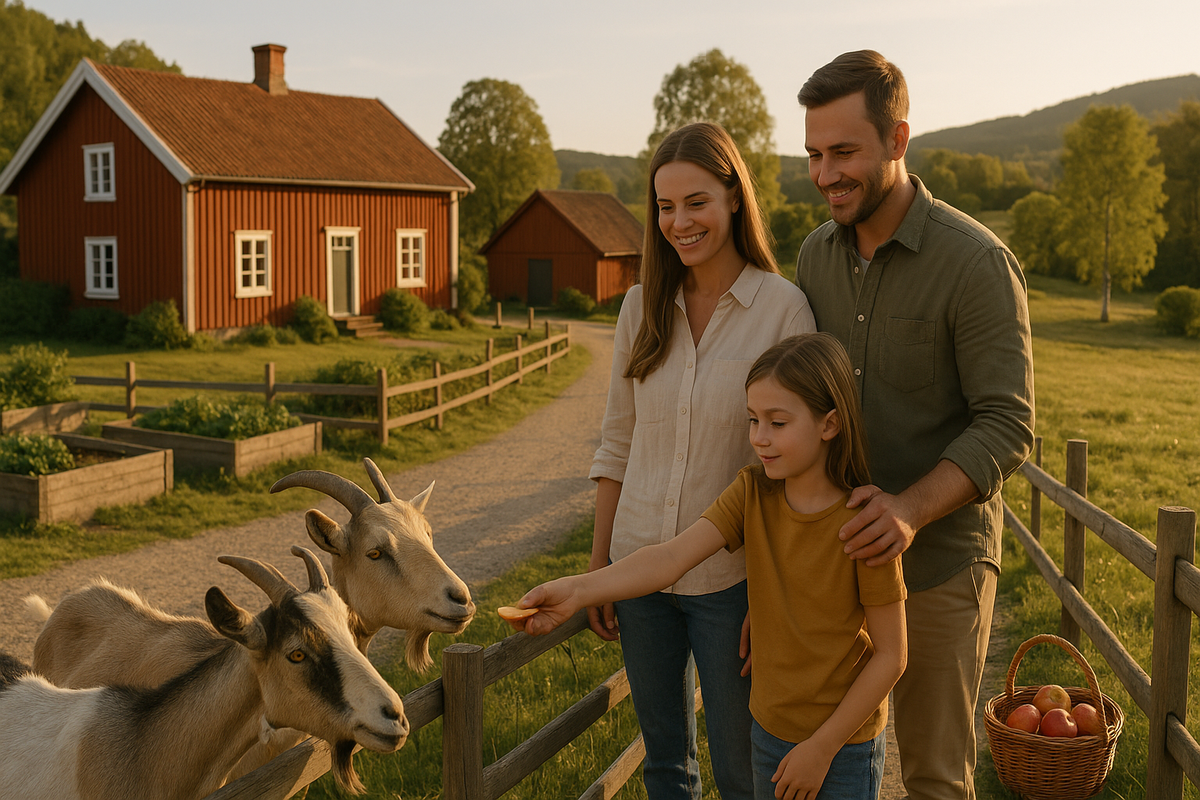
Facilities
– House with kitchen, living area and bedrooms.
– Often access to a garden, barns and sometimes animals (by arrangement).
– Breakfast sometimes included, dinner less often.
Pros
– Gentle introduction to rural life, especially interesting with children.
– Quiet, starry nights and very little light pollution.
Cons
– Almost always requires a car.
– Less anonymity: you live close to or with the owners.
– The nearest supermarket may be 10–20 minutes’ drive away.
🗺️Best regions for countryside stays in Scandinavia
🇩🇰 Denmark
West and North Jutland: long beaches, dunes, wind, surfing, lots of sommerhus and campsites.
Funen and islands: mild climate, orchards, farm stays and cottages by the water.
North Zealand and Bornholm: seaside cottages, cycle routes, a blend of nature and convenience.
sommerhus • campsites🇳🇴 Norway
Lofoten Islands: rorbu on stilts, fishing, dramatic mountains – unique but pricey.
Fjord regions: cabins and campsites on the water, mild summer climate.
Southern coast: rocky shores, coves, holiday homes and seaside campsites.
rorbu • hytte • campsites🇸🇪/🇫🇮 Sweden and Finland
Swedish lakes and forests: red cabins, farm stays, forest campsites and glamping.
Finnish lake district: cottages with sauna and jetty, fishing and kayaking.
Lapland: glass igloos, domes and simple cabins for the northern lights.
igloos • lakeside cabins🎯 Scenarios: which format for your kind of trip
“Winter cabin with fireplace”
– Format: Danish sommerhus, Norwegian hytte, Finnish lakeside cabin.
– Plus: kitchen, warmth, space for games and reading, fireplace or wood‑burning stove.
– Minus: heating costs (electricity) and the need to ventilate properly.
“Summer house on the fjord”
– Format: rorbu or waterfront cottage in Norway; cabins by lakes in Sweden/Finland.
– Plus: fishing, boats, swimming (in season), “postcard” views.
– Minus: high demand in July–August and the need to book well ahead.
“Campsite by the sea”
– Format: campsites in Denmark (Jutland, islands) or on the Norwegian/Swedish coast.
– Plus: relatively affordable, kids outdoors all day, many other families.
– Minus: shared showers and toilets, and strong dependence on weather if you sleep in a tent.
“Northern lights mission”
– Format: glass igloos, domes, cabins in Lapland.
– Plus: you can watch the sky from a warm bed.
– Minus: best to limit 1–2 nights in an igloo/dome and the rest in a normal cabin, otherwise the budget explodes.
💡 Checklist – choosing your format
🔍 Which format fits you?
Tick the boxes that feel true – then see which formats appear most often.
- We are 3–6 people, want to cook ourselves and spend a couple of days “not going anywhere” → look at sommerhus or farm stays.
- Our dream is a fjord view, fishing and a boat right outside → look for rorbu or waterfront cabins in Norway/lake regions.
- We want maximum romance and northern lights → plan 1–2 nights in a glass igloo/dome and the rest in a normal cabin.
- Our budget is limited but we love nature and are not afraid of shared facilities → campsites and simple hytte.
- We want it to look great but don’t want to sleep on a thin mat in a tent → glamping or comfy site cabins.
- We won’t have a car → look for sommerhus and campsites near train/bus lines; rorbu and farm stays are better kept for later trips.
❓FAQ
For a first trip, many people find a “city + cottage or campsite cabin” combination in Denmark or Sweden easiest. The climate is milder, infrastructure is straightforward, there is less extreme weather than in Norway or Lapland, and you’ll find plenty of accommodation with kitchens and decent comfort.
A sommerhus is a separate house on its own plot, with a full kitchen, living room and several bedrooms. A campsite cabin (hytte) may be simpler: smaller, sometimes without a private bathroom, with showers and toilets in a shared block. Campsites often win on pools, playgrounds and family facilities rather than indoor space.
Without a car it’s usually easiest to choose:
– sommerhus and apartments near railway stations and key bus routes,
– campsites close to big towns and popular beaches,
– some cabins in Swedish and Finnish lake regions where owners offer transfers.
Rorbu, farm stays and many glamping sites assume you either have a car or are ready to pay for transfers.
A well‑insulated sommerhus or hytte with proper heating is usually the cosiest. Rorbu can also be fine in winter but are more exposed to wind from the water. Glass igloos are designed for winter temperatures, but they are not meant as a “live here for a week” base: they are small and more about the view than daytime comfort.
Groups of 4–8 often do well in a large sommerhus, a lakeside cabin or a cluster of rorbu in the same complex. On campsites groups frequently book two or three hytte next to each other. If your focus is fishing and long evenings together, it’s more convenient to have a big shared living area than separate tiny igloos or highly compact glamping units.
The most predictable options with private bathrooms are:
– sommerhus and most standalone cottages,
– some rorbu and upgraded campsite cabins,
– some glamping units and farm stays.
If a private bathroom is essential, always check the description for “private bathroom” and avoid phrases like “shared facilities”.
The same pain points come up again and again:
– extra charges for electricity and heating in cabins and sommerhus, especially in winter;
– paid final cleaning if you don’t follow the check‑out rules;
– rental of bed linen and towels (not always included on campsites and in sommerhus);
– compulsory meal packages in places without kitchens (igloos and some glamping sites).
Yes, and it often works brilliantly. For example: 3–4 nights in a sommerhus or lakeside cottage and then 1–2 nights in a glass igloo or glamping tent for a “wow” finale. Or a week in a seaside cottage plus a few nights on a campsite closer to hiking trails. The main thing is not to cram in too many short stops: 2–3 formats over 10–14 days is usually plenty.

0 comments
Log in to leave a comment