


🌆 City + Nature: How to Combine a Capital and a National Park in 3–5 Days
Flying to Scandinavia just for museums is no longer enough: more and more travellers want to see both the capital and the “real” nature 🌲 in one short trip. At the same time, many worry: “In 3–5 days we’ll see neither the city nor the hiking part properly,” or “Without a car the logistics will be too complicated.”
In reality, Copenhagen, Oslo, Stockholm, and Helsinki all have solid “city + nature” combinations accessible by public transport — with clear routes and a realistic pace.
This article gives you ready-made scenarios for all four capitals, 3/4/5-day options, basic transport guidance, and a gear checklist so your trip doesn’t turn into a race against timetables.
⚖️ Why Combining a Capital and Nature Is the Best 3–5 Day Format

The “🏙️ city + 🌿 nature” format solves several tasks at once:
- Balanced impressions. A couple of days for museums, cafés, neighbourhoods, and waterfronts; one or two more for a light hike, lakes, forest, or archipelago. Your brain gets a break from “museum marathons,” your body from endless city pavement.
- Scandinavians live with nature right next door. From all four capitals you can reach forests, lakes, sea, and national parks by train, metro, commuter rail, bus, or ferry in about 30–90 minutes. A car is nice to have, but not mandatory.
- Logistics without pain. You don’t need to “relocate” to another region: you stay in the capital and treat nature like an advanced suburban day trip.
- Format for “normal people”, not ultra-trekkers. We’re talking about day hikes of 5–12 km on well-marked trails, not multi-day wilderness treks with heavy packs.
In a 3–5 day trip, the most common structure looks like:
- 3 days: 2 days city + 1 day nature;
- 4 days: 2 days city + 1 day nature + 1 flexible day (for weather/mood);
- 5 days: 2–3 days city + 2 days nature (or one “intense” nature day and one lighter one).
🌉 Copenhagen + Nature: From Harbor to Mols Bjerge Hills
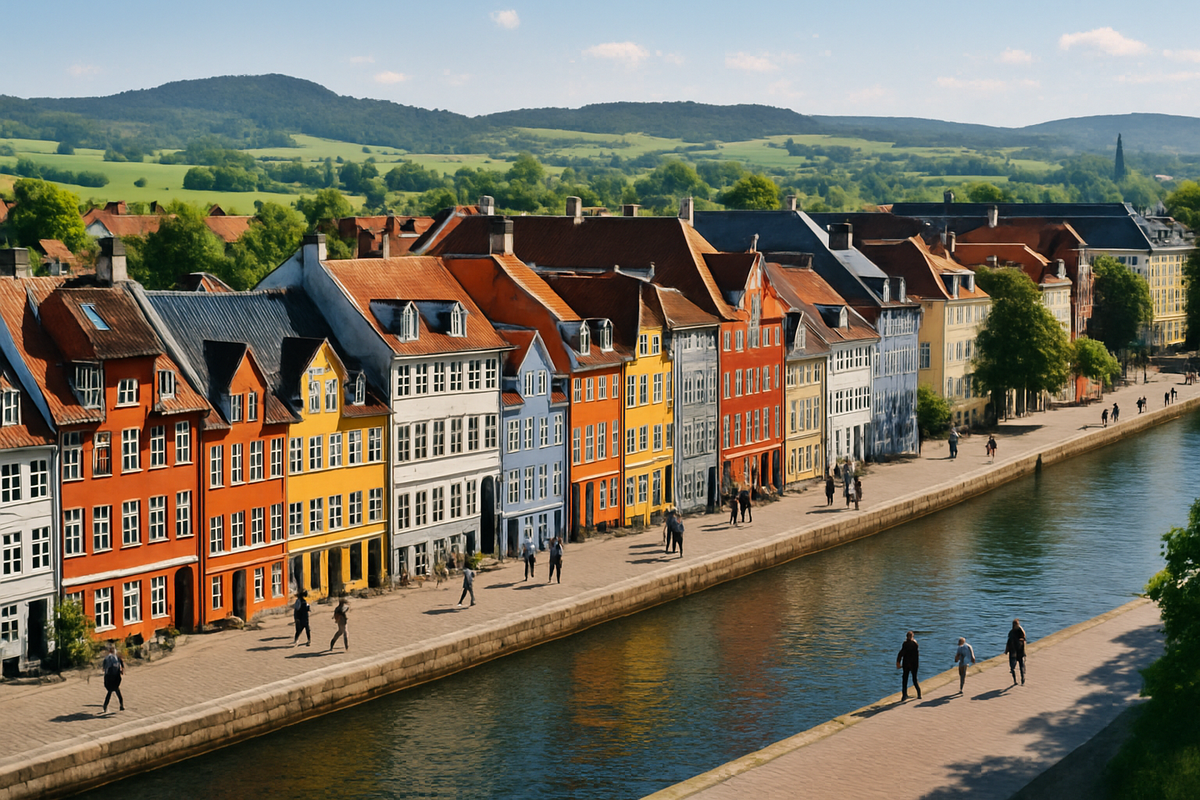
🏙️ City Day in Copenhagen: Water, Design, and Hygge
Copenhagen is perfectly suited to a “walk + a little metro” strategy:
- The pedestrian corridor Rådhuspladsen – Strøget – Nyhavn.
- Neighbourhoods like Christianshavn and Islands Brygge for canal-side walks.
- One or two “anchor” sights of your choice: the design museum, Glyptoteket, Christiansborg, the view from Rundetårn.
- In the evening — Reffen, Broens Gadekøkken, or any food hall: ideal to build around before/after your nature day.
🌾 Nature Day: Mols Bjerge and a Closer Alternative
Mols Bjerge National Park offers hills, seashore, and rural landscapes. It’s on Jutland, so it’s essentially a full-day excursion:
- Without a car, the usual route looks like:
- train Copenhagen → Aarhus (~3 hours),
- then a bus to Mols Bjerge (~1 hour, with a change).
- Realistically, you should consider this park as part of a 4–5 day trip, when you can dedicate an entire day to travel + hiking or stay overnight in the area.
Possible routes in the park:
- A short circular hike of 6–8 km through the hills with views over the bay.
- A longer loop of 10–12 km, including a stretch down to the water and a picnic spot.
💡 If your trip is only 3 days, it’s more reasonable to choose something closer to Copenhagen:
- Dyrehaven and the coast near Klampenborg (S-tog commuter train from the centre, ~20–25 minutes).
- Sandy beaches, forest, deer park, and views of the Øresund.
- A perfect “nature-light” day trip without changes and long travel times.
📅 Copenhagen: 3 / 4 / 5 Day Scenarios
3 days
- Day 1: Copenhagen — city centre, Nyhavn, one museum, evening on the waterfront.
- Day 2: Dyrehaven/Klampenborg, forest and coastal walk, return and an easy evening in town.
- Day 3: Vesterbro/Nørrebro neighbourhoods, modern architecture, food hall.
4 days
- 2 full city days (classic sights + more local areas).
- 1 day in Dyrehaven/coast.
- 1 “floating” day: either another light day trip (e.g., Roskilde) or a deeper city programme.
5 days
- 2–3 days in the city.
- 1 day in Dyrehaven or on the coast.
- 1 day in Mols Bjerge (expect an early start and late return or an overnight in Jutland).
🧭 Logistics Tips Around Copenhagen
- Plan the more distant excursions (Mols Bjerge) for the middle of your trip, when you’re already used to the transport system.
- Use day or zonal tickets if you’re combining nature and evening travel within the city.
- In nature, always have an offline map of your route and a backup option: a shorter loop in case of fatigue or worsening weather.
🌲 Oslo + Nature: Lakes and Forests of Oslomarka
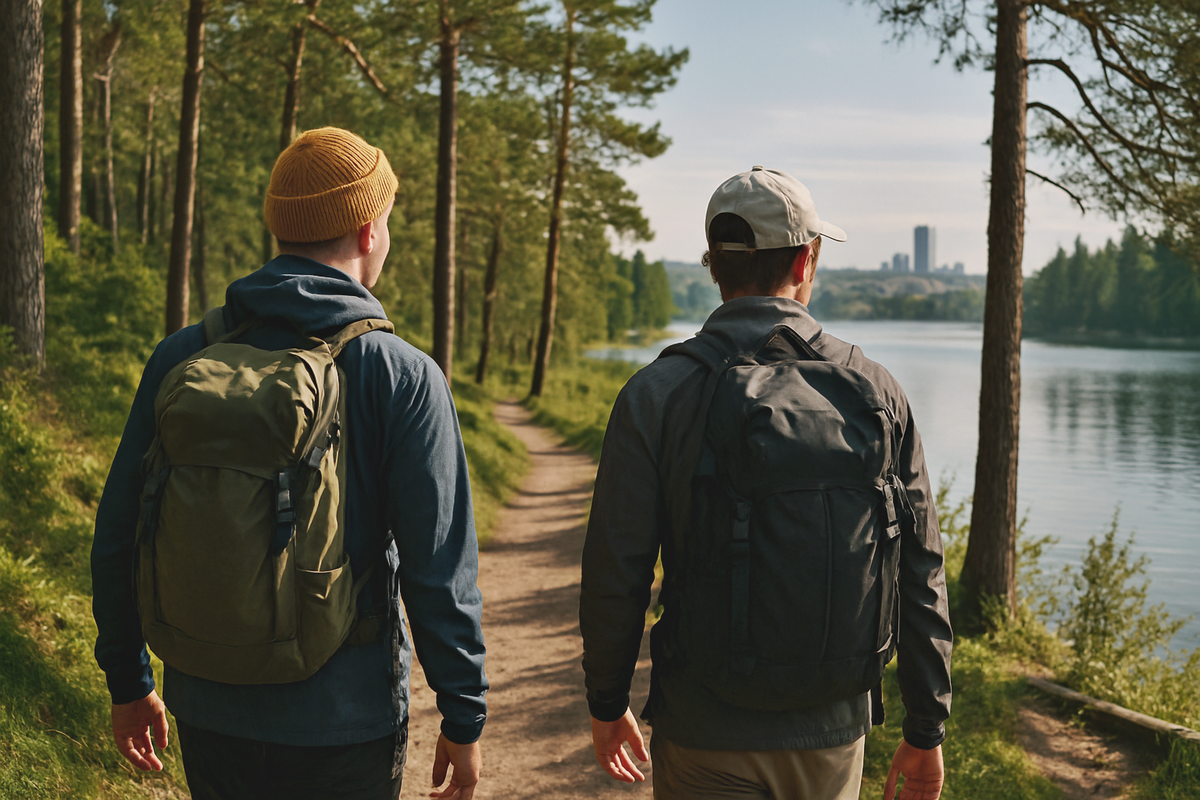
Oslo is almost the textbook model of a capital organically embedded in forest.
🚇 Oslomarka: Forest at the End of the Metro Line
Here “ride public transport into the forest in 30–40 minutes” is literally true:
- Metro lines, commuter trains, and buses fan out into different parts of Oslomarka, the vast forested area around Oslo.
- Popular starting points for easy hikes:
- Sognsvann area (Sognsvann metro station),
- routes toward Frognerseteren and trails in Nordmarka,
- forest zones around Østmarka (stations in the eastern part of the city).
A typical day hike:
- Circular route 6–10 km on forest roads and trails, passing one or two lakes.
- Elevation gain is moderate; the main concern is trail wetness and footwear.
🏙️ Oslo: Fitting a Forest Day into the City Programme
Oslo divides nicely by area:
- Day 1 — Aker Brygge waterfront, Akershus fortress, city centre, Opera House, Munch or National Museum.
- Day 2 — forest day in Oslomarka: morning departure, hike, return by evening, and dinner in town.
- On a 4–5-day trip you can add another light route or a day on the Bygdøy peninsula combining museums and shoreline walks.
📅 Oslo: 3 / 4 / 5 Day Scenarios
3 days
- Day 1: City centre, waterfront, Opera House, one big museum.
- Day 2: Oslomarka (Sognsvann or Nordmarka), evening in Grünerløkka or by the water.
- Day 3: Bygdøy (museums + walk), or an extended city/fjord day.
4 days
- 2 busy city days.
- 1 day in Oslomarka (forest + lakes).
- 1 buffer day: another forest zone, a fjord cruise, or a weather contingency day.
5 days
- You can plan two different forest days: one shorter and gentler, one a bit longer, plus 2–3 city days.
🌤️ Practical Notes for Oslo + Nature
- Forest is a good choice for days with uncertain weather: trees give some shelter from wind and light rain.
- Always check the time of the last return service.
- For Oslomarka, good non-slip, water-resistant footwear is especially important — forest trails often stay wet.
🛶 Stockholm + Archipelago: City, Islands, and Easy Trails
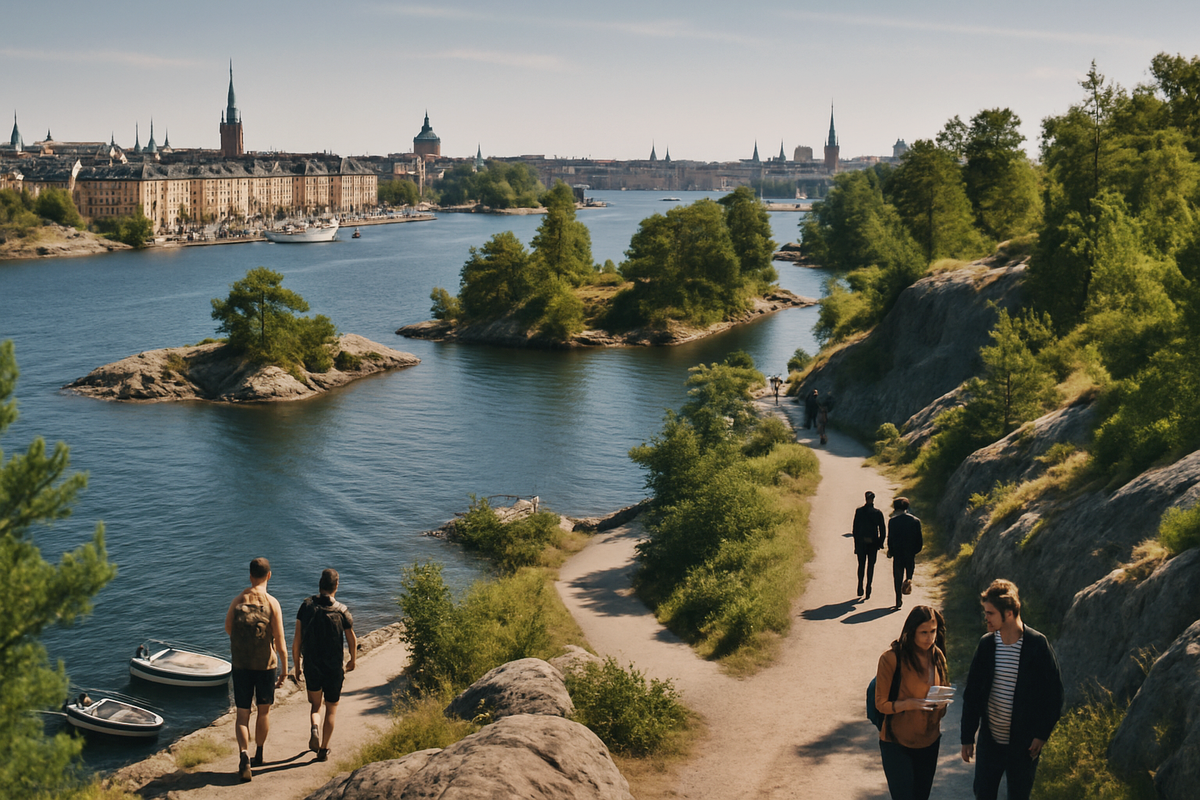
Stockholm is made for “city + sea”: the city itself sits on islands, and beyond it lies an archipelago with hundreds of islands.
⛴️ How Archipelago Logistics Work
- The main transport is ferries and boats, often combined with suburban buses.
- There are nearby islands ideal for half- or full-day trips: the “light archipelago” zone around 30–60 minutes from the city by boat.
- Many islands have marked loops of 4–10 km, beaches, and rocky coastal walks.
A typical day:
- Morning ferry ride,
- Circular trail with scenic viewpoints and beach stops,
- Picnic lunch or a simple meal at a local café,
- Return to Stockholm in the evening and a stroll through Gamla Stan or along the waterfront.
🏙️ Stockholm: City Before and After the Archipelago
- 1 day — Old Town, royal palace, one or two museums (Vasa, ABBA, Skansen, etc. depending on your interests).
- 1 day — archipelago.
- With 4–5 days you can add a second island/day trip or expand the city programme (Södermalm, Djurgården, modern districts).
📅 Stockholm: 3 / 4 / 5 Day Scenarios
3 days
- Day 1: Gamla Stan, Djurgården, one major museum.
- Day 2: Archipelago — an island with an easy trail and beach.
- Day 3: Södermalm, viewpoints, cafés, local markets.
4–5 days
- Add another island/archipelago route or a “no-museum” city day focused on neighbourhoods and food.
- It’s smart to keep the archipelago day flexible around the weather 🌤️ — this is a good candidate to move if forecasts change.
🧩 Archipelago Tips
- Save ferry timetables offline, so you’re not dependent on connectivity.
- Plan the return sailing in advance, leaving yourself a buffer of time on the island.
- For a first visit, choose the simplest route with a clear round trip, avoiding complex chains of connections.
🌳 Helsinki + National Parks: Nuuksio, Sipoonkorpi, and Beyond
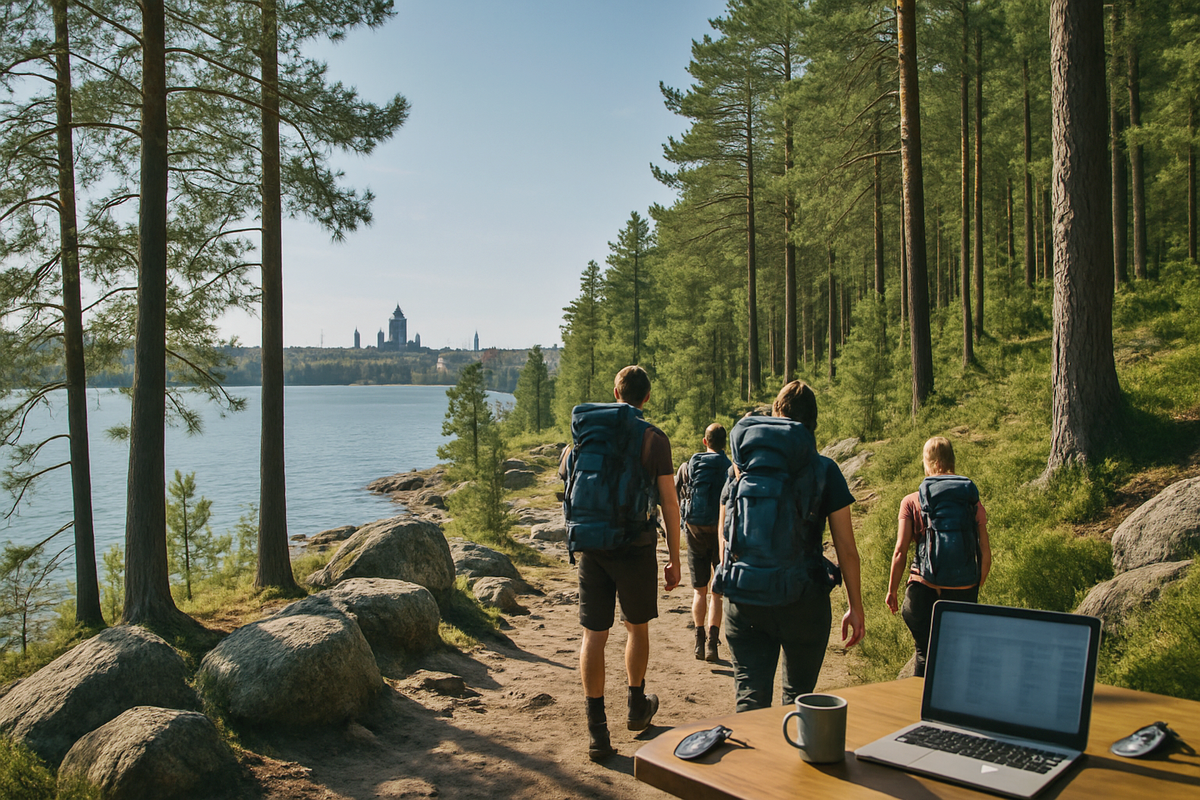
Helsinki makes a convenient base for 1–2 days in nearby national parks, reachable by regular public transport.
🌲 Nuuksio: Classic “Forest + Lakes” Combo
- Landscape: conifer forests, rocky outcrops, a chain of small lakes.
- Typical trails: marked loops of 5–10 km, with sections on boardwalks and solid forest paths.
- Logistics: combination of train/commuter rail and bus from Helsinki; total travel time from the centre is roughly 45–60 minutes one way.
A day in Nuuksio usually looks like:
- Morning departure,
- 4–5 hours of unhurried hiking with a picnic,
- Return in the evening and dinner in central Helsinki.
🌲 Sipoonkorpi and Other Parks
- Sipoonkorpi feels slightly wilder, with fewer crowds.
- Routes of 6–12 km with varying difficulty; be especially mindful of trail wetness and mud.
- Logistics are again built around train + bus combinations.
🏙️ Helsinki: Fitting Parks into a Short Trip
The city component usually looks like:
- 1–2 days: city centre, waterfront, design districts, Kiasma / Ateneum / Amos Rex, saunas, and markets.
- 1 day: Nuuksio or Sipoonkorpi.
- On a 5-day trip: either 2 nature days in different parks, or one forest day and one seaside/island day.
📅 Helsinki: 3 / 4 / 5 Day Scenarios
3 days
- Day 1: City centre, waterfront, one or two museums, evening sauna.
- Day 2: Nuuksio, 7–10 km walk, return for dinner in town.
- Day 3: Punavuori/Kallio districts, design, coffee, relaxed city strolling.
4–5 days
- Add a second park (Sipoonkorpi) or a coastal/islands day.
- Keep one day as a buffer for bad weather if possible.
🎒 Practice: Gear, Planning, and Summary Route Table
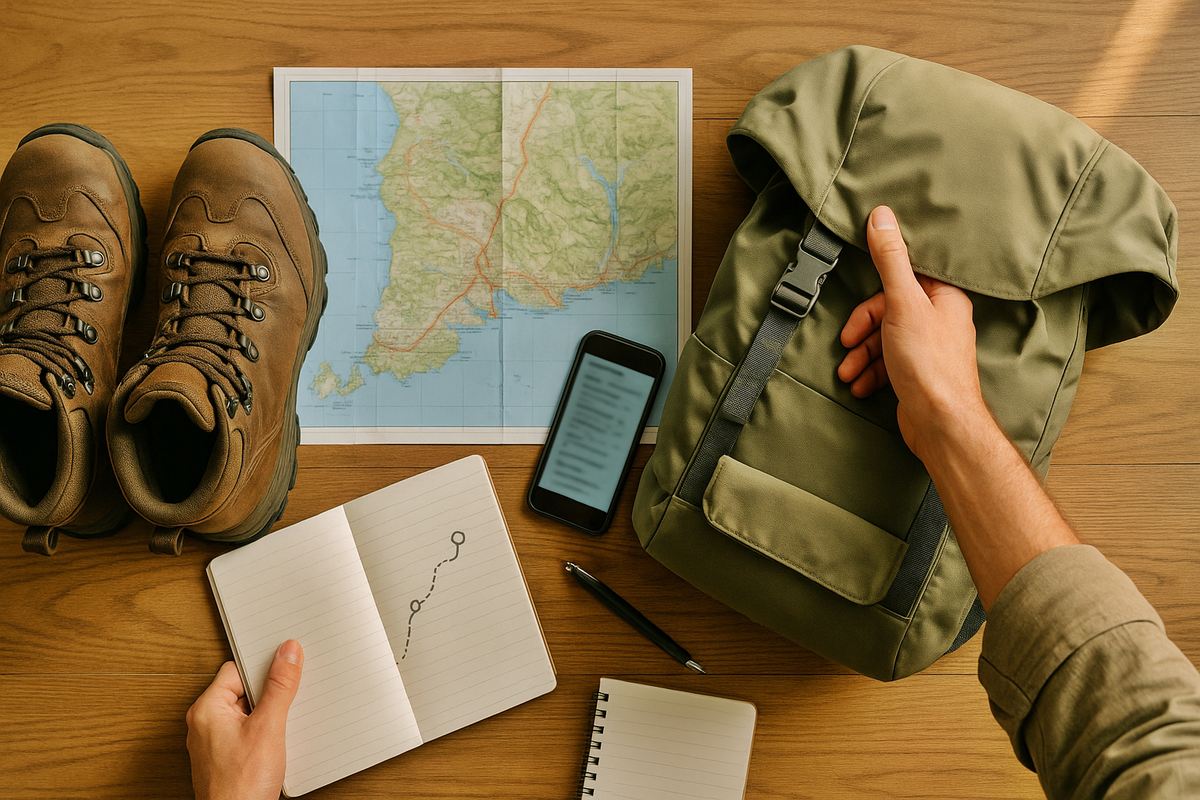
🎒 Minimum Kit for a Day Hike
- Footwear: sturdy trainers or light hiking shoes with a grippy sole.
- Clothing: layer up — base layer, mid-layer (fleece/sweater), wind- and waterproof shell.
- Additionally: light hat/buff, thin gloves outside summer, sunglasses and sun cream in summer.
- Daypack 15–20 L: 1–1.5 L of water per person, simple lunch/snacks (sandwiches, nuts, fruit), paper/offline map of the area, power bank for your phone.
💡 Box: Quick Checklist Before You Leave
– Checked the weather forecast and wind.
– Downloaded an offline map of the area.
– Know the time of the last train/bus/ferry back.
– Have a shorter “backup route” in case of fatigue or rain.
🕒 How to Plan a “City + Nature” Day
- Early start is your best friend: aim to leave around 8:00–9:00, be halfway through the route by lunchtime, and back in the city by evening.
- Rough time breakdown: travel to trailhead: 30–90 minutes; hike: 3–5 hours with breaks; travel back: 30–90 minutes; evening in the city: dinner and a short walk.
- For the city part after the hike, don’t stack up heavy museums and long guided tours — focus on neighbourhoods, waterfronts, and food halls instead.
📊 Summary Table of “Capital → Nature” Directions
| 🏙️ Capital | 🌿 Nature area | 🏞️ Landscape type | 🕒 Travel time (one way) | 🥾 Trail difficulty | 📅 Best season |
|---|---|---|---|---|---|
| 🏙️ Copenhagen | Mols Bjerge (Jutland) | Hills, forests, coastline, rural scenery | ≈ 4 h (train + bus, with changes) | Easy–moderate, 6–12 km, some climbs | Late spring – early autumn |
| 🏙️ Copenhagen | Dyrehaven / Klampenborg coast | Park forest, meadows, beaches, Øresund views | ≈ 20–30 min (S-tog) | Very easy, 5–10 km on paths | Year-round, especially May–September |
| 🏙️ Oslo | Oslomarka (Sognsvann / Nordmarka) | Forests, lakes, gentle ridges | ≈ 20–40 min (metro/train) | Easy–moderate, 6–12 km, sometimes wet | Late spring – early autumn |
| 🏙️ Stockholm | Archipelago (nearby islands) | Rocky shores, forest, beaches, sea | ≈ 30–60 min (ferry/boat) | Easy, 4–10 km, some rocky sections | Late spring – early autumn |
| 🏙️ Helsinki | Nuuksio National Park | Conifer forests, lakes, rocks | ≈ 45–60 min (train + bus) | Easy–moderate, 5–10 km, well marked | Late spring – late autumn |
| 🏙️ Helsinki | Sipoonkorpi National Park | Forests, boggy sections, small hills | ≈ 45–70 min (train/bus) | Moderate, 6–12 km, potentially muddy | Summer – early autumn |
⚠️ All travel times and seasonal notes are approximate. Always check current timetables, trail conditions, and park recommendations before your trip.
🚆 Box: How to Read Transport Timetables
- Look at service frequency (interval) and the time of the last departure back.
- Check whether you need a connection, and where exactly.
- Make sure your day/zonal ticket is valid on your chosen train/bus/ferry.
- Keep an offline screenshot of the timetable in case of connectivity issues 📱.
🕘 Example of a Real Tourist Day (Oslo + Oslomarka)
- 07:30 — breakfast at your hotel/apartment.
- 08:30 — metro ride to Sognsvann.
- 09:15–14:00 — 9–10 km circular hike around the lakes with a snack stop.
- 14:30–15:00 — return to the centre.
- 15:30–17:00 — waterfront stroll and coffee.
- 17:30–20:00 — dinner and evening in Grünerløkka.
This is not an overloaded day, yet you still get a genuine “we were in a Norwegian forest” feeling without sacrificing the city experience.
✅ Short Checklist for the “City + Nature” Format
- Plan at least one full nature day in any 3–5-day trip.
- Prioritise routes with clear start/finish at a transport stop.
- Aim for an early departure and return before late evening.
- Footwear and outer layer matter more than a fancy backpack: dry, comfortable feet and wind/rain protection are critical.
- Keep a backup plan for bad weather (forest instead of exposed coast, park instead of archipelago).
- Double-check timetables and ticket zones on official sources before you go.
- Don’t try to cram two heavy museums into the same day after a 10 km hike — leave only light activities for the evening.
❓FAQ
💬 Yes, all four capitals have routes that are easy to reach by train, metro, commuter rail, bus, and ferry.
💬 For simple routes in dry weather — yes, but light hiking shoes with a grippy sole are still a safer choice.
💬 Yes, with a “2 days city + 1 day nature” plan and a focus on key districts and one or two major sights.
💬 Most travellers find it most comfortable from late spring to early autumn, when trails are drier and days are longer.
💬 If you enjoy walking and are ready to trim the museum schedule slightly, two different nature days will give you very rich impressions.

0 comments
Log in to leave a comment