


⛺ Right to Roam: How Freedom to Roam Works in Sweden, Norway and Finland – And How Denmark Differs
The legend that “in Scandinavia you can pitch a tent anywhere” lives in blogs and guidebooks. In reality, your freedom to walk and sleep in nature is tightly linked to laws, local culture and the specific country. Sweden, Norway and Finland really do give visitors many rights – but also many obligations. Denmark, however, plays by different rules, and “a tent wherever you like” there usually ends with a fine.
This article puts all the practical rules in one place: where you can sleep, where you can’t, and how to avoid conflicts with the law and with locals.
🌍 Basic principles of freedom to roam in Sweden, Norway and Finland
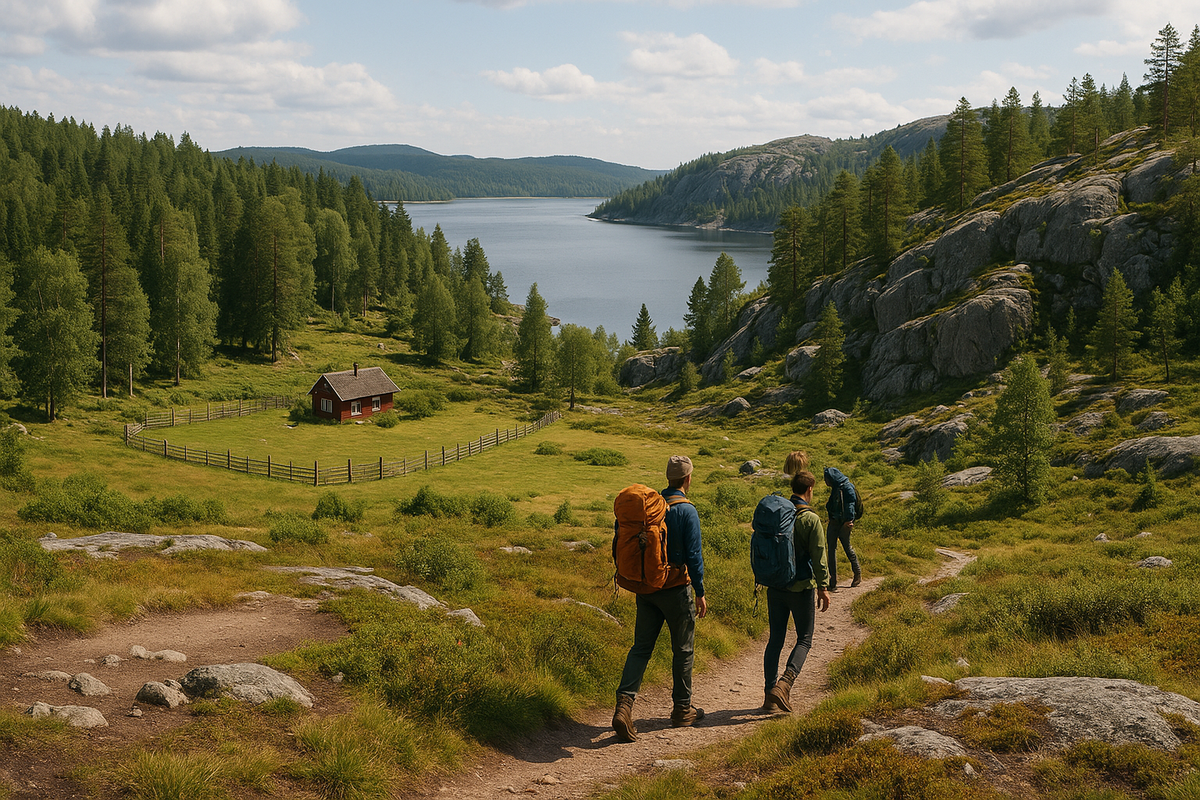
Freedom to roam / allemansrätten is not “anarchy in nature”, but a cultural and legal construct: you’re allowed to do a lot because people expect you to behave with maximum respect.
The core idea in all three countries is similar:
- you may walk (and in winter ski, sometimes cycle) over uncultivated land;
- you may make short stops and overnight in a tent for 1–2 nights in wild terrain, if you do not disturb the landowner;
- you may pick berries and mushrooms for personal use where this is not restricted by special protection rules.
What is almost always prohibited:
- pitching your tent on fields, pastures, fenced farms, gardens and plantations;
- camping too close to houses – think hundreds of metres, not tens;
- breaking trees and shrubs, damaging fences and infrastructure;
- ignoring special protection: national parks, reserves and nature protection areas often have their own stricter rules.
A simple visual filter helps a typical visitor:
- if you see a fence, signs, clear agricultural use (crops, machinery, livestock) – it’s not a place for your tent;
- if it’s forest, rocks, bog, tundra without nearby buildings or restrictions on maps/signs – it’s potentially OK, if you keep your distance and follow camping rules.
🏕️ Tents, campfires and private land: Sweden, Norway, Finland
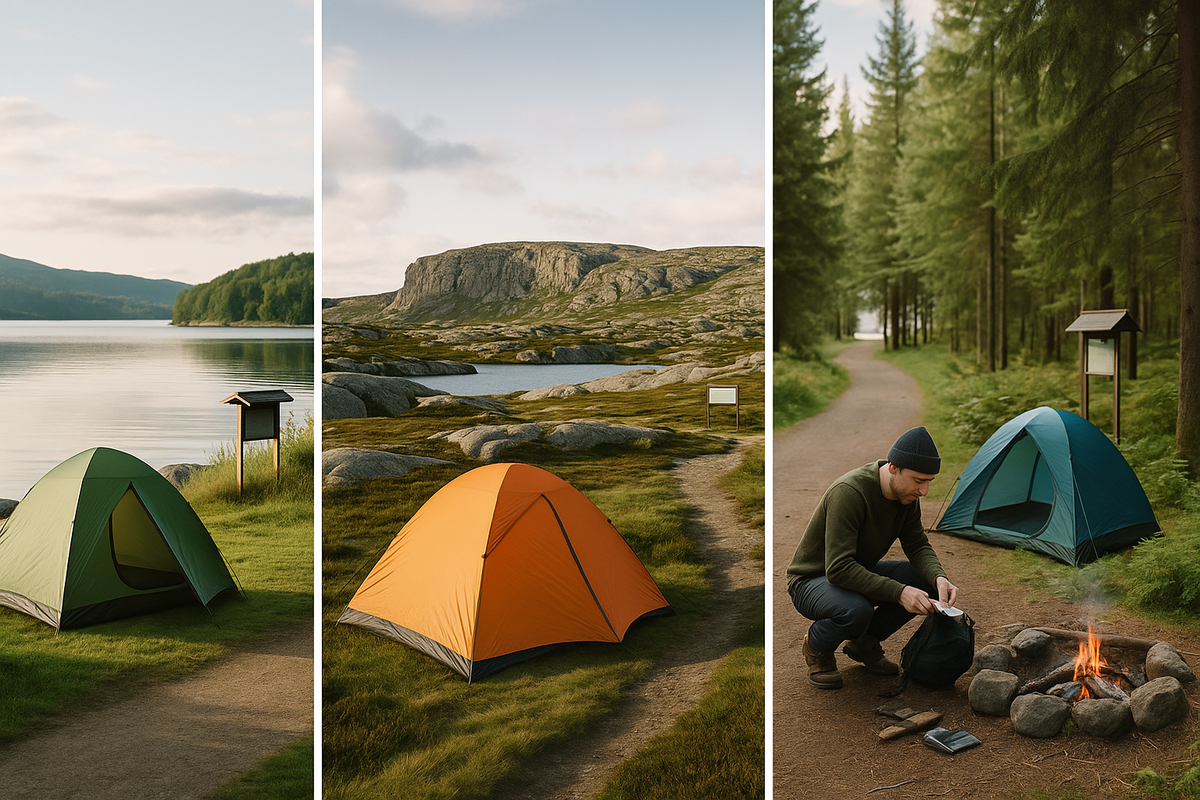
Below is the general logic by country. Details can vary by region and by specific park, so treat any overnight stay as something to be checked with your own eyes and with local signs.
🇸🇪 Sweden
Tent. A short (1–2 nights) stay is usually allowed on uncultivated land away from houses and farms. Do not camp on fields, pastures, gardens or right next to buildings. The further from homes you are, the more comfortable it is for everyone.
Campfires. Allowed only where it is safe and not prohibited locally. In dry periods whole regions may ban open fires altogether. Stick to existing fire rings and prepared sites wherever possible.
Private land. You may walk across private land if you cause no damage and stay out of the yard. Turning a “passage” into an overnight camp without permission is already a violation.
🇳🇴 Norway
Tent. The key distinction is between utmark (outlying land) and innmark (infield). Utmark – forests, mountains, bogs, tundra – is where a 1–2 night stay is generally allowed at a reasonable distance from houses. Innmark – fields, farms, yards etc. – is where camping without the owner’s permission is forbidden.
Campfires. The classic Nordic picture is a fire by a lake or on the rocks, but in reality in dry seasons open fires near forests are often completely banned. Always read local notices and use prepared fire sites.
Private land. The logic is similar: you may pass through, but not camp on agricultural land or in yards.
🇫🇮 Finland
Tent. The Finnish model is close to Sweden’s: short-term camping is allowed in wild areas away from houses and cultivated land. In national parks there are often designated camping zones – it’s best to use those.
Campfires. Generally allowed only in designated fireplaces. Open fires outside them, especially in dry forest, are a bad idea both legally and practically.
Private land. Respecting boundaries is critical. Finns expect you not to wander into yards or working farmland without explicit permission.
📊 Summary table: tents, campfires and private land
| 🌍 Country | ⛺ Tent | 🔥 Campfires | 🏡 Private land | ⚠️ Features |
|---|---|---|---|---|
| 🇸🇪 Sweden | ⛺ 1–2 nights in wild areas away from houses and fields | 🔥 Allowed outside fire bans, preferably in existing fire pits | 🏡 Passage generally allowed, camping without permission is not | ⚠️ National parks often have their own stricter rules |
| 🇳🇴 Norway | ⛺ On “utmark”, not on fields, farms or in yards | 🔥 Restrictions in fire-risk season, follow local signs | 🏡 Innmark – only with landowner permission | ⚠️ Strong winds and slopes make choice of campsite critical |
| 🇫🇮 Finland | ⛺ Short stays in wild areas, ideally in designated camping spots | 🔥 Mostly only in designated fireplaces | 🏡 Farmland and yards are excluded | ⚠️ In national parks, trails and camping spots are often tightly regulated |
🇩🇰 Why Denmark is a different rulebook
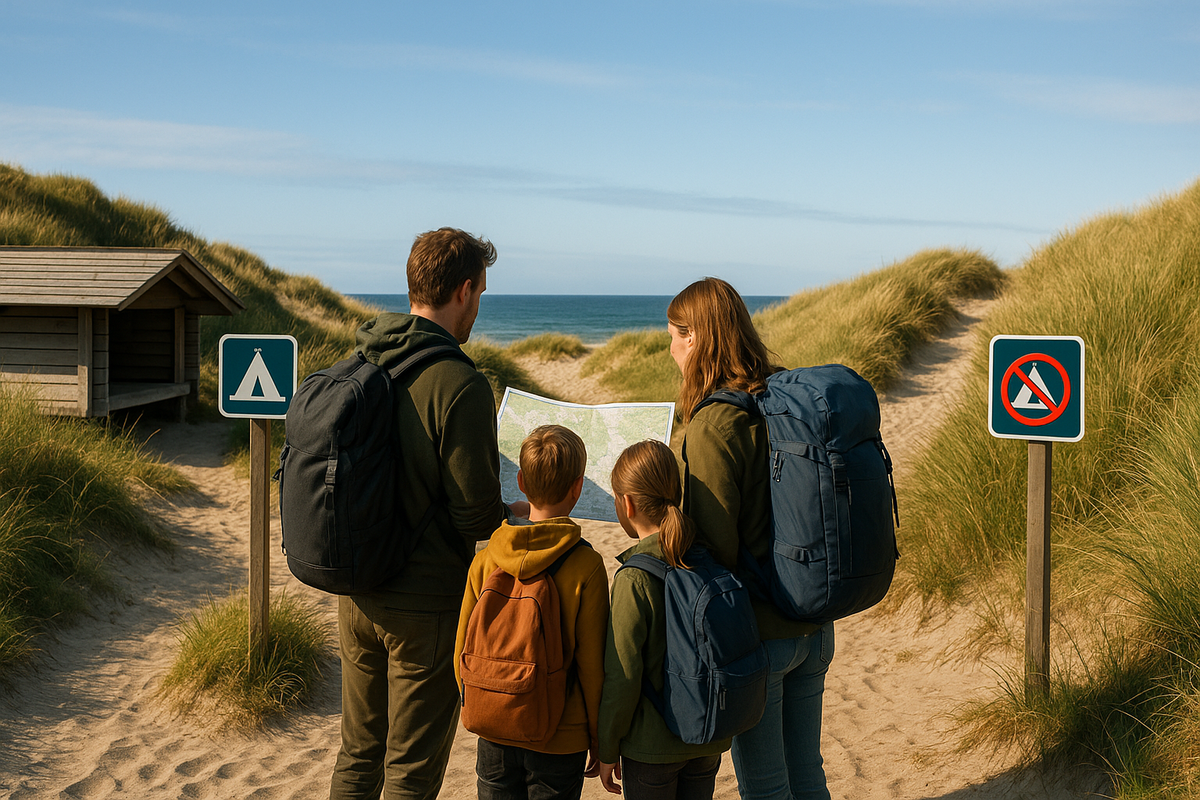
Denmark is the only one of the four countries that does not have classic freedom to roam. Bringing the “tent anywhere” myth here is a direct road to trouble.
Key differences:
- Wild camping is effectively banned in most places. Putting your tent on a beach, in a forest or in a field without explicit permission is a formal violation.
- Instead Denmark uses:
- shelters – simple huts and lean-tos for overnight stays;
- designated areas – specific forest/park zones where tents are allowed under clear rules.
- Outside these zones your options are:
- official campsites,
- camping pitches at hostels and farms,
Other things to bear in mind in Denmark:
- Dense settlement and intensive agriculture. Even “wild” forest often belongs to a specific owner or foundation.
- Coasts and dunes often have protected status where camping is forbidden.
- Sleeping in a car/campervan outside official campsites and allowed parking areas can also raise questions – you must check local rules.
In short:
- Sweden, Norway and Finland follow a “you may, if you follow the conditions” logic.
- Denmark follows a “you may not, except where clearly allowed” logic.
✅ “Can / can’t” checklist for typical situations
Below are typical tourist dreams and how they look through freedom-to-roam rules in the four countries. This is not a substitute for law, but a working matrix for common sense.
| 🗺️ Situation | 🇸🇪 Sweden | 🇳🇴 Norway | 🇫🇮 Finland | 🇩🇰 Denmark |
|---|---|---|---|---|
| ⛺ Tent by a lake, far from houses | ✅ Usually fine for 1–2 nights if you treat the spot respectfully | ✅ On utmark, with attention to shoreline status and local signs | ✅ Often ok, but check the area’s/park’s protection status | ❌ Only if it’s an official shelter or camping area |
| 🏖️ Overnight on the beach | ⚠️ Often restricted or banned, especially on popular beaches | ⚠️ Many local rules; always check signs on site | ⚠️ Depends on coastal protection; in many parks it’s not allowed | ❌ Generally forbidden outside official campsites |
| 🌾 Tent on the edge of a field/pasture | ❌ No camping on farmland without owner permission | ❌ Innmark; only with permission | ❌ Agricultural land is excluded | ❌ Private property violation |
| 🌲 Overnight in forest ~100 m from the trail | ✅ Usually fine away from houses and outside strict reserves | ✅ On utmark, with respect for paths and nature | ✅ If no special bans apply; in national parks – only by their rules | ❌ Only in designated wild camping zones |
| 🏡 Tent “a bit away” from a cabin/house | ⚠️ Often too close; best to ask permission | ⚠️ High conflict risk; use only with permission | ⚠️ Finns value distance; without permission, pick another spot | ❌ Almost always forbidden without explicit owner consent |
📚 Real stories: conflicts, smooth experiences, takeaways
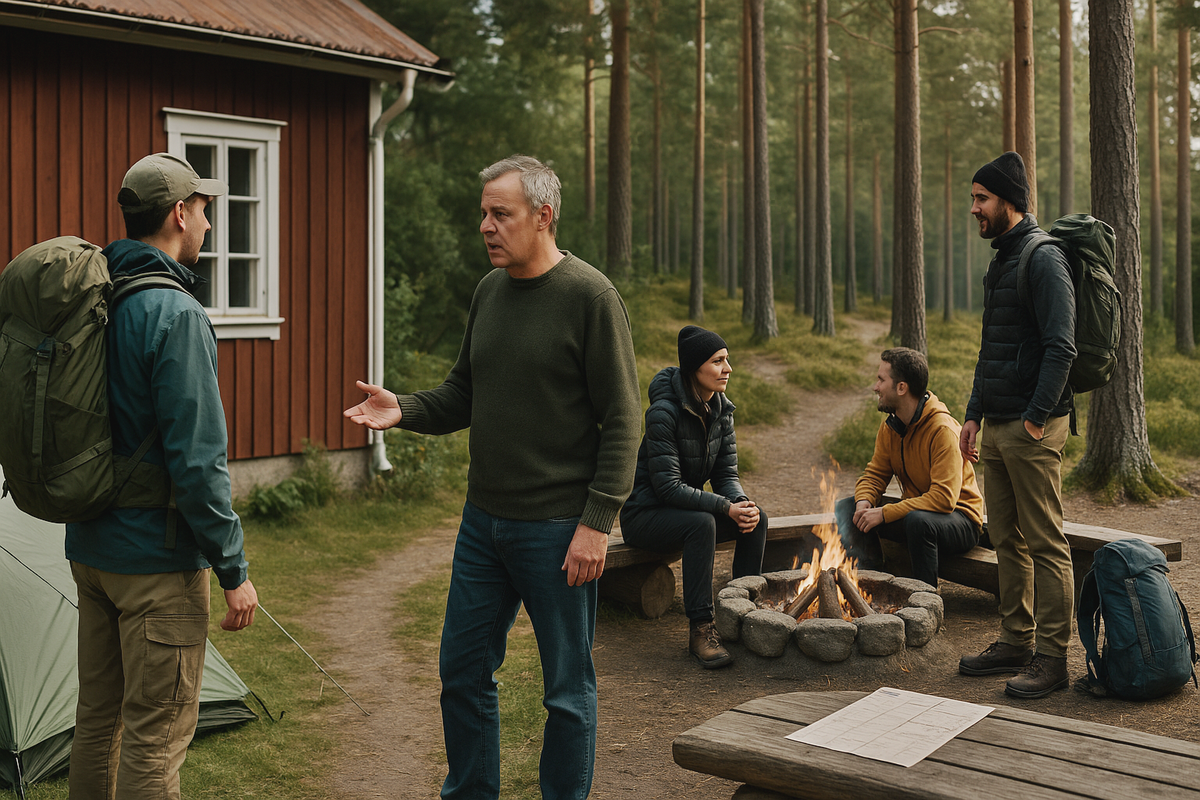
🚫 Case 1: “Not really next to the house”
A couple pitched their tent on a pretty meadow by the forest, which they saw as “not that close” to a house. In the morning the owner arrived: the meadow turned out to be part of his land, and they had to pack up quickly under sharp comments.
Takeaway: your visual sense of “just a field” is unreliable – look for fences, driveways, farm equipment, outbuildings and always keep a generous distance from homes.
🔥 Case 2: Campfire in dry forest
A group in Norway lit a fire on a nice grassy patch near the forest in the middle of a dry spell. They hadn’t noticed the local fire-ban signs. Result: call to the fire brigade, a fine and a very stressful evening.
Takeaway: in high fire-risk periods any fire near forest is a big problem; even if the spot looks “obviously fine”, without explicit permission and signage it’s safer to stick to a stove.
✅ Case 3: Perfect overnight in Finland
Travellers studied the national park map in advance, found an official camping area with fireplace and toilet, arrived in daylight, set up camp and left in the morning, taking all their rubbish. Their neighbours were locals, and the atmosphere was relaxed and friendly.
Takeaway: using official camping zones in parks and forests brings legal risk almost to zero and helps you fit into local outdoor culture.
🙂 Case 4: Responding properly to a complaint
A tourist in Sweden put up a tent too close to a house; the owner asked them to leave. Instead of arguing about “my right to roam”, the tourist apologised, packed calmly and spent the night at the nearest campsite. No police, no drama.
Takeaway: even if you are sure “the law is on your side”, arguing late at night with the landowner is the worst option; a calm retreat is the only functional strategy.
📝 Algorithm: how to sleep legally and safely outdoors
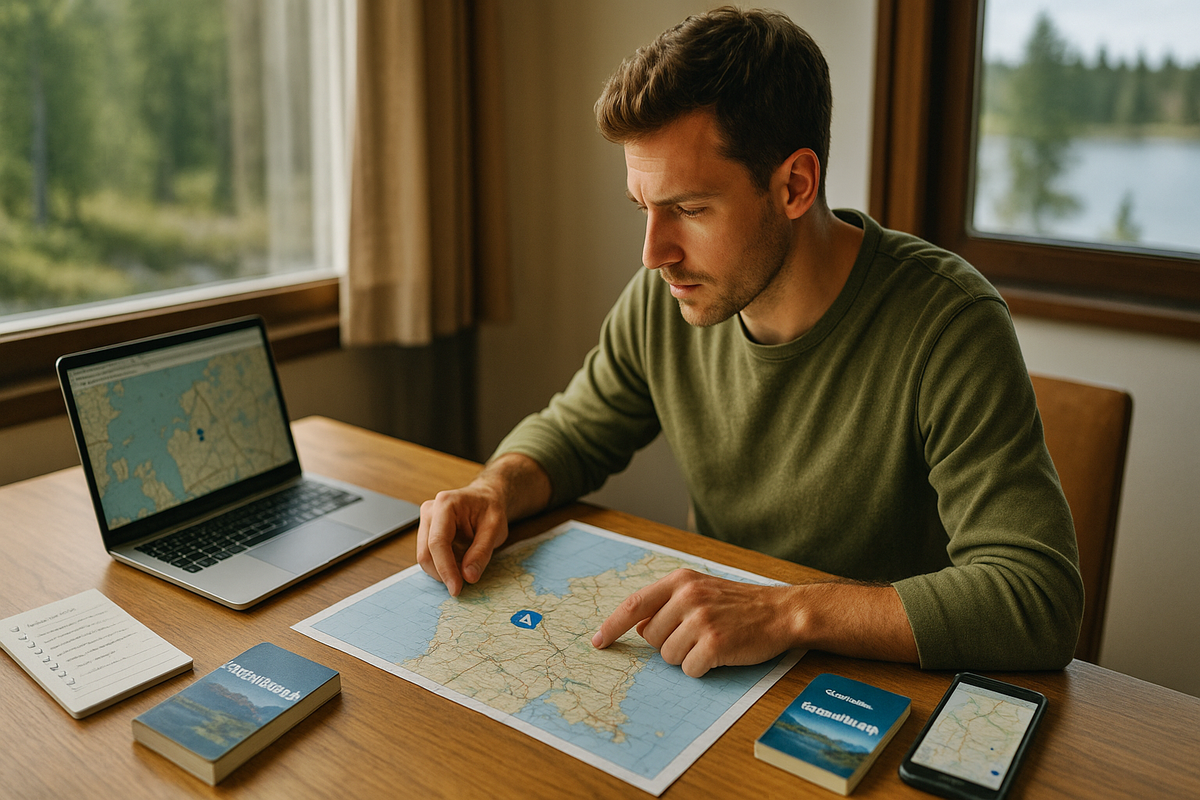
To finish, here’s a working tool you can keep in your notes before the trip.
🧾 Mini-checklist before pitching your tent
- Country. Are you absolutely sure whether you are in Sweden, Norway, Finland or Denmark?
- Land status. Is this wild terrain, a national park, a reserve, a farm, a beach, a field? Are there signs/fences?
- Distance to houses. Can you see homes, farms, outbuildings? If yes, you are probably too close.
- Land type. Is it forest, rocks, uncultivated meadow – or clearly farmland/pasture?
- Season and fires. Is there fire risk? Are campfires allowed? Is there a prepared fireplace?
- Legal alternatives. Is there a campsite, shelter or official tent area nearby?
- Plan B. Do you know where to go if the place turns out to be problematic (owner, ranger, police)?
🧮 Small “risk calculator” (for rough guidance)
📋 Minimal outdoor ethics in Scandinavia
- Keep quiet at night and early morning – people may live or rest nearby.
- Take all rubbish with you, including food scraps and cigarette butts.
- Do not break live trees and shrubs, do not create new fire pits.
- Leave the spot so that it’s hard to tell anyone camped there at all.
🙋♀️ Frequently asked questions
💬 In theory yes, if it’s not a field, yard or protected area, but always check your distance to houses and any local signs.
💬 For a normal visitor it’s safest to assume that overnight stays outside official zones and campsites are not allowed.
💬 Most of the time the idea is 1–2 nights, after that you’re expected to move on.
💬 Only under that park’s specific rules: some have designated camping spots, others ban any camping outside huts.
💬 Apologise, pack up calmly and go without arguing – that’s the normal and expected behaviour.

0 comments
Log in to leave a comment