


👨👩👧 Scandinavia with children in 7 days: how to plan a route without exhausting journeys
Travelling around Scandinavia with a child is not a “European sprint”. Children need breaks, predictability and simple joys: the sea, trains, animals, games and rides. Parents need two extra layers: not to blow the budget – and not to spend half the holiday on transport with a tired child in their arms.
In 7 days you can absolutely show your child Scandinavia in a way that feels like an adventure for them and like a real, live region for you. The main thing is to avoid overnight journeys, to limit the number of bases and to have at least one strong “wow” point for the child. Below are three ready‑made scenarios – “Denmark‑centred”, “Sweden‑centred” and “Norway‑centred” – plus general principles so you can adapt them to your child’s age and your budget.
🧩 Principles for a 7‑day family itinerary
To keep a week with kids from turning into an endurance test, a few rules help a lot:
– No more than two bases per trip. For example: Copenhagen + Billund (LEGOLAND), Stockholm + archipelago, Oslo + one fjord village. The fewer times you pack and unpack, the calmer everyone is.
– At least two nights in each place. One night is “arrive, sleep, leave”. Two nights give you at least one full day on the spot.
– A clear child‑centred “anchor” for the route. LEGOLAND, a petting zoo, trains, boats, islands – something the child themselves is excited about and prepared to travel for.
– A “2–3 hours activity – then a break” rhythm. Children have limited energy, even when they seem to be bouncing off the walls. Quiet time on a playground, in a park or in your accommodation is just as important as museums and rides.
Below are three concrete options you can almost use as‑is, tweaking details to fit your family’s pace.
📊 Three family‑friendly 7‑day itineraries
| Itinerary | Cities and bases | Children’s age | Key “wow” moments |
|---|---|---|---|
| Copenhagen + LEGOLAND | 3–4 nights in Copenhagen, 3–4 nights around Billund (LEGOLAND / waterpark / safari park). | 3–10 years: rides, trains, zoos, children’s museums. | LEGOLAND, waterpark, driverless metro, canal boats, petting animals. |
| Stockholm + archipelago | 4 nights in Stockholm, 2–3 nights on an island in the archipelago (or long day trips). | 4–12 years: ships, museums, islands, parks and playgrounds. | Historic ship museum, children’s / science museum, boat trips between islands, picnics by the water. |
| Oslo + gentle fjords | 3 nights in Oslo, 3–4 nights in a “gentle” fjord region with short transfers. | 6–14 years: more walking, boat trips and scenic trains. | Fjords, panoramic train, short trails, boats and swimming (in season), ice cream with mountain views. |
🧸 “Denmark‑centred” itinerary: Copenhagen + LEGOLAND
Denmark is a perfect first step into Scandinavia with kids. Copenhagen is compact and stroller‑friendly, with parks, playgrounds and calm green pockets. Billund and its surroundings add pure child joy to an otherwise “adult” city‑and‑culture route.
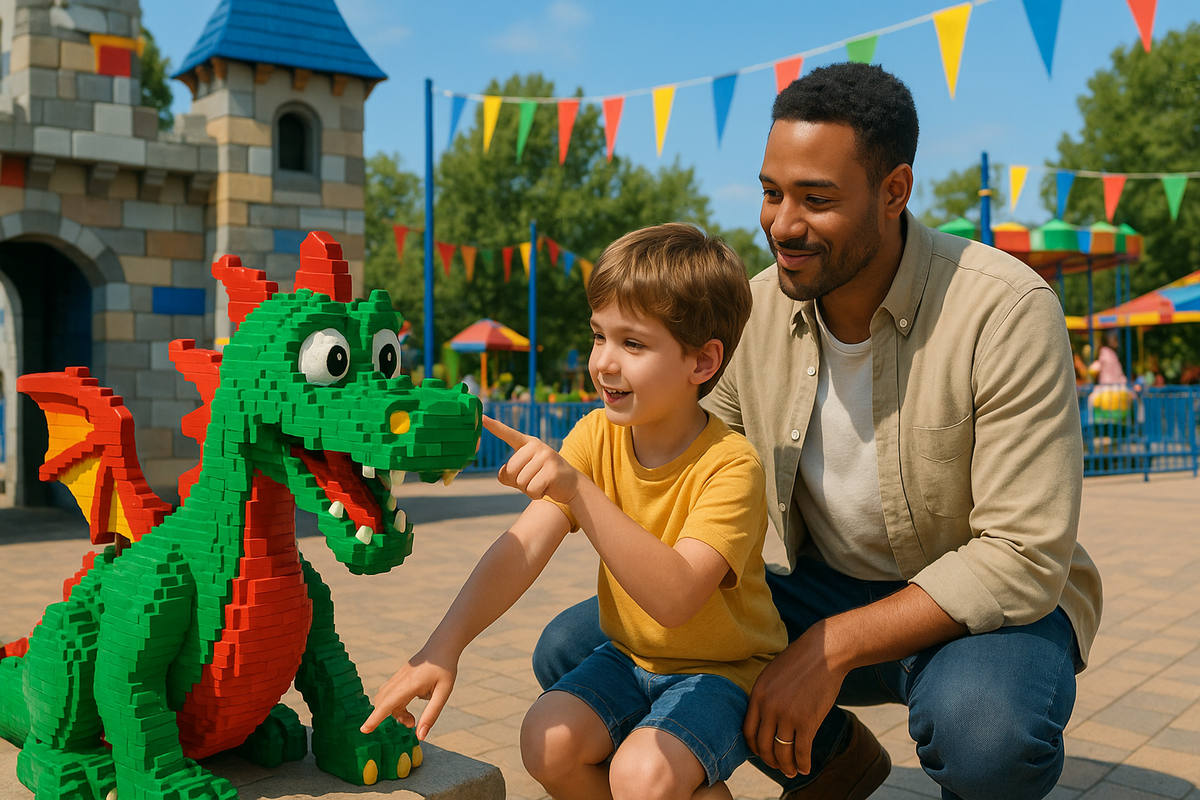
Sample 7‑day plan:
Days 1–3: Copenhagen
Day 1 is for travel, check‑in and a stroll around the nearest park. On day 2 you can mix adult and child interests: the historic centre, Nyhavn, a canal boat tour, and a big playground or zoo to round off the day. Day 3 is for one major age‑appropriate attraction: an interactive science centre, aquarium or animal park.
Day 4: travel to Billund
You can go by plane, train + bus or hire a car. It is best to travel in the morning, so you can settle into your house / hotel / campsite during the afternoon and let the child explore a playground or the waterpark.
Days 5–6: LEGOLAND and downtime nearby
One full day is for LEGOLAND – without trying to “do everything”. It is better to pick 5–7 rides and zones that match your child’s height and nerves and arrive at opening time. The second day is softer: waterpark, safari park, a bike ride or simply playgrounds and mini‑farms.
Day 7: homeward journey
Travel back via Copenhagen or another hub with a generous time buffer – not a morning sprint “park and then straight to the plane”.
A common mistake is booking two consecutive full days in LEGOLAND. For many children a single intense day is enough; after that they need at least one day to decompress, otherwise tiredness turns into meltdowns.
⛵ “Sweden‑centred” itinerary: Stockholm + archipelago
Stockholm is often easier for children than many big capitals: water everywhere, islands, boats, green parks and museums where you are allowed to touch and experiment. The archipelago adds that “real islands” feeling, but without difficult sea crossings.
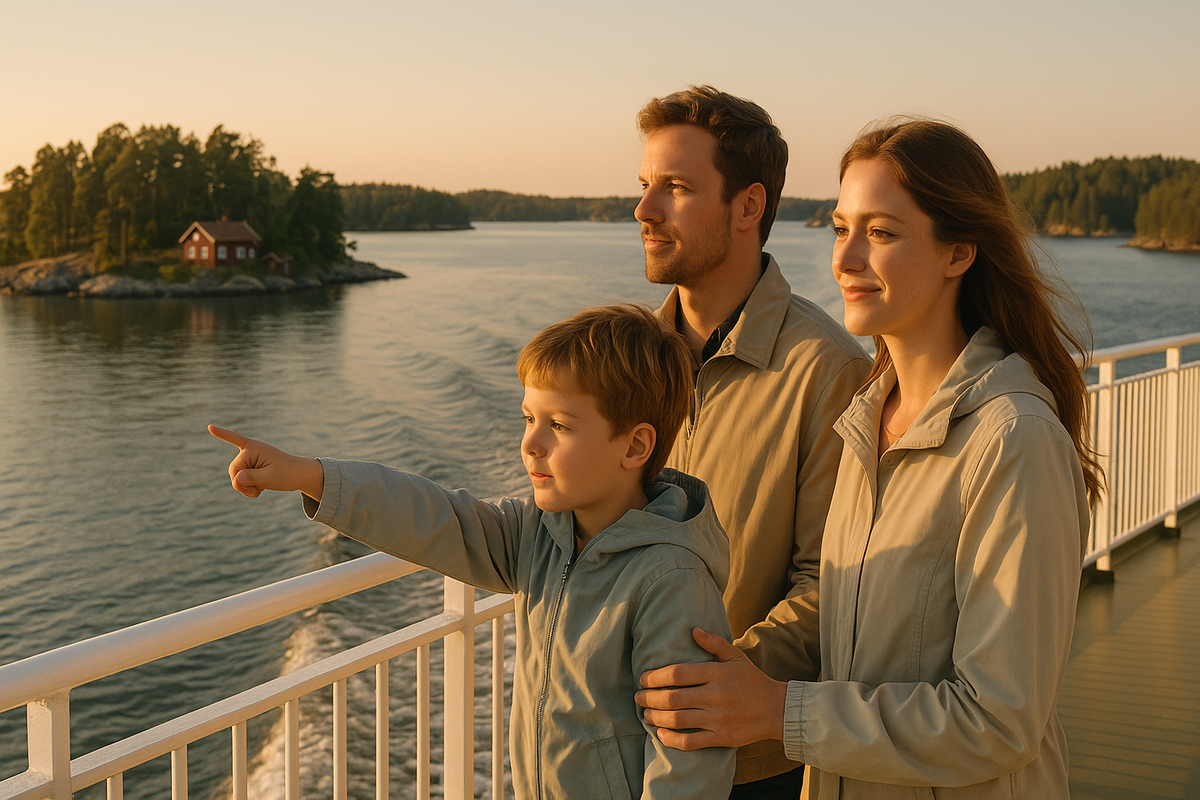
Sample 7‑day plan:
Days 1–3: Stockholm
Day 1 is just for getting your bearings and visiting a nearby playground. The next two days each get one “big” attraction: a ship museum one day, a children’s/science museum the next, plus a stroll through the old town or a large island park. Try to use ferries and boats as part of your public transport – for children they are just as exciting as the museum itself.
Days 4–6: archipelago
A bolder option is to spend 2–3 nights on one island with a small hotel or simple campsite. A gentler version is to stay in Stockholm and make one or two long day trips to the islands, returning in the evening to a familiar room. For children under about 4–5, overnight island stays can be tiring; they often cope better if they can end a busy day back in a known, predictable place.
Day 7: buffer and departure
You can spend this day in a favourite park, revisit a beloved museum or keep it as plan B in case earlier days were rainy.
🏔️ “Norway‑centred” itinerary: Oslo + gentle fjords
Norwegian fjords can look “too serious” for families, but if you avoid hard mountain hikes and winter, you can build a very soft child‑friendly route.
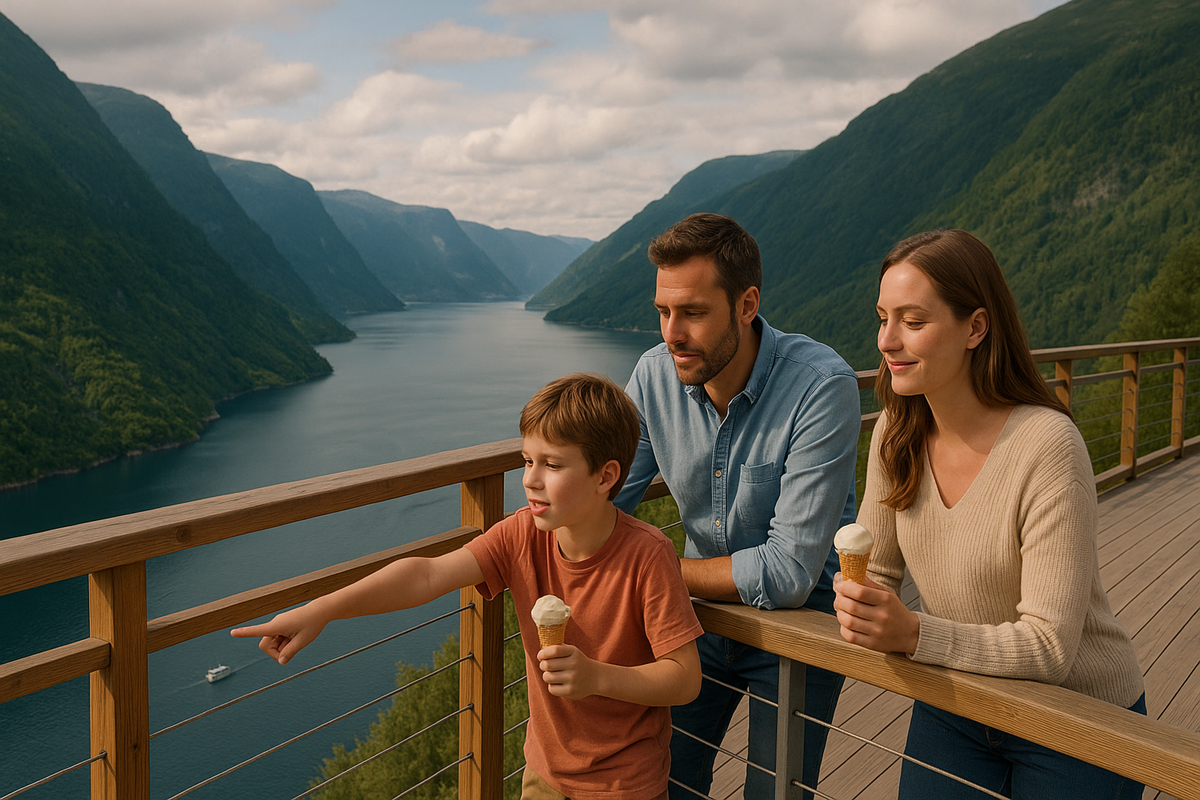
Days 1–3: Oslo
Easy walks along the waterfront, a sculpture park, trams and trains as an adventure in themselves, one “museum day” (ships, polar expeditions, science – depending on age). The key is not to ram all the museums into one day: two or three solid visits are better than ten rushed ones.
Days 4–6: fjord region
Choose a base you can reach from Oslo without half a day of complicated transfers – a small town with a direct train/bus or a simple “train + ferry” combination. The programme is short viewpoints, 1–1.5‑hour trails, calm boat trips and simply watching water and mountains.
Day 7: travel back
Return to Oslo and fly home, without any extra new locations or experiments on the final day.
It is crucial to think honestly about your child’s age. For a 6–7‑year‑old, an hour up and then an hour walking downhill from a viewpoint is already a serious effort. It is better to choose shorter trails and keep energy for actually enjoying the scenery.
🍽️ Where to stay and how to eat with children

With kids, accommodation with a kitchen is a lifesaver: apartments, summer houses, family cabins on campsites. It lets you:
– avoid being tied to restaurant opening hours;
– cook simple familiar dishes if your child is picky with new food;
– sort out proper breakfasts and snacks without panic‑searching for food every morning.
A good compromise is 1–2 nights in a hotel in a big capital, where location matters, and then 4–5 nights in a cabin or apartment closer to nature and child‑centred activities.
🚆 Logistics and nap time
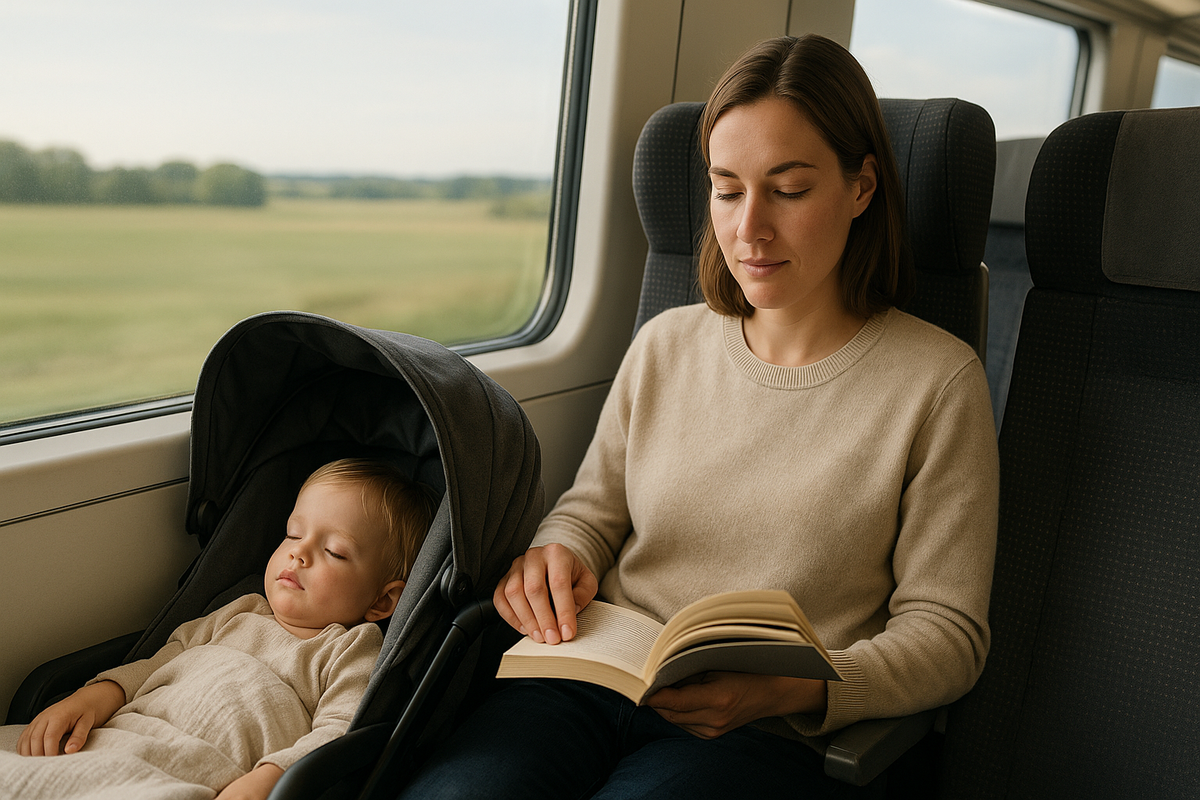
If your child still naps, it makes sense to build the route around that:
– schedule major transfers (train, coach) for typical nap times;
– do big museums in the morning, when energy is highest;
– leave open, unstructured walks for after the nap.
On route level this means:
– avoid very early departures at 6–7 a.m. if your child normally sleeps then;
– don’t put two big things in one day (for example LEGOLAND plus a long journey);
– deliberately include “nothing‑special” hours when adults simply have coffee and the child plays on a playground.
💰 Family budget calculator for 7 days
📝 Checklist: is this itinerary comfortable for your child?
📝 Is your child ready for a week in Scandinavia?
Tick the lines where you can honestly say “yes”. If there are too many “no” answers, simplify the itinerary.
- My child generally copes well with 2–3 hours of travel in one go (plane, train, coach).
- We have some experience of nights away from home and they do not cause major stress.
- We are ready to plan the day around nap time rather than forcing naps around our plans.
- The adults are prepared to sacrifice some of their own plans if needed for the child’s mood.
- We accept that some days will pass without “ticking sights off”, but with playgrounds and simple walks instead.
❓FAQ
Technically yes, but you will have fewer breaks and shallower impressions. For a first family trip it is usually better to choose one country and at most two bases. You can always add a second country on the next holiday, when you already know how your child handles travel.
Most families find the “Denmark‑centred” route easiest: Copenhagen + Billund. There are lots of age‑appropriate activities, fewer big elevation changes and softer logistics than in Norway. Stockholm + archipelago works well if your child likes boats and you enjoy being on the water yourselves.
It depends a lot on the season. In summer, with proper clothing (windproof layers, hats, waterproof shoes) children are usually fine, especially if they move around. In spring and autumn you need more layers and a warm base to return to – and it is better not to plan long, static activities in exposed windy spots.
In that case, accommodation with a kitchen helps even more. Many families build their days like this: simple breakfast “at home”, light familiar lunches and snacks (soups, pasta, potatoes, meatballs), then either cook again in the evening or go to a simple, child‑friendly café. It is important not to design a route where you are completely dependent on restaurants three times a day.
Yes. Many museums and parks offer reduced or free entry for children under a certain age, family tickets or combined passes. It is worth checking in advance which city cards or combined tickets are available in Copenhagen, Stockholm and Oslo – they often include both public transport and several attractions.
Over a 7‑day trip most families find apartments or holiday homes easier: separate bedroom, kitchen, space to spread out and not pack every morning. Hotels are convenient for 1–2‑night city blocks when you want to be very central or close to the station.
For children up to around 3–4, a lightweight stroller often saves the trip: cities have plenty of smooth pavements, and museums and shopping centres have lifts. In fjord areas, the pushchair is more useful in villages and along the waterfront than on trails. If your child walks confidently, you might manage with just a scooter or a carrier for the trickier parts.
Many Scandinavian museums have children’s zones, hands‑on exhibits and activities. Even so, it is better to alternate: one day a museum with a strong child focus (science, ships, animals), another day just walks, playgrounds and water. If your child dislikes large indoor spaces or crowds, avoid planning two big museums on the same day.

0 comments
Log in to leave a comment