


🗺️ 10–14 days in Scandinavia: how to combine Norway’s fjords and Copenhagen without rushing
The “Copenhagen + Norwegian fjords” combo looks perfect on paper: a bit of hygge, a slice of city architecture and that iconic view of a fjord with waterfalls. In reality many first‑timers try to squeeze in Stockholm, Trondheim and “at least one glacier” on top – and end up with a holiday where they mostly drag a suitcase instead of breathing in sea air.
This article offers two calm, realistic 10–14 day scenarios: one via Oslo, one via Bergen. No frantic city hopping, clear logistics and options both for public transport only and for hiring a car just where it genuinely adds value.
🧭 Overall itinerary logic: how many days and how not to overload the plan
A comfortable time frame is 10–14 full days “on the ground”, not counting flights to and from Scandinavia. Less than 9–10 days means you will have to sacrifice something important; more than two weeks often runs into budget and time‑off limits.
A few principles that keep the trip sane:
– No more than 3–4 main bases: Copenhagen, Oslo or Bergen, one fjord region and, optionally, one extra city.
– At least 3 nights in Copenhagen so the capital does not turn into a rushed stopover.
– In the fjords, aim for 3–4 nights in one region instead of moving every night.
– Long transfers (overnight train, ferry, flight) are best “woven” into the route so that they save an overnight stay instead of simply eating up a day.
With this in mind you get two very workable skeletons: Copenhagen + Oslo + fjords and Copenhagen + Bergen + fjords, each of which can be stretched from 10 to 14 days.
📊 Two basic itineraries for 10–14 days
| Variant | Basic skeleton (10–12 days) | Extension to 14 days | Best for |
|---|---|---|---|
| Via Oslo | Copenhagen 3–4 nights → overnight ferry/train → Oslo 2–3 nights → fjords (Sognefjord/Nærøyfjord region) 3–4 nights → return via Oslo. 10–12 days | +1 night in Copenhagen or Oslo for a slower pace, +1 night in the fjords for hiking or kayaking. up to 14 days | Travellers who want more cities, museums and restaurants, and a smooth journey by train and ferry rather than extra flights. |
| Via Bergen | Copenhagen 3–4 nights → flight to Bergen 1 night → fjords (Bergen–Sognefjord/Hardanger region) 3–4 nights → Bergen–Oslo train (1 night) or return to Copenhagen. 10–12 days | +1 night in Bergen for the city and viewpoints, +1 night in Oslo or on the scenic train/fjord cruise. up to 14 days | Those who want maximum “postcard fjords” and are happy to add an internal flight for more time in the mountains. |
🚆 Option 1: via Oslo – trains and ferries
This option suits people who prefer trains and ferries to internal flights. It is a good choice if flights into Copenhagen are much cheaper than flying directly to Norway.
Example 10–12 day itinerary:
– Days 1–3: Copenhagen
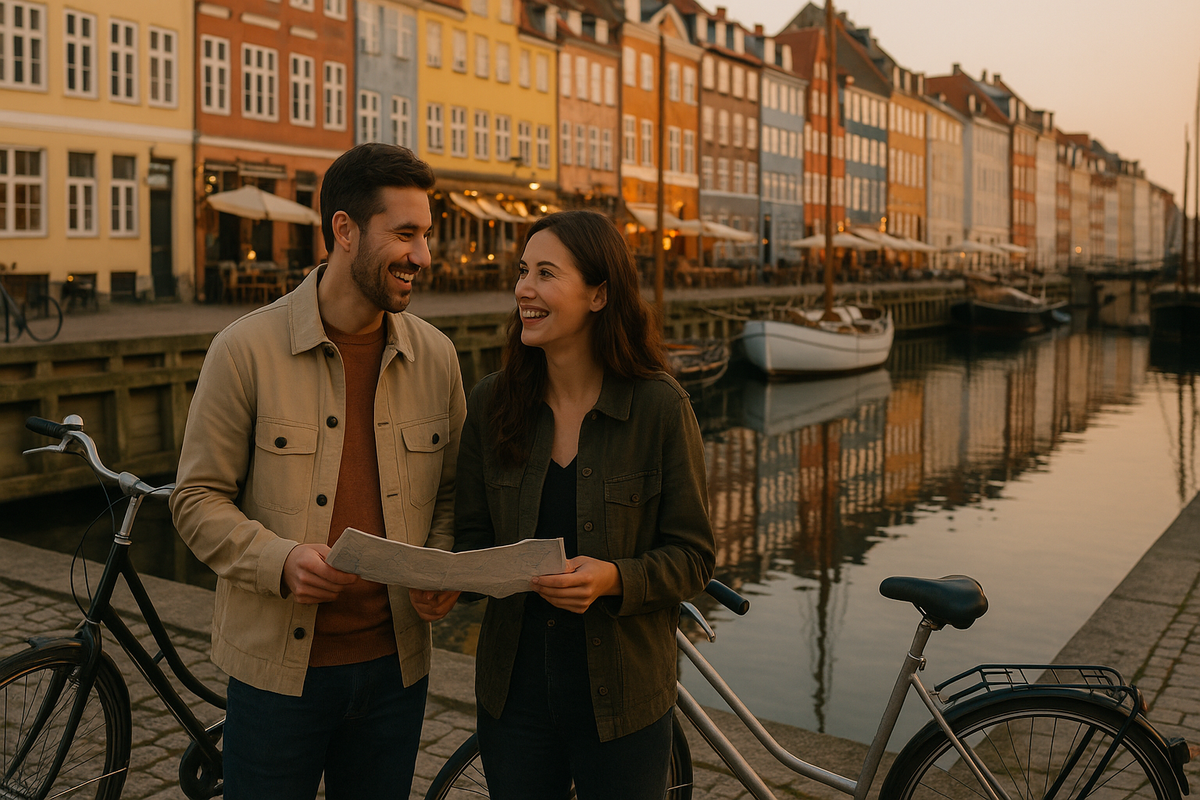
Arrival, first walk around the centre and Nyhavn, a bike ride along the waterfront, one day for a short side‑trip: north‑Zealand castles, Malmö or a modern art museum.
– Day 4: travel to Oslo
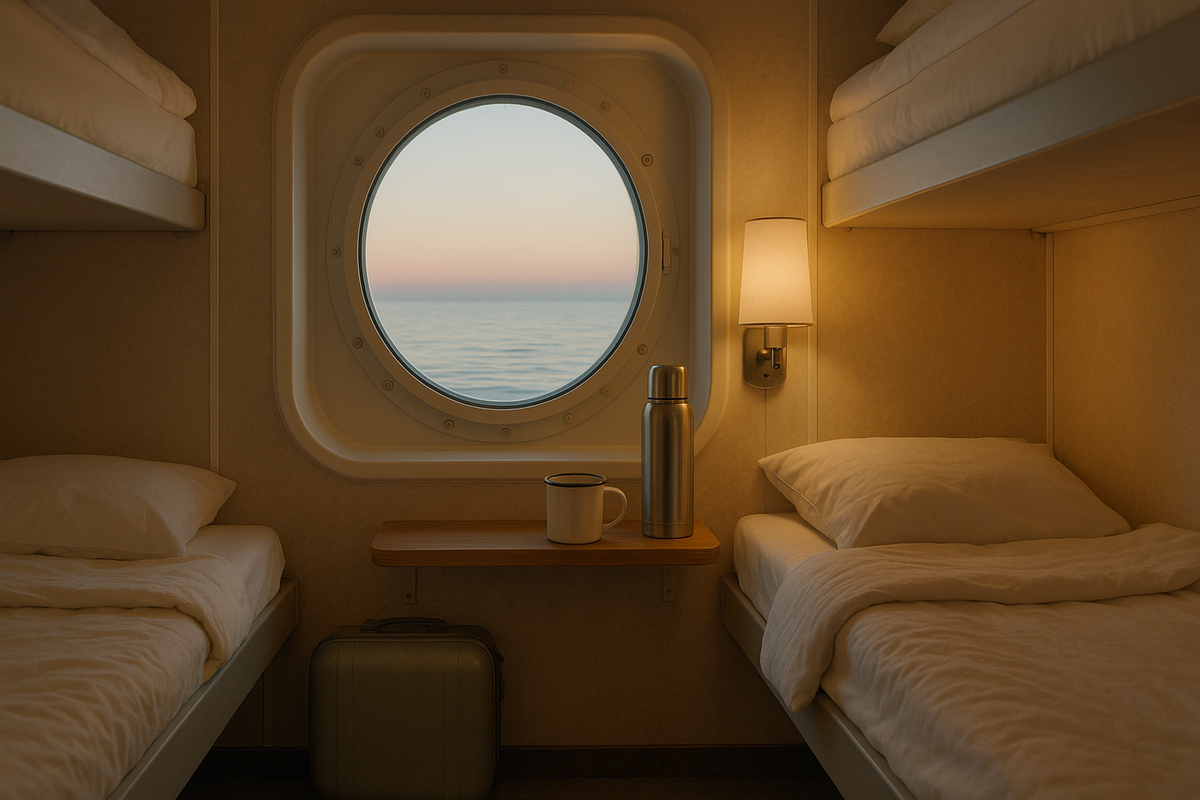
Overnight ferry or day train/coach (depending on budget and timetables). The ferry saves you one hotel night and gives you a mini‑cruise, but check the season and weather.
– Days 5–6: Oslo
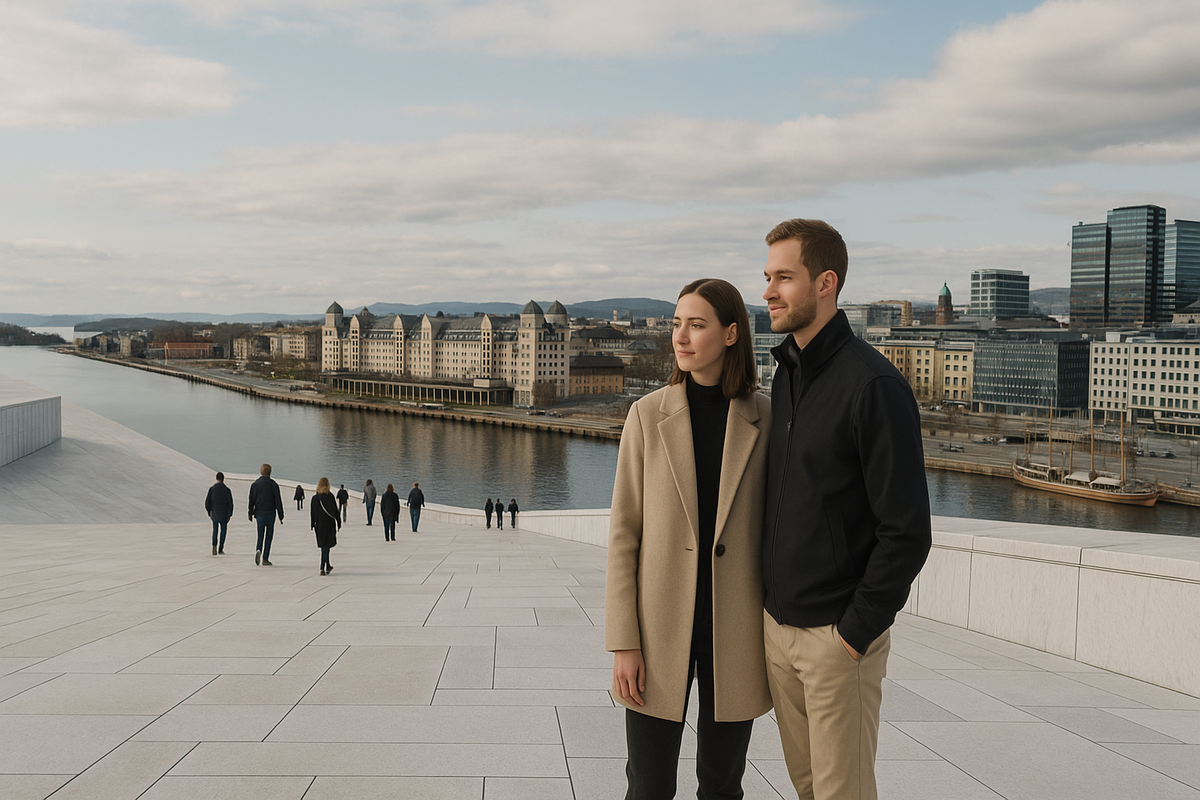
Two nights to explore the harbourfront, museums on Bygdøy, the opera house roof, a tram or train ride into hillier neighbourhoods and a general feel for the Norwegian capital.
– Days 7–9: fjords (Sognefjord or Nærøyfjord)
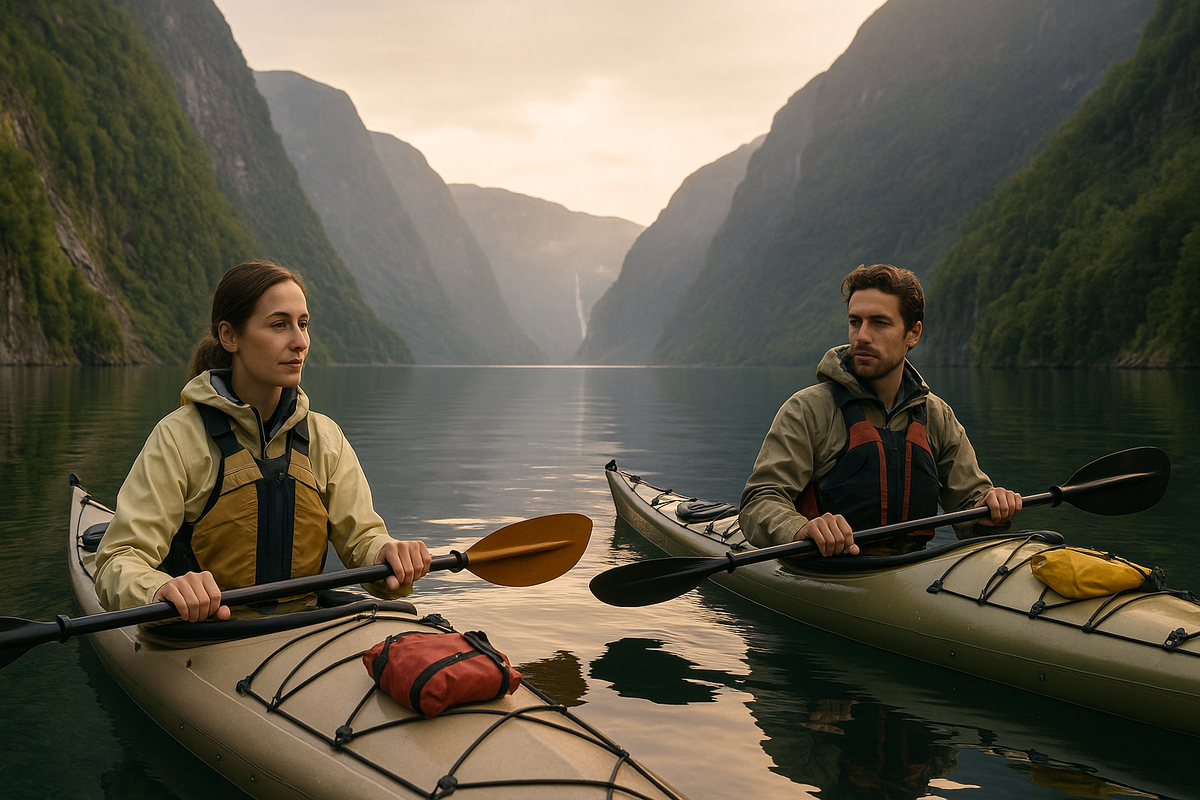
Classic routes combine train + ferry + bus with a 2–3 night stay in one village. The key is not to “tick off” the fjord in a single day, but actually live there: go on hikes, take a kayak out, and wait for a clear break in the weather.
– Days 10–11: back to Oslo and home
One overnight stop on the way back, one buffer day for weather or delays, then your flight home or a return to Copenhagen if outbound flights from there are cheaper.
If you have 14 days, resist the temptation to bolt on another new city. It is usually nicer to expand what you already have: add a day in the fjords, one extra “no plans” day in Copenhagen or a relaxed day in Oslo.
✈️ Option 2: via Bergen – maximum fjords in a compact area
If your main goal is the fjords, many travellers choose “Copenhagen + Bergen” with an internal flight. This cuts down overland travel and lets you spend most of the route in exactly the scenery you came for.
Example 10–12 day itinerary:
– Days 1–3: Copenhagen
A classic first visit to the city: central canals, parks, a couple of neighbourhoods beyond the core and one suburban outing to a forest, beach or nearby town.
– Day 4: flight to Bergen
A short flight, then half a day to wander along the harbour, fish market and wooden quarter, and perhaps a funicular ride for a panoramic view of the city.
– Days 5–8: fjord region around Bergen
Choose one base for 3–4 nights and do day‑trips from there: Sognefjord, Nærøyfjord, Hardangerfjord, side valleys, perhaps a glacier viewpoint. The idea is to avoid moving your luggage every day and build a “fan” of day routes instead.
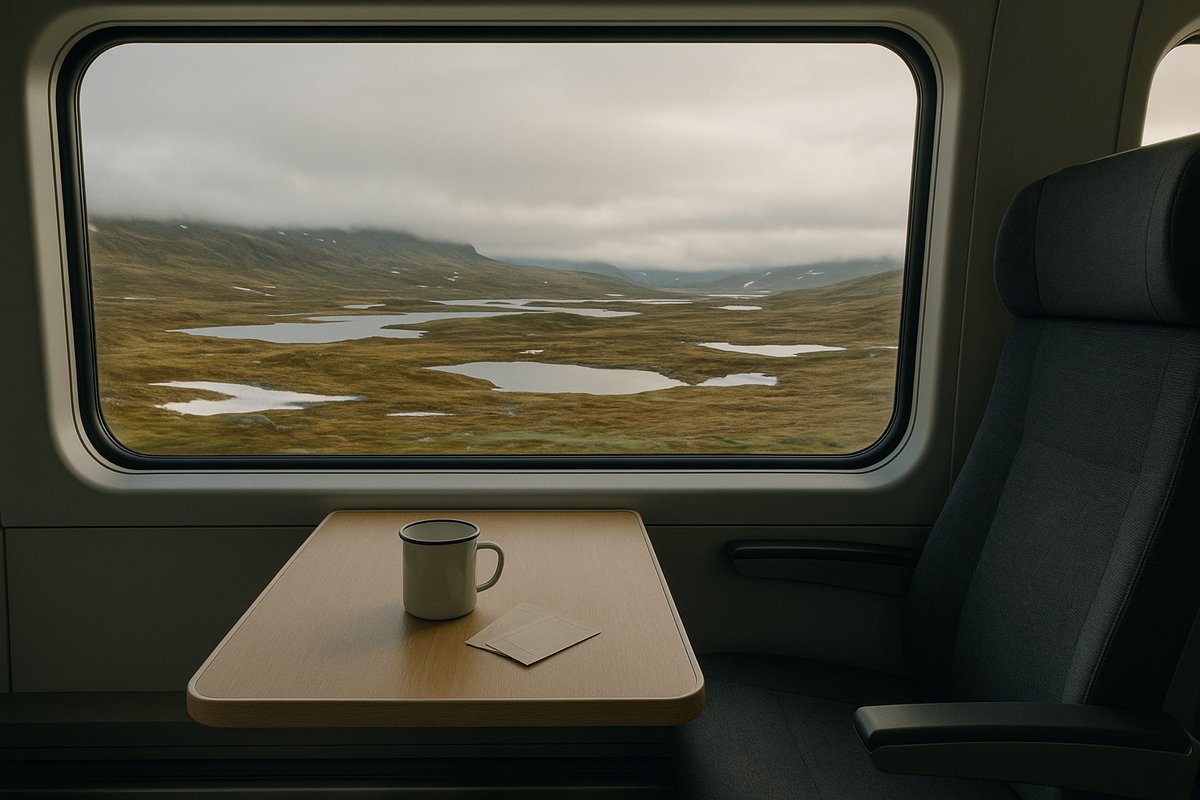
– Days 9–10: Bergen–Oslo train (optional)
One of the most scenic railway lines in the region. You can ride it all the way to Oslo and spend 1–2 nights there or return to Bergen and fly back to Copenhagen.
– Days 11–12: extra and buffer
Perfect for those who want more city time (Oslo) or more mountains and water (another fjord day).
With 14 days it is easy to stretch the fjord block to 5 nights and add one more overnight in Oslo or back in Copenhagen.
💺 Public transport or car hire: how the route and budget change
Both Norway and Denmark work very well on public transport. In theory you can complete the entire itinerary without sitting behind the wheel once: trains, coaches, ferries and internal flights cover almost everything.
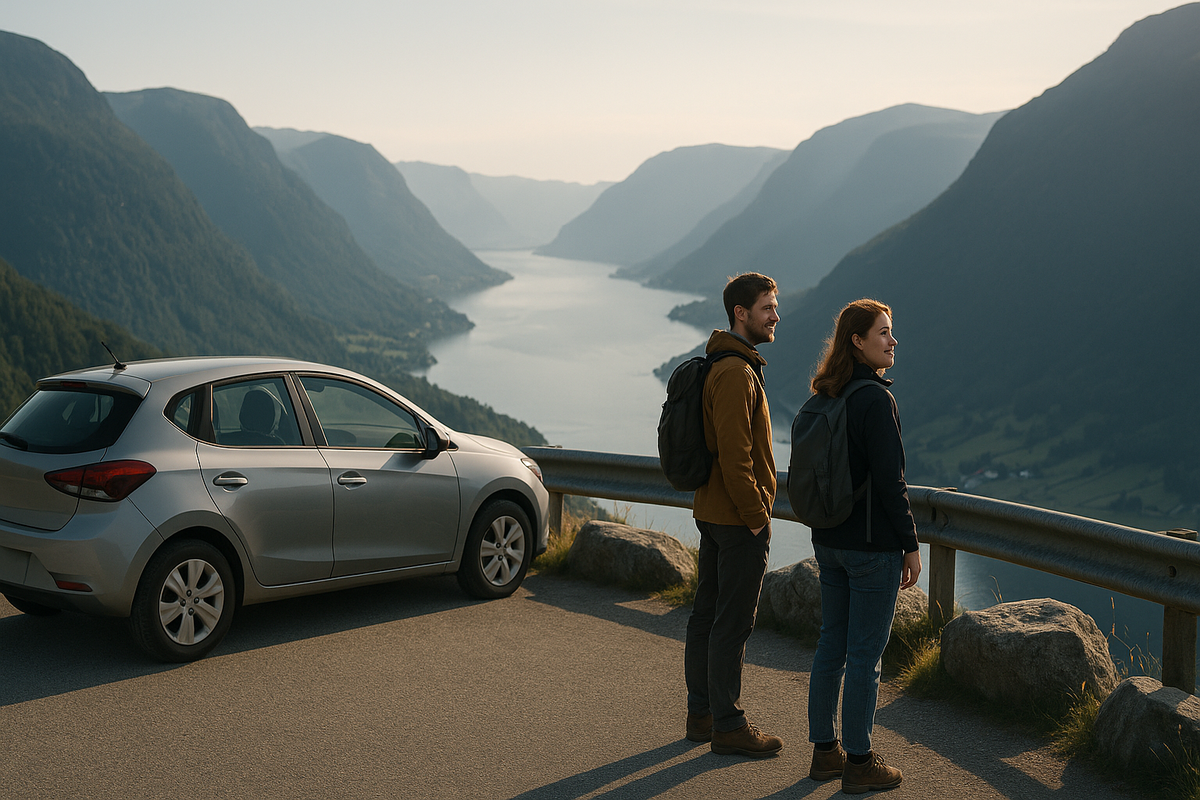
Hiring a car for 3–5 days in the fjord region, however, gives you:
– freedom to stop at viewpoints, smaller waterfalls and picnic spots;
– access to quieter trails and villages with no mass‑market tours;
– the option to stay slightly away from the most expensive, touristy villages and drive in when you want.
The downsides are expensive city parking, high fuel prices and the need to take mountain roads and hairpins seriously.
📌 Public transport vs hiring a car in the fjords
| Public transport only | Car hire in the fjords (3–5 days) |
|---|---|
| Routes are built around trains and organised tours. Easier to plan and no need to get used to local driving rules. | Flexibility: you can change plans with the weather, choose lesser‑known trails and villages and stop wherever the view is best. |
| In the fjords you depend on timetables: one ferry in the morning, one in the evening. If a departure is cancelled, you may lose a whole day. | Higher spending on fuel and parking, especially in Bergen and Oslo. You must be confident on mountain roads and hairpins. |
| The budget is more predictable: tickets are bought in advance and there are no risks of car damage or traffic fines. | For 3–4 people sharing, the daily cost per person is often similar to – or lower than – several separate fjord tours. |
| Ideal for those who dislike mountain driving and treat trains and ferries as part of the experience. | Ideal for those who want maximum freedom and are happy to take responsibility for route choices and weather windows. |
✅ Checklist – which skeleton suits you?
✅ Which skeleton to choose
Tick what sounds like you – the pattern will show which route to look at first.
- I dislike internal flights and want as many trains and ferries as possible → choose the route via Oslo.
- Fjords matter more to me than cities → fly to Bergen and expand the fjord block.
- I am not comfortable driving mountain roads → stick to the public‑transport‑only version without a hire car.
- There are 3–4 of us and we are happy to share a car → it is worth hiring one for 3–5 days in the fjords and using trains/planes for the cities.
- We enjoy museums, restaurants and capital‑city walks → keep enough nights in Copenhagen and Oslo instead of stealing them for extra transfers.
🌤️ When to travel: fjords without crowds vs peak season
For a “city + fjords” trip three things matter at once: weather, daylight and crowds.
– May – early June
There can still be snow higher up in the mountains, but trails start opening, the green is fresh and waterfalls are full. There are fewer people than in July and it is easier to find accommodation. Temperatures are unstable: one day in a T‑shirt, the next in a jacket and hat, but the days are already long.
– July – early August
The most reliable period in terms of warm-ish air and water, tours running and full timetables. In exchange you get the highest prices and busiest trains, ferries and viewpoints. If you are tied to school holidays or dislike cold, this is the safest bet.
– Late August – September
Slightly cooler, but still enough daylight, lots of autumn colour and fewer groups. Prices start to soften and that “rush hour” feeling disappears from the classic fjord routes. You need to be ready for more frequent rain and wind, but for a calm “Copenhagen + fjords” combo this is one of the most rewarding windows.
In winter the fjords also work, but it is a completely different trip: very short days, a limited choice of open trails and more focus on cities and winter activities. For a first “city + classic fjords” journey, it is easier to aim for the warmer months.
✂️ What to skip if you are short on days
The main rookie mistake is trying to glue one or two extra cities onto “Copenhagen + fjords”: Stockholm, Bergen and Oslo on the same trip, plus islands and a glacier.
If you only have 10–11 days, it is sensible to:
– skip Stockholm and other capitals and keep just Copenhagen and Norway;
– choose one fjord region and one base instead of chasing “two fjords in two days”;
– avoid unnecessary night transfers: two calm nights in one place are better than “saving” on a hotel and losing the next day to exhaustion.
With 12–14 days you can gently “add meat”: an extra day in Oslo, one more fjord day or a truly lazy day in Copenhagen without a must‑see list.
❓FAQ
It is technically possible, but in practice you will spend most of the time in transit with very little depth in each place. For a first trip it is better to keep the “Copenhagen + Norway” combo and save Sweden for another journey.
Via Oslo is usually simpler if you do not like internal flights and want to rely on trains and ferries. Via Bergen works better if your priority is fjord scenery and you are happy to fly once more in order to spend more time in western Norway.
Yes. Both Denmark and Norway have good public transport and many organised fjord tours. You can see Copenhagen and the fjords entirely by train, coach and boat. A car is a question of extra freedom and remoteness, not a strict necessity.
The bare minimum is 2 nights (one full day), but 3–4 nights are much more comfortable. That gives you a weather buffer, one day for hiking, one for water‑based activities (kayak, cruise) and perhaps one just to sit and look at the view.
Late May, June and September. In late spring you get powerful waterfalls and bright green slopes; in September – colour and a calmer rhythm. In both cases there are notably fewer people than in July.
If you like the idea of a night at sea and are comfortable in cabin conditions, yes – it is both transport and an experience. If you are prone to seasickness or cutting costs, a train or plane may suit you better.
Ten full days on the ground are the lower comfortable limit. Any less and you will have to sacrifice either Copenhagen or the fjord region. For a relaxed pace and a few buffer days, 12–14 days are ideal.
Yes. From a logistics point of view it does not matter whether you start in Denmark or Norway. The important part is not to slice the route into too many short blocks or add cities “just because they are nearby” – that is what turns a holiday into a race.

0 comments
Log in to leave a comment