


☔ Hygge in foul weather: what to do if your whole sommerhus holiday is rain and wind
You book a sommerhus picturing endless sunsets, warm sand and a gentle breeze. Comments under blog posts, however, tell other stories: “it poured all week in August,” “in March the coastal wind stung our faces,” “we spent half the break at the house and regretted going at all.” Hence the main fear: “we’ll be soaked, we’ll be bored and we’ll have wasted our money.”
The truth is that rain and wind are part of the Danish package — especially in March, April, September and even mid‑summer. But it’s not a verdict. A sommerhus is designed to keep you happy in any weather: a fireplace, sauna, board games, long dinners and forays to nearby towns, museums and dunes. This article is about turning a “rainy holiday” into your most restorative hygge break of the year.
🌧️ Weather as a backdrop, not an enemy: what to expect from Denmark
Denmark doesn’t promise 30°C and unbroken sunshine. Even in August you can live through a day of “rain — sun — wind — rainbow — rain again”. In March and November the coast can feel raw and clammy even if the thermometer isn’t scary. Many disappointed reviews start the same way: “We thought it would be like the Mediterranean.”
If you adopt the idea that “sunny days are a bonus, not the norm,” everything gets easier. Weather becomes a dynamic backdrop you plan around:
- “dry” day — head for trails, the beach, lighthouses;
- “changeable” day — a couple of short outings + a café/museum;
- “sheets of rain” — the house, fire, sauna, board games and a maximum radius of 30–40 minutes by car.
You often see confessions in reviews:
“The weather let us down, but hygge in the house saved the trip”;
“We thought rain would ruin August, yet it turned into our calmest holiday in years.”
Your goal is to decide in advance what you’ll do for each scenario — not to “sit and wait for good weather.”
🔥 Hygge indoors: fireplace, sauna, hot tub and long evenings
A Danish sommerhus isn’t just “a base by the sea”. It’s a big antidote to northern weather.
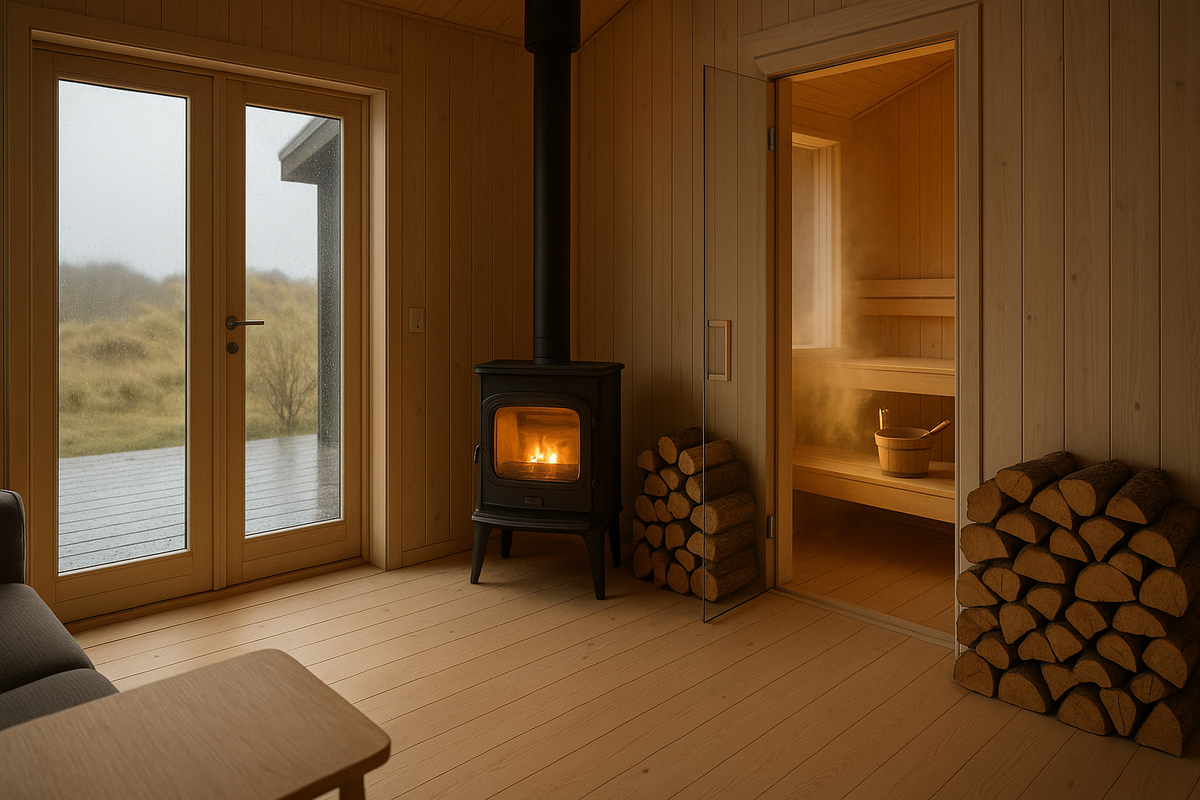
Many houses have:
— a fireplace or wood‑burning stove;
— a sauna or hot tub;
— a large dining area for dinners and games;
— sofas, blankets, shelves of books and sometimes a stash of board games.
When it’s dry all that feels like a nice extra. The moment rain sets in, the house becomes the main attraction. That’s why seasoned travellers write:
“If we go in March or October, we always pay for a fire and a sauna. Two rainy evenings and they’ve paid for themselves.”
A few ideas to turn “we’re stuck indoors” into “we finally exhaled”:
— run a board‑game marathon with prizes and silly forfeits;
— stage a “spa evening”: sauna, hot tub, face masks, herbal tea or wine;
— cook something beyond default pasta: fish from the local supermarket, roast veg, cinnamon buns;
— make a cinema: download a couple of films in advance, bring an HDMI cable and don’t rely on random TV channels.

Checklist: a hygge kit for a rainy day in a sommerhus
🕯️ Hygge kit to prepare before the rain
These small things often decide whether “bad weather” becomes a pleasant reason to slow down.
- Candles or a candle lantern (if your hosts permit candles).
- A couple of favourite board games that your group will enjoy.
- An evening music playlist and headphones in case someone wants some quiet.
- Books or an e‑reader pre‑loaded with novels/non‑fiction.
- Spices, coffee/tea and your favourite chocolate or wine for cosy dinners.
- Comfy loungewear and warm socks — hygge doesn’t work well in jeans soaked from a walk.
- Films/series downloaded in advance, plus a cable to connect your device to the TV.
🏠 Make the house the adventure: ideas for a couple, a family and a group
Even without going further than 30–40 minutes, a day in the house can look completely different — it depends who you came with.
A couple can run a mini‑retreat: turn off notifications, cook together, open a bottle and finally talk about things other than work and chores. Reviews often say: “We didn’t expect to just sit by the fire and talk until 2 am — and it beat any excursion day.”
A family with children can turn the house into a base for quests and “home camp”: blanket forts, baking, board‑game tournaments, showing old family photos on a tablet, building a “little museum of finds” from the beach.
A group of friends can make it a tiny Danish “chalet”: one cooks, one does music, one runs games. A good practice is to assign evenings of responsibility so each person prepares a programme.
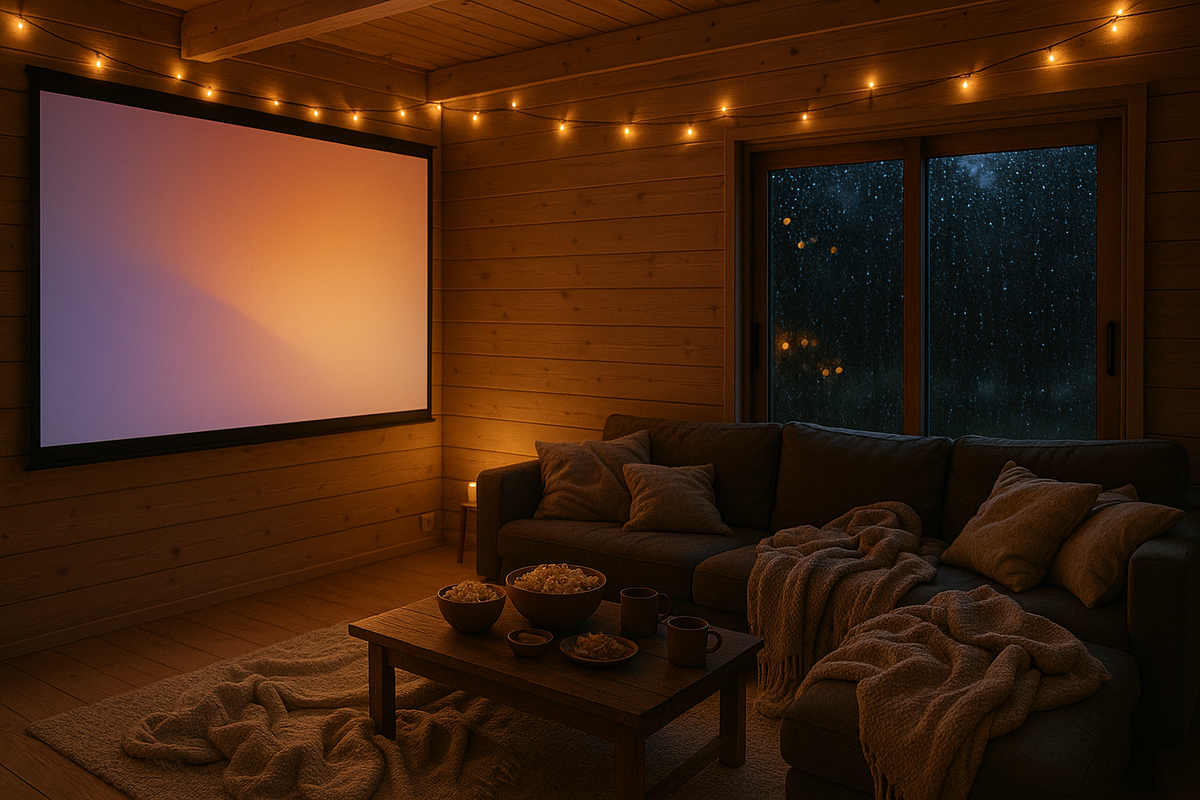
Ideas for a hygge day at the house when the weather is bad
🏡 What to do in a sommerhus if it “pours all day”
Mix and match: pick one idea from each column.
| Who you are | Quiet hygge | More active day |
|---|---|---|
| Couple | Long breakfast, reading by the window, cooking together, a film under a blanket. | Joint online course/workshop, tasting local cheese/beer, a little photo‑shoot in and around the house. |
| Family with children | Reading aloud, jigsaw puzzles, board games, “home cinema” with popcorn. | A house‑and‑garden treasure hunt, making pizza or biscuits together, a “Danish sea” drawing session. |
| Group of friends | Shared brunch, board games or card tournaments, long fireside conversations. | Cook‑off “Denmark vs our cuisine”, an improvised quiz, a mini party with a Scandi‑pop playlist. |
| Solo traveller | Reading, journalling, meditation, spa evening with hot tub/sauna if available. | Online museum tours, editing photos from past trips, short runs during “dry windows”. |
🚗 A 30–40 minute radius: museums, aquariums and “lost” little towns
One of Denmark’s big sommerhus perks is that even in places that look “wild” you’re rarely far from civilisation. In nearly any popular area, within 30–40 minutes’ drive you’ll find:
— a small town with a pedestrian street, cafés and bakeries;
— a maritime museum, aquarium or “sea centre” for a couple of hours;
— an open‑air museum or an old harbour;
— a pretty village with a harbour, fishermen’s cottages and one or two excellent patisseries.
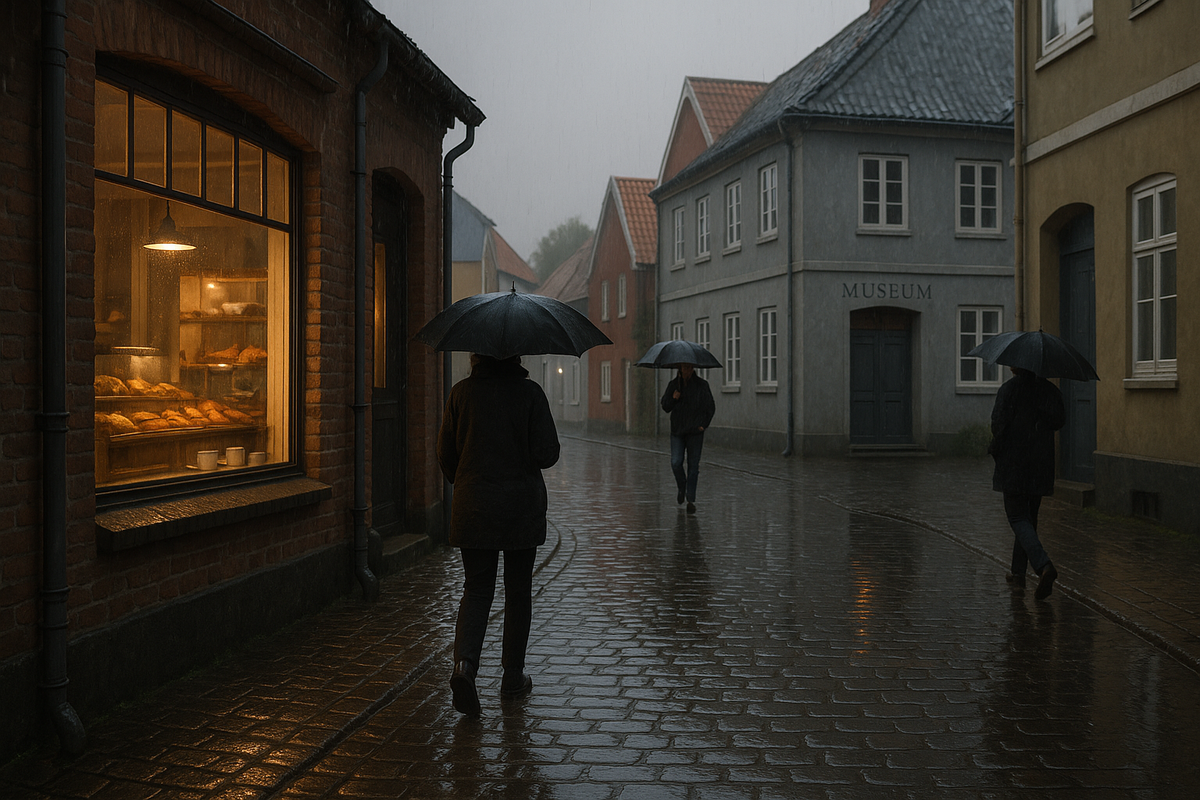
People who hit long rainy spells often write:
“We picked three small towns around our sommerhus and visited a new one each day. They were our best days: no rush — just walks, buns and the grey sea.”
A good plan is to mark before you travel:
— 2–3 nearby towns with some “life”;
— 1–2 museums or aquariums your group would enjoy;
— a couple of cafés/patisseries worth a “grey‑day” trip.
What to do on a rainy day
🌬️ Walking in wind and rain: how to go out and still enjoy it
A rainy beach walk can be torture — or pure catharsis. The difference often comes down to two things: clothing and route.
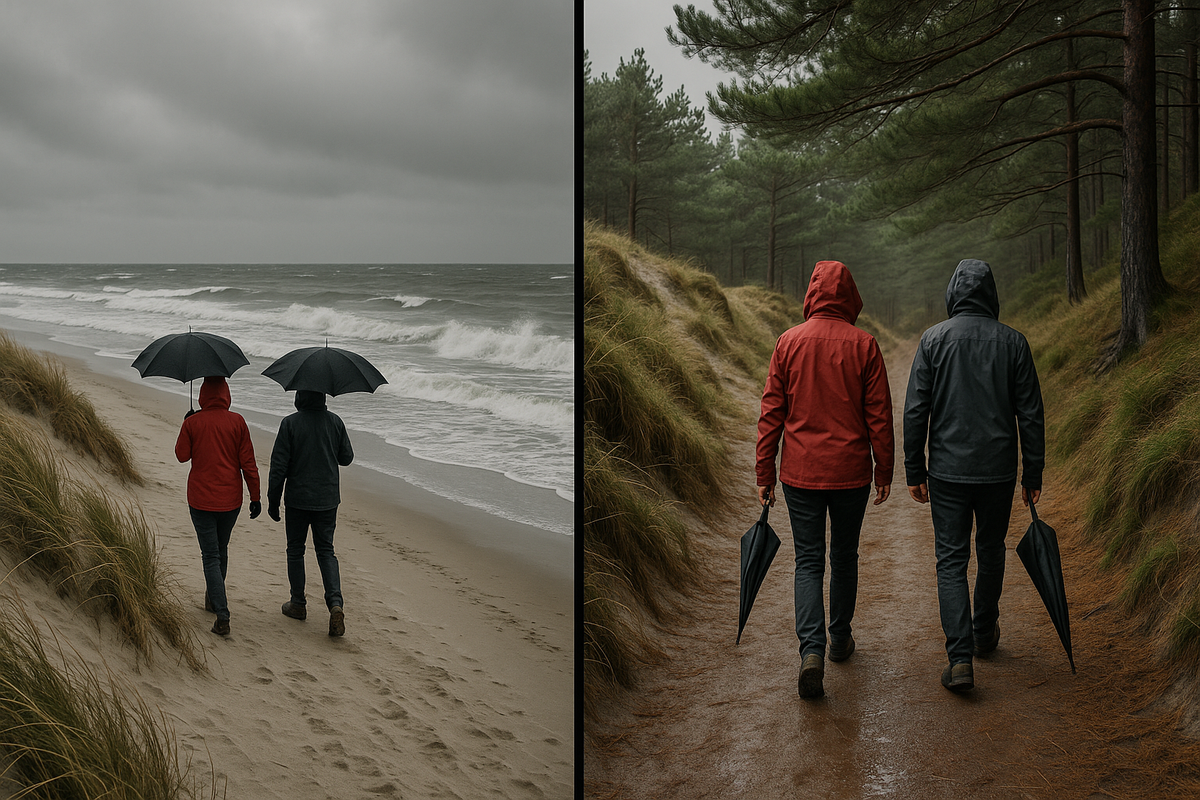
- Layers and wind‑proofing. In March and November the issue is less temperature than wind and damp. A waterproof jacket, hood, hat and scarf often matter more than another jumper.
- Forest instead of an open beach. If the wind literally knocks you sideways, switch to trails in the forest or between dunes: calmer and warmer.
- Short “storm” outings. Rather than one long walk, do three short ones: go out to “meet the storm”, come back for tea, step out again when the rain eases.
- Safety first. In a strong storm, admire the sea from a safe distance; don’t go into the water — especially with children or without experience in surf conditions.
Reviews often say: “We went into the dunes ‘just for 10 minutes to see the storm’ and came back an hour later — it was stunning.” The main thing is to stop pretending you’re in a July Mediterranean and dress as if you’re in a Nordic winter fairy tale.
🍰 Cafés, buns and small towns: bad weather as a cue to slow down
In good weather you might spend all day on the beach and trails, using the nearest town only as a place to buy bread and milk. In rain and wind the focus shifts: suddenly you notice:
— local bakeries with cinnamon, sweet rolls and sourdough loaves;
— little museums about the town or fishing;
— antique and vintage shops;
— cafés where guests linger for hours over one cup and nobody rushes you.
It’s during such “rainy excursions” that people write later: “We popped into a town we hadn’t planned to see — it became our favourite of the trip.”
A good trick is to name the day honestly the night before: “Tomorrow is our slow‑town day.” Treat it as a separate adventure, not Plan B.
🧠 Hygge psychology: how not to regret the trip even if sun was scarce
The biggest mistake is measuring a Danish holiday by hours on the beach. If your internal KPI is “7 days = 7 swims and 7 sunsets”, Denmark is unlikely to deliver.
Set different waymarks before you go:
— “at least one evening by the fire with a long conversation”;
— “at least one museum/aquarium within 30–40 minutes of the house”;
— “one dune walk in ‘ugly’ weather when the sea is grey and dramatic”;
— “one day when we don’t rush anywhere and live by our internal clock.”
Reviews often say:
“Without the rain we’d have chased ‘perfect weather’ and never spent time together”;
“The storm crowned the holiday, not ruined it — the house was great and we were ready.”
Denmark doesn’t promise you sun. It does promise endless reasons for hygge — if you allow yourself to see them as more than a forced beach replacement.
❓FAQ
No. Coastal forecasts often change: instead of “7 days of rain” you’ll get a mix of drizzle, bright spells and a couple of downpours. If you have a plan for the house, nearby towns and forest trails, the trip will be different, not worse.
Very much. People more often regret not paying for fire/sauna and ending up in an “ordinary cottage” than they do an extra €50–100 for comfort. In a rainy week those options work every day and set the mood.
Yes — if you’re dressed for it and use common sense: don’t enter the sea in a storm, avoid wet rocks and watch your footing. Often it’s better to step back into the dunes or forest — less wind, same sea sound.
Board games, puzzles, cooking together, house‑and‑garden quests, “home cinema”, drawing and crafts work brilliantly. Add trips to nearby aquariums, museums and children’s centres within 30–40 minutes.
If your goal is only beach and suntan, reconsider the destination. If you’re ready for “sea + house + towns + trails”, there’s no point cancelling: rainy Denmark with Plans B and C can be very cosy.
No. You don’t need expedition kit. But a good waterproof, decent footwear and a warm hat/gloves in shoulder season greatly improve walks. If you love walking, invest in clothing, not a fifth jumper.
Typically: one or two small towns, several cafés and bakeries, some museum (maritime, local history or modern art) and sometimes an aquarium or themed centre. Enough for 2–3 “grey” days with interest.
Yes — and it’s wonderful if trails are open and there’s no severe weather warning. Forests and dunes in damp weather look completely different. Wear shoes with good grip and respect nature: don’t step off marked paths where it’s forbidden.
That’s the signal to switch to the “outside” plan: a nearby town, museum, aquarium, trampoline hall or swimming pool if there is one. A change of scene and light activity are usually enough to make the evening hygge again.
Don’t build the whole holiday around the beach. If the plan already includes the house, hygge evenings, neighbouring towns, museums and forest trails, rain stops being a catastrophe and becomes another excuse to brew tea and light the fire.

0 comments
Log in to leave a comment