


👨👩👧👦 Sommerhus vs camping: which is better value and more comfortable for a family with children
Imagine you’re planning your first family trip to Denmark. In one tab you have a cosy sommerhus with a fireplace and a dune‑side terrace; in another, a lively family campsite with a pool, trampolines and mini‑golf. A house gives you a kitchen, quiet and a private garden; a campsite promises children who will make friends on their own and disappear to the playground till evening. The question is simple: which ends up better value and more comfortable for a family—especially if you watch every line of the budget?
In this article we sort it all out: how a sommerhus differs from a family campsite with hytter/cabins, what a week actually costs in each option, where toddlers are calmer and where teens are happier, and how to choose a format for your family, not for an “average review on the internet”.
⚖️ Sommerhus and camping: two different holiday philosophies
You can think of it this way: a sommerhus is a “family cottage by the sea”; a campsite is a “small camp with its own world”.
A sommerhus gives you:
— a separate house with its own kitchen, terrace and garden;
— quiet (if you’re lucky with neighbours) and the feeling of “we live here”;
— maximum control: you decide what/when to cook, when to sleep, whom to invite over.
A campsite gives you:
— on‑site infrastructure: playgrounds, trampolines, pool, mini‑golf, sometimes animation and a small café;
— plenty of other families and instant socialising for children;
— a sense of buzz, where you can avoid leaving the grounds for days.
For some families, a big kitchen and a quiet evening by the fire are the dream. For others, it matters more that children run around the playground instead of asking adults for attention every five minutes. Knowing your own “philosophy” is half the decision.
💶 What makes up the weekly bill: cottage vs campsite
At first glance, a sommerhus seems more expensive: a separate house, closer to the sea, sometimes with a fireplace. But a family campsite can also “grow” a bill: fees for family + hytte/cabin or pitch, electricity, showers, laundry, pool, activities, sometimes paid Wi‑Fi.
A typical week‑long budget for a family of 2+2 in each format includes:
— accommodation (house rental or hytte/cabin/pitch at a campsite);
— utilities & cleaning (electricity, water, final cleaning; at campsites also showers, laundry);
— food (self‑catering + snacks/café on site);
— activities (pool, bike/SUP hire, mini‑golf, etc.).
The difference: in a sommerhus you pay more for the house itself, but many activities are scattered within a 30–40‑minute radius and you choose them selectively. In a campsite many activities are on the spot, but you may pay a little for them every day.
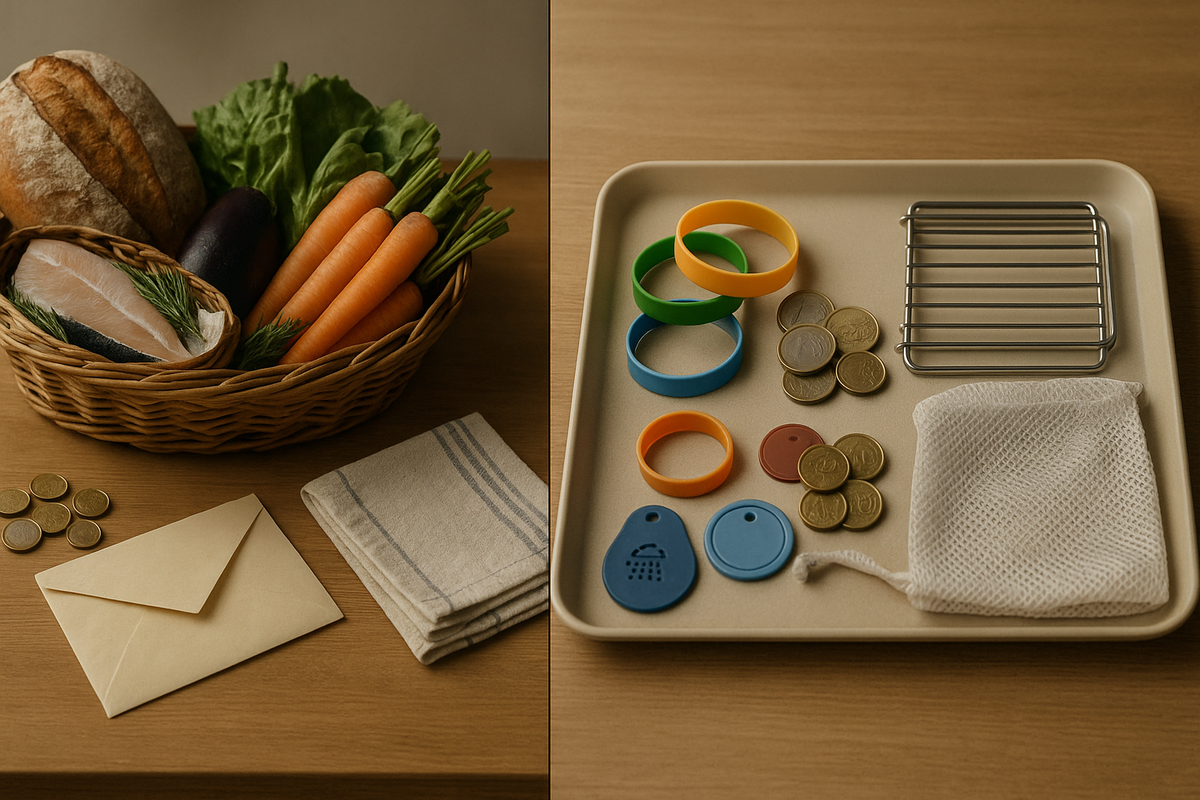
📊 The comparative picture: sommerhus vs family campsite
📋 How a week in a sommerhus differs from a family campsite
📋 Sommerhus or family campsite: the key differences for a family
This is a guide, not a universal truth — helpful for seeing which format fits your family.
| Criterion | Sommerhus | Family campsite (hytte/cabin) |
|---|---|---|
| Privacy | High: a separate plot without a constant stream of people past the windows. | Lower: neighbouring cabins/tents, more sounds and movement. |
| Children’s infrastructure | Depends on location: sometimes only beach and forest; sometimes small playgrounds nearby. | Often several playgrounds, trampolines, pool, mini‑golf, games room. big plus for kids |
| Kitchen & household | Full kitchen, oven, dishwasher, often washer and dryer. | Kitchens in hytter are usually simpler; for tents there are shared kitchens and sanitary blocks. |
| Price for a week | Higher base rent, but more chances to save on food and pay for activities à la carte. | Often lower base price but many small extras for showers, laundry, pool and activities. |
| Weather | Rain and wind are easier to handle: living room, fireplace, sometimes sauna or hot tub. | Cabins are fine; tents + long rain can be tiring, especially with little ones. |
| Children’s safety | Quiet settlements, few cars, but roads and water may be nearby — more parental oversight needed. | Often fenced grounds, low vehicle speed, many adults around. |
| Socialising | Children mostly play with siblings and, at most, neighbours. | High chance kids make friends quickly and “live on the playground”. |
🧮 Calculator: indicative one‑week budget for a family of 2+2
🏡 When a sommerhus is better value for a family
A sommerhus almost always wins when your family needs calm and its own rhythm. Especially if:
— you have a toddler who needs a quiet daytime nap;
— the adults want at least a couple of evenings without neighbours through a thin wall;
— you like to cook and value a proper kitchen and table;
— you want a washing machine so sand, kids’ clothes and towels are easy to handle.
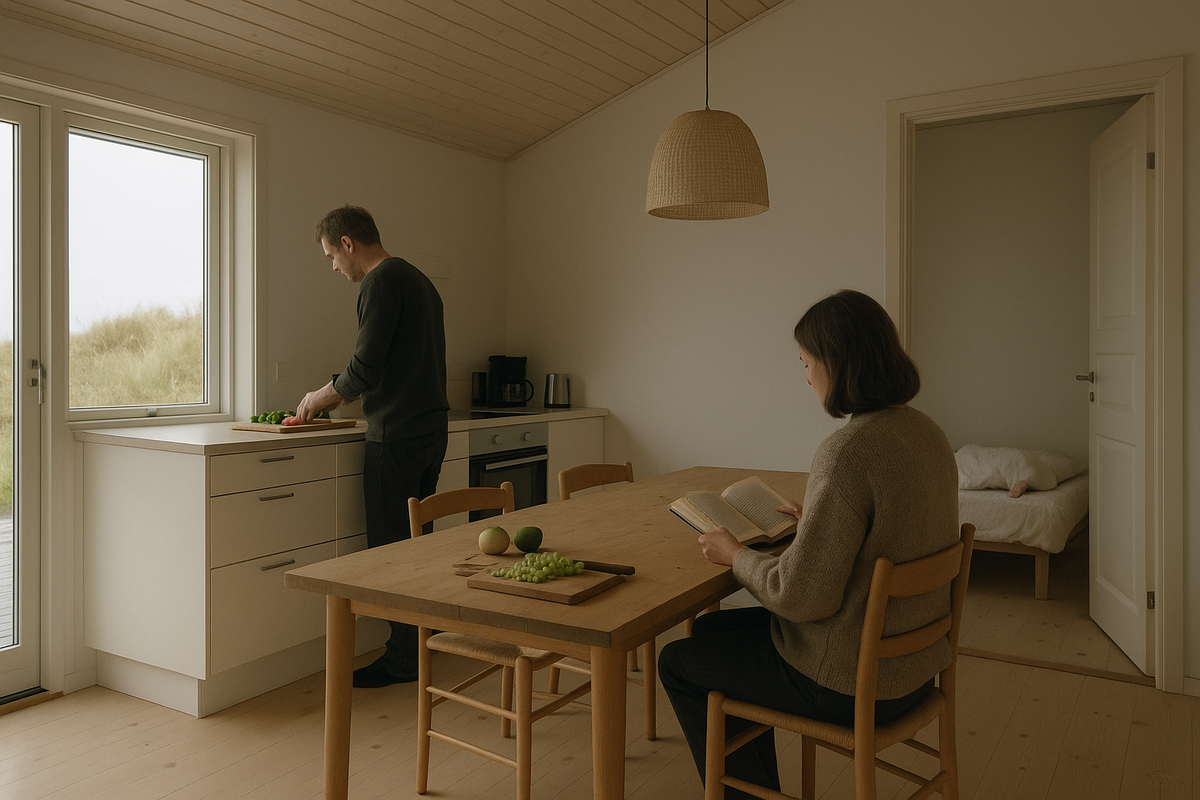
Pros for families:
— separate bedrooms so you can put children to bed and still relax in the lounge;
— your own plot where kids can play under your eye—not in a crowded common area;
— your own pace: no PA announcements for animation, no 7 a.m. pool noise;
— a solid bad‑weather base: fireplace, sauna, board games, big windows.
Cons:
— children’s infrastructure depends on location: sometimes it’s just sand and wind; the nearest playground may be a couple of kilometres away;
— socialising is usually limited to siblings and perhaps neighbours;
— driving to pools, waterparks, attractions and museums costs time and fuel.
A sommerhus usually suits families who want to “make their own Denmark”: the same beach, home cooking, escaping the city and hearing the quiet.
⛺ When a campsite is the more logical choice
A family campsite with hytter/cabins is almost a mini‑resort in a Danish key. It fits well if:
— the kids are active and love company, not only parent‑led play;
— you want everything on hand: pool, playground, mini‑market;
— you accept more people, sound and evening laughter.
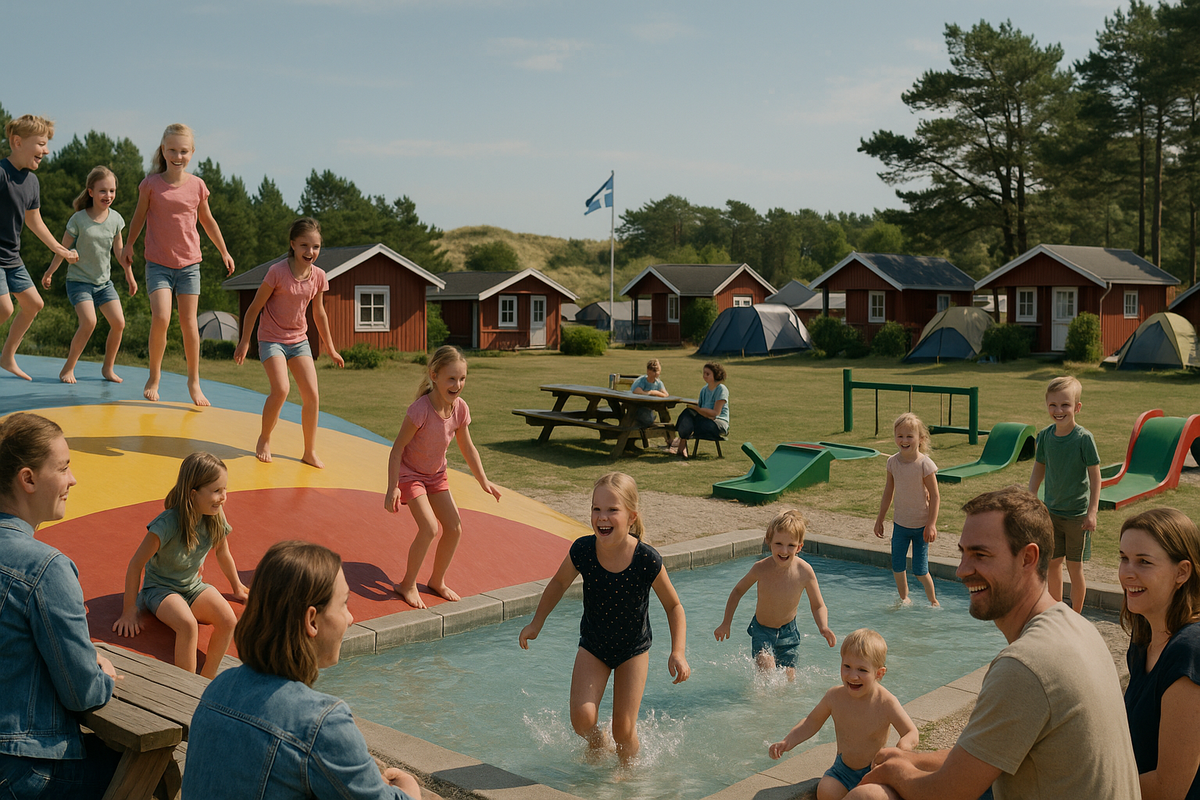
Pros for families:
— multiple layers of activities for different ages: sandpits and soft zones for little ones; trampolines and pool for school‑age; sports, SUP/kayaks, mini‑golf for teens;
— children make friends fast, freeing parents from 24/7 entertainment duty;
— grounds are often fenced, traffic is slow, plenty of adults around—easier to give kids some independence;
— a community effect: evening hangouts, shared kitchens, outdoor games.
Cons:
— less privacy: it’s a village, not a separate home;
— shared facilities if you’re in a tent/camper;
— in bad weather it’s hard to escape noise in a small hytte;
— many small extras for showers, laundry, pool, some activities.
Campsites feel best value when children are independent enough to roam and return for dinner, and when adults aren’t seeking silence and “our own walls.”
🛡️ Safety and comfort: fences, beaches and lifeguards
Safety matters as much as budget. The strengths differ.
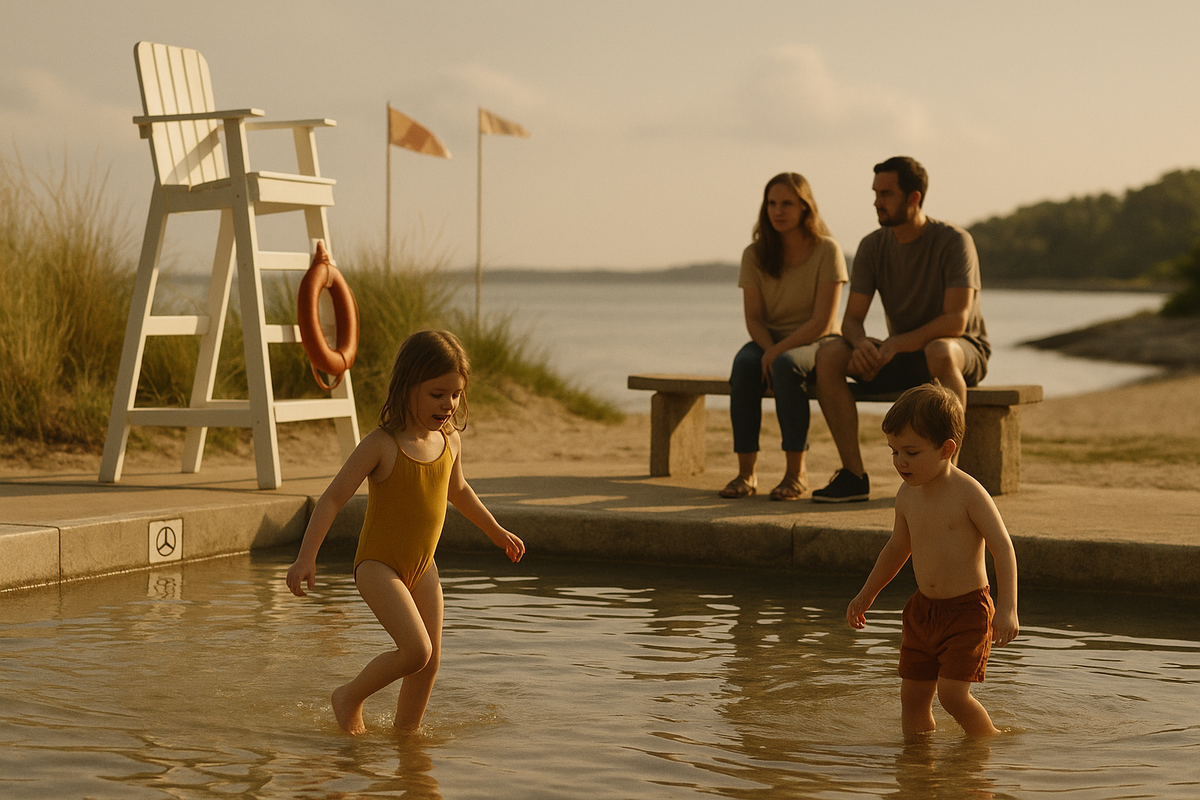
In sommerhus settlements:
— typically quiet with little traffic, but some roads lack pavements—important for buggies and small kids;
— not every plot is fenced: a child can run onto a lane or to neighbours;
— beach access is often via dune or forest paths, sometimes with gradients;
— lifeguards aren’t everywhere, especially in small settlements—swim with children only in good conditions and close supervision.
In family campsites:
— grounds are often fenced, entrances controlled, vehicle speeds limited;
— playgrounds are positioned for easy adult overwatch;
— if there’s a beach attached or nearby, infrastructure and oversight can be better than a wild stretch; sometimes there’s a shallow area and seasonal lifeguards;
— pools and slides give “controlled water” vs the sea, but require following rules closely.
Both formats can be safe if chosen thoughtfully; the “evac‑calm” feeling—child out of sight yet still on a playground—more often comes from a campsite.
👶 Age‑based scenarios: from toddlers to teens
👶 0–4 years
What matters most:
— daytime sleep (ideally in a separate room, not in the middle of a “camp”);
— a place to crawl and toddle without a crowd;
— the ability to retreat indoors quickly if cold/wet/overtired.
Usually a sommerhus wins: separate bedrooms, a quiet garden, calm. A campsite can work (e.g., a hytte in a quiet zone with a toddler pool and playroom), but a pure tent in changeable weather is a risk to weigh carefully.
🧒 5–10 years
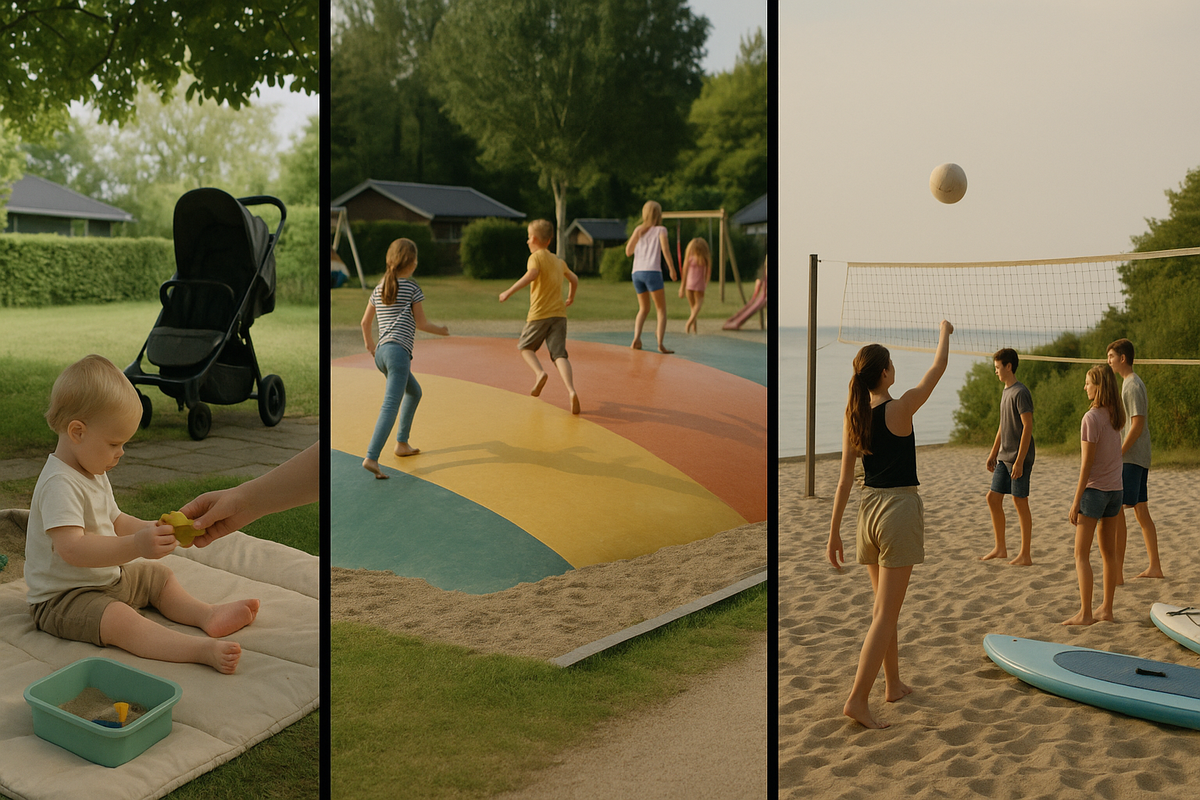
This is the “I want to play and meet people” stage. Campsites are often a paradise: playgrounds, trampolines, pool, kids’ clubs, lots of peers, and safe grounds to run from breakfast to dinner.
A sommerhus can still be great if:
— there’s a campsite or a good playground you’re happy to visit;
— family activities exist nearby: parks, aquacentres, small amusement parks.
🧑🎓 Teens
Teens often prioritise:
— reliable internet;
— sports infrastructure: courts, football, cycling routes, SUP/surf stations;
— chances to meet and hang out with peers.
A campsite with strong sports + a youthful vibe gives them far more than a silent dune‑side house. A sommerhus wins if it’s near teen magnets: surf spots, skate parks, seaside towns for evening walks.
🧭 How to decide: sommerhus or campsite for your family
🧭 Choose your format
❓FAQ
If you compare a seaside house with a hytte/cabin in a family campsite, the campsite’s base price is often lower. But it adds small extras (showers, laundry, pool, activities). A sommerhus is dearer in rent, yet you can save on food and pay for activities selectively. With care, totals can be similar.
Usually a sommerhus: separate bedrooms, quieter, your own kitchen and plot. A campsite with a hytte can work, but choose the calmest locations and have a bad‑weather plan.
In a campsite: dozens of families, children constantly on playgrounds and at the pool; they make friends in half an hour. In cottage areas it’s calmer—mostly neighbours or kids met on the beach.
A sommerhus handles bad weather better: living room, fireplace, sometimes sauna, enough space for everyone. In a campsite long rain can bore children, especially in a tent or tiny hytte. Well‑equipped campsites with indoor play areas are a good compromise.
Good family campsites are usually fenced, with slow traffic, lots of adults around and sight‑line playgrounds. In cottage areas it depends on location: some are quiet, others have a road without pavements or quick access to water. In both formats, judge the specific place, not general rules.
A sommerhus with a full kitchen/dishwasher makes control easier. In a campsite it’s possible with a hytte kitchen or your camper’s kitchen; in a pure tent relying on shared kitchens, it’s harder.
Yes, and it works well: e.g., 4–5 nights in a sommerhus for a “quiet” part, then 2–3 nights in a family campsite with pool/animation. Or the reverse. Note you will have two cleanings and two sets of extras.
Usually a family campsite with a hytte or simple rental tent: lower base bill and child infrastructure mostly included or inexpensive. Choose a site without “luxury” add‑ons but with good playgrounds + pool, and cook yourselves.
Check for multiple playgrounds, kids’ pool, games rooms, high‑season programmes; study photos (children’s ages), and wording like “family friendly”. Most important: family reviews praising cleanliness, safety and activities across ages.
Answer two questions honestly: how much you need quiet & your own rhythm, and how much your kids need company & infrastructure. If quiet comes first, you’ll likely prefer a sommerhus. If you want a camp with pool/playgrounds, look at family campsites. If you want both, plan a combo: a house plus a few campsite days, or regular day trips from a sommerhus to a nearby family site.

0 comments
Log in to leave a comment