


🐾 Pet‑friendly sommerhus and campsites: how to travel to Denmark with a dog
Almost every dog owner has this picture in mind: you’re walking along an endless Danish beach, the wind ruffles the fur, your dog poses better than any Instagram model, and in the evening you sit on the terrace of a sommerhus with a blanket and something hot. Exactly when you start checking flights, other thoughts appear: “What if this breed isn’t allowed to enter,” “all the houses say ‘no pets’,” “if the dog barks, we’ll be fined,” “fur on the sofa will cost us the deposit.”
This article is about calmly covering the whole journey: from entering the country to finding a specific pet‑friendly house and a beach where a dog can not only breathe sea air but also actually walk. We’ll look at rules, surcharges, leads and “dog” beaches, and we’ll honestly estimate how much a trip with a four‑legged friend adds to the overall budget.
🐶 Main worries of owners — and what it’s like in reality
For people who have never travelled to Scandinavia with a dog, the inner radio usually says the same things:
— “What if my breed is banned and we’re turned back at the border.”
— “The listing says dogs allowed, but then they’ll charge a huge cleaning fee for fur and sand.”
— “They’ll say dogs aren’t allowed on the beach and we’ll spend the trip walking in the car park.”
— “Neighbours will glare if the dog barks at 9:50 pm.”
— “At the campsite they’ll say only small and ‘quiet’ dogs.”
Some of these worries are not made up: Denmark really does have a list of prohibited breeds, strict rules on leads and quite tangible cleaning surcharges. In practice, people’s experience is usually calmer:
“We brought our Labrador; nobody glared, he ran on the beach on a lead, and the owner just asked us not to let him into the bedrooms”;
“Yes, there was a deposit and a pet surcharge, but it was clearly written in the contract — no surprises.”
The key to peace of mind is to understand three things in advance:
— which documents and breed restrictions apply on entry;
— how pet‑friendly sommerhus and campsites are arranged;
— how rules work on beaches, in forests and in towns.
📜 Entering Denmark with a dog: documents, breeds, basic rules
Always re‑check detailed requirements with your vet and official sources before travelling, but the general framework is as follows.
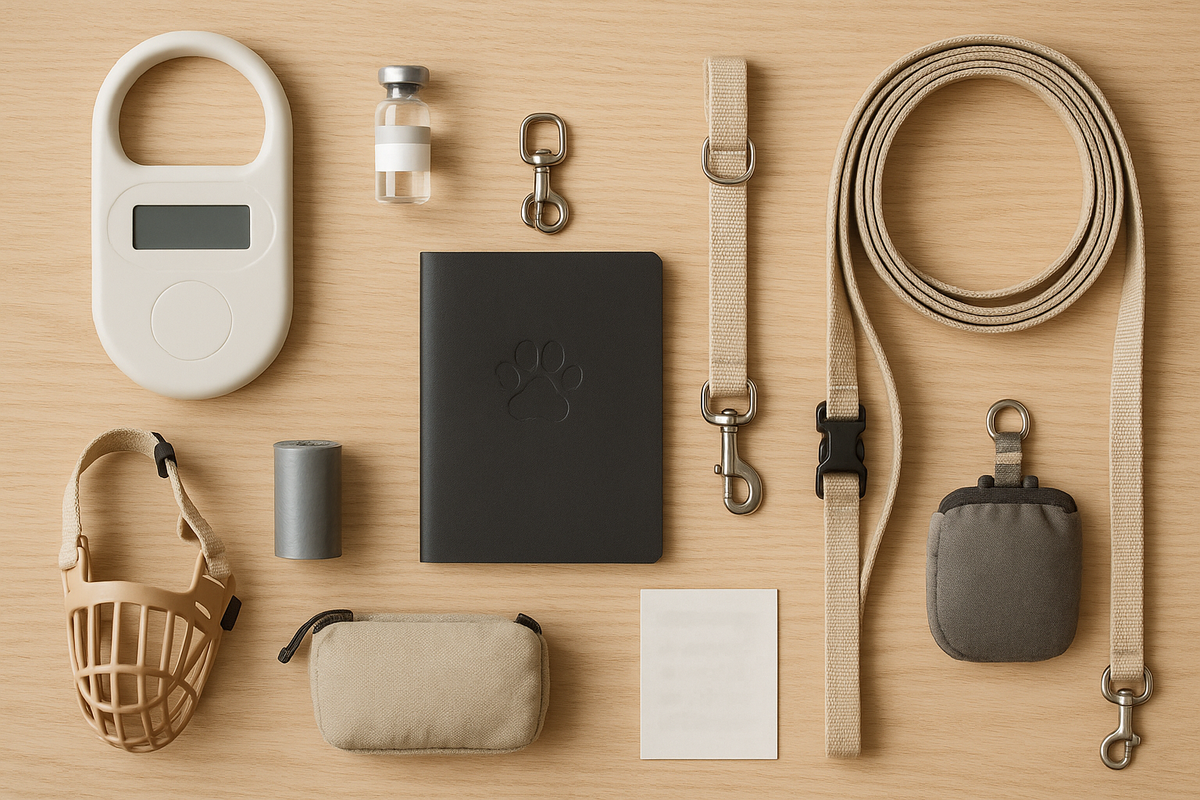
What you will almost always need
— Identification: a microchip implanted to international standards and readable by a scanner.
— Rabies vaccination: administered in time and fully valid (usually at least 21 days before travel if it’s the first vaccination).
— Passport or veterinary certificate: for the EU — an EU Pet Passport; for non‑EU — a certificate in a format recognised in Denmark.
— Parasite treatment: for some countries, treatment for Echinococcus may be required within specific time frames before entry.
Practical tip: plan a vet visit at least a month before the trip to handle vaccinations, the chip (if needed) and paperwork calmly.
Breed restrictions
Denmark has a list of breeds and cross‑breeds that are prohibited to import and keep. The list is updated from time to time, so instead of reciting it from memory it is safer to:
— check current rules on an official Danish government or veterinary site;
— if you have an AmStaff, Pit Bull, bully‑type mix or another “at‑risk group” breed, obtain written confirmation from your vet on the breed and pedigree;
— carry all documents on the dog’s origin if its looks may resemble a prohibited breed.
Lead and muzzle
In law, the lead is the main point: Denmark is quite particular about dogs being under control. A muzzle isn’t mandatory for all, but:
— it may be required on ferries or in some transport;
— sometimes it’s required for large dogs in confined public spaces (check carrier rules).
A good idea is to take two leads: a short one for town/transport and a longer (but controllable) one for beach and forest.
🏡 Pet‑friendly sommerhus: how it works from the inside
Open a Danish sommerhus catalogue and you’ll quickly notice filters like pets allowed / pets not allowed and notes on surcharges. Houses that happily take dogs are not rare, but they do follow unwritten rules.
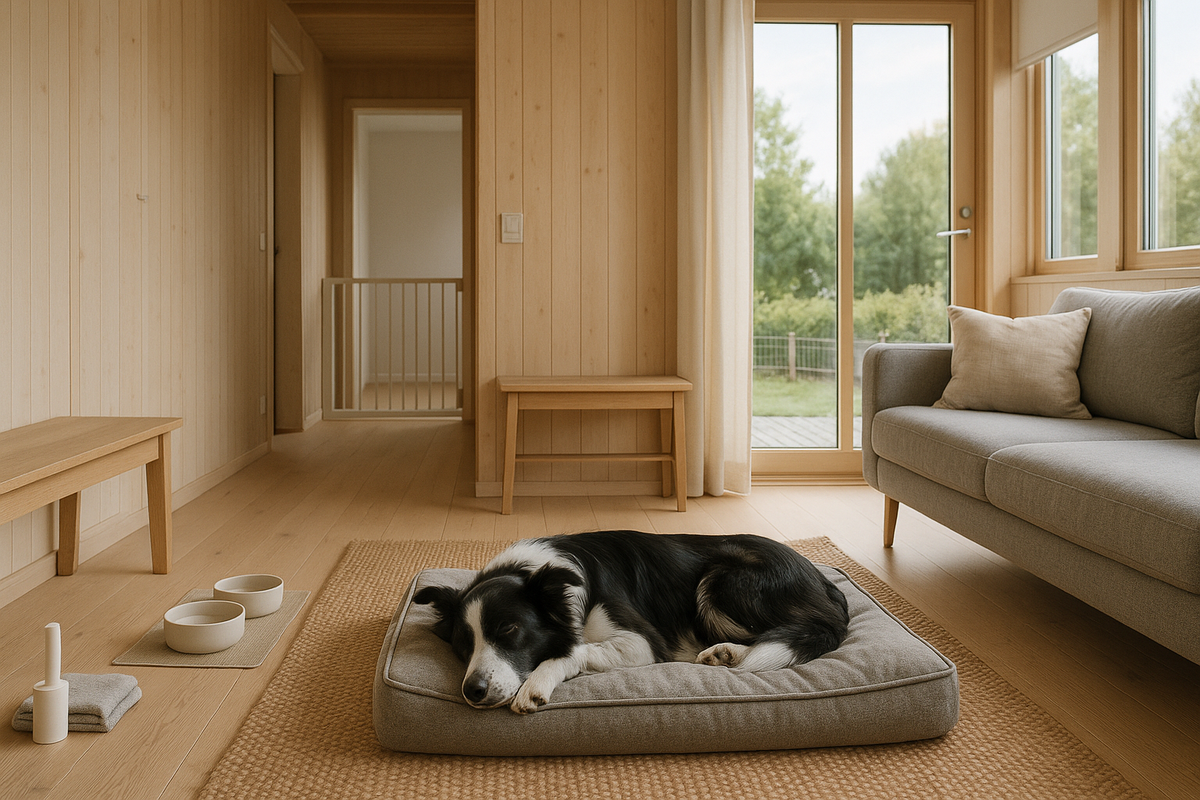
What to look for in a listing
— Pets allowed / pets on request: the first means “dogs are fine”; the second “ask first”.
— Number and size: sometimes only one dog is allowed, sometimes two; sometimes “small dogs only”.
— Fenced garden: if it’s critical that your dog doesn’t bolt onto a road, look for fenced garden — fully or partially.
— Furniture rules: many owners state “no dogs on sofas/beds”; important for cleaning and deposit risk.
— Minimum age and behaviour: puppies and “uncontrolled” dogs may be refused.
In reviews you’ll often see phrases like:
“We brought two Border Collies; the garden was fenced, and the owner only asked not to leave them alone for long,” or “The fence looked continuous in the photos, but in reality there were ‘gaps’ to next door — we used the lead more often.”
Typical owner responsibilities
— clean up after your dog on the plot and outside (bag dispensers stand in most Danish park‑and‑beach corners);
— don’t leave the dog alone to bark for hours;
— don’t allow digging in dunes or flowerbeds, breaking shrubs, chewing furniture;
— at the end, do a quick pass with a hoover/brush if the clean is “partly on you” (and even if final cleaning is booked, removing obvious fur/sand is good practice).
⛺ Pet‑friendly campsites: the dog as part of camp life
Danish campsites are often even more “doggy” than sommerhus areas: you’ll see tents with two or three dogs, motorhomes with bowls by the door and shared paths where everyone walks on a lead.
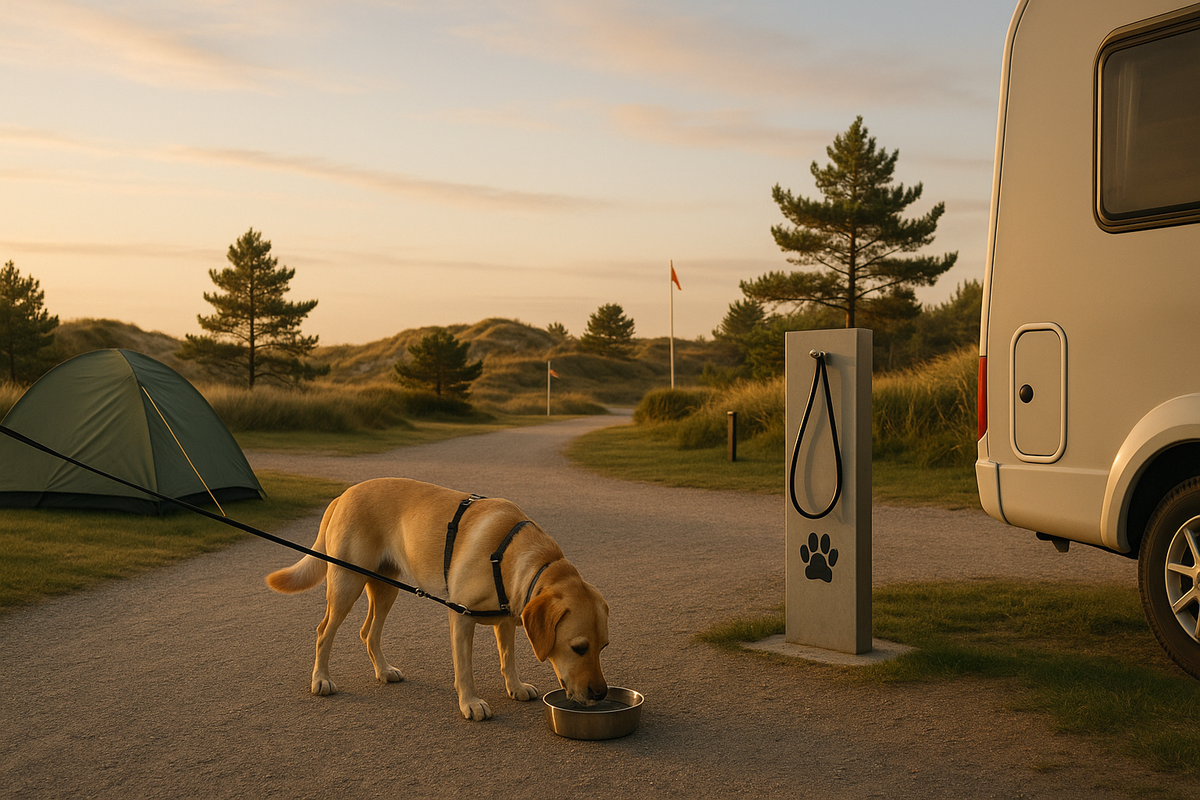
What to consider:
— almost everywhere the dog must be on a lead on the campsite (even if friendly and well‑known to you);
— there may be no‑dog zones (playgrounds, pools, shared kitchen, and sometimes parts of a beach);
— descriptions often state whether there is a:
• separate dog exercise area;
• shower/tap to rinse the dog after the beach;
• free poo‑bag dispensers.
A good sign is wording in descriptions and reviews like “camping is very dog‑friendly,” “many guests had dogs,” and specific mentions of a dog area. This nearly guarantees staff are used to four‑legged guests and care only about rules being followed.
💰 What it costs to take a dog: surcharges, deposits and cleaning
The “trap” is the same as with utilities: the base price for a house or pitch is one thing; the final bill with a dog looks a little different.
Most common set‑ups:
— Fixed pet fee for the stay: e.g., +€25–60 for the whole period (often in campsites) or +€40–100 in sommerhus, especially if extra cleaning is expected.
— Higher final cleaning fee with a dog (say, €120 instead of €90).
— Deposit: sometimes slightly higher for guests with pets, but often the same; withheld if the dog clearly damages furniture, doors or floors.
— Per‑night pet charge at campsites: sometimes a small €3–5 per night, especially for large dogs.
A good hack is to calculate the “dog package” separately: base rent + standard utilities + “dog” surcharges. That way you won’t be surprised by an extra line on the invoice.
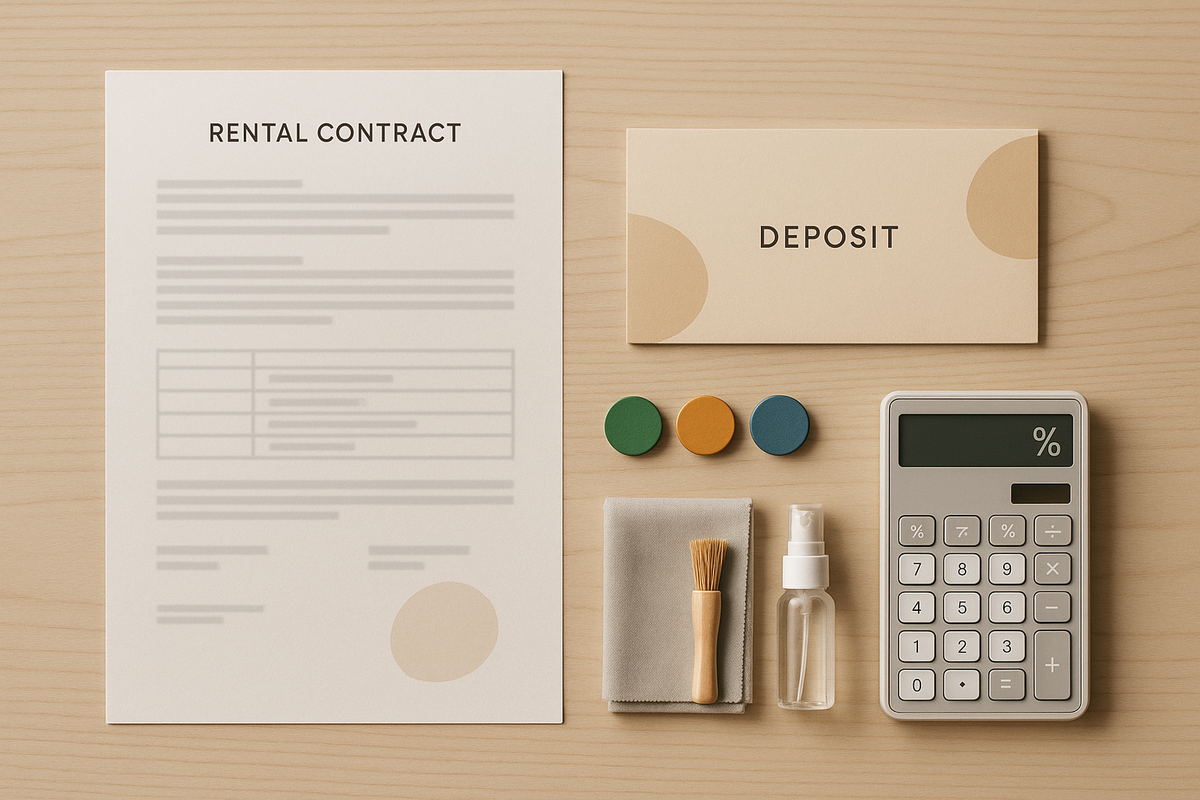
How much a trip with a dog adds to the budget
🏖️ Beaches, leads and “dog” zones: how to walk without getting fined
The most common question: “Are dogs allowed on the beach at all?”
Short answer: yes, on most Danish beaches dogs are permitted — with clear rules.
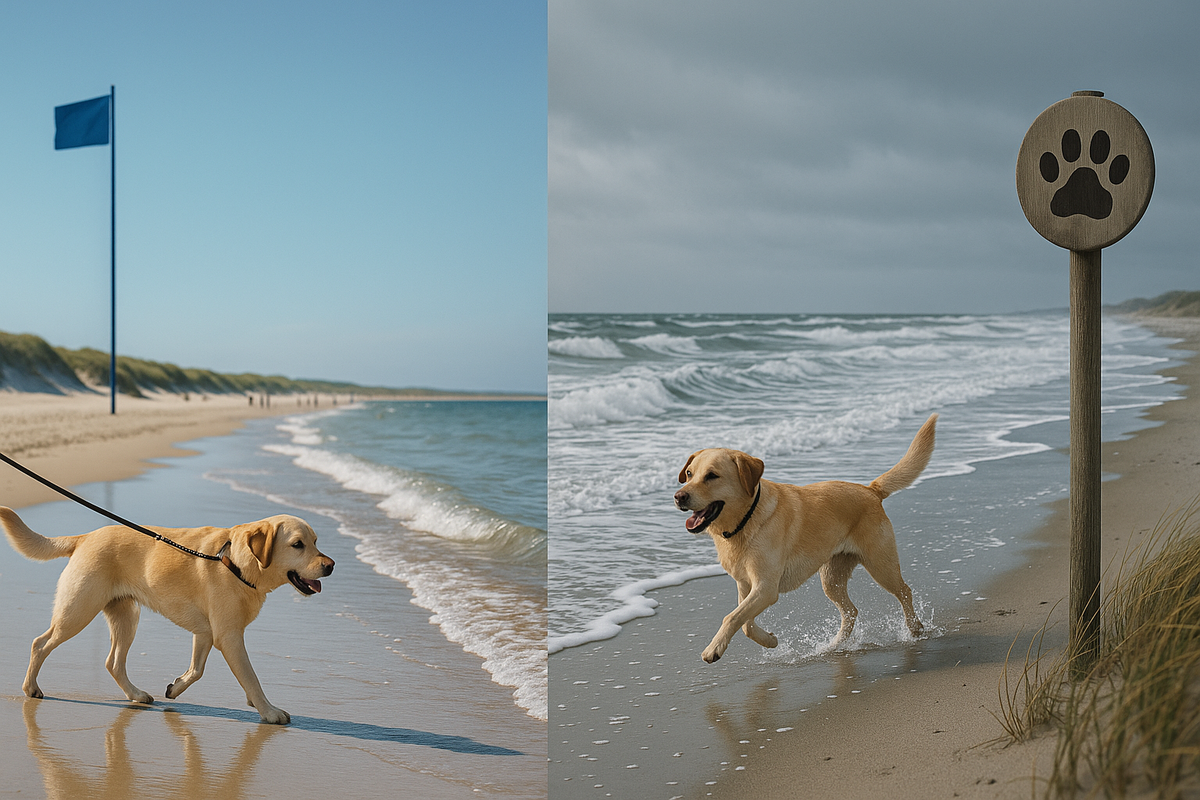
Key points:
— in the warm season (usually 1 April to 30 September) the dog must be on a lead on the beach, even if nobody is around;
— outside that period, on many beaches dogs may be off‑lead, but only if under full control and if there are no additional bans;
— in forests and nature areas, leads are most often required year‑round, except in special fenced dog forests (hundeskov) where you can let them off;
— on some protected areas and particular beaches, dogs may be completely banned — signs at access points make this clear.
For the dog this still means plenty of impressions by the sea: running along the water’s edge, playing on a long line, swimming where allowed and safe. For the owner it means reading the signs carefully and not relying on “there’s no one here, so it’s fine”.
Basic rules for dogs on Danish beaches and in nature
📋 Main zones and how to walk a dog there
This is a general guide — always check signs and current regulations on the spot.
| Place | High season (approx. Apr–Sep) | Low season (approx. Oct–Mar) |
|---|---|---|
| Regular beach | Dog on a lead, even if the beach is empty. Watch for local signs: some areas add extra restrictions. | On many beaches the dog may be off‑lead if under full control and if there is no special ban. |
| Blue Flag beach | Often stricter rules: lead required; sometimes dogs are not allowed in bathing zones at all. Always read the local signs. | Rules may be softer, but restrictions on bathing and leads sometimes remain. |
| Forest, nature trails | Leads almost always required year‑round because of birds and wildlife. | Usually the same rules: lead, except in special dog zones. |
| Hundeskov (dog forest/area) | Fenced or marked area where a dog may run off‑lead if it’s under control and non‑aggressive. | The same: a year‑round “play” zone for dogs. |
| Town, promenades | Lead required; some parks and shops don’t admit dogs. Outdoor tables are often fine — ask staff. | The same town rules: lead and respect for pedestrians. |
Interactive map: dog beaches and off‑lead areas
🗺️ Map of dog‑friendly beaches & off‑lead areas
An interactive map highlighting Denmark’s hundestrande (dog‑friendly beaches) and hundeskove (dog forests/off‑lead areas).
🧳 What to pack for your dog: from passport to blanket
The packing list for Denmark with a dog doesn’t differ much from any European trip, but there are nuances linked to sea, wind and local rules.
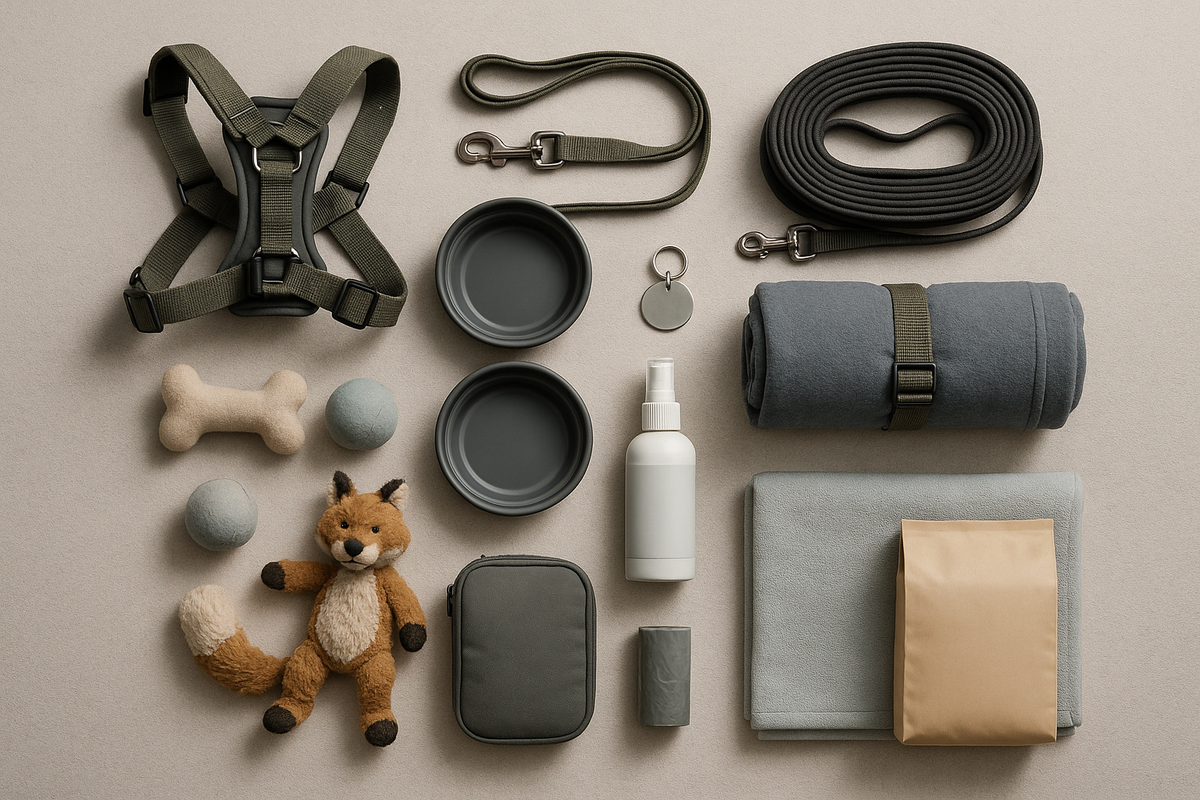
Minimum set:
— vet passport/certificate with vaccinations, treatments and microchip recorded;
— comfy harness and two leads (short city lead and a longer beach lead);
— ID tag with your phone (ideally in international format and, if possible, a Danish number);
— a few familiar toys and a blanket/bed so the house smells “like home”, not a hotel;
— a towel for the dog to save furniture and the car after the sea;
— a supply of familiar food for at least a couple of days to avoid digestive experiments at the start;
— a small first‑aid kit: tick/flea treatment and basics for sore paws if sand and salt rub them.
Checklist: ready to travel with a dog?
📦 Checklist for travelling with a dog
You can literally tick items before leaving home.
- Current entry rules and breed restrictions checked; all vet documents are in order.
- Required vaccinations done; microchip installed and readable.
- Passport/certificate, ID tag and owner contact details with an international phone number are ready.
- Harness, two leads (short and long) and, if needed, a muzzle packed.
- Familiar food for the first days and bowls for water/food packed.
- Blanket/bed, toys and a towel for the dog packed.
- Simple first‑aid kit prepared for paws and minor cuts.
- Contract read for house/campsite: pet surcharges, furniture rules and walking rules are clear.
🗺️ Where to search for pet‑friendly houses and campsites: regional ideas
There isn’t a single “right” answer, but a few typical scenarios help.
— West Jutland — heaven for long beach walks: wide sandy strands, dunes, lots of sommerhus and campsites that are relaxed about dogs. The price: constant wind and the need to manage the lead so your dog isn’t “blown to the Netherlands.”
— Funen and nearby islets — gentle Baltic, calmer waves, lots of greenery. Good for dogs that don’t love rough seas, and for owners who value the nature + quaint towns mix.
— North Zealand — if you fly into Copenhagen and want to combine city and sea. Many sommerhus here accept dogs; there are pines, beaches and good public transport.
— Bornholm — an island where you can easily mix forests, cliffs, beaches and cycling. For active dogs (and owners) ready to walk and ride a lot.
— Inland campsites — if the sea isn’t essential and forests/lakes matter more, look at campsites around lakes and national parks: dogs enjoy them just as much.
When building a selection for a magazine or blog, it’s worth using scenarios rather than a “top list”:
— “A week in a dune cottage in West Jutland with a Labrador”;
— “Funen with a small dog: three towns, three beaches and one forest”;
— “Bornholm by bike with a Border Collie: where to stay and where to ride.”
🐕 Real stories: when it went smoothly — and when it was strict
To avoid being purely theoretical, weave in real voices. Typical review emotions look like this.
“We took our Labrador, told the owners honestly and budgeted for the extra cleaning. The house had bowls and a blanket; the garden wasn’t fully fenced but it was quiet. On the beach everyone walked dogs on a lead, nobody glared; children loved giving our pup a scratch.”
Another situation:
“At the campsite, the manager stated the rules at check‑in: dog always on a lead, don’t leave alone in the cabin, and avoid the playground. Once we forgot a poo bag and came back ten minutes later — someone was already watching us. Not rude, but very strict.”
Short sketch‑quotes fit the article well:
“there were more dogs than children and everyone was comfortable”;
“we never heard ‘remove the dog’, only ‘keep the lead on’”;
“on one section dogs weren’t allowed, but next door there was a ‘dog zone’ and it was much livelier.”
Such snippets reduce anxiety better than any paragraph of rules.
❓FAQ
On most Danish beaches you can take a dog, but in the warm season leads are required almost everywhere. Dedicated dog beaches and dog forests make walks easier, but don’t rely on them alone — read the signs and keep a lead handy.
Yes. Denmark has a list of breeds and cross‑breeds that are prohibited to import and keep. The list changes, so check official information before travelling and, if your dog’s looks could cause doubt, bring pedigree documents and a vet’s statement.
It depends on the house, but count +€60–150: a fixed pet fee, a slightly higher final clean and sometimes a small deposit uplift. In campsites the surcharge is often smaller, but may appear as a per‑night line.
In high season — almost never: a lead is required. In low season, on many beaches you can let the dog off‑lead if it’s under good control and there are no local bans. Even in autumn/winter rules differ by region — read the signs.
Indoors — not always; it’s up to the venue. At outdoor tables, small calm dogs are usually fine if they don’t disturb others and stay on a lead. The simplest way is to ask staff.
Most owners ask you not to leave a dog alone for long, especially if it tends to bark. Some house rules explicitly forbid leaving dogs indoors unattended. Discuss it with the host and consider your dog’s temperament.
For most dogs it isn’t mandatory, but it may be useful on public transport, ferries or in particular places. It’s sensible to get your dog used to a muzzle in advance rather than at a bus door.
Don’t rely only on the “pets allowed” filter — read reviews. Good signs: people mention travelling with dogs comfortably, bowls/blankets provided, a fenced garden, no negativity. If reviews grumble about “hair disputes” — pick another option.
Yes — very much. First, it helps the dog settle and reduces stress. Second, it protects furniture/floors from moisture and sand, reducing the risk of disputes over cleaning and deposits.
If you prepare a little, handle documents and respect the rules, Denmark is a very forgiving first dog trip. Clear signs, good paths, lots of greenery and respect for dog walkers make the holiday predictable and calm — provided you show the same respect in return.

0 comments
Log in to leave a comment