


⛺️✨ Glamping in Denmark: a luxury tent instead of a hotel — where it’s comfortable and how much it costs
Do you want to fall asleep to the sound of the sea or forest — but have outgrown the idea of a thin mat and a shared shower at three in the morning? Glamping in Denmark is exactly that middle ground: a real bed, tasteful interiors, sometimes a private bathroom and even a hot tub — all inside a tent or dome in the heart of nature.
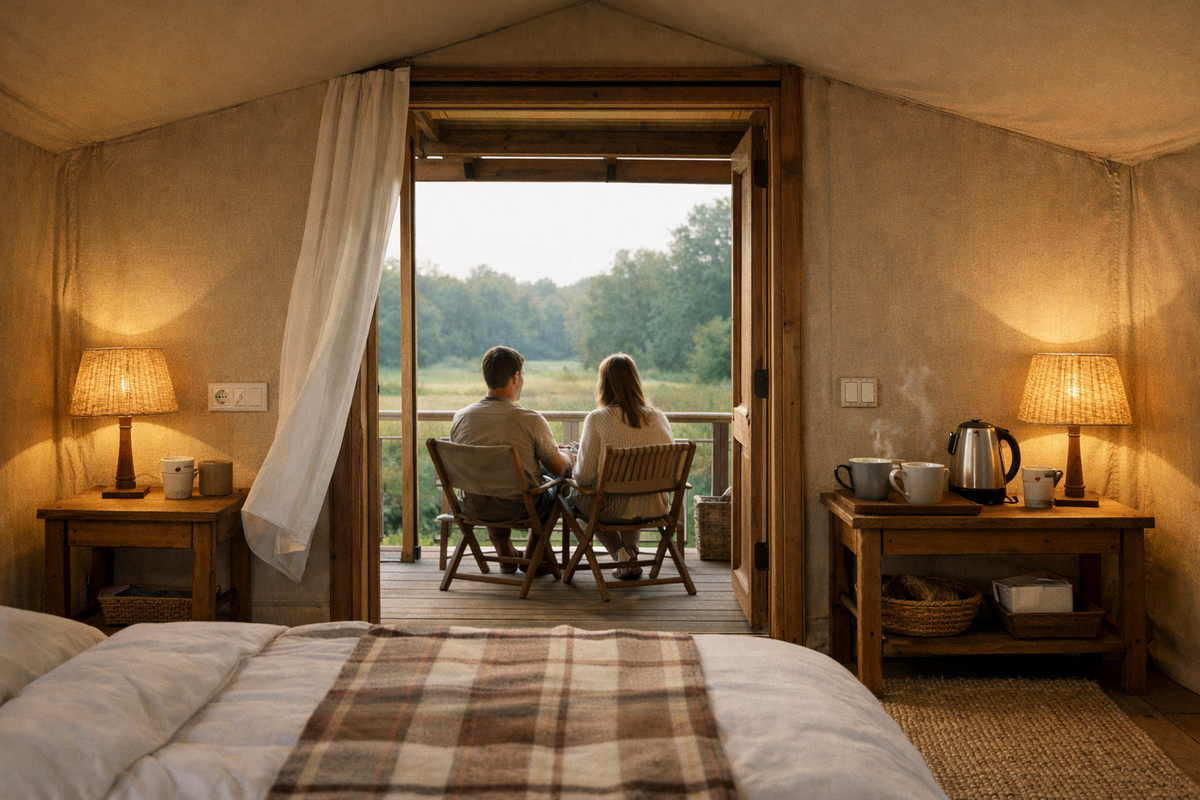
At the same time, Danish glamping is still niche: there are fewer locations than classic campgrounds and sommerhus, prices vary, and the format shifts a lot from place to place. In this guide we unpack what glamping means in Denmark, where to find it nationwide, and how it fits your trip budget.
🌟 What “Danish glamping” means and who it’s for
In short, Danish glamping is:
- a large fixed tent (safari tent, bell tent, dome) or a “half‑cabin” concept;
- inside: full beds with proper mattresses and textiles;
- almost always electricity, lighting and sockets;
- often a kitchenette or full kitchen zone; sometimes a private bathroom;
- outside: a wooden deck with chairs and table, views of sea, lake or fields.
The vibe sits between hotel, sommerhus and camping:
- closer to nature than a hotel or classic cottage;
- far more comfortable than your own tent;
- visually “Instagram‑friendly”: wood, warm textiles, fairy lights.
Most tents are either:
- on the grounds of a large campground (pools, playgrounds, minimarket — e.g., Feddet Strand Resort, Rosenvold Strand Camping, Hvalpsund Familie Camping); or
- on small eco‑sites such as Tiki Camp on Langeland or Nordliv on Bornholm — focused on quiet, sustainability and “eco‑cozy”.
Glamping works especially well for:
- couples wanting a “pretty weekend” and a memorable setting;
- families with small kids who need beds, hot showers and proper facilities;
- friends who want campfire atmosphere but to sleep like humans.
💶 How much glamping costs in Denmark — and what it does to your budget
Baseline price cues (from public price lists and aggregators, 2024–2025):
Regular camping with your own tent (2 adults + 1–2 kids):
- ~300–450 DKK/night in shoulder season;
- 400–550 DKK/night in peak (summer, holidays), including pitch + people.
Glamping without spa (family safari/bell tent):
- family tents by the water (Rosenvold Strand Camping, Hvalpsund Familie Camping) start around 650–750 DKK/night in low season and 900–1100 DKK/night in summer, plus cleaning and linen fees.
Glamping with private bathroom & kitchen (Tolne; parts of Bornholm/Funen):
- typically 900–1400 DKK/night depending on region, season and tent size.
Spa‑glamping with hot tub and extras (e.g., Feddet Strand Resort):
- often at good sommerhus level: roughly 1500+ DKK/night in high season, sometimes close to a mini‑villa price, especially with wellness and full resort access.
For comparison — sommerhus in popular regions:
- simple cottages inland: ~2200–4000 DKK/week off‑season;
- by the sea (West Jutland, islands) in summer: often 7000–12,000+ DKK/week; larger houses with pool/spa go higher.
For a 3–4‑night stay:
- basic glamping at 900–1100 DKK/night = 2700–4400 DKK total;
- a week in a small sommerhus in shoulder season can be not much pricier than 3–4 nights of top‑resort glamping.
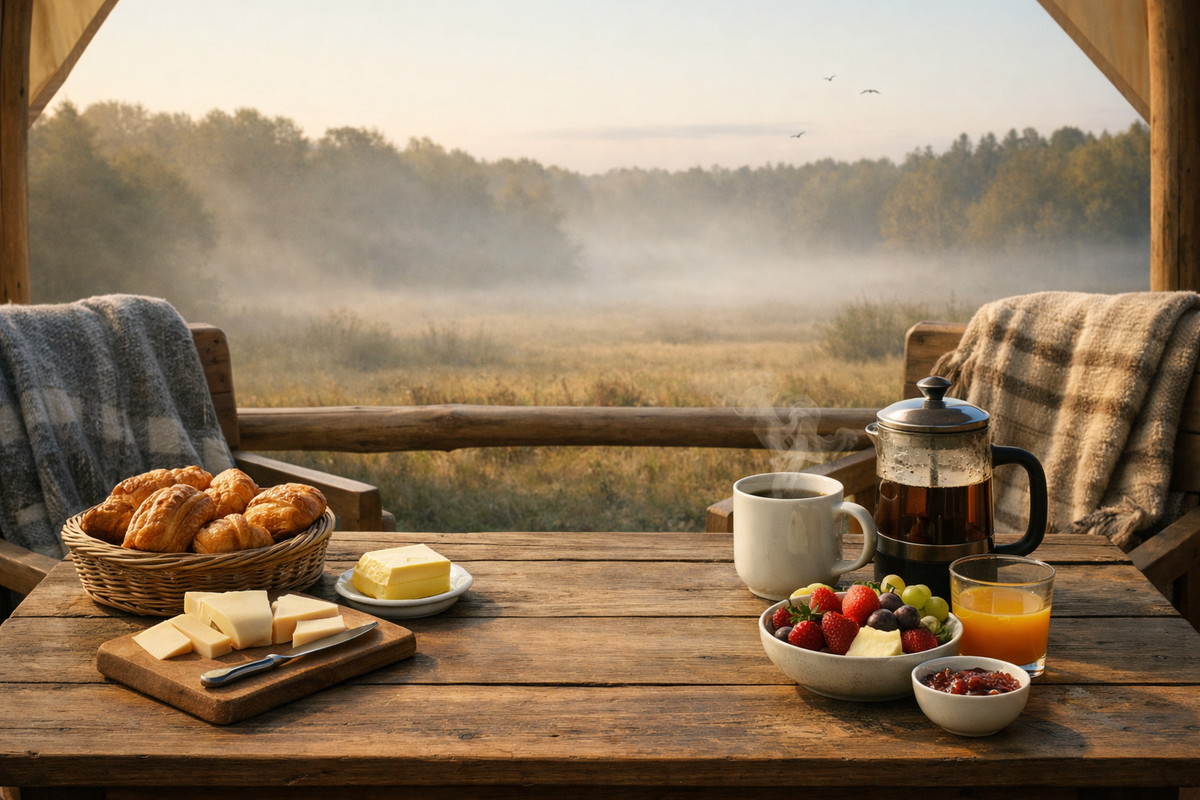
📊 Table: glamping vs camping vs sommerhus
📊 Glamping, camping and *sommerhus*: indicative price ranges
Ranges averaged from various campgrounds and cottage rentals for 2024–2025.
| Format | Typical stay | Shoulder season (guide) | Summer / peak (guide) | Extra costs |
|---|---|---|---|---|
| Camping with your own tent cheapest | 1–3 nights, sometimes a week | 300–450 DKK/night for a family (2 + 1–2 kids) | 400–550 DKK/night in popular seaside spots | Electricity, showers (if paid), laundry, kitchen, sometimes pool access. |
| Glamping (basic safari tent) mid‑range | 2–4 nights, sometimes a week | ~700–900 DKK/night for 2–4 guests | 900–1100+ DKK/night | Linen & towels, final cleaning, sometimes pool/spa access. |
| Glamping with private bathroom | 2–5 nights | 900–1200 DKK/night | 1200–1500+ DKK/night | Cleaning, linen, sometimes breakfast and wellness access. |
| Spa‑glamping with hot tub premium | 2–3 nights | 1300–1700 DKK/night | 1500–2200+ DKK/night | Spa, extended activities/services, sometimes catering. |
| *Sommerhus* (small cottage) | Weekly (Sat–Sat) | 2200–6000 DKK/week in less touristy areas | 7000–12,000+ DKK/week by the sea | Electricity, water, heating, cleaning, linen. |
🧮 Calculator: what’s better for you — glamping or sommerhus
🧮 Calculator: estimate glamping vs. *sommerhus* budget
Figures are indicative only. Always check live prices — this tool helps with **order of magnitude**.
📍 Where to look for glamping in Denmark: 7 typical examples
This is not a full catalogue — rather “archetypes” by region, from spa‑resort to quiet eco‑camp.
🌊 Feddet Strand Resort (Zealand): spa glamping by the sea
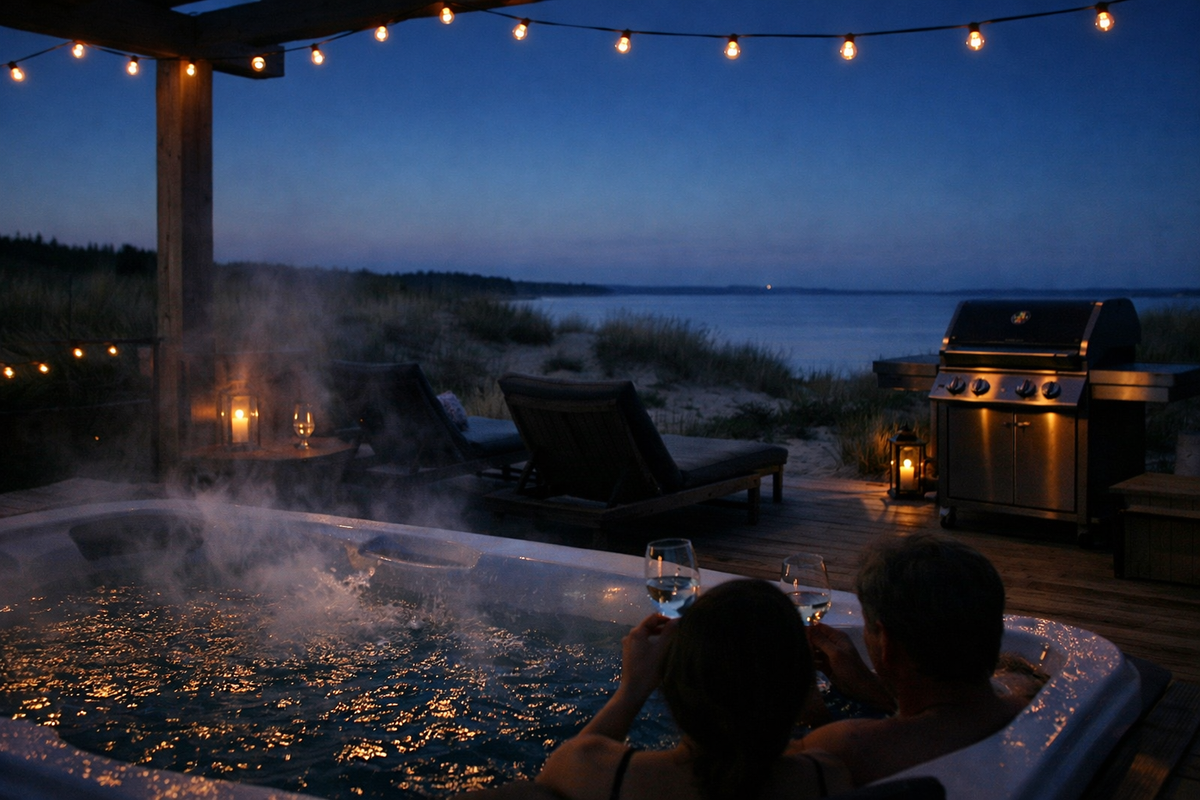
The Feddet peninsula south of Copenhagen is among the most “resort‑like” options:
- large tents stand within a big campground right by a sandy beach;
- inside — sleeping cabins with real beds, kitchen with fridge, table and sofa; on the deck — lounge furniture;
- spa units add a private hot tub, robes, gas grill and refined interiors;
- on site — aquapark, wellness area, restaurants, minimarket, kids’ activities.
Feels less like a tent and more like fabric‑walled mini‑apartments. Ideal if you want sea + spa + evenings on the deck in one stay.
🏝 Nordliv and other glampings on Bornholm
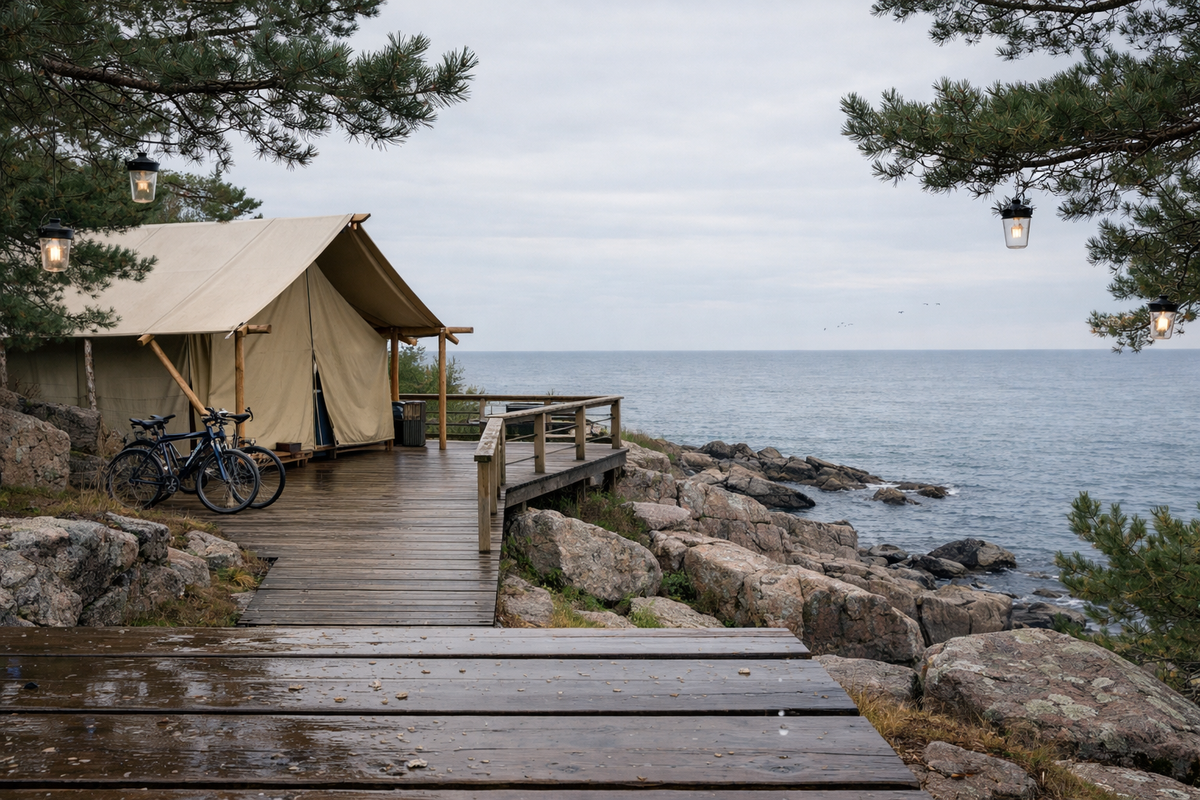
Bornholm is actively growing its “luxury tent by the Baltic” scene:
- at Nordliv near Hasle you’ll find large eco‑tents with separate 2‑person cabins, proper bedding, electricity and device charging; forest and sea nearby;
- there’s a cozy outdoor kitchen area and open shower; full bathrooms are available in the campground blocks;
- other island camps (Hullehavn by Svaneke; sites near Nexø) offer ready safari/villa tents with kitchens and proper beds.
Choose Bornholm for island atmosphere, cliffs, fishing towns and cycling, with glamping for an extra layer of comfort on windy nights.
🌴 Tiki Camp (Langeland, south Funen): eco‑glamping & slow life
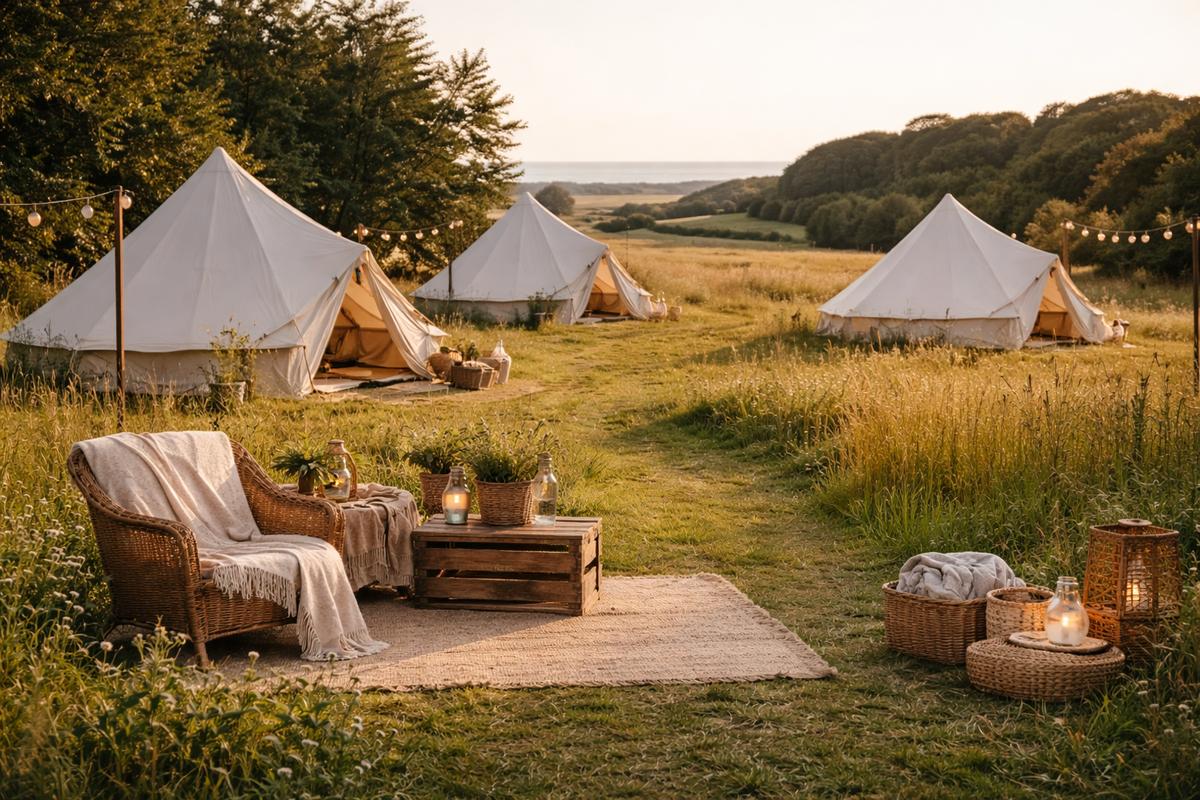
Tiki Camp presents itself as Denmark’s first eco‑glamping:
- white bell tents, a dome and a small A‑frame cabin in warm “boho‑Scandi” style;
- focus on sustainability: natural materials, environmental care, animal‑friendly vibe;
- good for couples and families: camp feel with real beds and soft linen.
A handy base for combining Funen + South Funen Archipelago + Langeland’s beaches.
🌊 Falsled Strand Camping (Funen): designer tent suites by the water
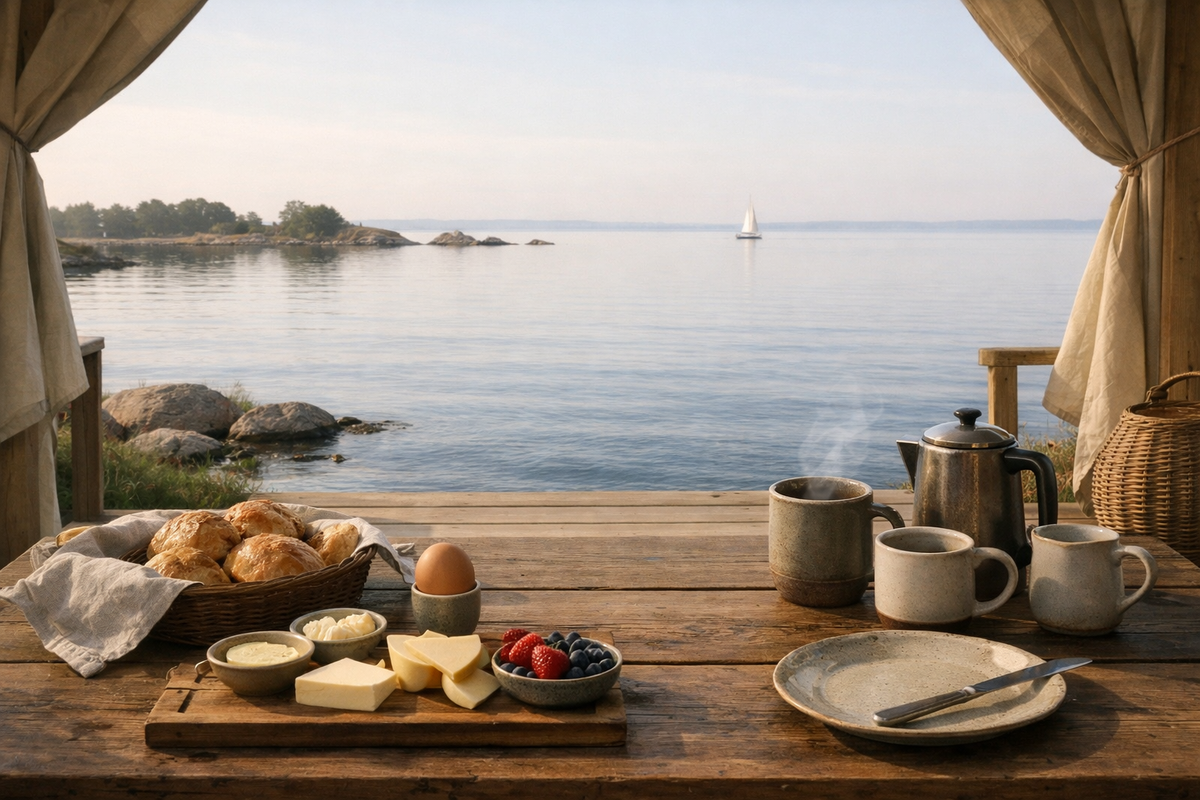
An “Insta‑friendly” setup — tent suites at Falsled Strand Camping:
- large cotton tents (~40 m²) styled as Scandi lodges: wood, textiles, armchairs, reading nooks;
- a deck with views of the archipelago; a small, calm campground evokes a subtle retro feel;
- pool and family amenities on site: suitable for families and couples.
Great if you want a stylish picture + sea + unhurried rhythm.
🌲 Tolne Camping (North Jutland): safari tents in the forest
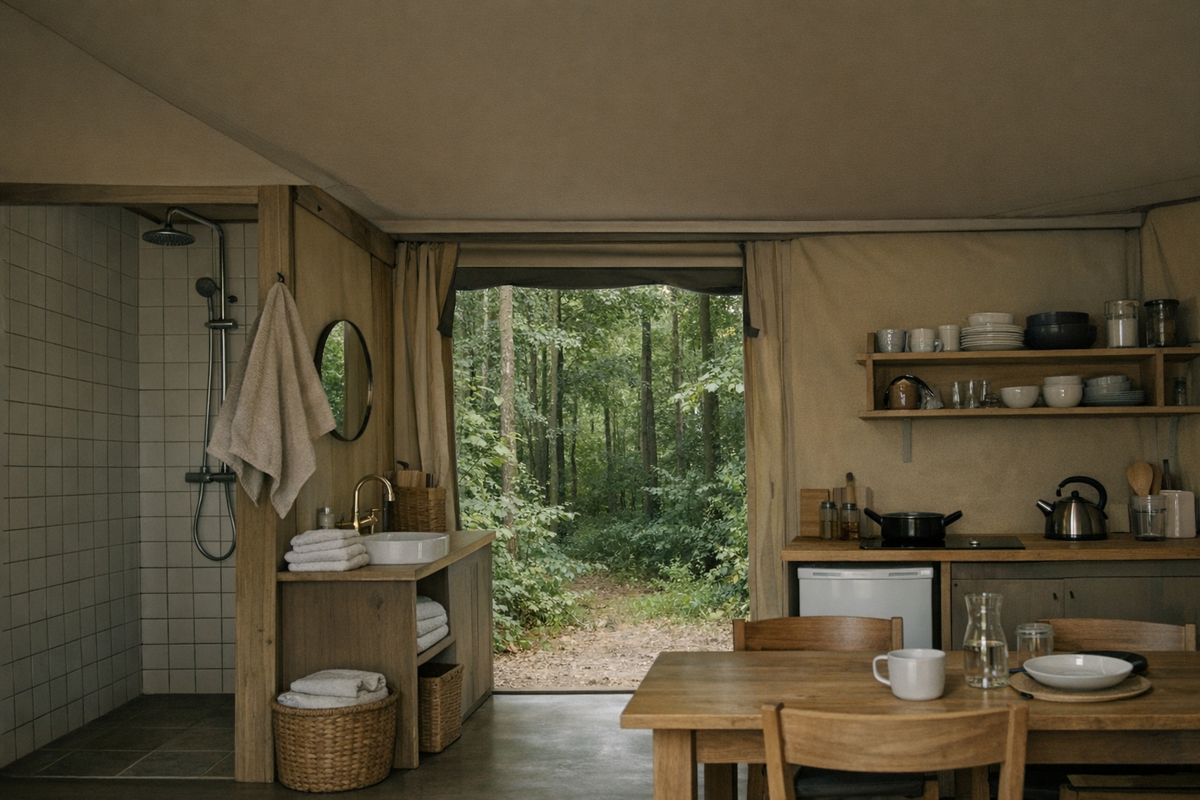
Tolne Camping specializes in forest glamping:
- several 4–6‑person safari tents with private bathroom, kitchen and large veranda;
- surrounded by Tolne Skov woods, near hiking and cycling; quiet northern landscapes;
- feels like a tiny house with fabric walls, set in a woodland camp.
Choose this if you prefer forest over sea without giving up a shower and a real kitchen.
🌅 Rosenvold Strand Camping (East Jutland): family glamping on a fjord
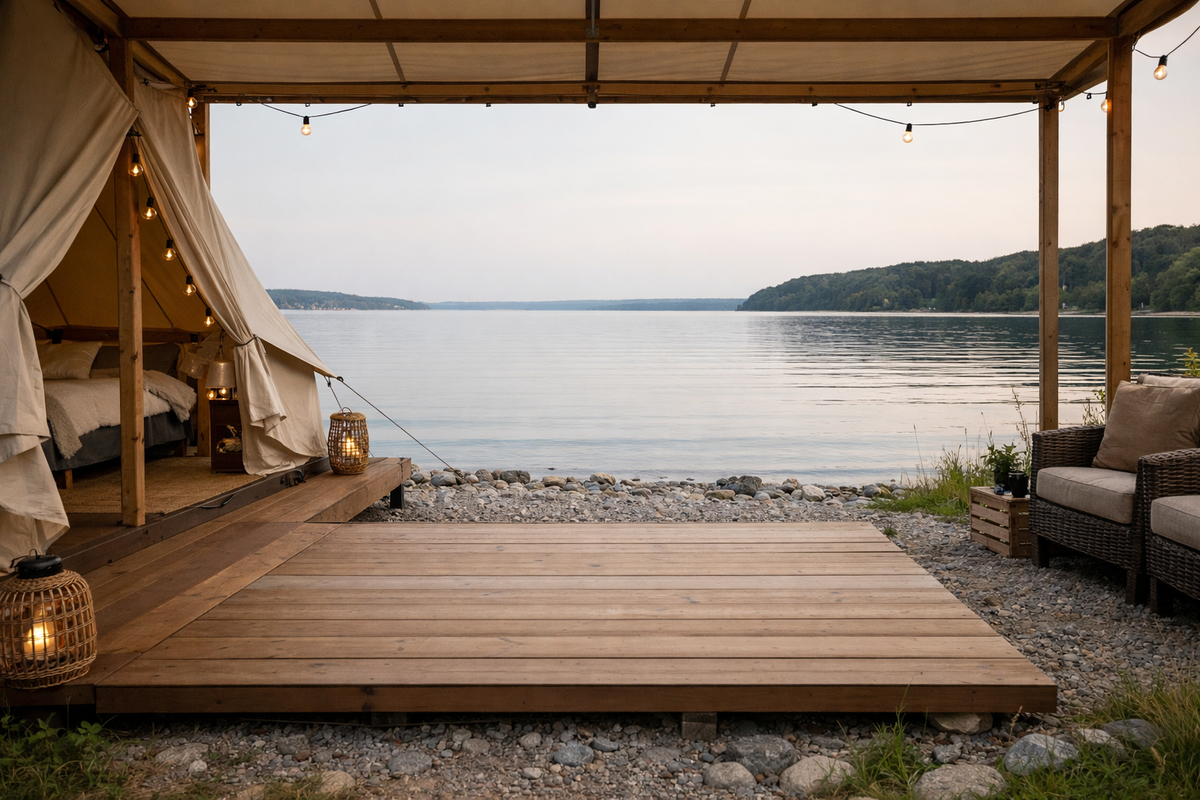
On Vejle Fjord’s shore, Rosenvold Strand Camping offers:
- family tents for 4–6 with real beds, kitchen zone and covered deck;
- base rates for simple family tents in low season often start around 570–700 DKK/night, higher in summer; linen and cleaning are extra;
- fjord beach, walks, easy day‑trips to Vejle, Jelling or LEGOLAND.
A solid “family glamping + sightseeing” combo without long drives.
🌊 Hvalpsund Familie Camping (Limfjord): glamping with a family focus
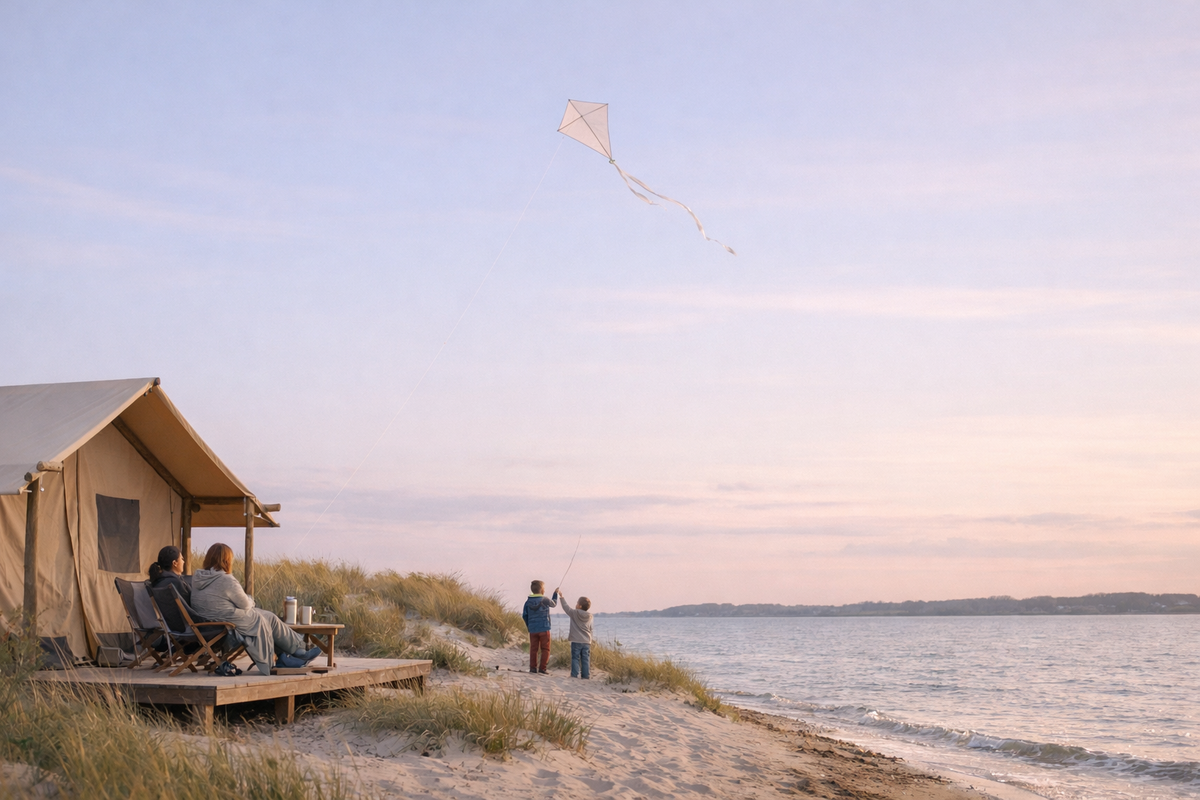
Hvalpsund Familie Camping near the Limfjord often appears on glamping lists:
- 4–5‑person safari tents with real beds, kitchen and ready deck;
- pool, kids’ activities, shop and café on site;
- seasonal promos (e.g., Black Week) show the pricing order: a week in a safari tent is well above regular camping, but often below a large seaside sommerhus.
Feels like a classic family camp upgraded to “lux tents.”
🧳 Inside the tent: comfort, heating, bathroom
Even within “glamping,” comfort varies widely.
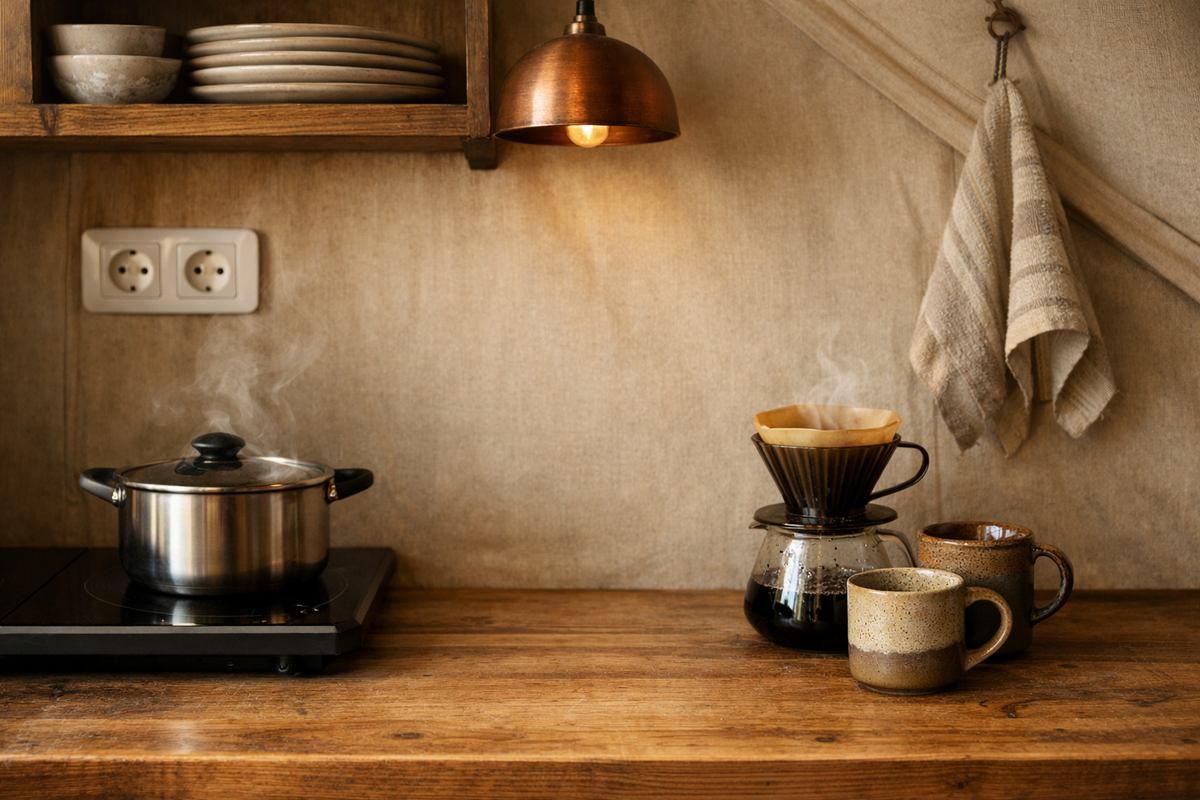
Usually expected:
- proper beds with mattresses, duvets and pillows;
- lighting and sockets (Bornholm/Tiki Camp highlight charging & Wi‑Fi);
- furniture (table, chairs, sometimes sofa inside; lounge set outside);
- basic kitchen: fridge, hob (induction/gas), cookware, sink.
Often missing in basic units:
- solid insulation — it’s still a tent, it cools faster than a cabin;
- soundproofing — you’ll hear neighbors, sea and wind;
- private bathroom — facilities are often shared in campground blocks.
Higher‑end tents (Tolne, Feddet Spa, parts of Bornholm/Funen) may include:
- private bathrooms,
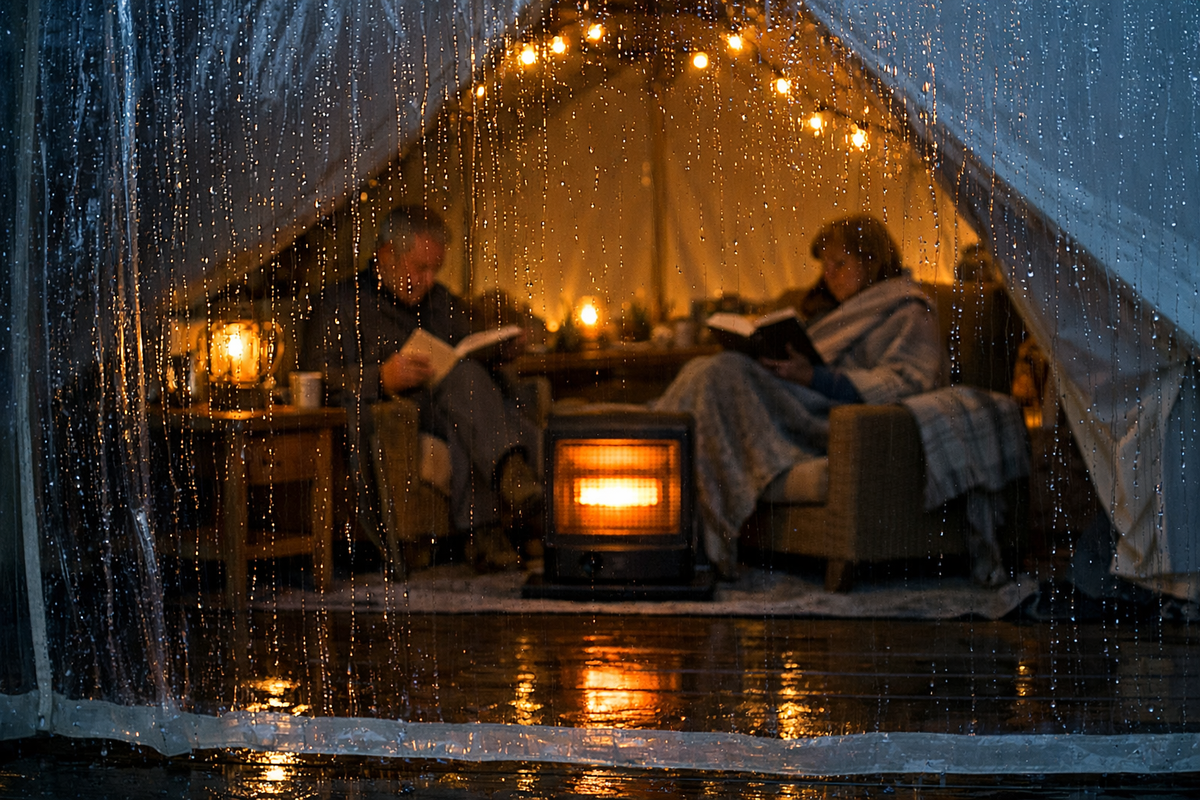
- electric heaters or stoves,
- hot tubs, grills and more substantial outdoor furniture.
Be realistic about comfort:
- if you get cold easily, April/September by the sea without heating can feel brisk;
- sound sensitivity + fabric walls + close neighbors can be a factor.
🕒 Seasonality: when glamping is comfortable — and when a sommerhus is wiser
Glamping in Denmark is largely seasonal:
- many camps open tents April–October;
- some sites (e.g., on Bornholm) run mid‑June → mid‑August only.
You’ll feel seasonality in weather and price:
- May–June & September = golden window: softer prices, fewer people; evenings can be chilly by the sea;
- July–August = warmest + most activities and highest prices + minimum‑night rules;
- outside that window, a wooden sommerhus with stove/heat pump simply beats a tent in foul weather.
Practical approach:
- make glamping a 2–4‑night highlight inside a longer trip;
- spend the rest in a sommerhus or regular campgrounds.
✅ Checklist: questions to ask before paying for glamping
✅ Checklist: confirm with the site before booking
Run through this list before you click “pay” — it saves money and nerves.
- Are final cleaning and linen/towels included — or charged separately?
- Is there any heating (electric heater/stove) and what are typical night temperatures for your dates?
- Private bathroom or shared campground blocks?
- How far is it to the beach/forest/lake on foot — in real minutes, not “by the sea” in marketing speak?
- Is access to pool, slides, spa included or extra?
- Is there a grill on the deck; what are the rules for open fire and quiet hours?
- Pets policy: dogs allowed, surcharge, breed limits?
- Minimum stay for your dates (2, 3 or 7 nights)?
- Parking near the tent, or a long walk with luggage?
- Do they have real photos of your tent type, not just the best unit?
🗺️ Interactive map: quick orientation
🗺️ Interactive map: Danish glamping & campsites
The map shows approximate locations of a "resort‑style" glamping (Feddet), "eco‑formats" (Tiki Camp, Nordliv) and "family campgrounds with glamping tents" (Rosenvold, Hvalpsund, Tolne, Falsled). Zoom to explore nearby options.
❓FAQ
Usually a tent or dome, but fixed and well‑equipped: proper beds, furniture, electricity, often a kitchen and sometimes a private bathroom. It feels closer to a tiny house with fabric walls than to a thin camping tent.
Often 2–3 nights. Big resorts in high season may require 3–4; spa units can sell as packages (weekend, mini‑break). In shoulder season policies relax; some sites allow 1 night — check each campground’s rules.
For 3–4 nights, basic glamping and a small sommerhus off‑season can be similar. But glamping is sold per night, while sommerhus is weekly, and off‑summer weeks can be very good value. In July–August, resort glamping can match nice cottage prices (especially spa tents), so the choice is often about atmosphere rather than raw savings.
No. You pay for the ready‑made tent, bedding, interiors and comfort. A family pitch might be 300–450 DKK/night in shoulder season; a glamping tent on the same site can be 700–1200 DKK/night or more.
It depends. Some sites include electric heaters or stoves (especially higher‑end tents/eco‑camps); budget units may have none. Ask before booking: windy April/September nights by the sea can be colder than the forecast suggests.
Yes — many family‑oriented sites offer real beds, kitchen, pool access, kids’ programs. Check distance to bathrooms (if shared), evening noise, and deck safety.
Often yes, with a surcharge and rules. Some Feddet/Rosenvold tents are pet‑friendly (fixed fee; limits on numbers). Always check the pet policy and fees.
For summer/holidays, book months ahead (Feddet, Tiki, Bornholm, Funen). Shoulder season is easier — sometimes 2–4 weeks suffice, unless you need a specific unit (spa tent, large family tent).
Spend the bulk of your trip in a sommerhus or regular camps; book 2–3 nights of glamping at the most scenic point (Bornholm/Funen), and pre‑calculate cleaning/linen fees so the final bill doesn’t sting.

0 comments
Log in to leave a comment