


🧮 How much does a week in a Danish sommerhus cost: an honest budget for couples and families
You find a dream cottage on the coast: a week — €800. Inside it’s bright and clean, there’s a fireplace, a terrace, and the beach is a ten‑minute walk. “Not bad for Denmark,” you think, and happily click “book”. Then at home you tally the final bill: €1,050. On top of rent came electricity by meter, water, a final cleaning, linen hire, plus — just your luck — a toll bridge and parking. The trip was great, but there’s that “why did no one say it would be like this?” feeling.
This article is exactly about laying out the true budget of a week in a Danish sommerhus. Not only “how much the house costs”, but also what all the extras add up to — food, local travel and the “little things” that turn €800 into €1,050 and more. We’ll look at three typical scenarios — a couple, a family and a group of friends — in high, shoulder and low season, and estimate what a week by the sea is likely to cost if you approach it without rose‑tinted glasses.
💸 What a sommerhus week actually consists of
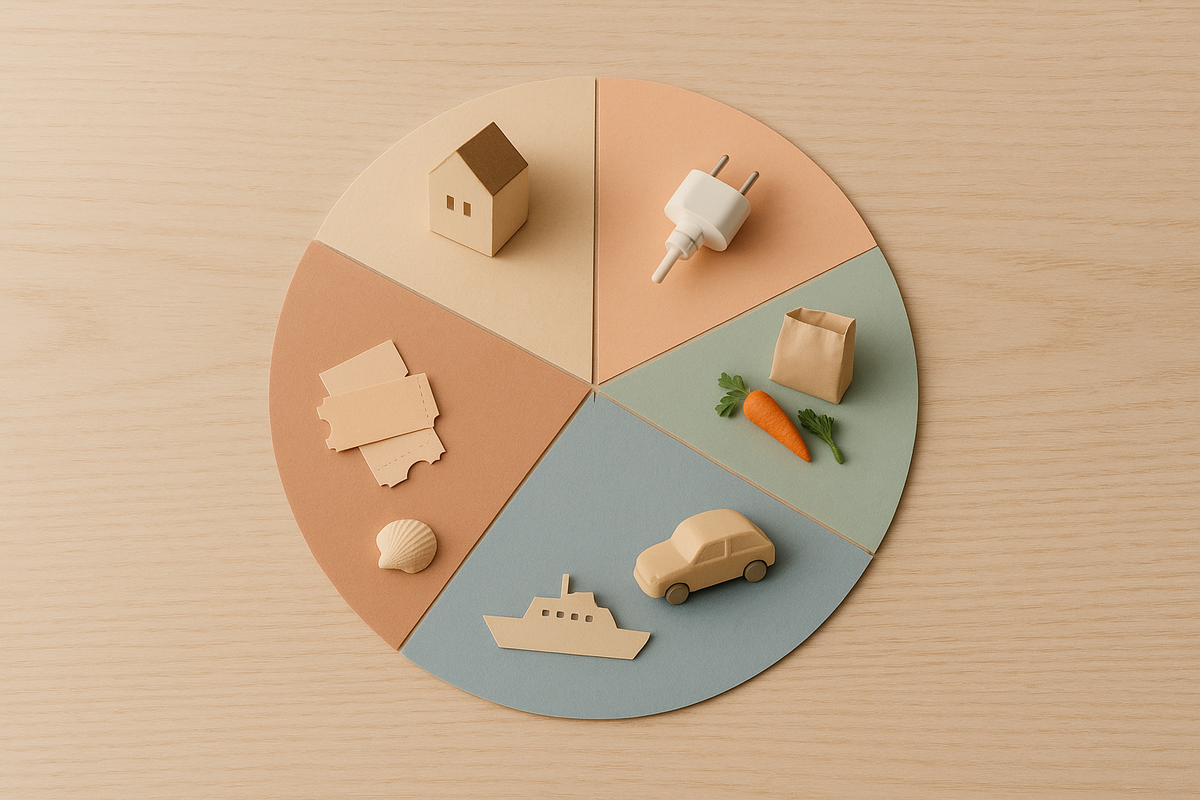
To avoid drowning in numbers, it helps to understand the structure first. A week in a summer house isn’t one “rent” line — it’s several big “wallets” you fill in parallel.
First, the house rent itself. That’s the number you see on the card: “7 nights — €840”, “week — 7,500 DKK”, etc. It depends on region, season, distance from the sea and house standard. It’s usually the anchor: “we’re ready to spend about this much on lodging”.
Second, utilities and house‑related extras. Electricity, water, sometimes heating, final cleaning, rental of bed linen and towels, pet fees. These are either metered or charged as separate lines. Many people underestimate this bucket: it looks like “a few euros”, then turns into another €150–€250 for the week.
Third, food. In theory, a sommerhus saves money: you cook instead of eating out. In practice, it depends on habits. You can keep a modest supermarket bill, or add cafés, ice creams and seaside restaurants every day.
Fourth, getting around. We’ll leave flights out — they vary by departure country. In Denmark you may have car hire, fuel, toll bridges and ferries, train and bus tickets, parking at sights. Sometimes this rivals half the house rent.
Finally there’s entertainment and bits: LEGOLAND and zoos, bike hire, tours, fishing, souvenirs. With kids this is almost inevitable; for couples who love walking, it can be close to zero.
To visualise it, here is a very rough “pie” for an average family on a sensible plan: about half goes to lodging and house costs, roughly a third to food, the rest to transport and fun. On a “we go out a lot” plan food and entertainment grow; on a very frugal plan you can squeeze almost everything except the house.
📊 What a typical one‑week sommerhus budget is made of
Percentages are not hard statistics — they’re guidance for a “normal” trip without either extreme frugality or luxury.
| Cost item | Couple | Family (2+2) | Group (4–6) |
|---|---|---|---|
| House rent | 40–50% | 35–45% | 30–40% |
| Utilities, cleaning, linen | 10–15% | 10–15% | 10–15% |
| Food | 20–30% | 25–35% | 25–35% |
| Local travel | 10–20% | 10–20% | 10–20% |
| Entertainment & bits | up to 10% | up to 15% | up to 15% |
💡 Flights are excluded — they depend on your origin. Below we count the “Danish part” only.
⚡ Hidden costs: where the extra €200–€300 come from
The most common review reads: “we thought the house would be €800; we paid €1,050.” The bill lines tend to repeat:
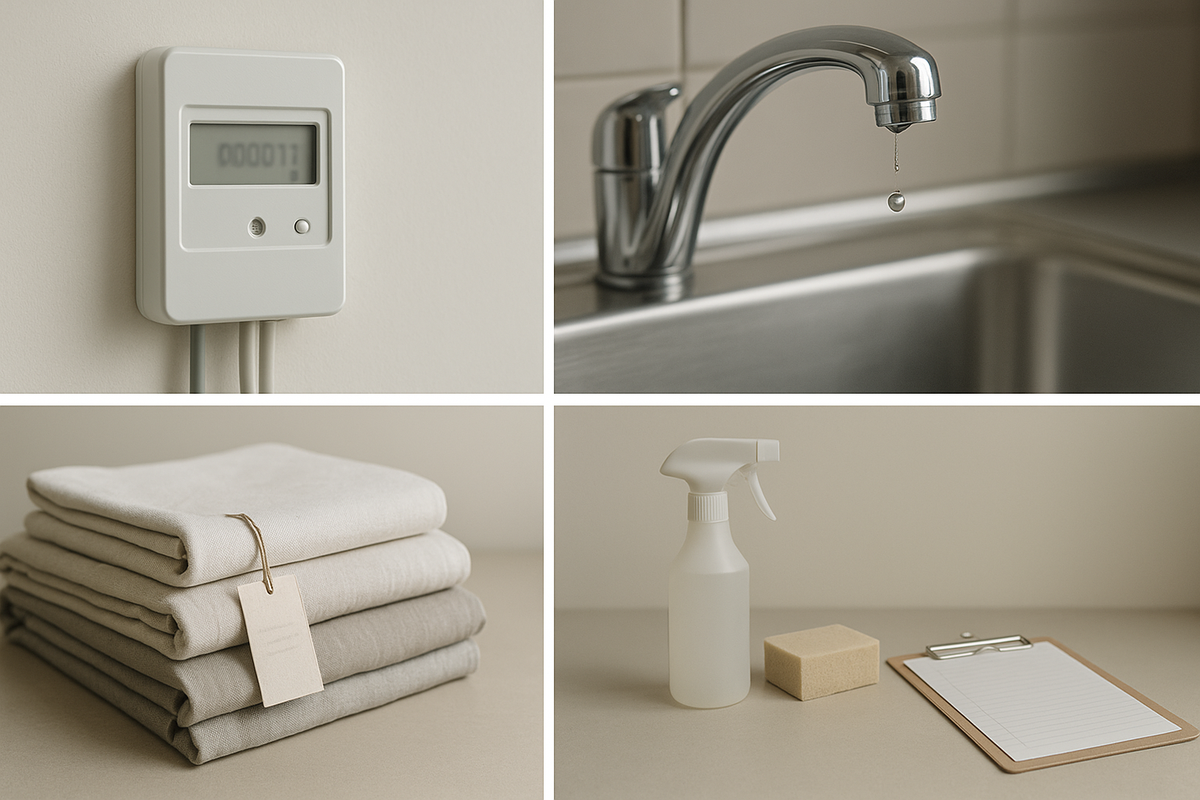
Electricity and heating. Often metered: note readings on arrival and departure, pay the difference at the tariff. With a heat pump and sensible heating this can be €6–10/day. In an older, colder house with electric radiators and a hot tub, winter can easily be €20–25/day.
Water. Sometimes included; sometimes metered. Careful use is fine, but heavy sauna/hot tub use and frequent laundry raise the bill.
Final cleaning. Frequently added as a fixed amount: €90–€150 depending on house size. Some places offer strict DIY cleaning, but many travellers — especially with children — choose to pay.
Bed linen and towels. Sometimes included; often an extra: €15–€25 per set per person. A couple spends €40–€50; a family €60–€80; a group €100+. Driving? Bringing your own can save money.
Pets. A pet fee or higher cleaning. Small in isolation; adds up with other extras.
And the little things: toll bridges, parking at popular beaches and sights, local fees. Tiny on their own, €50–€100 by week’s end.
📆 Three budget scenarios: couple, family and group across seasons
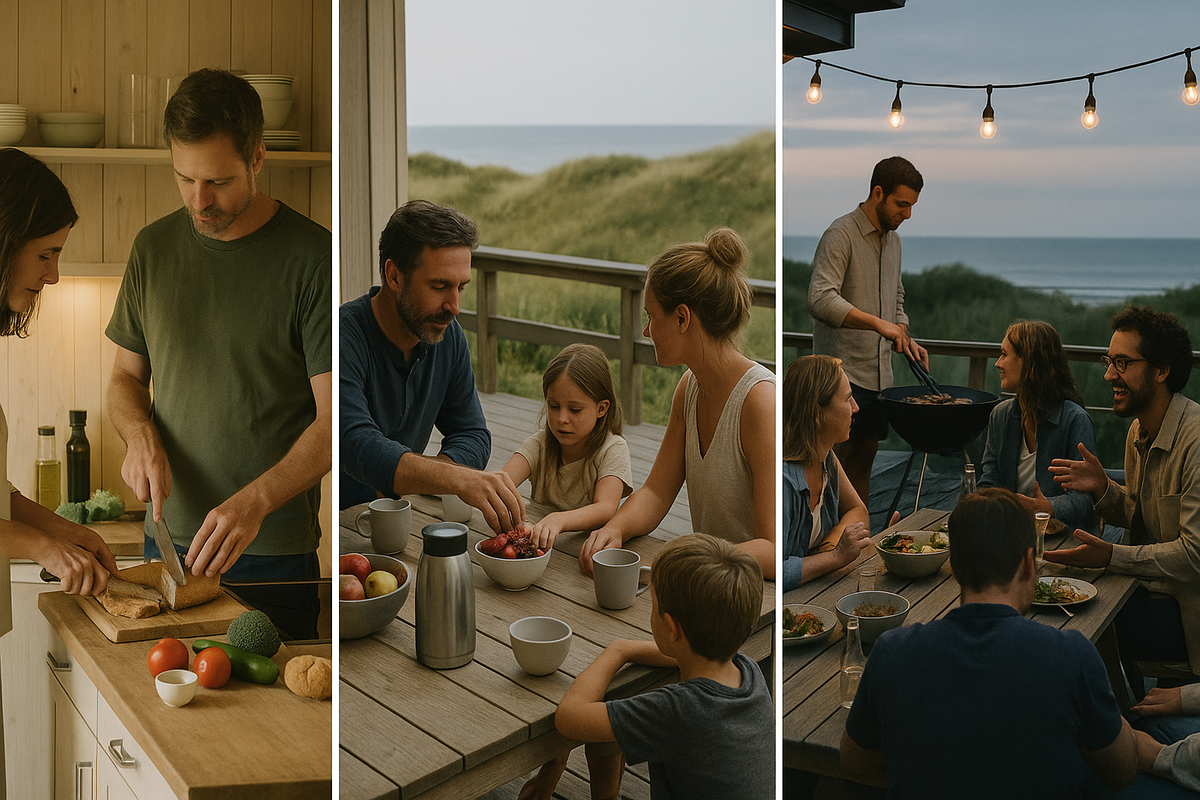
Now for the fun part: realistic, averaged numbers. Below are three typical scenarios — a couple, a family (2 adults + 2 children) and a group (6 people) — for 7 nights. Flights excluded; lodging, house extras, food and “Danish” transport included.
👩❤️👨 Couple in a sommerhus
A not‑tiny, not‑luxury house:
- low season (autumn/winter): about €80/night;
- shoulder (May, June, September): about €120/night;
- high (July, early August): about €160/night.
Rent for 7 nights:
- low — ~€560;
- shoulder — ~€840;
- high — ~€1,120.
Add careful estimates of house extras (heat/electricity, water, cleaning, linen):
- low: €100–€110 energy, €100 cleaning, €40 linen — ~€805 for “house + extras”;
- shoulder: ~€50–€60 electricity + €100 cleaning + €40 linen — ~€1,040;
- high: ~€40 electricity + €100 cleaning + €40 linen — ~€1,300.
Add food and local travel on a moderate plan (mostly cook, occasional cafés; short bus/train or car trips):
- food: €200–€250/week for two if supermarkets + cooking dominate;
- local travel: €80–€150 depending on car/rail/bus.
Indicative total for a couple (7 nights, no flights):
- low: ~€1,100;
- shoulder: ~€1,400;
- high: ~€1,700.
Split the shoulder case in two — ~€690 per person for a full week by the sea (no flights).
👨👩👧👦 Family (2 adults + 2 children)
More requirements: usable space, at least two bedrooms, decent beach access — so typically pricier:
- low: ~€100/night;
- shoulder: ~€150;
- high: ~€200.
Rent (7 nights):
- low — ~€700;
- shoulder — ~€1,050;
- high — ~€1,400.
House extras (more people → more use):
- low: ~€125 energy, €120 cleaning, €80 linen — ~€1,030 for the house;
- shoulder: €70 electricity, €120 cleaning, €80 linen — ~€1,320;
- high: €50 electricity, €120 cleaning, €80 linen — ~€1,650.
Food and travel (sensible plan):
- food: €350–€450/week (children like ice cream and cafés too);
- local travel: €150–€220 (rail/bus or fuel + parking if driving).
Indicative total (no flights):
- low: ~€1,500;
- shoulder: ~€1,900;
- high: ~€2,300.
Shoulder season split by four: ~€475–€480 per person for the week.
🧑🤝🧑 Group of friends (4–6 people)
Groups choose bigger houses — large lounge, good terrace, sometimes sauna — but split costs more ways.
Say a 6‑person house:
- low: ~€130/night;
- shoulder: ~€200;
- high: ~€260.
Rent (7 nights):
- low — ~€910;
- shoulder — ~€1,400;
- high — ~€1,820.
House extras:
- low: ~€150 energy/heat, €140 cleaning, €100 linen — ~€1,300;
- shoulder: €90 electricity, €140 cleaning, €100 linen — ~€1,730;
- high: €70 electricity, €140 cleaning, €100 linen — ~€2,130.
Food and local transport:
- food: €500–€620/week (depends on appetites and bars/cafés);
- local travel: €220–€320 (one–two cars, fuel, parking, ferry possible).
Synthesis:
- low: ~€2,000 for all;
- shoulder: ~€2,550;
- high: ~€3,070.
In shoulder season that’s about €430 per person — a reason groups love sommerhus: per‑head can be lower than many families.

🧮 Interactive: week‑budget calculator for a sommerhus
Everything above can be “prodded”. A simple calculator: pick trip type and season to see an indicative budget. You can change the figures; defaults mirror the scenarios we just walked through.
🌦️ How season and region move the numbers
What we calculated above is an “average temperature”. In practice two sliders move the budget a lot: season and region.
Season is obvious: the same house in shoulder and in peak summer can differ two‑fold in rent. Utilities are higher in low season (heating, long evenings) and lower in high. If you’re willing to trade sea swimming for savings, a week in late autumn in an atmospheric cottage can cost like 3–4 days in peak July.
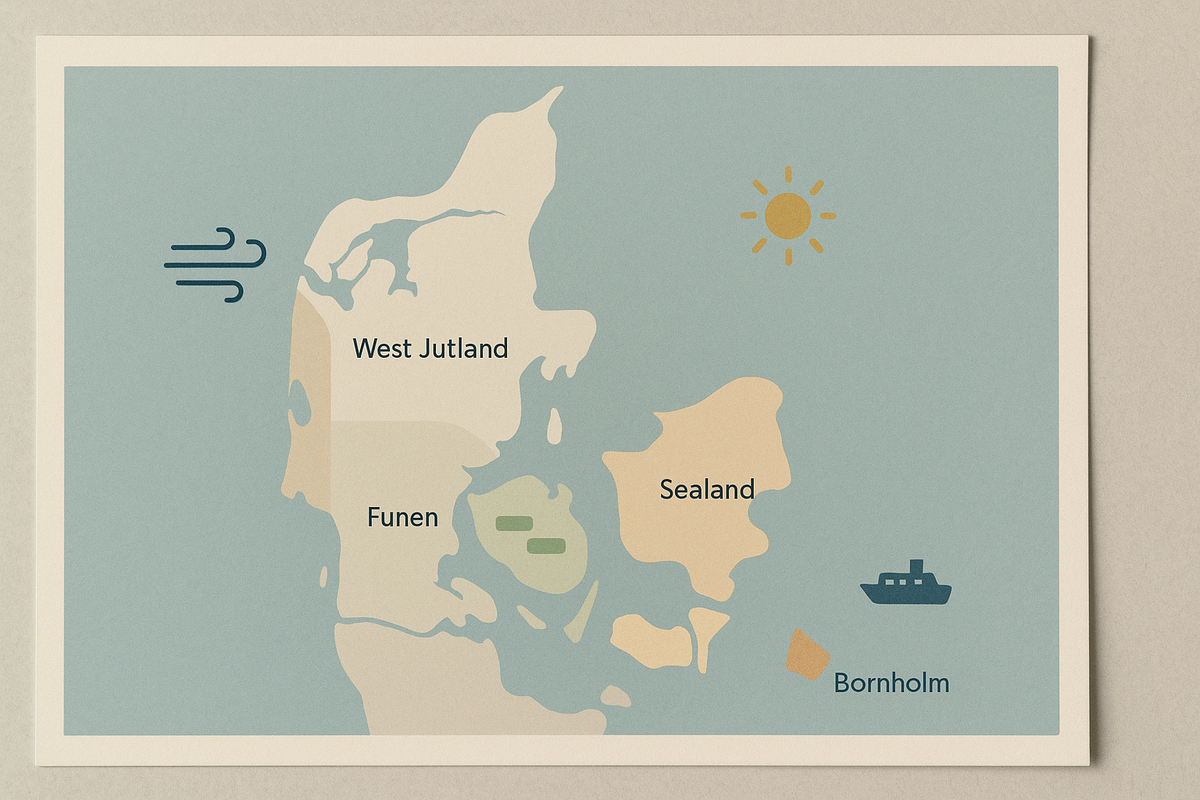
Region works like a coefficient. North and West Jutland generally offer more budget houses, especially away from the most in‑demand resorts. Funen and the “non‑capital” parts of Zealand tend to sit in a comfortable middle. North Zealand near Copenhagen and the best bits of the “Danish Riviera” almost always jump to the upper band. Bornholm adds logistics: the house can cost similar to Funen, but ferry/flight and island transport lift the total.
If you multiply our scenarios by a “region coefficient”, you get: roughly 0.8 for simpler parts of West Jutland; 1.0 for Funen and many parts of Jutland and Zealand; 1.2–1.3 for top coastal zones near the capital and the most coveted spots on Bornholm. The earlier you book — and the more flexible your dates — the easier it is to catch a sweet spot.
🧾 How to avoid the “€800 became €1,050” situation
Reviews are full of “we loved it, but we underestimated the budget”. The same missteps repeat:
— only reading the big “rent” number and skipping the electricity/water/cleaning section;
— ignoring linen, assuming you’ll bring your own — then realising it’s carry‑on only and renting sets after all;
— not factoring toll bridges and ferries when picking a region;
— not asking the owner/agency — shying away from clarifying details.
To avoid this, keep a note and estimate the full sum for each candidate house. Not “€800/week”, but “€800 + cleaning + linen + roughly this much kWh”.
❓FAQ
In low or shoulder season, in a non‑premium region and with a careful plan — yes. You’ll pick a cheaper house, watch electricity, cook more and keep entertainment modest. In peak summer by the sea it’s far less realistic.
The combo of electricity/heating, final cleaning and linen hire; plus logistics (bridges, ferries, parking) and local travel. With a dog, there’s a pet fee. In sum this easily becomes €200–€300.
If you travel light, have no small children and are fine with a few hours’ thorough checklist cleaning before checkout — yes, it saves. If you’ll be in a rush and every mark will stress you, budget for cleaning.
A lot. The gap between “cook, occasional cafés” and “eat out daily” easily reaches €200–€300+ a week for a family. Danish supermarkets are well‑suited to cooking: lots of fish, ready salads, bread, pastries.
If you drive and aren’t luggage‑limited — yes, it’s an easy way to save dozens of euros. With carry‑on only, it’s usually easier to budget for rental.
A deposit isn’t a cost — it’s a temporary hold. Think of liquidity: can you spare the sum for a couple of weeks while kWh are settled? Budget only what you might lose for serious rule breaches/damage.
Often May, early June and September. Prices are much lower than peak; nature is already/still beautiful; fewer people; terrace time still pleasant. Sea swimming with kids is comfier in summer, but many find the shoulder months the best budget‑to‑experience ratio.
Comparing similar houses on the same dates, the gap between a “quiet corner in West Jutland” and a “top zone near Copenhagen” can be tens of percent on rent. Utilities and food are broadly similar. That’s why region is a multiplier.
Not usually: you add a second cleaning and extras, and spend time/money moving. It’s better to pick one base and tune house level, season and food plan. Split a week for experiences (“dunes + island”), not for savings.
Always total at least four lines: rent, utilities/cleaning, food, local travel. For a few favourite houses, estimate a full week’s bill — and choose from those totals.

0 comments
Log in to leave a comment