


🏡 Sommerhus for first‑timers: how to choose your first Danish seaside summer house
Imagine this: morning. You step out onto a wooden deck with a mug of coffee, dunes and a strip of sea in front of you. It’s quiet—only wind in the grass and gulls calling. That’s the classic Danish sommerhus—a summer house Danes escape to on weekends and holidays.
If it’s your first time in Denmark, a sommerhus can seem mysterious: it’s a house but not a hotel or an apartment; there are quirks with cleaning, meters and how you book. This article is a human‑friendly deep dive: where to go, how much it costs, how to read listings so the house you pick is truly “yours”.
🏠 What a Danish sommerhus is and how it differs from an apartment or hotel
A Danish sommerhus is a detached house (usually single‑storey) in a “summer village” near the sea, a fjord or a forest. Not a glam villa, but simple, cosy living made for being together: a large living‑room‑kitchen, a terrace, a small plot of land and maximum hygge.
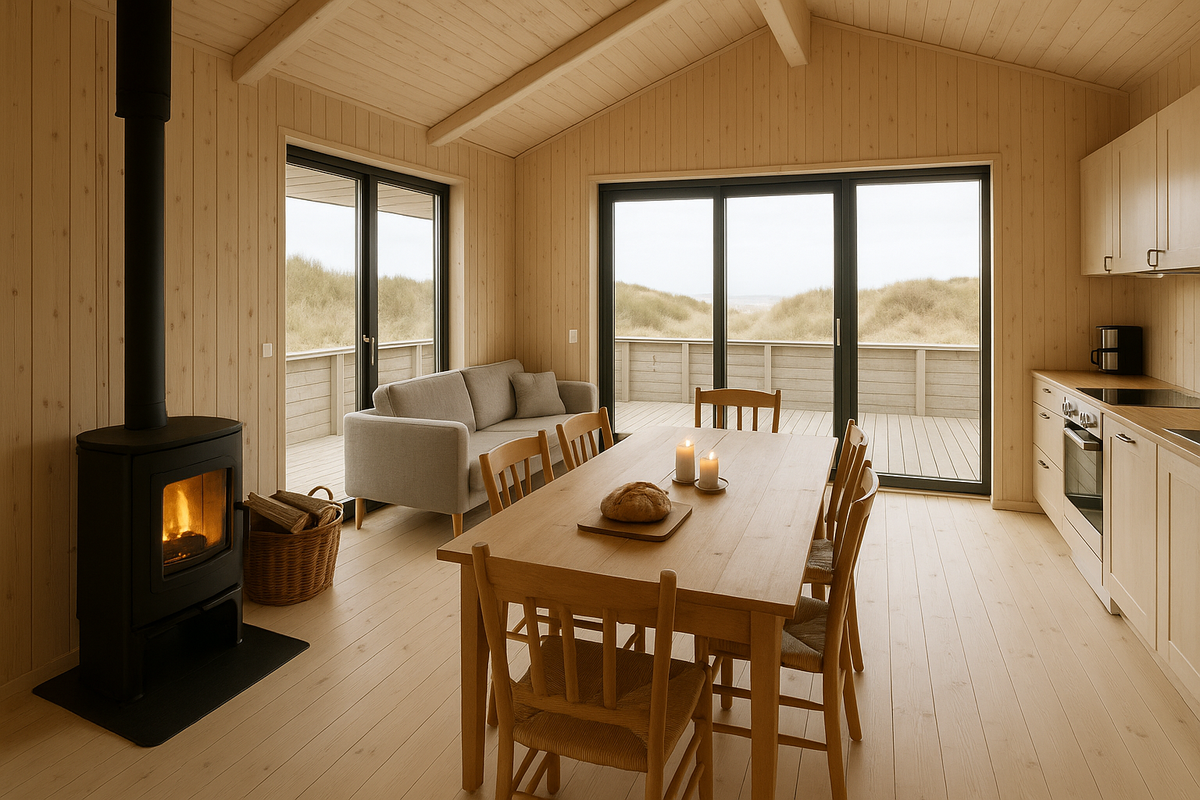
🪵 What a typical Danish summer house looks like
A classic sommerhus typically has:
- a one‑ or two‑level wooden house;
- a location in a small settlement by the sea, a fjord or in the woods;
- a large shared area: open‑plan living room + kitchen, big windows;
- a terrace with outdoor furniture and a grill;
- a fireplace or stove, sometimes a sauna or hot tub.
Inside it isn’t “Instagram luxury”, but simple and very cosy: wood, throws, candles, lots of light. The point isn’t showiness—it’s the feeling of “we’ve left the city and can finally exhale”.
🏨 Sommerhus vs hotel vs apartment
How a sommerhus differs from a hotel:
- no reception or 24/7 service—you run the place yourself;
- no daily breakfasts delivered or housekeeping;
- more space, your own kitchen, yard and parking by the house.
How a sommerhus differs from apartments:
- location—instead of a city street you’re in a village among dunes, pines or fields;
- privacy—neighbours are farther away, no “ant‑hill” feeling;
- house rules—you’ll often see meters, mandatory final cleaning, strict waste sorting, etc.
In summer people usually stay for weeks, not 1–2 nights: you arrive, settle in, stock up at supermarkets, walk the area and build a small life by the sea.
🍳 Food & daily life
- Almost always a full kitchen: hob, oven, dishwasher, large fridge.
- Shopping at the supermarket can greatly cut food costs—especially for families or small groups.
- You decide when to have breakfast and dinner—no “until 10:30” deadlines.
🧼 Responsibilities & services
- Cleaning—either you do it (by checklist) or pay for final cleaning.
- Electricity, water and heating are often billed by meter at the end.
- Bed linen and towels: sometimes included, but often you bring your own or rent a set.
- No reception and no room service—you are your own host.
Guests often describe it like this:
- “The house is simpler than on the photos, but very cosy—like staying at friends’ cottage.”
- “We didn’t expect to do so much ourselves: reading kWh, sorting waste, cleaning.”
A sommerhus works beautifully if you treat it as a Danish seaside cottage, not as a mini‑hotel.
💡 Comparison: hotel vs apartments vs sommerhus
🏡 Which option to choose: hotel, apartment or sommerhus?
| Parameter | Hotel | Apartment | Sommerhus |
|---|---|---|---|
| Location | Usually in the city or a resort | City / suburbs | Coastal settlements, dunes, forest |
| Dining | Café/restaurant, breakfast | Kitchen, but less space | Full kitchen, grill, terrace |
| Privacy | Neighbours through the wall | Depends on the building | Detached house and plot |
| Best for | Short stays, transit | Urban sightseeing | Nature, family & friends, 5–10 days |
🗺️ First choose a region: where to go for a “house by the sea”
Before sinking into hundreds of house listings, it’s important to answer the basic question: which coastline do you actually want?
The region determines:
• the view from your window (dunes, cliffs, bays, fields)
• the character of the sea (waves or a “calm plate”)
• accommodation prices
• logistics (with or without a car)
• how you’ll spend your days (surfing, cycling, castles, islands)
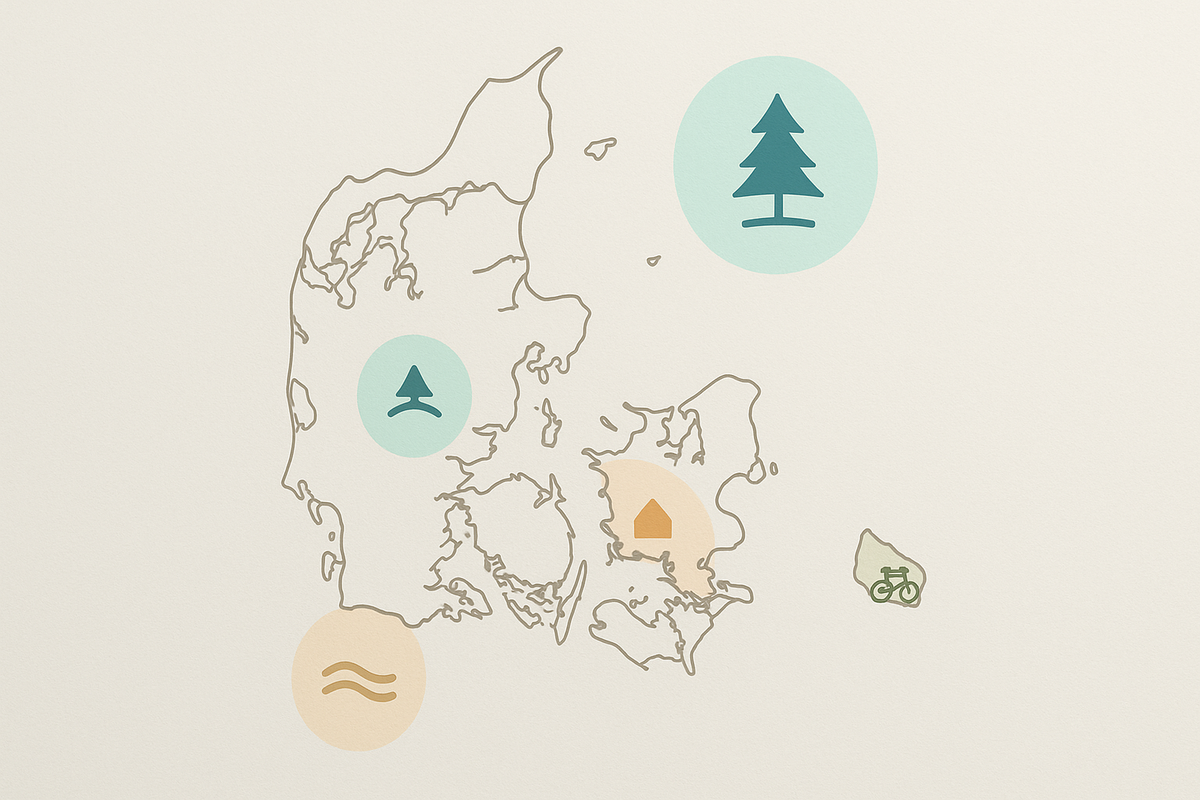
🌊 Western Jutland: the North Sea, dunes and wind
Image: long beaches, dunes, lighthouses, storms and surfing.
Popular areas: Blåvand, Hvide Sande, Søndervig, Fanø, Rømø.
✅ Pros: dramatic North Sea scenery, a sense of space and “wildness,” lots of surf and kitesurf spots, huge choice of cottages and campsites.
⚠️ Cons: constant wind, cold water, long distances, inconvenient without a car.
Ideal if you want the “real north,” don’t fear wind and enjoy active holidays.
🏖️ North Zealand: the “Danish Riviera” near Copenhagen
The coast from Helsingør to Gilleleje is often called the Danish Riviera.
✅ Pros: sandy beaches and pines, relatively calm sea, close to Copenhagen, castles and the Louisiana museum nearby. You can stay in a cottage and visit the capital for a day.
⚠️ Cons: one of the most expensive regions; good waterfront houses in summer are booked far in advance.
Ideal if you have no car, are visiting Denmark for the first time, and want “both sea and capital” in one trip.
🌿 Funen and the gentle Baltic: pastoral Denmark
Funen and its surrounding islands offer hills, half-timbered villages, gardens and small ports.
✅ Pros: calm Baltic Sea, many shallow bays, great base for cycling and castle trips, softer prices than around Copenhagen.
⚠️ Cons: less “dramatic” sea than the North Sea; routes are harder without a car but still possible.
A good option for families and couples who want greenery, peace, and a comfortable sea.
☀️ Bornholm: the sunny island in the Baltic
Bornholm is white sand at Dueodde, cliffs in the north, smoked fish, cycling routes and an island vibe.
✅ Pros: one of the sunniest regions, combination of beaches and cliffs, bike paths, interesting gastronomy.
⚠️ Cons: more complex logistics (ferries/flights), accommodation in peak season must be booked very early.
Great for those who love islands, bikes and don’t mind planning ahead.
💡 Interactive regional choice helper
🗺️ Not sure where to go? Pick your priorities
Tick what matters most to you and get a suggested region.
✅ Listing checklist: how not to miss hidden pitfalls when choosing a specific house
Once you’ve settled on a region and dates, the most tedious part begins: choosing one exact sommerhus out of dozens of similar listings. It’s important to read not only what the ad says, but also what it quietly hints at.
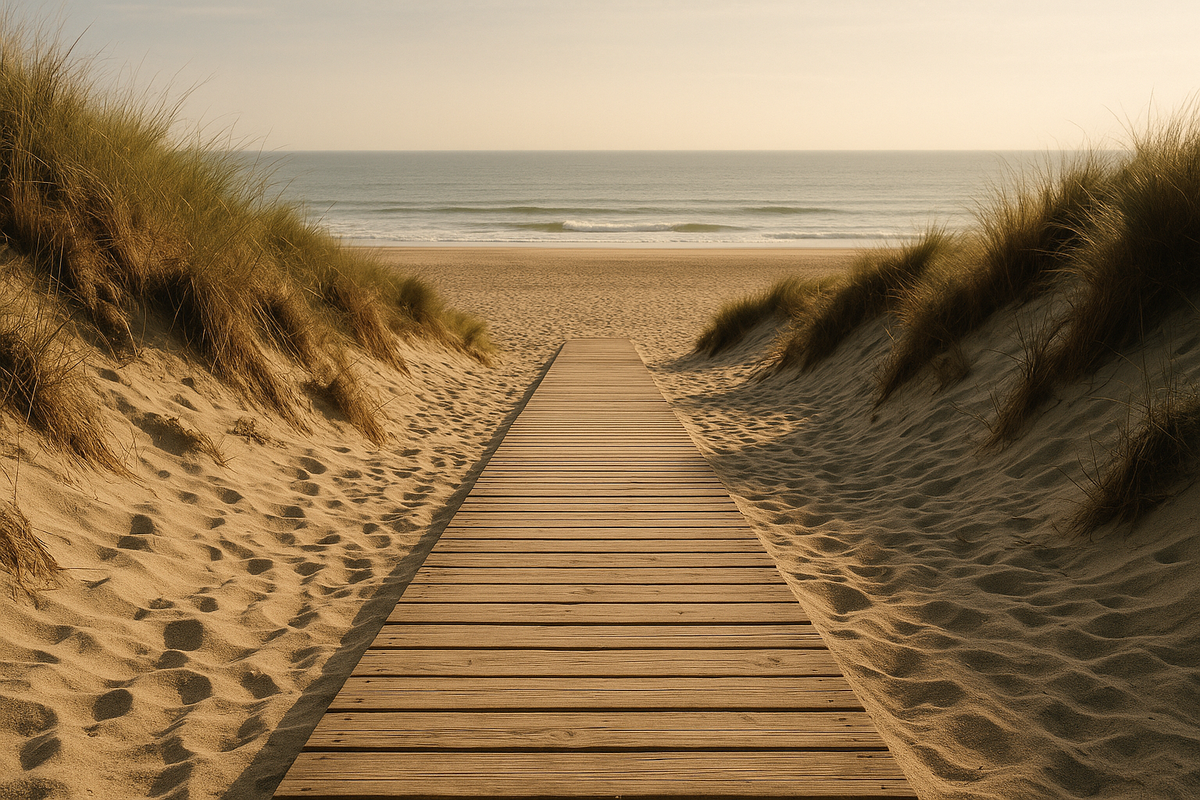
📍 Distance to water and the real location
The phrase “300 m to water” does not guarantee a convenient sandy beach; it may be a fjord, a rocky shoreline, or an area with no proper access to the water.
Always switch the map to satellite view and check:
• where the actual beach is
• whether there are dunes and how high they are
• how the path goes: boardwalk, sand, stairs
If the description says “sea view,” look for a photo taken from inside the house, not just “a house with the sea somewhere behind it.”
Classic mistake: trusting a pretty picture with “house and sea” without checking that the real beach is a 15–20 minute walk away.
🛏️ Layout and sleeping arrangements
Don’t just look at the number of bedrooms; check the bed types: one double or two singles, and whether all rooms have proper adult mattresses.
In Scandinavia it’s common to have separate mattresses and duvets even on a “double” bed.
If multiple couples are traveling, make sure at least two bedrooms are equally comfortable rather than “one normal, one children’s room.”
🍽️ Kitchen and dining area
The basic set is almost always there: stove/oven, fridge with freezer, dishwasher, pots and dishes.
Spices, oil, sugar and other “little things” are better to bring with you — don’t count on them being there.
For a group, space matters as much as equipment: a large indoor table, a comfortable terrace table, a proper grill, and some wind protection.
🔥 Heating and energy
Pay attention to how the house is heated:
• electric radiators: convenient, but may be expensive if insulation is poor
• heat pump: more economical
• wood stove/fireplace: cozy and an extra heat source, but requires wood and a bit of attention
The phrase “energy-saving house” in the description is a good sign: the house is likely insulated and energy consumption will be lower.
📶 Internet and connectivity
For work or study, check what internet the house actually has instead of relying on a vague “Wi-Fi.”
Reviews often mention honestly: “Internet was excellent, good for work” or “signal only near the window.”
🐾 Pets, kids and ‘quiet rules’
If you’re bringing a dog, look for “pets allowed / dog allowed” and read the conditions: sometimes there’s a fee, sometimes a deposit.
For kids, it’s nicer when there’s a garden, a terrace without steep steps, a nearby playground or a quiet road.
In resort villages there are unspoken “quiet hours” — a loud party until 2 am in a peaceful village won’t thrill the neighbors.
💡Sommerhus listing inspection checklist
✅ Pre‑booking checklist for a sommerhus
Tick the items you’ve already verified in the listing.
💰 How prices work and what your real budget is made of
📊 Rough price ranges
Prices depend a lot on region, season and the standard of the house, but in general:
- a basic 2–3 bedroom house in shoulder season can be noticeably cheaper than in peak season
- the same house in July–early August can sometimes jump to twice the price
- first row to the sea and a “spa set” (sauna, hot tub, pool) add a solid percentage on top
The best approach is to think in ranges: open several houses in your chosen area for your dates and see where the “middle” of the prices is.
📅 Seasonality and how dates affect the price
🟥 Peak (expensive) – mid-July to early August + major holidays.
🟨 Shoulder seasons (best balance) – May–June and late August–September: softer prices, relatively stable weather.
🟩 Low season (cheap, but not a beach holiday) – late autumn and winter: rent is much cheaper, but heating costs go up and you’re unlikely to swim.
If the budget is critical, it makes sense to:
- travel in the shoulder seasons
- shift dates (go in June instead of July)
- look at slightly less hyped regions
🧾 What else you’ll spend money on besides rent
When planning your budget, definitely include:
🔌 Electricity and heating – usually charged by meter (kWh), especially important in cooler months and if you actively use the sauna/hot tub.
🚿 Water – sometimes included, sometimes also metered.
🧹 Final cleaning – mandatory or optional, but with a strict checklist if you do it yourself.
🛏️ Bed linen and towels – bring your own or rent.
🐶 Pets – possible extra fee or deposit.
🚗 Bridges and ferries – if you’re driving and planning to visit islands.
💳 Service/platform fee – on some booking platforms.
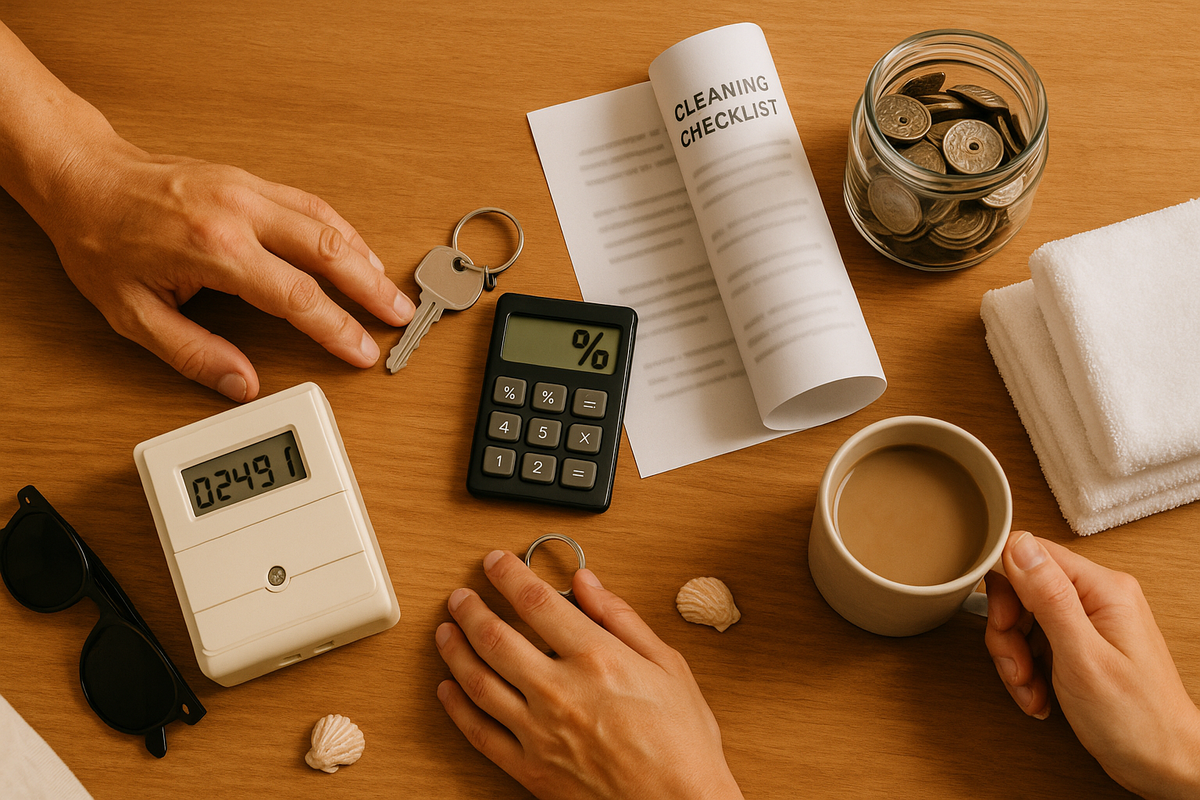
💡 Mini budget calculator for a sommerhus
💰 Mini budget calculator (sommerhus)
Enter your numbers to estimate the total trip cost.
Total for the trip: — DKK
Average per night: — DKK
⚠️ This is only an approximate estimate. Actual amounts depend on season, region and your habits.
🧭 How to choose your first sommerhus: step-by-step plan
So you don’t drown in endless listings, you can follow a simple algorithm.
🪜 Step 1. Decide on the format
Ask yourself:
- are you with a car or without?
- how many nights do you have?
- do you want more sea & walks, or to “drive around and see everything”?
🧭 Step 2. Choose a region that fits this format
- without a car and with a “city + sea” plan: North Zealand
- with a car and dreaming of dunes and storms: Western Jutland
- for a family holiday with children: Funen / gentle Baltic or the calm shores of the Kattegat
- if you love islands and bikes: Bornholm
💸 Step 3. Set your budget and date range
- look at different weeks and compare prices
- decide how much you are willing to pay per night/week, including extra costs
- be flexible with your dates if possible – this often saves money
📍 Step 4. Filter houses on the map
- turn on a filter for distance to the sea
- exclude options without the needed number of bedrooms and key amenities
- save the options you like to your favourites
🔍 Step 5. Check location and photos
- open the map and satellite view, assess the way to the beach and the surroundings
- check where the windows and terrace face (sunset/sunrise / neighbour’s fence)
📑 Step 6. Read the fine print
- read the conditions for cleaning, bed linen, energy, pets
- if anything is unclear, ask questions before booking
🌦️ Step 7. Match your expectations to the season
- spring/autumn: more time spent inside the house, so coziness and heating matter more
- peak summer: more people and higher prices, but maximum daylight and activities
❓FAQ
💬 In autumn and winter it’s no longer a “beach” holiday, but a hygge-style stay: windy walks, fireplace, sauna, long evenings in the house. Prices are noticeably lower, but it’s important to know how the house is heated and to factor electricity/heating costs into your budget.
💬 Most often families are advised to look at North Zealand and the gentler parts of the Baltic (Funen, the east coast of Jutland): calmer sea, lots of shallow water, nearby towns and activities. The west coast with the North Sea is also possible, but you need to take the wind and waves into account.
💬 It’s possible if you choose regions with good public transport: North Zealand and areas around major cities (Copenhagen, Aarhus, Odense). But you should still check the distance to the station/bus stop and the bus timetable – not all houses are equally convenient without a car.
💬 Very roughly: in shoulder season and less overpriced regions you can manage with a few hundred euros for the house itself. In peak season, by the sea and with “luxury” extras (sauna, hot tub), the bill easily climbs to 1,500–2,000 euros and up. Plus extras: energy, cleaning, linen, travel.
💬 Electricity and water charged by meter, final cleaning (if mandatory and paid), rental of bed linen and towels, extra fees for pets, and the cost of toll bridges/ferries. It’s best to ask in advance for a clear breakdown of all these items in your messages with the agency or owner.
💬 In high summer many houses are rented “Saturday to Saturday”, but in shoulder season and in gaps between bookings shorter stays are often possible. Look for filters like short stay / mini holiday and be prepared for a smaller selection.
💬 Yes, it’s one of the most convenient formats: several bedrooms, a shared living room, terrace and grill. Just make sure to agree on expectations around “quiet hours” in advance and choose a house where evening gatherings won’t bother the neighbours (dense development vs a house in the dunes).
💬 Safety depends on how the deal is handled. If you book directly, ask for written confirmation with all conditions, check the payment details, look for reviews of the owner and avoid bank transfers “to a random person” without payment protection. For beginners it’s usually easier and calmer to start with big platforms and agencies.
💬 Yes, there are plenty of pet-friendly houses. But you should use the right filters, read the conditions (sometimes there’s a limit on the number of dogs), factor in extra fees and check whether there are dog-friendly beaches nearby. If you don’t have pets and have allergies, you can instead filter for houses where animals are not allowed.
💬 A comfortable range is 4 to 7 nights. In 3–4 nights you can “try on” the format and the surroundings; in a week you can really live the house life: sea, trails, nearby towns and quiet evenings on the terrace.

0 comments
Log in to leave a comment