


🏖️ Where it’s cheaper and more beautiful to rent a sommerhus: West Jutland, Funen, Zealand or Bornholm?
Imagine the flights are already booked, you’ve got a picture of a cottage by the sea in your head, but Denmark on the map still looks like a blur. West Jutland teases with endless beaches and surfing, green Funen promises a gentle Baltic and castles, “capital” Zealand tempts with the idea of swimming in the morning and sipping wine in Copenhagen in the evening, while Bornholm winks with sunny beaches and an island atmosphere. And then the question that troubles almost everyone pops up: where is more beautiful and where is cheaper?
In this article we calmly unpack the four most talked‑about destinations for a sommerhus: we’ll look at the view from the window, the weather, crowds, indicative costs, and who each suits best — a family with children, a group of friends or a couple that simply wants to hide away by the sea.
🌍 First decide what “beautiful” means to you — and what you call “cheaper”
Everyone has their own criteria. For some, “beautiful” means wild dunes and a wind that blows your cap off; for others it’s a groomed beach, pines and a café with a latte across the road. “Cheaper” also varies: you can save on the cottage itself but spend more on ferries and travel; you can choose a budget region but hit peak season and pay premium prices.
Before we compare West Jutland, Funen, Zealand and Bornholm, it helps to answer a few honest questions:
- you’re travelling with children, with friends, or as a couple
- you plan to stay put or drive around every day
- you’re ready for wind and waves, or calmer water is a priority
- you arrive in Copenhagen/Billund and don’t want to spend hours on the road
From here it’s easier: we’ll view each region through the lens of these criteria.
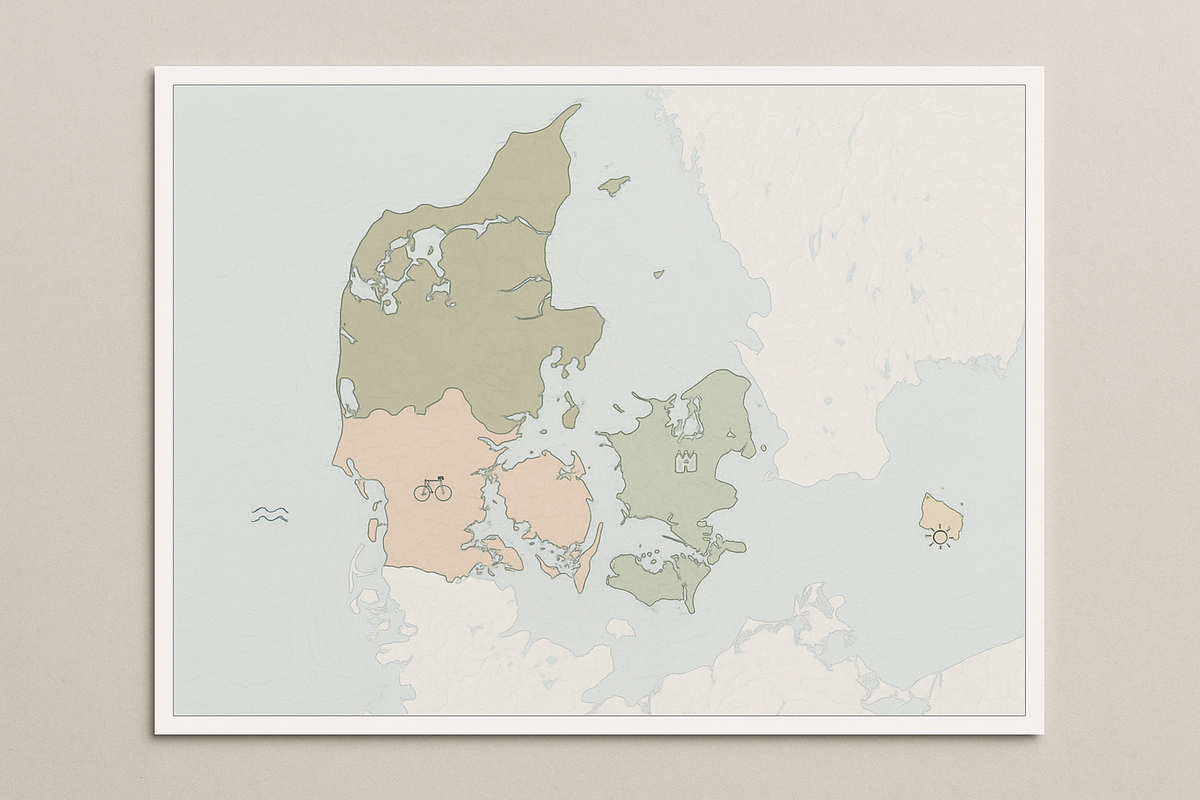
🧭 Four coasts: how they actually differ
To simplify, it looks like this:
🌬️ West Jutland — the raw North Sea, long dunes, a lot of air and wind, big distances, a huge choice of cottages.
🌿 Funen — a gentle Baltic, green hills, castles, small towns, sheltered bays.
🏙️ Zealand (especially the north) — sea plus Copenhagen, castles and museums, good logistics — and higher prices.
☀️ Bornholm — a sunny island with white beaches and cliffs, cycling routes — and you have to get there.
To avoid “everything about everything”, let’s look at a compact view first.
📊 Where the sea is calmer, where the wind is stronger — and how it affects your budget
The table isn’t strict maths but a guide — it helps you see which region fits your style of holiday.
| Region | Coast & weather | Crowds & vibe | Sommerhus budget | Accessibility |
|---|---|---|---|---|
| West Jutland North Sea | Waves, wind, wide beaches and dunes, a “edge of the world” feeling. | There are famous resorts, but it’s easy to find almost empty stretches of coast. | Many cottages for every wallet — from simple to luxury; good chances to find value. | Convenient from Billund and Hamburg, but harder without a car: distances are large. |
| Funen Baltic | Gentle Baltic, inlets, rolling fields, pastoral landscapes. | Calm, “village” atmosphere; less mass beach tourism. | Often mid‑range pricing; a very decent price/quality balance is realistic. | Bridges to Zealand and Jutland; logistics are easy, especially by car. |
| Zealand (north) Baltic | Cosy sandy beaches, pines, gentle sea without extreme waves. | Popular with Danes in summer; the “Danish Riviera” is noticeably busier. | “Capital” region — summer prices tend towards the upper band. | Ideal from Copenhagen: trains and buses, possible without a car. |
| Bornholm Baltic | More sun, white beaches in the south and cliffs in the north; island weather. | Feels like a big resort village: lively in summer, but not “packed”. | There are budget cottages too, but add ferry or flight to the bill. | You need to fly or sail; the island is small — easy by car or bike. |
🌬️ West Jutland: cheap air and expensive wind
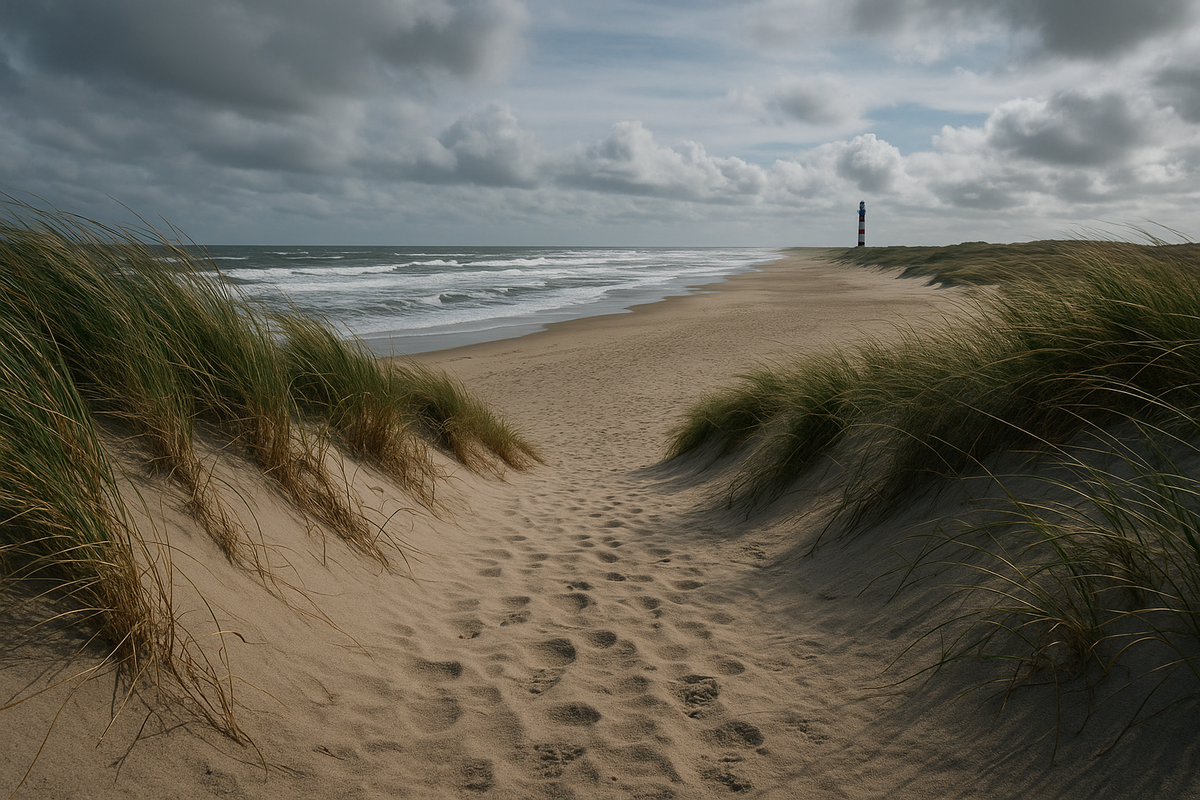
If you want the sea to feel “proper” — noise, foam, an endless horizon and weather that changes three times in an hour — West Jutland almost always makes the list. It’s the coast where people write: “We walked along the water for an hour and didn’t meet a single person,” right next to “the August wind was so strong it literally blew the kids off the beach.”
Budget‑wise the spread is wide, but it’s precisely on the west coast that it’s easiest to find a basic yet honest cottage: not first dune line, no panoramic view, but a tidy sommerhus a couple of kilometres from the sea at a nice price. The further from big names and the less “luxury”, the kinder the numbers.
A key bonus of West Jutland is its proximity to large natural areas. In the north stretches Thy National Park with dunes, lakes and trails; in the south‑west is the Wadden Sea with tides, birds and seals. Many cottages and campsites stand so you can step onto a trail straight from your door, without long drives.
Who especially benefits here:
- families and couples willing to accept wind for the reward of “wild” beaches and sunsets;
- groups of friends who need space — kitesurfing, runs across dunes, evening grilling, an improvised “bar” on the terrace;
- those who want to save on accommodation but are ready to spend on a car and a couple of extra layers.
Read enough reviews and you’ll see two emotions side by side: delight at empty beaches and the note “we underestimated the wind and cold; in March we sat by the stove more than outside.” That’s a fair summary: it’s beautiful, but it asks for a warm layer and a touch of stoicism.
🌿 Funen: a soft compromise between “beautiful” and “affordable”
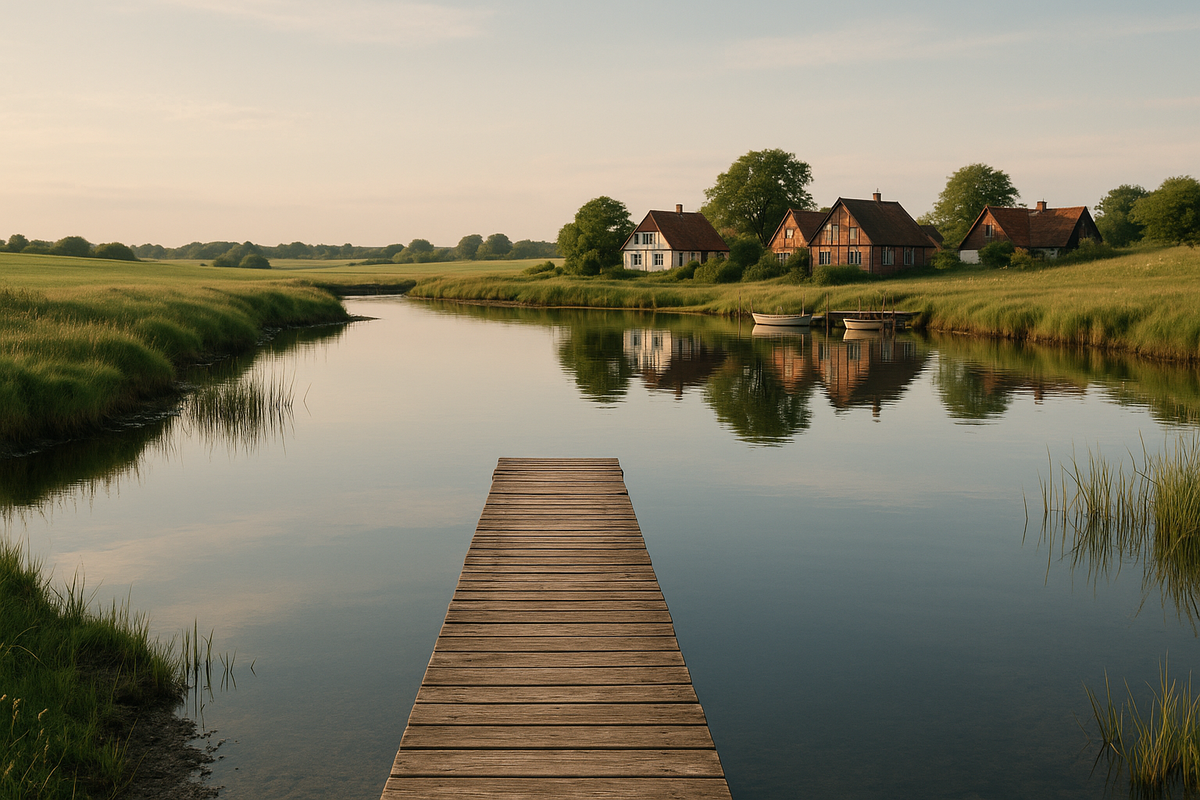
Funen is often called “Denmark’s garden”. There are no dramatic cliffs or endless dunes, but there are hills, living villages, white churches, fishing harbours and castles in parkland. The Baltic around Funen is usually gentler than the North Sea: more bays and inlets, less feeling you’re being carried off to Norway.
Money‑wise, Funen is that mid‑segment where you don’t see as many extremely expensive cottages as on the “Danish Riviera”, but you also won’t find rock‑bottom options like in the simplest parts of Jutland. The choice is honest: a proper 2–3‑bedroom sommerhus with a pleasant terrace and walkable/cyclable access to water at a fair price is realistic — especially if you skip peak July.
Funen suits families who like a rhythm: one day at the beach, the next at a castle, then a loop through nearby villages, then a forest or coastline trail. “Where’s the nearest national park?” works differently here: around Funen there are many small protected areas; the big names like Mols Bjerge or Thy are in Jutland and need a drive.
Reviews sound calm: tidy villages, friendly hosts, convenient logistics, and children swimming peacefully in sheltered bays rather than battling waves. On the minus side, some miss the “wow” of the North Sea; others feel it’s “too quiet”. If you like “a bit of sea, a bit of towns, a bit of fields and cows”, that’s very much Funen.
🏙️ Zealand: the sea plus Copenhagen and castles
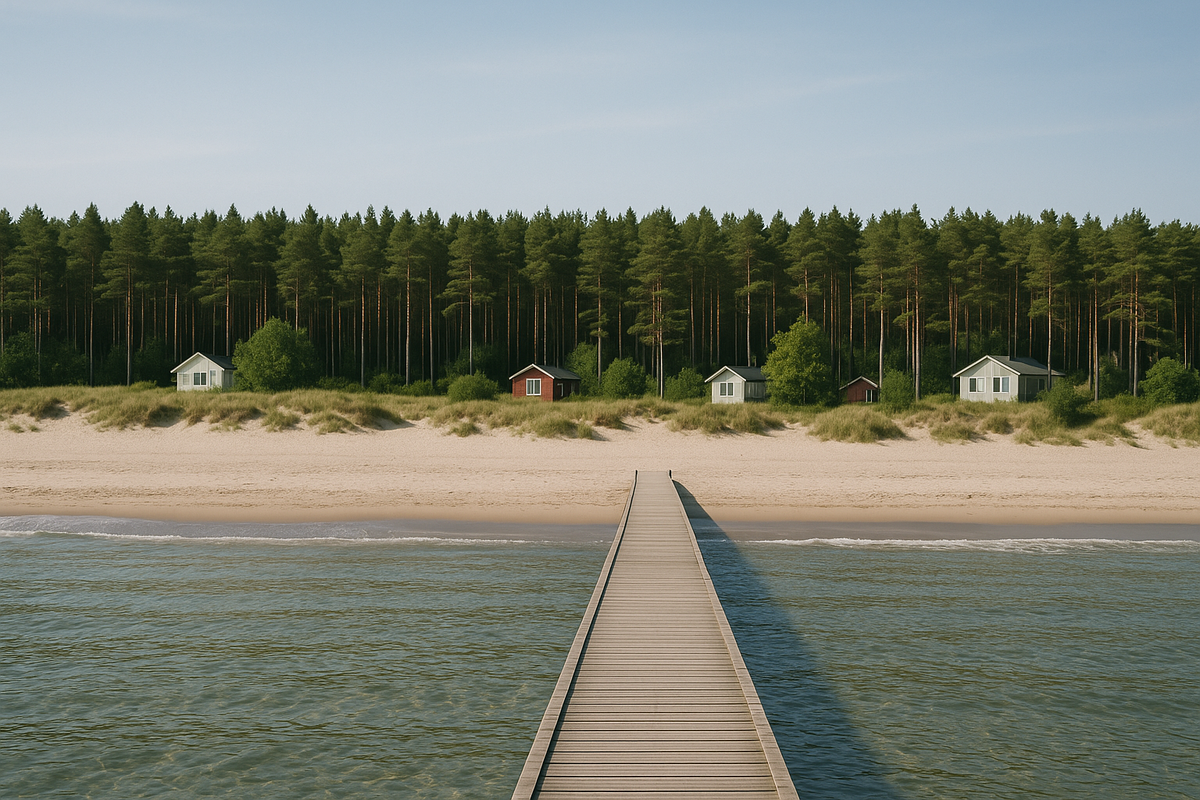
Zealand is the big island where Copenhagen sits. For sommerhus the north coast is the classic pick: Gilleleje, Hornbæk, Tisvildeleje and neighbours that Danes fondly call the Danish Riviera. Pines, pale sand, neat cottages, cafés, and a “resort near the capital” vibe.
The main plus is ease of access if you fly into Copenhagen and don’t want to rent a car. Trains and buses fan out of the city; many villages sit along the railway; a cottage within walking or cycling distance of a station is realistic. That saves time and removes the “what if we’re stuck in the middle of nowhere without a car” worry.
The second plus is how well you can blend a sommerhus with a rich cultural programme. One day you swim and grill fish on the terrace; the next you pop into the capital; another day is for castles, contemporary art museums and historic towns. Skjoldungernes Land National Park, looping around fjords and fields in north‑west Zealand, adds trails and views perfect for day trips from your cottage.
The flip side of this picture‑book life is price and people. In summer there are more people than on the west coast, and a seaside sommerhus in a prime spot costs noticeably more. Reviews show it clearly: some write “perfect balance — beach in the morning, Copenhagen in the evening, cottage is a dream”; others admit “we expected more seclusion; lots of people; prices very ‘capital’.” Still, if it’s your first Denmark, you’re car‑free and want sea, city and sights “in one go”, Zealand is a very strong candidate.
☀️ Bornholm: a holiday on an island that feels like a country of its own
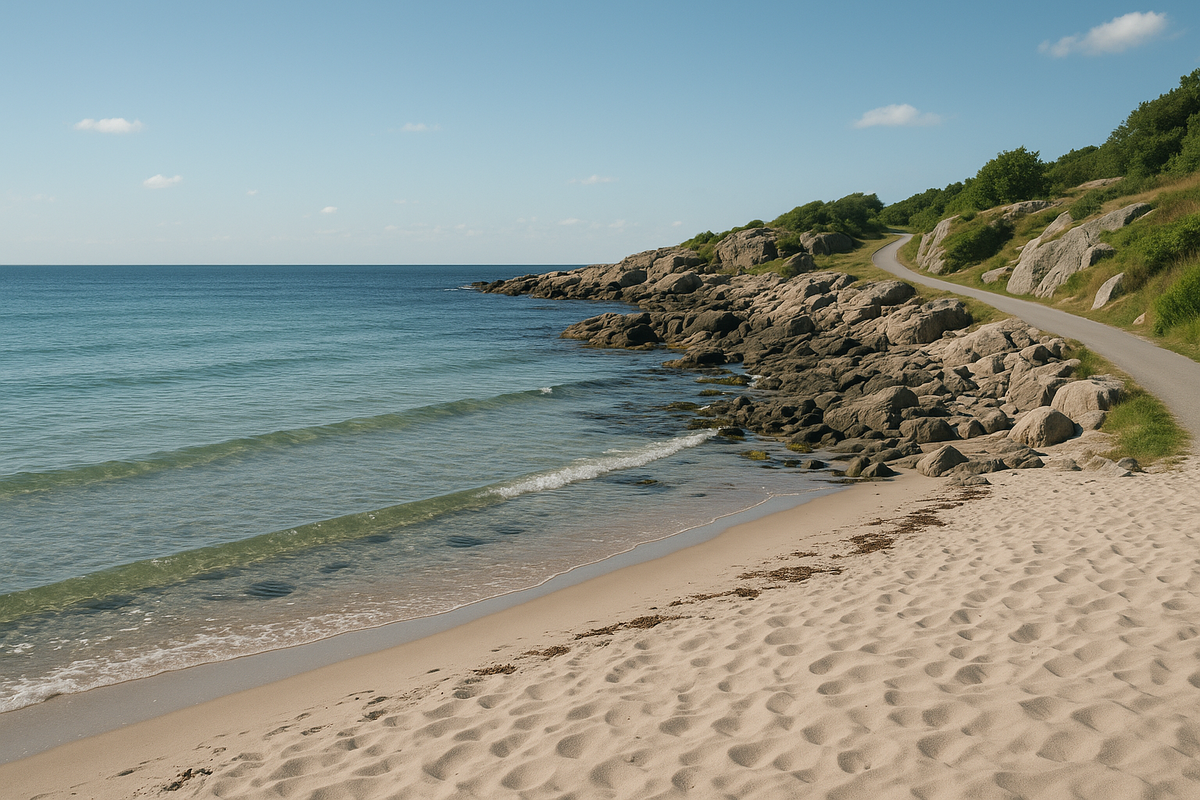
Bornholm is a holiday that starts with the journey: train/car to the port, then ferry or plane, and you’re on an island that looks a bit like Denmark, a bit like Sweden — and like neither. In the south: long white beaches like Dueodde; in the north: cliffs and small towns; in the centre: forests and trails; along the coast: kilometres of cycle paths.
On the “beautiful” scale, Bornholm almost always ranks high. Those rave reviews — “we didn’t expect it to be so well kept yet so alive”, “we could live for a week in a village with two cafés and a smokehouse and never get bored” — that’s Bornholm. It’s easy to do “cottage by the sea + bike life”: start along the coast in the morning, swim in a different bay at midday, return to your terrace in the evening with a bag of smoked herring.
Money is trickier. There are budget cottages, campsites and modest options away from top beaches — but you pay for logistics: ferry, flight, maybe car hire on the island. If you calculate “cost per holiday day”, a less “postcard” region without a ferry sometimes comes out cheaper even if the cottages cost similar.
Bornholm loves families and couples who aren’t chasing checklists but living an “island life”. Groups of friends are happy here too — if they enjoy bikes, trails, cliffs, fishing and evenings on the terrace rather than nightclubs.
🚸 Families, couples, groups of friends: who will be happier where
There are no strict rules, but typical scenarios suggest basic pairings.
If you’re travelling with children, especially small ones, and want friendly waters, painless logistics and more than just the beach, settings often look like this:
- Funen — for calm water, greenery, small towns and low stress.
- North Zealand — for easy public transport, a sea‑plus‑Copenhagen combo and castles.
If you’re a group of friends craving energy, sport and a sense of adventure, favourites are usually:
- West Jutland — surf, kites, empty beaches, grilling and wind;
- Bornholm — bikes, trails, cliffs, fish, lots of daytime activity.
Couples often want something else: quiet, pretty walking spots, the option to sit by the stove and also pop into a town. The strongest fits are:
- Funen — for softness and romantic landscapes;
- Bornholm — for island atmosphere and variety;
- Zealand — if you want to “escape to the capital” in the evening rather than stay in the village all the time.
To avoid guesswork, you can “play” with the settings right in the insert.
🎯 Region picker for your style of holiday
Select who you’re travelling with and your budget — you’ll get a suggestion of where to start looking.
🥾 National parks and trails: where nature is right “by the cottage”
When choosing a region, it matters not only what the beach looks like but what lies beyond the sand. For many, a sommerhus is a base for hikes, cycling and visits to national parks.
In West Jutland you can live on the edge of Thy National Park in summer: coffee on the terrace in the morning, and twenty minutes later you’re on a trail among heather and dunes. Further south, near the Wadden Sea, cottages and campsites become a springboard to tidal flats, where people later recall “astonishing empty space where the horizon dissolves”.
Look to Zealand and add Skjoldungernes Land to “sea + city”: trails around fjords and farmland. It’s convenient to stay on the coast and plan day trips: one day cultural programme, next day a hill‑and‑forest trail.
Funen wins by offering many small natural areas: protected pockets, forests and coastal paths scattered so that almost any cottage sits within a short drive of a pleasant walk.
Bornholm, with its cycle routes, cliffs and forests, feels like a big park: you can do a “mini‑hike” or a bike day from almost any cottage without hours of logistics.
And if national parks are key for you, keep Mols Bjerge in mind on the Jutland east coast: a different region outside our list, but often paired with Funen or Zealand by adding a mainland base.
💶 Where is cheaper overall if you count the whole trip, not just the cottage
It’s easy to slip up by comparing the weekly rent alone. A cottage in West Jutland may be cheaper than one on Bornholm, but if you pay for a ferry to the island while the west requires a long drive and toll bridges, the final budget isn’t so clear‑cut.
To get realistic, split costs into four blocks in your head:
-The cottage itself.
- Utilities and cleaning.
- Logistics (flight/ferry/bridges/fuel).
- Food and on‑site shopping.
Looking at cottages in isolation, it’s roughly like this:
- West Jutland offers more cheap and mid options, especially away from the flagship resorts.
- Funen sits in the “pleasant middle”: there’s both cheaper and pricier, without extreme swings.
- Zealand, particularly north of Copenhagen, more often sits in the upper band, especially at the water and in peak season.
- On Bornholm you can find very simple and very expensive options; most often it’s the middle segment plus travel costs.
Then add logistics. If you’ll have a car and drive anyway, an extra hour to West Jutland isn’t critical; a couple of ferry tickets to Bornholm can be. If you’re car‑free, fly into Copenhagen and want to make life simple, north Zealand can be better value despite higher rents than a “cheap cottage far away + complex transfers” combo.
There’s also a quiet factor — season. The same region in May and in July are two different universes. A family writing “we found a great seaside cottage for little” often just hit a shoulder season rather than peak.
❓FAQ
Most often it’s easiest to find inexpensive cottages in West Jutland and some of the less hyped areas of Funen. But a lot depends on season: a cottage on “expensive” Zealand in May can cost roughly the same as Jutland in peak July.
For the calmest water, look to the Baltic and bays: Funen, parts of north Zealand and sheltered inlets on the islands. The North Sea is beautiful but often windier and cooler — not every child loves that.
The “emptiness” feeling is usually West Jutland and some northern stretches, especially outside school holidays. On Bornholm you can also get away from people by moving a couple of kilometres from the most popular villages and beaches.
North Zealand wins thanks to trains and buses from Copenhagen. You can manage parts of Funen without a car (with planned “train + bus” links), but you’ll have less freedom. Bornholm and West Jutland require more planning and a readiness for walking/cycling distances.
West Jutland is great if you want Thy or the Wadden Sea nearby; Zealand lets you combine the sea and Skjoldungernes Land; Bornholm itself feels like one big natural park with trails and cycleways. Funen gives easy access to many small protected areas and islands.
Often West Jutland: cottages can be split across a big group, there’s plenty to do (wind, waves, dunes), and the choice is huge. Do factor in the cost of a car — without it it’s harder.
A good compromise is Funen and parts of Bornholm. On Funen there are lots of neat cottages and pleasant nature without eye‑watering prices; on Bornholm you get strong visuals and can choose a place a row back from the water to avoid the premium tier.
Not always. Sometimes a “cheap” location eats savings through travel, ferries and time lost. With a week’s holiday it can be better value to pay a bit more for accommodation but save a day on travel — and save your nerves on transfers.
For a first trip people often choose north Zealand or Funen: a soft climate, a good balance of town and nature, and simple logistics. West Jutland and Bornholm are worth approaching slightly more prepared, knowing you truly want wind/island life.

0 comments
Log in to leave a comment