


👑 Queen Margrethe II’s Birthday: an April flag, a city on the square, and a story you’ll want to see with your own eyes
✨ Prologue: an April tradition in the colors of the Danish flag
By mid‑April Copenhagen changes its rhythm: red‑and‑white ribbons in windows, tiny paper Dannebrog flags on squares, and a quiet feeling of “our shared day.” 16 April is Queen Margrethe II’s birthday: not an official public holiday, but a national day of appreciation. That’s how locals treat it — a chance to thank the woman who was the country’s symbol for half a century and remains its beloved artist‑queen. Morning brings the Guard, noon brings the Royal Life Guard’s music, evening brings family dinners and toasts. And even after she passed the throne to her son in 2024, the day retains its flag status — cities hoist the Dannebrog, and the royal squares carry a special festive hush.
📜 History: born in wartime, a lifetime of duty, and a rare abdication
Margrethe Alexandrine Þórhildur Ingrid was born 16 April 1940 at Amalienborg — a week after the German invasion. The flag raised in a difficult time became part of why her birthday feels like “ours” to Danes. In 1972, after King Frederik IX’s death, she acceded to the throne and served for 52 years — an era of European integration and a gentle modernization of the monarchy. On 14 January 2024, she did something Denmark had not seen for nearly 900 years: she abdicated voluntarily in favor of her son, now King Frederik X. The city filled with flags and music once more — a symbol of continuity.
But there is another, almost fairytale biography: artist, scenographer, illustrator. Under the pseudonym Ingahild Grathmer she illustrated The Lord of the Rings; in Copenhagen her costume and set designs have appeared on many stages — from Tivoli’s pantomime theatre to new ballets and Andersen‑inspired productions. Even after stepping down, in 2024–2025 she returned to stage work. This creative line gives her April day a second meaning: a celebration not only of a title, but of a talent.
🕛 The noon tradition: how it used to be — and how it’s evolving
For decades, the classic birthday pattern looked like this:
- around 11:50, on Amalienborg Square, the Royal Life Guard in red tunics and bearskin caps performed the “grand” guard mount;
- at exactly 12:00, the Queen appeared on the balcony of Christian IX’s Palace — family beside her, a sea of flags below, and the crowd calling “Hurra!”
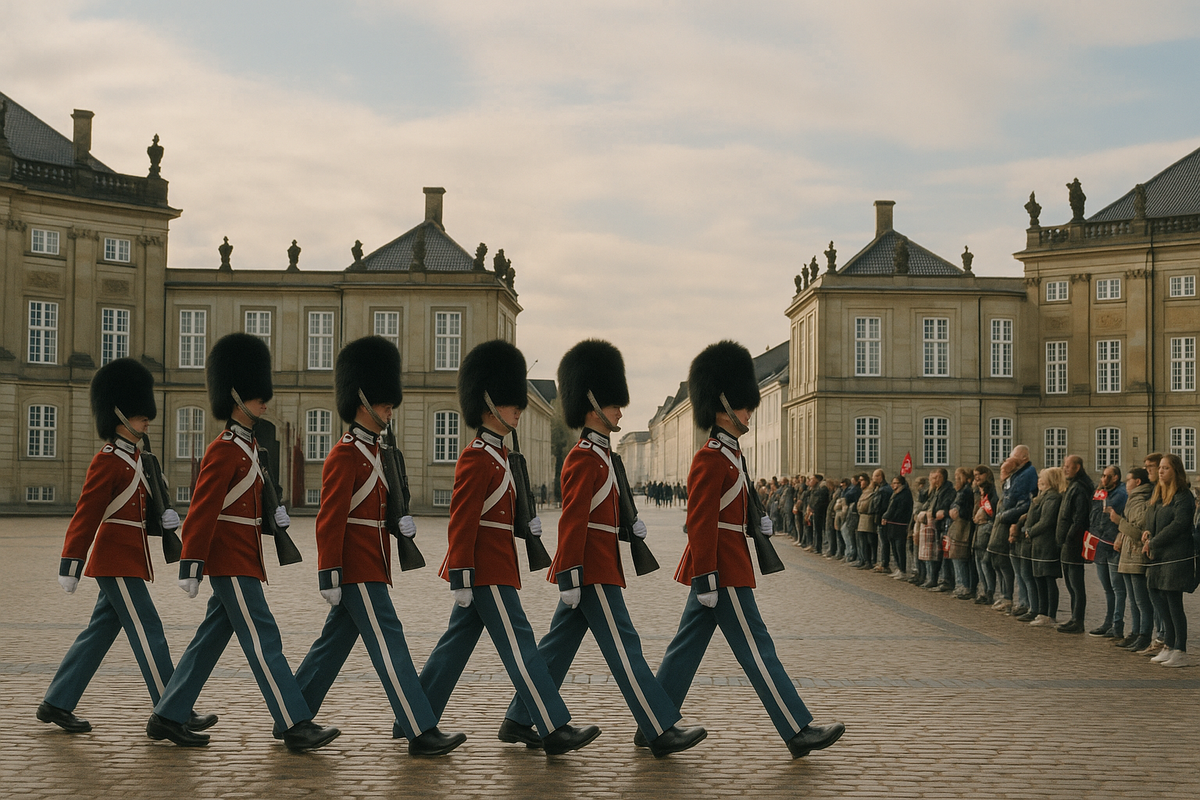
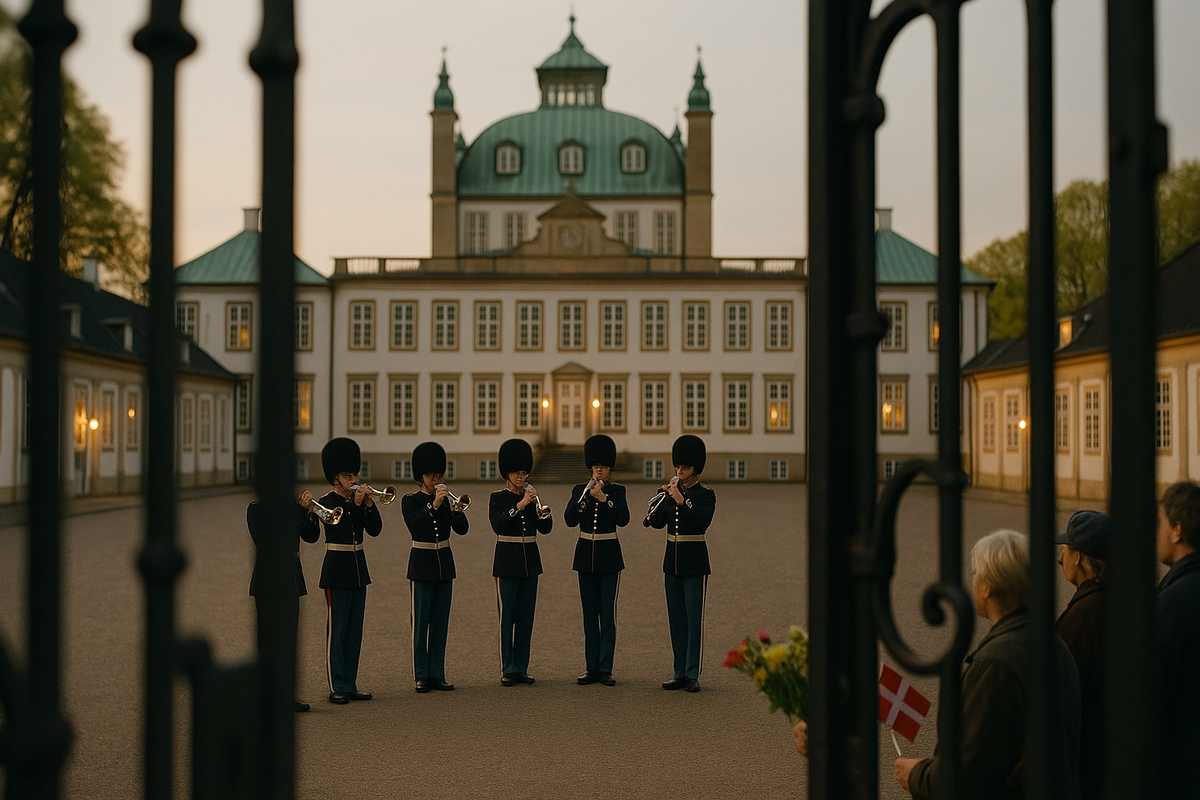
What’s different since 2024. After the abdication, the public balcony moment with music and the “grand” mount moved to the reigning monarch’s birthday (now 26 May, King Frederik X). In 2024 and 2025, Queen Margrethe’s birthday was quieter: a flag day across the country, family gatherings, and at times a small Royal Life Guard concert in the inner court at Fredensborg — without a huge city‑square rally. For travelers, that means: yes to atmosphere, not always to the big balcony crowd.
🧭 Where to be on 15–16 April: three traveler’s scenarios
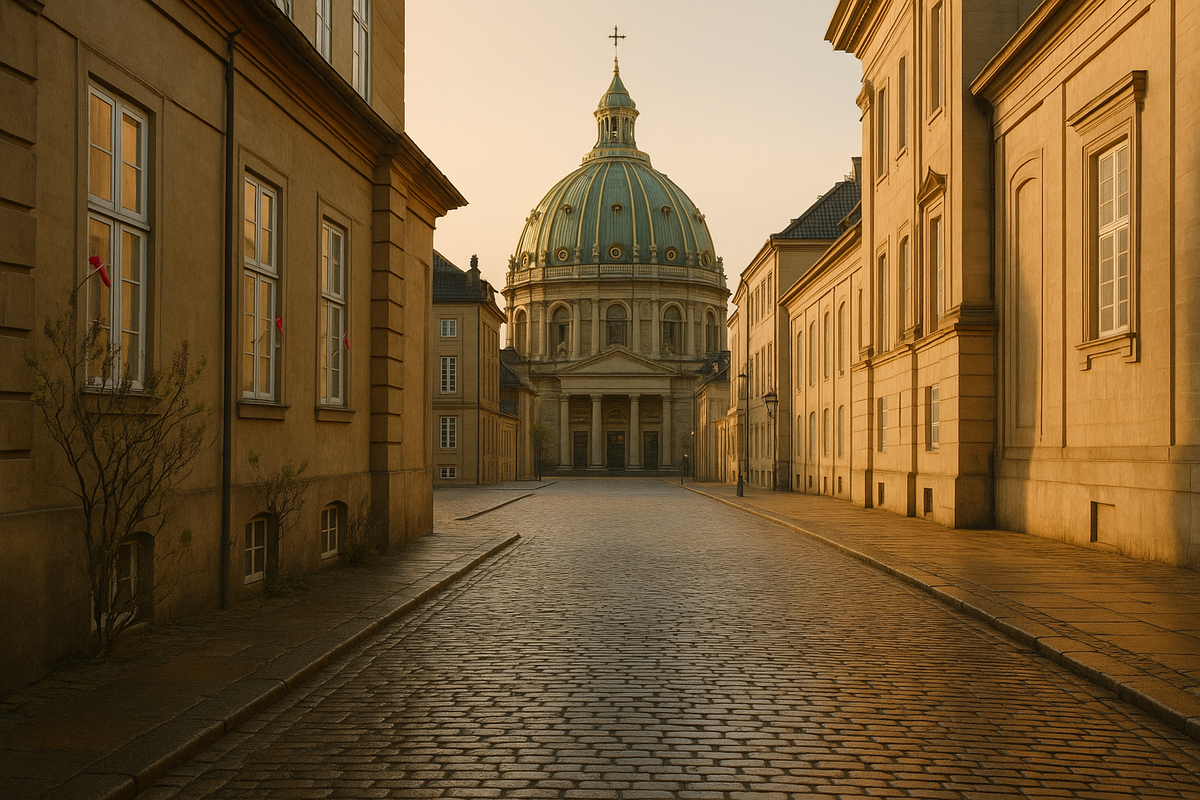
1) Classic Copenhagen. Slow morning in Frederiksstaden — the Marble Church, the Amalienborg ensemble, the quays. By noon, come to the square for the daily guard change (it happens even without the “grand” ceremony). Afterwards — coffee in a historic café where April already smells of lilacs and sea. Dinner with a harbor view.
Pros: everything is walkable. Cons: wind off the straits — bring a windproof layer.
2) Fredensborg “family mood.” Head north to Fredensborg Palace and park: quieter, with a chance to catch the celebration’s “home” rhythm. If the Life Guard is scheduled in the courtyard, music carries to the gates; locals gather with flowers and small flags.
Pros: intimate atmosphere. Cons: details vary year to year.
3) Two capitals in two days. 15 April in Copenhagen (museums and royal architecture), 16 April morning in Fredensborg (about an hour away), evening back in town for a harbor‑side dinner in Nyhavn or Christianshavn.
🎨 The artist‑queen: why April is a good time to visit
Spring is a lively season for Danish museums and theatres: exhibitions, chamber concerts, Tivoli and Royal Theatre productions. Knowing that Queen Margrethe has long created sets and costumes, it’s a joy to build a route that includes a production bearing her touch — new ballets and fairytale pieces have appeared in 2024–2025. The celebration becomes not just monarchical, but cultural: palaces and Guards by day, a lit stage by night.

🏁 Celebration etiquette: how to “take part the Danish way”
- Flags. 16 April is a flag day; carrying a small paper Dannebrog is sweet and appropriate.
- Distance & respect. Danish festivities are calm: don’t push at barriers, don’t climb parapets, don’t step into the carriageway.
- Photos. If you glimpse the royal family, shoot without flash; drones are not allowed around palaces.
- Flowers & cards. People often leave them at the gates; official greetings are usually sent in advance.
- Weather. April is changeable: layers, waterproof shoes, a beanie “just in case.”

🛏 Where to stay and how to plan your budget
- If you hope for Amalienborg Square. Book the centre (Indre By/Frederiksstaden) — walk to the noon moment instead of queueing for taxis in the wind.
- If Fredensborg is your focus. Consider two nights: one in Copenhagen, one closer to North Zealand — your morning journey becomes easy.
- Mid‑April prices. It’s shoulder season: usually cheaper than July, pricier than February. Weekends can cost more than weekdays; flexible rates help if the year’s format shifts.
- No‑surprise plan. Keep a Plan B: if there’s no balcony moment and you pivot to Fredensborg, you still gain a day of Guards’ music, parks and museums.
📌 Summary
Queen Margrethe II’s birthday is about quiet Danish loyalty to their “artist‑queen” and the warm, Scandinavian way of celebrating. Historically: noon at Amalienborg and the Life Guard’s “grand” mount; now, after 2024, often a flag day with family‑style formats at Fredensborg. For travelers it’s a fine April reason to come: to see the flags, feel the gentle solemnity, and compose your own day — palaces, music, museums, and a lit stage in the evening.
❓ FAQ
No. 16 April is a flag day, not a day off. Cities do hoist flags, families congratulate Margrethe, and the palaces feel festive.
Historically yes, for decades. Now it’s not guaranteed: in 2024–2025 the Queen marked the day at Fredensborg more privately, while the formal balcony ceremony with the “grand” mount takes place on the reigning monarch’s birthday (now 26 May).
Create a cultural route: Amalienborg and the noon guard change, the Marble Church, and an evening at the Royal Theatre or Tivoli — many productions connect to the Queen’s creative biography.
In the centre you’ll find flags, the Guard’s band and broad open space; in North Zealand you’ll find quiet park walks around the palace. A “noon in the city — evening up north” plan keeps stress low.
Because it’s a story of personal responsibility and cultural identity: a birth in 1940, a steady reign, a rare voluntary abdication, and a creative life that makes the monarchy feel human.

0 comments
Log in to leave a comment