


🕯️ Kyndelmisse: Candlemas the Danish way and nights of ligh
✨ History and meaning: the “fortieth day” and midwinter
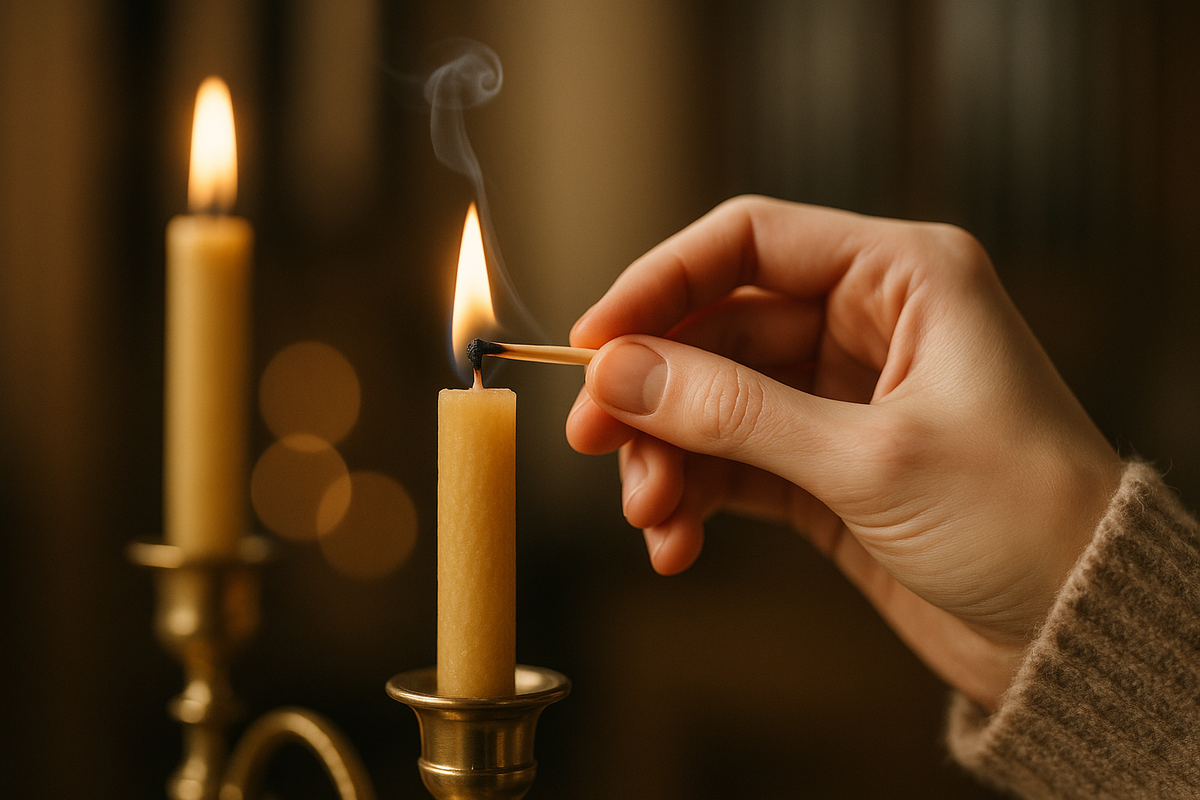
In the Danish calendar Kyndelmisse is 2 February, the fortieth day after Christmas. In old rural lore it marked “the middle of winter”: it’s still dark and damp, yet the thought of spring becomes tangible. Churches light candles, short choirs and organ pieces sound, and voices soften — an evening of attention and light. Today Kyndelmisse rarely “booms” with big parades: it’s a quiet, intimate date Danes live through candles, music and night walks among lights.
🔔 Rituals today: candles, music, warm pauses
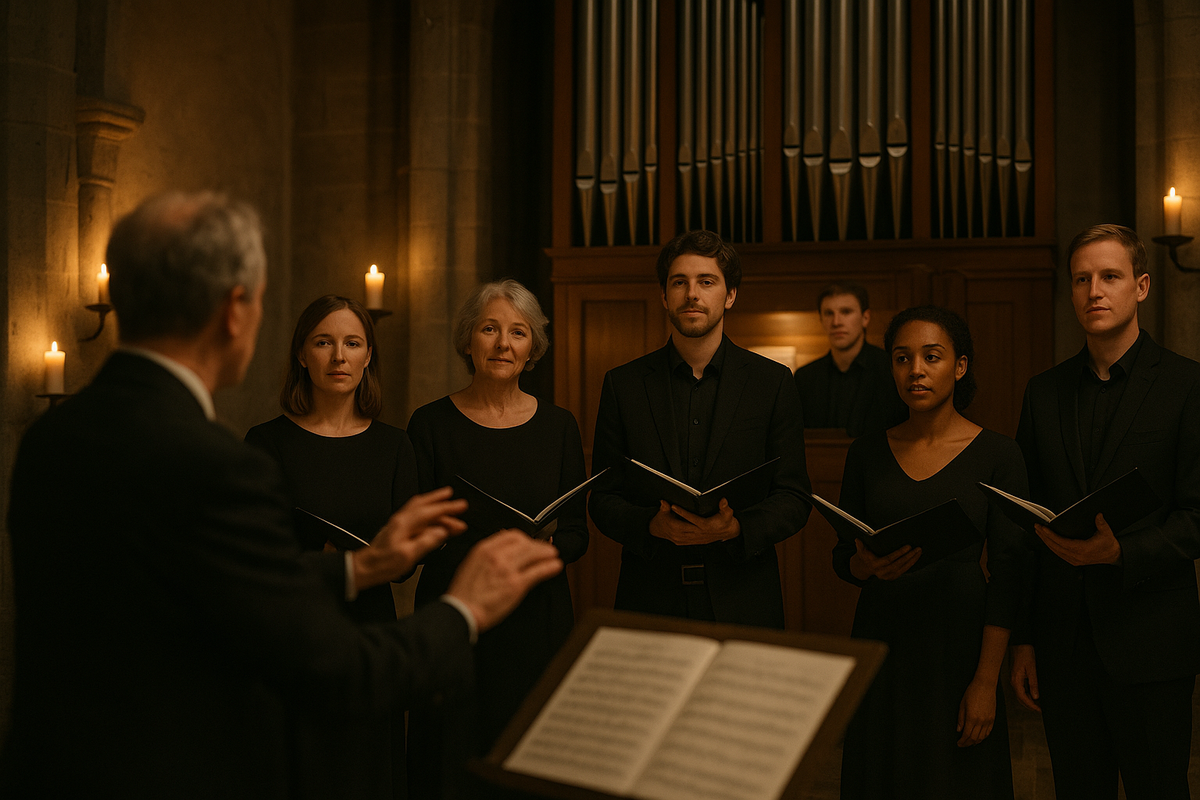
Churches glow with candelabra and window lights. Programmes often announce “candlelit evening services”, sometimes organ mini‑concerts and chamber choirs. The format is gentle: you can step in, sit in silence, let your eyes rest from screens and wind — and then head outside to the nights of light. In small towns you meet half‑darkness, wood scent and wax, in bigger ones — second‑row cafés with steaming cocoa and the hum of grinders.
💡 Sorø Lysfest: how the “night of light” works
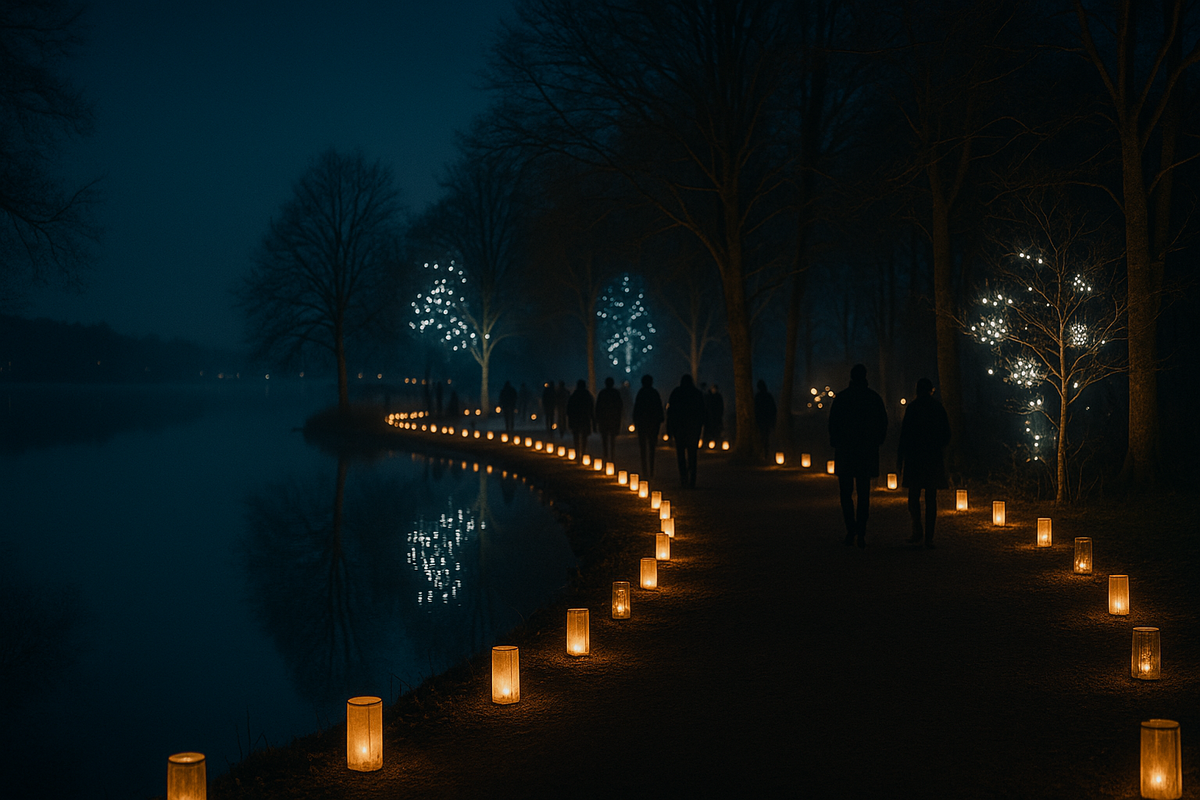
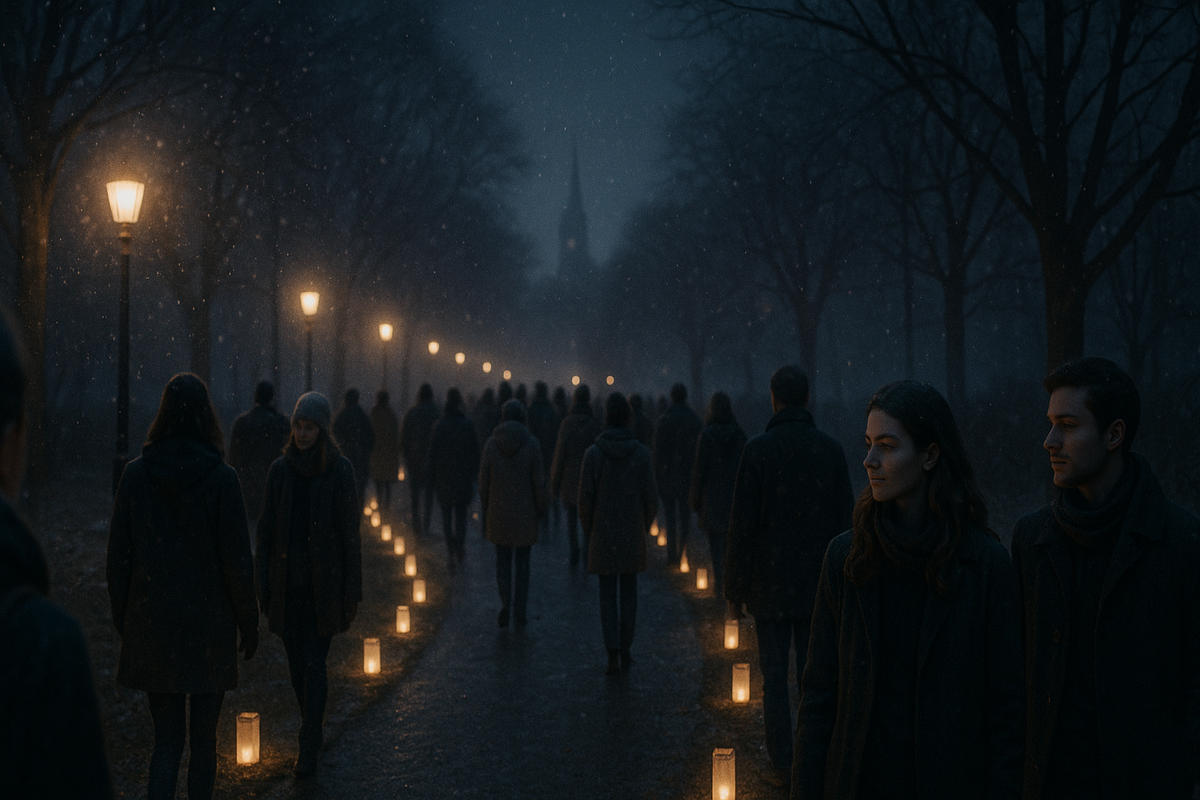
The Zealand town of Sorø holds a night of light every year in late January or early February: installations, lit paths towards the lake, artistic illumination, small performances and wind‑sheltered pockets with music. The spine of the route is the historic centre, Klosterkirke (the abbey church), the academy grounds and paths down to Sorø Lake. The key is not to “cover it all”, but to linger where it looks and sounds right — with the wind at your back.
🗓️ Kyndelmisse Planner
Kyndelmisse: date & evening rhythm
🧭 Sorø Lysfest: two routes — 60 and 90 minutes
When the wind bites, a short loop saves the evening; in calm weather walk down to the lake and linger by the water.
🚶 60 minutes — “chamber loop”
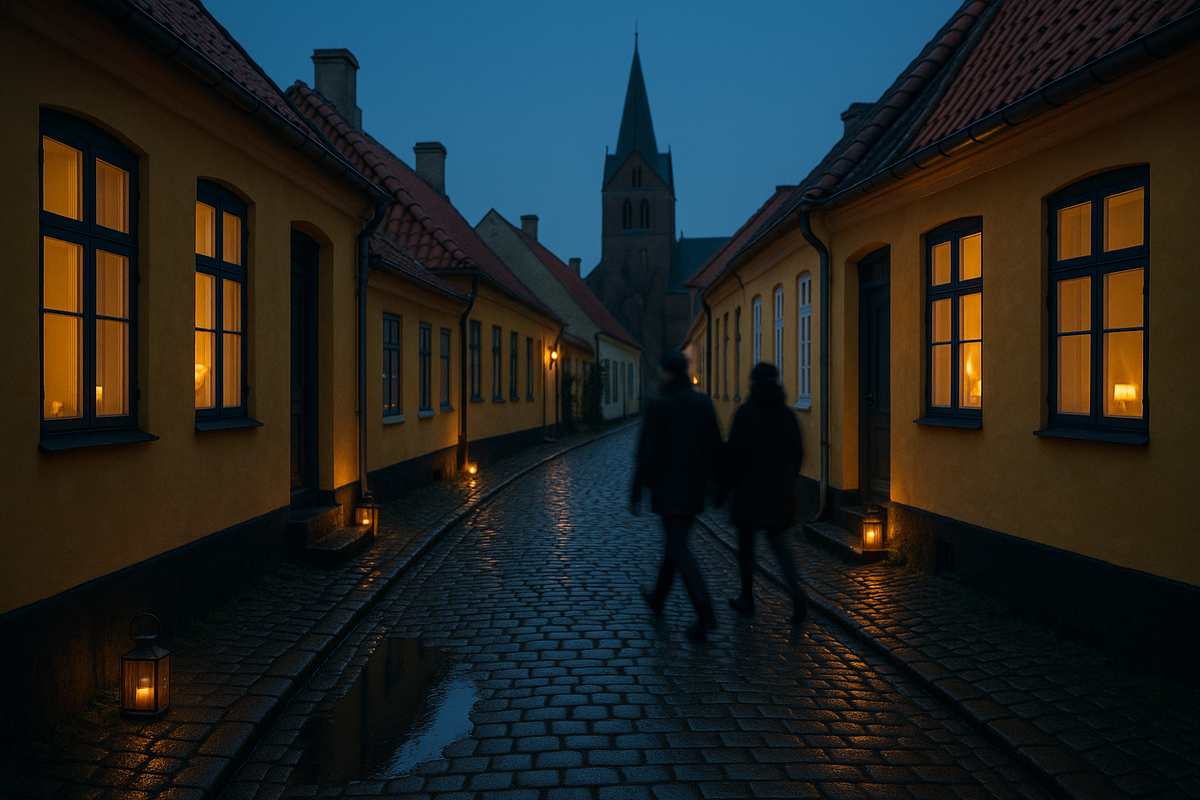
- Station → centre (10–12 min): warm up with a brisk walk, peek into cosy shopfronts.
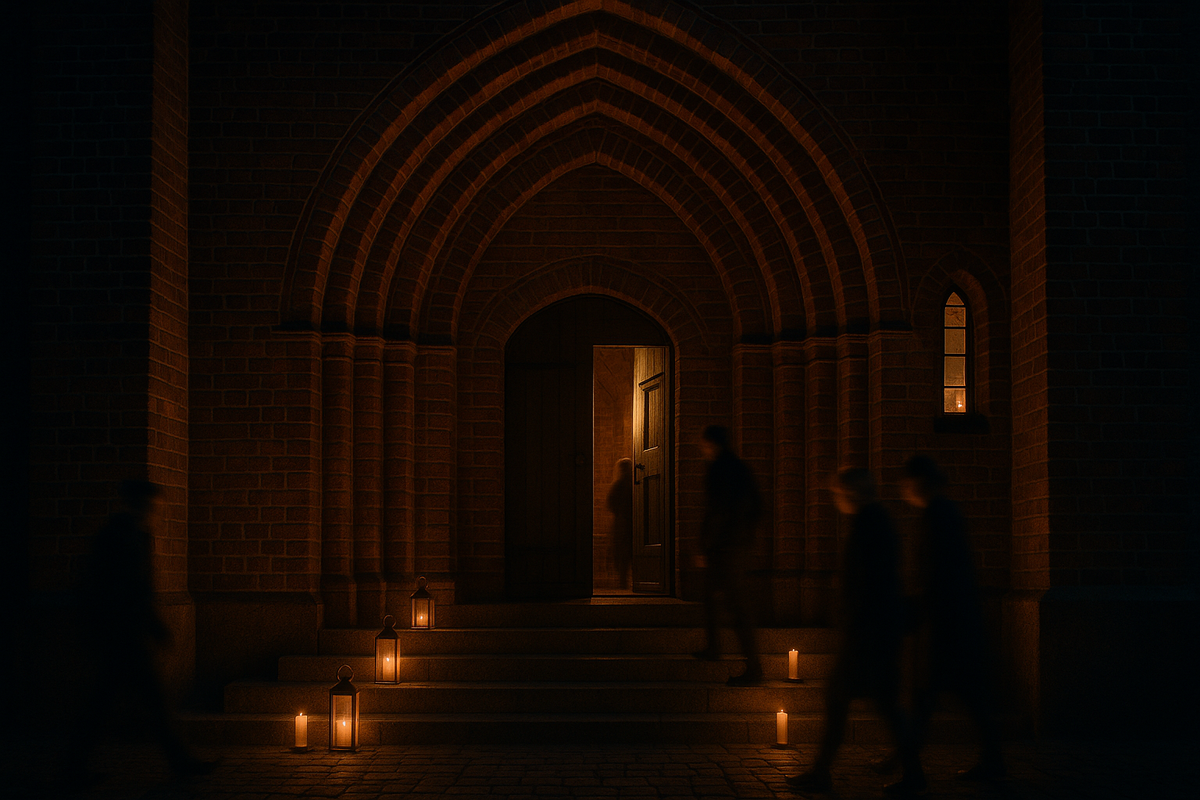
- Klosterkirke (15–20 min): candles, 1–2 choral pieces, a short pause.
- Academy courtyards (10–15 min): installations tucked into wind pockets.
- Return (10–15 min): along quieter second‑row streets — calmer and warmer.
🌊 90 minutes — “with the lake”
- Station → centre → Klosterkirke (25–30 min): no rush; if a concert is on, slip in for 10–15 minutes.
- Down to Sorø Sø (20–25 min): stay on the leeward edge; lights mirror in the water.
- Academy & old lanes (20–25 min): pocket installations, crowd‑free photos.
- Return (15 min): early dinner/hot chocolate.
🗺️ Sorø Lysfest Route
Sorø Lysfest: a route for the weather
⛪ Church etiquette and language: how to be a good guest
- Tone & pace. It’s a quiet evening: silence your phone, shoot without flash, don’t walk the aisles during singing/prayer.
- Seats. Leave aisle seats to seniors and families; if full, stand by a column/wall.
- Dress. Cosy‑modest: you may remove your outer layer in the narthex; take off hats at the entrance.
- Language. Services are mostly in Danish, but the structure is clear; hymn sheets sometimes have English cues.
- Offering. Donation boxes by the door are common (cash/card) — optional.
🚆 Getting there and parking
- By train (Copenhagen → Sorø): about 50–60 minutes, then 10–15 minutes on foot to the centre and Klosterkirke.
- By car: allow ≈ 1 hour on main roads; mixed parking rules in the centre (free/limits/meters) — read signs and budget 10 minutes to find a spot.
- Going back: if it’s windy or damp, leave slightly before the final wave to catch your train or exit without queues.
💸 Budget: travel, food, possible tickets
- Transport: return train per adult, or fuel/parking if driving.
- Hot drink + dessert: at least one hot drink and one sweet per person.
- Dinner: bistro/café in Sorø or back in Copenhagen.
- Events: street lights are usually free; concerts/indoor halls may have small tickets/donations.
🧮 One‑Evening Budget Calculator
Evening budget (estimate)
🧥 Weather & clothing: don’t let the wind “eat” your evening
- Layers: base → warm mid‑layer → windproof shell; neck gaiter/hat.
- Liner gloves: handle phone/camera without freezing fingers.
- Footwear: grippy soles for wet cobbles; hand warmers help a lot.
- Breaks: every 45–60 minutes step indoors for tea and quiet.
✅ Etiquette & Comfort Checklist
Checklist: service, lights, comfort
🧭 “24 hours”: Copenhagen morning → Sorø evening → overnight
- Morning: coffee and a short stroll in central Copenhagen; check which churches hold candlelit services in the evening.
- Day: train/drive to Sorø; drop bags or check in; light lunch.
- Evening: candlelit service → light loop around the historic centre and the lake → dinner.
- Night: stay in Sorø (quiet, unhurried) or return to the capital before the late rush.
🧩 Wrap‑up
Kyndelmisse is Denmark’s gentlest winter evening: quiet, candles, lights and walks without hurry. It’s not a festival of checkmarks; it’s a pause in breathing. For chamber beauty, pick Sorø Lysfest; for meaning, step into a candlelit service. In any scenario, leave room for warmth and breaks — in Denmark that turns February into time for yourself.
❓FAQ
Yes. Kyndelmisse evenings are welcoming: slip in quietly and take a free seat by the aisle. The order of hymns and prayers gives a clear structure even without the language. Do keep the basics: no flash, no aisle‑walking during singing, phone on silent. If unsure, stay 10–15 minutes — enough to feel the atmosphere.
Look for indoor courtyards around the academy and second‑row cafés — less wind and fewer crowds. Build your loop so every 45–60 minutes you land near warmth: hall, library, culture house or café. For kids and seniors choose the 60‑minute loop: fewer open stretches, more shelter.
Not if you befriend the route. On windy nights, stick to the leeward side of streets and walls; save the lakeside for another time. Think in short blocks: 15–20 minutes outside → 10–15 minutes indoors. Liner gloves let you shoot without bare fingers; grippy footwear removes stress on wet cobbles.
It’s the best‑known chamber evening, but not the only one: towns across Zealand and Southern Denmark run their own “lys‑aftener” the same week. Smaller in scale, often warmer in feel thanks to locality. For groups, Sorø is easiest: rail station, compact centre, clear light “loop” and a lake close by.
Go multi‑layered: thermal, warm mid‑layer, windproof shell. In church, remove the shell in the narthex and put it back on after. Hats off at the door; a neck gaiter is neutral and practical. Keep colours calm. Footwear with good tread is key: wet cobbles can be treacherous.
Yes. The ideal “24‑hour” formula: morning in Copenhagen (coffee, a museum), afternoon transfer to Sorø, evening service + lights, dinner on site, overnight — either in Sorø (quiet) or back in the capital if needed. The secret is not scattering: one town per evening.
Street installations are usually free. If concerts/indoor halls are scheduled, expect small tickets/donations. Arrive slightly before dusk: grab something hot, pick sheltered spots by walls/columns, check where the wind blows tonight, and choose 60 or 90 minutes accordingly.
Yes, with a shorter pace and alternation of outdoor and indoor. Kids focus on an installation for 5–7 minutes, then need a change of scene and warmth. Seniors should sit on the periphery, away from draughts; choose wall pockets and breaks every 20–30 minutes.
Usually yes, but without flash and without walking the aisles. Best options: a few shots before or after the main part, or from the side during music. When in doubt, follow the locals: Kyndelmisse is an evening of respect for space and quiet.

0 comments
Log in to leave a comment