


🎭 Fastelavn without confusion: barrels, horses and buns
✨ “Let spring out of the barrel”
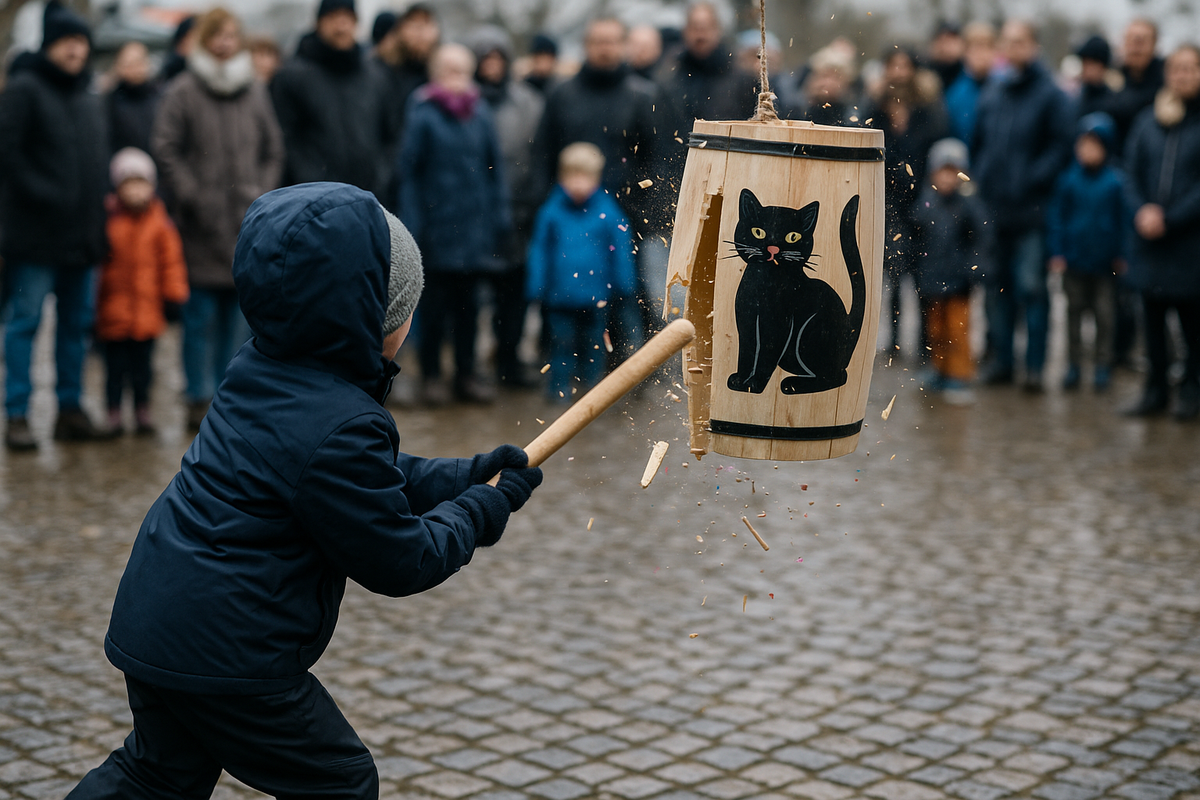
A dim February afternoon. Children in homemade capes and paper crowns gather in a ring, adults tuck their scarves tight against the wind, and in the middle hangs a wooden barrel with a painted black cat. The first strike is shy, the second rings louder, confetti bursts into the air — winter seems to crack a little. This is Fastelavn, Denmark’s pre‑Lenten carnival, where the stars are a barrel, costumes, laughter and cream‑filled buns rather than pancakes.
🕯 Origins: from medieval carnival to today’s family holiday
Fastelavn grew out of Europe’s pre‑Lenten carnival. In Lutheran Denmark it lost the heavy religious frame but kept what gets you through the darkest weeks: games, costumes and sweets.
The old rite slå katten af tønden (“knock the cat out of the barrel”) once symbolically expelled evil; centuries ago a real cat could be placed inside, later replaced by a painted cat and candy. The drama remained: the person who knocks out the bottom becomes kattedronning (“queen of the barrel”), and the one who breaks the last stave is kattekonge (“king of the barrel”).
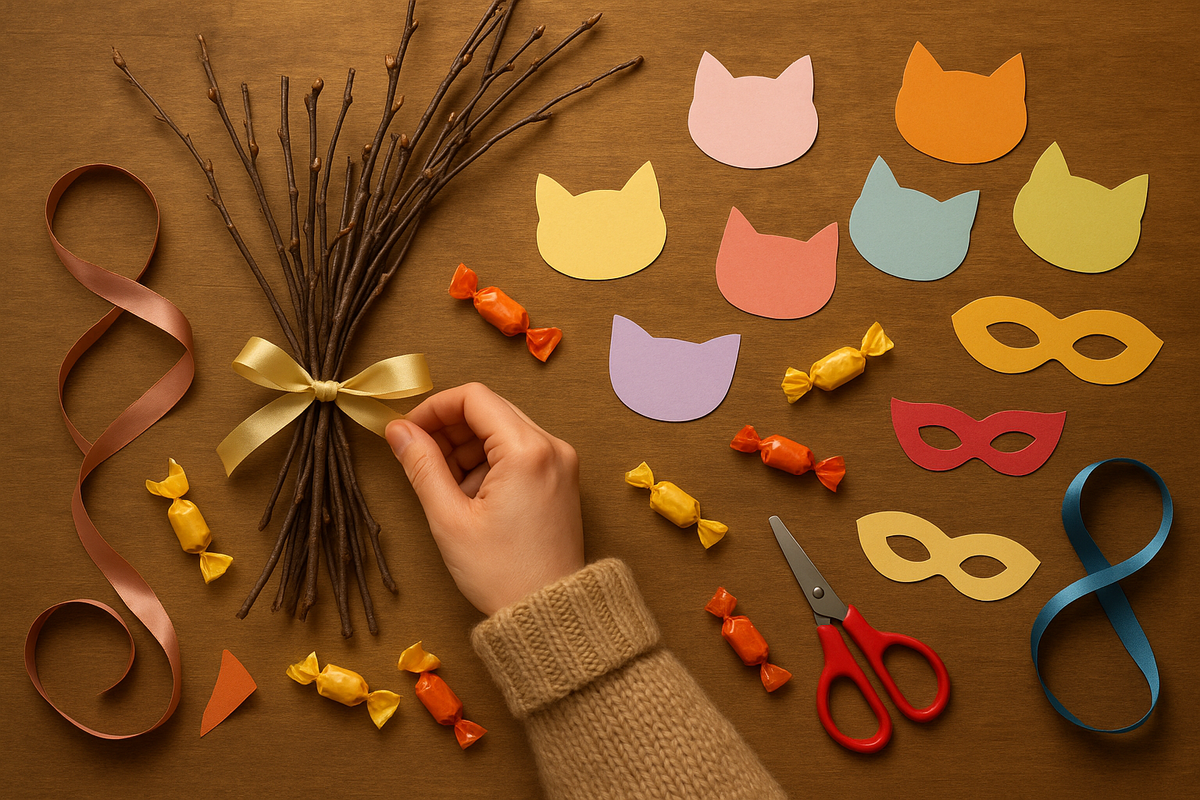
There’s also the fastelavnsris — a small bundle of birch twigs decorated with ribbons, masks and sweets, traditionally used to “wake” the household into spring.
🔔 How the tøndeslagning rite works: order and roles
- Costume parade. A quick show before the barrel — pirates, princesses, superheroes and foxes.
- Strikes in turn. Each participant gets 1–2 strikes, then passes the bat.
- Titles. Who knocks out the bottom becomes kattedronning; who drops the last plank becomes kattekonge. Paper crowns appear; sometimes capes too.
- Candy shower. As the barrel falls apart, organizers hand out sweets; kids gather them with proper ceremony.
- Cocoa and photos. Ten minutes later the square empties — everyone heads indoors to warm up. It’s a compact rite: arrive early and choose a safe spot.
🗓 When Fastelavn happens — planning the date
Fastelavn is the Sunday seven weeks before Easter. That means mid‑February to early March in most years. In cities and suburbs, family events typically run 11:30–15:00.
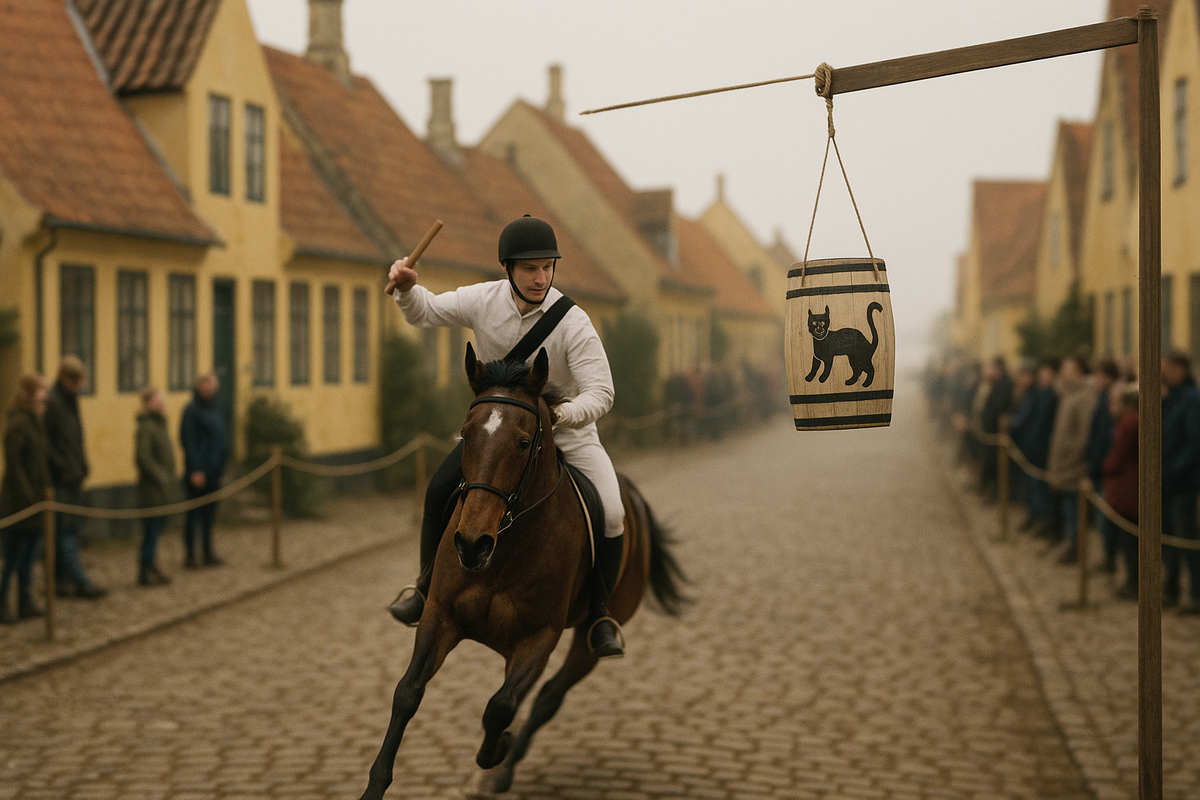
Several places in Zealand and southern Denmark keep a mounted tradition: tøndeslagning til hest happens on the Monday after Fastelavn — spectacular and atmospheric.
📟 Fastelavn Date Calculator
Fastelavn Calendar
🍩 What people eat and drink: fastelavnsboller, cocoa and “cold‑day desserts”
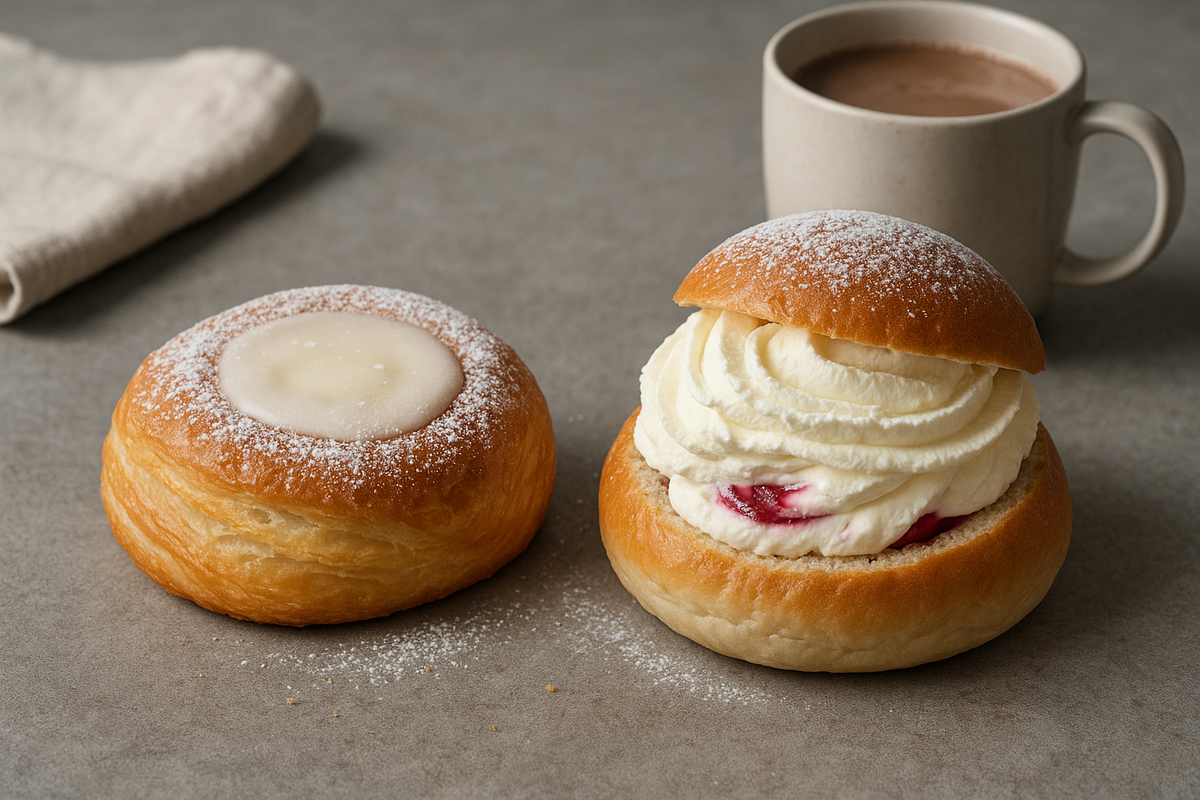
The taste of the season is fastelavnsboller. Two schools:
- Wienerbrød‑style (puff pastry): a crisp shell with pastry cream, sometimes jam or ganache, topped with icing.
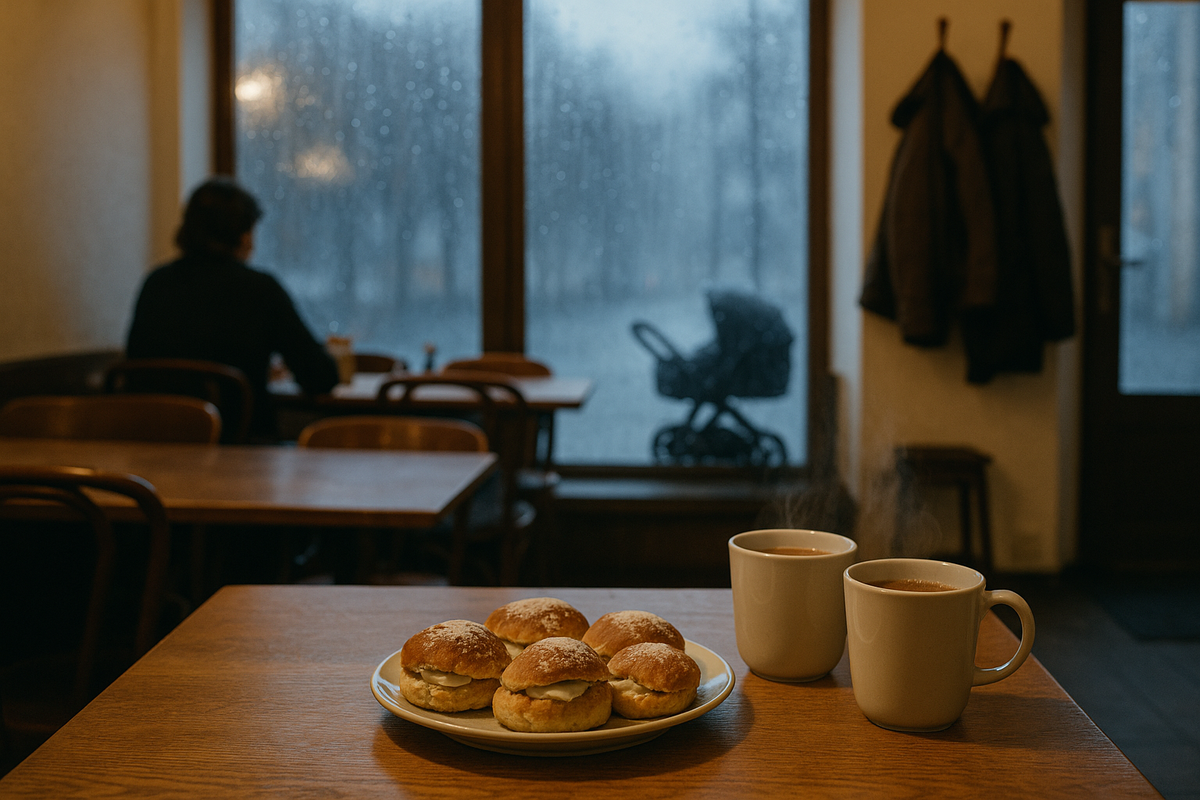
- Bolle‑style (yeasted): a soft bun split in half, filled with whipped cream and flavours (vanilla, raspberry, pistachio; sometimes salted caramel).
Seasonal add‑ons include almonds, marzipan and orange zest. Pair with hot chocolate, cocoa or latte; adults sometimes celebrate with a winter gløgg or a beer once the square empties.
When to buy: best in the morning — the cream sits prettier, queues are shorter.
Dietary notes: many bakeries offer lactose‑free/vegan options by late January — ask ahead.
💸 Fastelavnsboller Price & Flavour Guide
Fastelavnsboller: prices & flavours
🌿 Fastelavnsris: birch, paper and a “pocket of spring”
A fastelavnsris is a handful of birch twigs tied with ribbons, tiny masks, paper cats and candies — a playful way to “wake” the home. Cultural centres and libraries often host craft hours: you make a set, kids sign cards, everyone warms up and rests from the wind.
🧭 Where it’s celebrated: a winter map (far beyond Copenhagen)
Denmark is compact, but every region gives Fastelavn a slightly different colour.
- Copenhagen & Frederiksberg. Neighbourhood squares, school yards, museums: family‑friendly barrels and parades. Best to stay 5–10 minutes from the metro — after the rite you can go straight into warmth.
- Amager: Dragør & Store Magleby. The famous tøndeslagning til hest: riders strike the hanging barrel, streets wear flags, the sea is close — a “northern postcard”.
- North Zealand (Helsingør). Old town lanes and Kronborg Castle as theatrical backdrop; for families, pick squares with wind‑shelter.
- Roskilde & small Zealand towns. Squares by cathedrals/town halls, cafés on second‑line streets; frequent fastelavnsris workshops.
- Aarhus (Jutland). Quarters near museums and the water, great logistics: one area — one day (barrel → buns → museum).
- Odense & Funen. Historic lanes and parks; occasionally winter programmes by Egeskov Castle (by season).
- Aalborg/North Jutland. Parks and squares, sea wind: favour leeward pockets and nearby cafés.
- Ribe (South‑West). A tiny medieval core and cosy squares — ambience without crowds.
- Skagen. “Sea & light”: parades depend on weather; balance the wind with frequent warm breaks.
- Bornholm. Small bright gatherings in Rønne, Gudhjem, Svaneke: close‑knit, local, family‑friendly.
🗺️ Where to watch Fastelavn
Locations & formats
👨👩👧👦 One‑day and weekend scenarios (built around weather)
One day (family, capital).
Morning — bakery (buns + hot chocolate).
Midday — the nearest barrel show (arrive 10–15 min early).
After — warm break (soup/cocoa).
Evening — pool/sauna or cinema to “wind down”.
Weekend (with “Mounted Monday”).
Saturday — explore neighbourhoods & patisseries.
Sunday — city Fastelavn (costumes, barrels).
Monday — Dragør/Store Magleby riders and the hanging barrel; return before dark, dinner near the hotel.
💼 Budget & logistics (quick guide)
- Transport: day/48‑hour passes beat singles; plan 2–4 rides/day in winter.
- Food: for two — morning 120–160 DKK (drinks + buns); bistro lunch/dinner 120–250 DKK pp.
- Events: most free; indoor venues may charge small fees.
- Stay: ideally 5–10 minutes to the metro or walking distance to the square.
✅ Fastelavn Checklist
Checklist (weather, food, logistics)
🧥 Safety & comfort
- Don’t stand right under the barrel — keep a 1–2 m buffer for view and safety.
- Leeward side means less dust/confetti and easier breathing.
- Kids & noise: earplugs/earmuffs; warm breaks every 45–60 min.
- Helper phrases: God fastelavn! — “Happy Fastelavn!”; Må jeg tage et billede? — “May I take a photo?”
📌 Wrap‑up
Fastelavn is where adults warm up with laughter and kids with importance. It’s a family ceremony of winning over winter. Pick a neighbourhood show in town for convenience, or ride out to Amager for legend and horses — and always leave time for buns and warm pauses.
❓FAQ
Yes — spectators wear normal warm clothes.
Often moved indoors/tents; mounted events depend on strong winds.
Typically 30–60 min; longer with horses.
Sweets, yes; titles follow rules (bottom/last plank).
Indoors (halls/cafés) have corners; outdoors, stand one row back.
0 comments
Log in to leave a comment