


🇩🇰 The Birth of Denmark: the Viking Age, the Jelling Stones, and the road to a kingdom
🪨 Introduction: why Denmark’s history is best read through places
The history of Denmark does not begin with a palace or a square. It begins with a shoreline, with wind, with straits where the sea narrows so much that it feels as if a hand could hold the route in place. It begins with a market where silver lies in the palm of a hand and every fragment is tested on scales. And it begins with a stone that has stood on Danish soil for a thousand years and still says the same thing: there is power here, there is a name here, there is memory here.
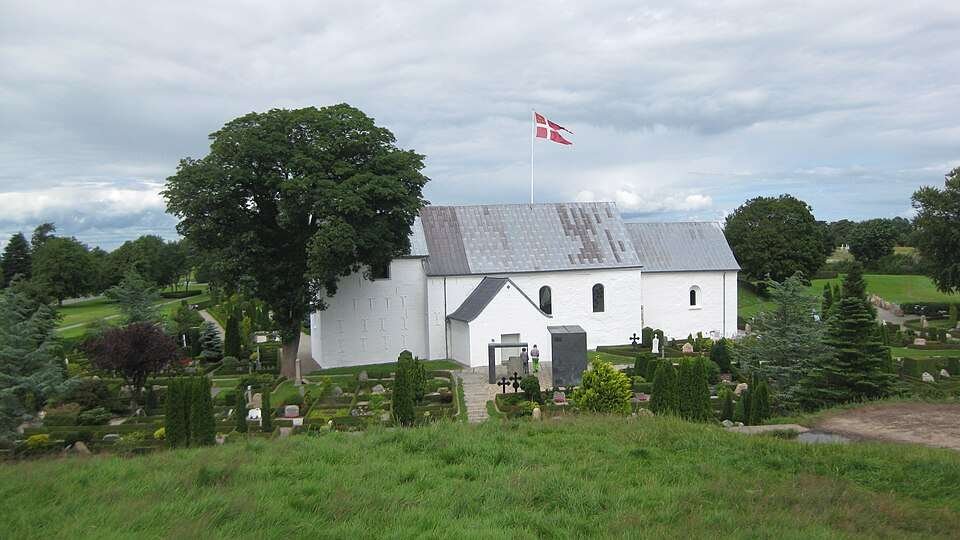
When people hear the phrase “the Viking Age”, they usually imagine raids, axes and longships. But Denmark has a different, rarer story. Here, the Viking world did not only sail and fight. It gradually learned how to become a state. That process can still be seen in specific places: Jelling, Ribe, the Danevirke, Hedeby, and in the strict geometry of the Viking ring fortresses, often associated with the Trelleborg fortresses.
This is a historical travel article rather than a dry chronology. It is a connected story told through dates, names, places and turning points: how trade became power, how a border became a political idea, how a rune stone became a public declaration, and how Denmark in the 9th and 10th centuries grew from a network of coasts and strongholds into an early kingdom.
🛡️ The Viking Age in Denmark: when the sea became a road and power became a project
The Viking Age is usually dated from the late 8th century to the 11th century. For Scandinavia, this was not a legendary blur but a period of profound change: seafaring expanded, trade linked distant shores, and political life became more complex. In Denmark, this period matters especially because it reveals the early traits of a kingdom: control of strategic nodes, building on a large scale, symbols of power, and a new religious and political language.
To feel the pace of the age, it helps to begin with a few events that set the tone for all of northern Europe.

⚔️ 793: the blow that woke Europe
In 793, the attack on the monastery of Lindisfarne in England is often treated as the symbolic beginning of the Viking Age. The event is usually associated with Norse raiders rather than specifically Danish ones, yet it matters deeply for the Danish story as well. From this point onward, Europe understood the northern seaborne world as a serious political and military force.
👑 804–811: King Gudfred, Charlemagne and the making of a northern frontier
In Danish history, the early 9th century already sounds unmistakably political. The southern edge of what would become Denmark was not a quiet periphery but a frontier of great European rivalry. King Gudfred (Godfred), who ruled roughly from 804 to 810, appears in Frankish sources as a ruler who thought in terms of trade and borders, not just raids.
In 808, he is associated with a move that feels strikingly modern in political logic: not merely seizing wealth, but redirecting it. The episode is linked to the destruction of the Slavic trading centre of Reric and the transfer of merchants into a zone that was easier to control, near Hedeby. This was no simple act of plunder. It was the politics of nodes: whoever controls the node controls the flow.
Then, in 811, a peace agreement with the Franks fixed the River Eider as an important line of division between spheres of influence. Moments like this show that the Viking world did not live only by raiding. It was also learning to live by treaties, and a frontier was becoming something that could be held across time.
🪙 845: Paris and the price of silver
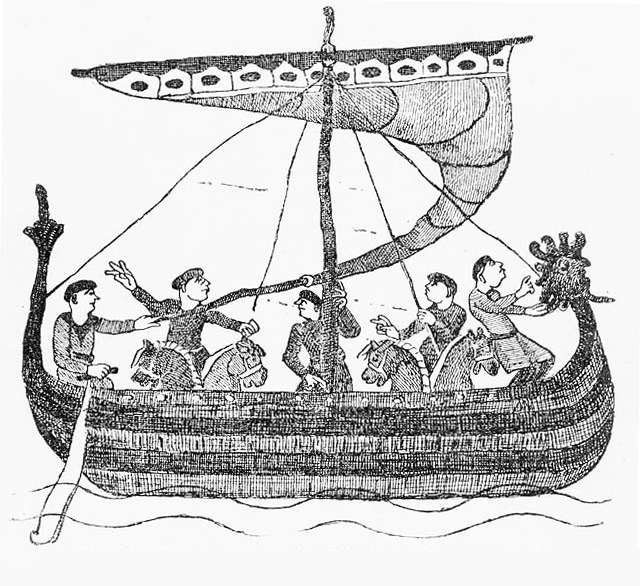
In 845, Viking forces sailed up the Seine and reached Paris. Frankish chroniclers associate the expedition with a leader called Reginherus. The outcome was one of the most revealing diplomatic endings of the Viking Age: the city was spared not only by arms, but by silver.
That silver mattered far beyond France. It returned north and became influence, ships, followings and royal opportunity. Violence learned to take the form of economy, and economy, in turn, began to build political power.
🗺️ 865–878: the Great Heathen Army and the making of the Danelaw
From 865 onward, England faced what later became known as the Great Heathen Army, a large Viking force in which Danish Vikings played a major role. In the years that followed, power shifted dramatically: York was taken, Anglo-Saxon kingdoms were pressured, and a large zone of Scandinavian law and influence emerged — the Danelaw.
For the story of Denmark, this matters not only as an overseas adventure. It shows scale. Danish leaders were learning to think in terms of space, routes and political maps. Even before a kingdom with modern borders existed, a kingdom-sized imagination was already taking shape.
All of this was the distant thunder of the age. Inside Denmark itself, another process was unfolding more quietly but no less decisively: the birth of order.
🧭 Denmark’s geography: straits that turn the sea into leverage
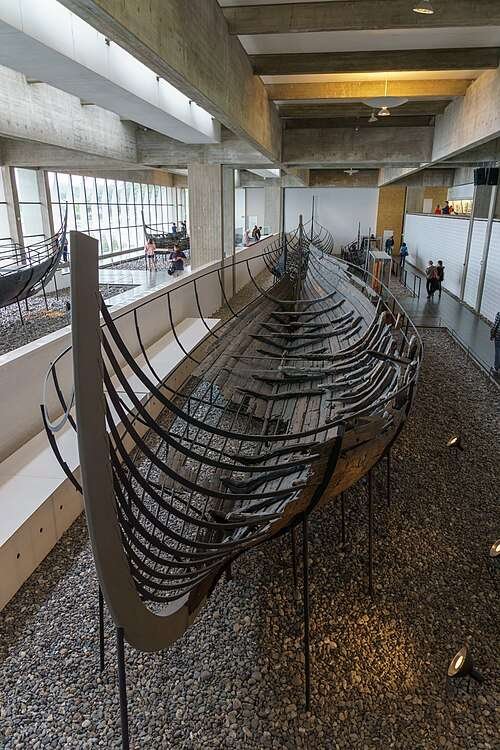
Denmark cannot be understood without water. Here, the coast is not a boundary but a connection. In the Viking Age, the sea was the main road: ships moved cargo faster than wagons, and news travelled by water more quickly than overland messengers could move through forests and marshes.
Denmark stands between the Baltic Sea and the North Sea. That position creates a simple but powerful political logic:
- narrow passages create control,
- control creates power,
- power held over time becomes statehood.
In this sense, the birth of Denmark is the story of power learning to hold straits, harbours, markets and routes.
🪵 Around 980: a bridge that reveals a kingdom
Strong power often reveals itself through building. Around 980, a huge wooden bridge was constructed across marshland at Ravning Enge in Jutland. A project of that scale requires planning, resources and labour management far beyond what a local chief would normally command.
This was not just a bridge. It was a signature. Power in Denmark was beginning to connect the country not only by command, but by infrastructure.
🌊 Around 1070: when the sea was blocked by ships
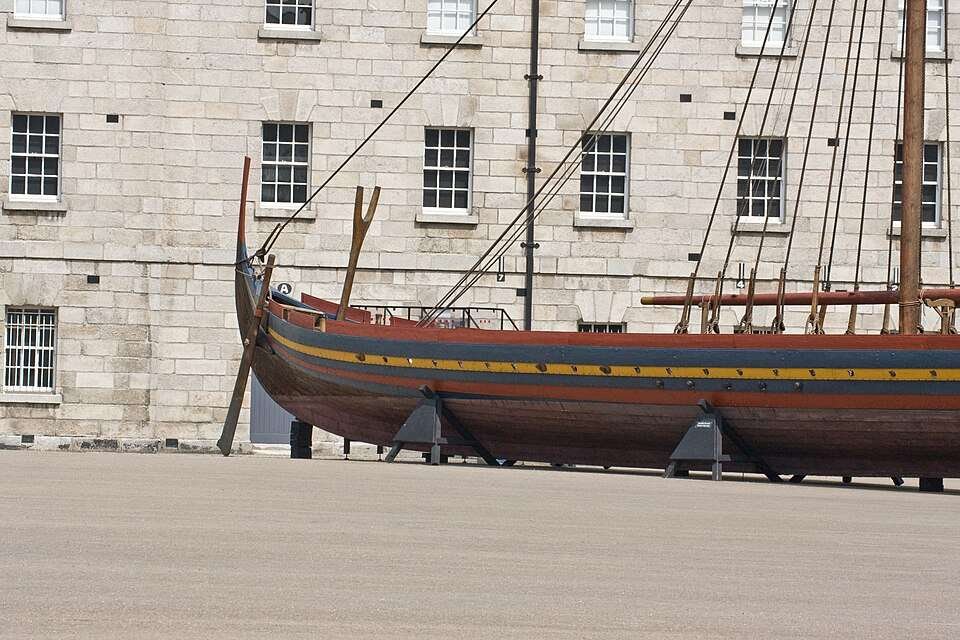
At the very end of the Viking Age, and on the threshold of medieval Denmark, ships were deliberately sunk in Roskilde Fjord to block the entrance and protect the inner waters. The story is powerful because it expresses the maritime logic of Danish history in one image: the sea links the country, but the sea must also be defended. Sometimes that defence took the most Viking form imaginable — ship against ship, even when the ship no longer sailed.
⚖️ People, law and runes: why Viking Denmark was also a culture of order
Viking Age Denmark was a layered society. There were free landowners, influential families, war bands and followers, and there were unfree people — dependants and slaves — who were also part of the economy. But the most important thing is not the hierarchy itself. It is the fact that this society already knew that order could be maintained by more than brute force.
Assemblies of free men created a habit of rules: disputes could be settled by compensation, fines, negotiation and collective judgement. When royal power later grew stronger, it did not emerge out of a vacuum. It built on this culture of norms and gradually transformed the local into something more general and kingdom-wide.
⛵ Around 925: the Ladby ship burial and the world before Christian memory
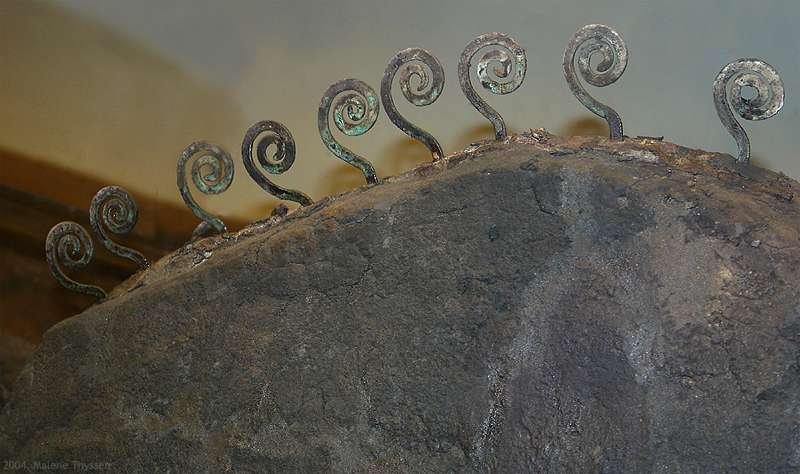
To understand the “old order,” one place is enough: the ship burial at Ladby on the island of Funen, usually dated to the early 10th century, around 925. A powerful man was buried in a ship, as if even death should continue his maritime biography.
Such burials mattered not only because of wealth, but because of meaning. Power belonged to those who could gather men, ships, weapons and memory around themselves. That is why the later Christianization of Denmark would be so dramatic. It changed not only belief, but also the language of memory.
🔤 Runes and the Younger Futhark
Runes and the Younger Futhark were not merely mystical signs. In Denmark, a runic inscription on stone could become a public instrument of memory. Once power was carved in stone, it was no longer just rumour. It became something durable, visible and political.
And that is the path that leads directly to Jelling.
🪙 Silver, trade and Danegeld: how economy turns into power
The Viking Age is often told through wars, but silver is just as important as swords. Trade lived through wool and cloth, iron, timber, tar and pitch, fish and salt, leather, furs, jewellery and craft goods. All of this moved by water. And wherever goods moved, nodes emerged: markets, harbours, exchange points. Nodes required order.
🧭 Dirhams from the East: Denmark inside a wider network
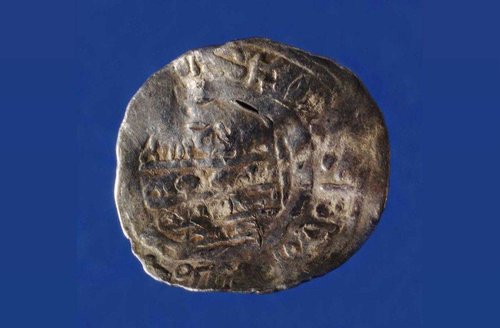
Danish Viking Age hoards contain not only western European coins but also Arabic silver dirhams from the 9th and 10th centuries. To a modern reader, that can sound astonishing: silver minted far to the east ended up in Danish soil. But for the Viking world it made sense. Northern Europe lived through networks. Silver became ships, ships became political speed, and political speed became the ability to build and hold power.
🪙 991: Danegeld and the diplomacy of silver
By the late 10th century, England began paying large sums to Viking forces — Danegeld, literally “Danish tax” or tribute. In 991, after the Battle of Maldon, one of the first major payments is usually recorded. The exact amount matters less than the logic. Europe recognised Scandinavian seaborne power as a political reality.
Every payment sent silver north, and every flow of silver strengthened ships, followings and royal ambitions. Thus a powerful cycle emerged: silver → force → influence → more silver. In Denmark, that cycle gradually became part of the royal mechanism.
🏙️ Ribe: where the Viking Age becomes urban life
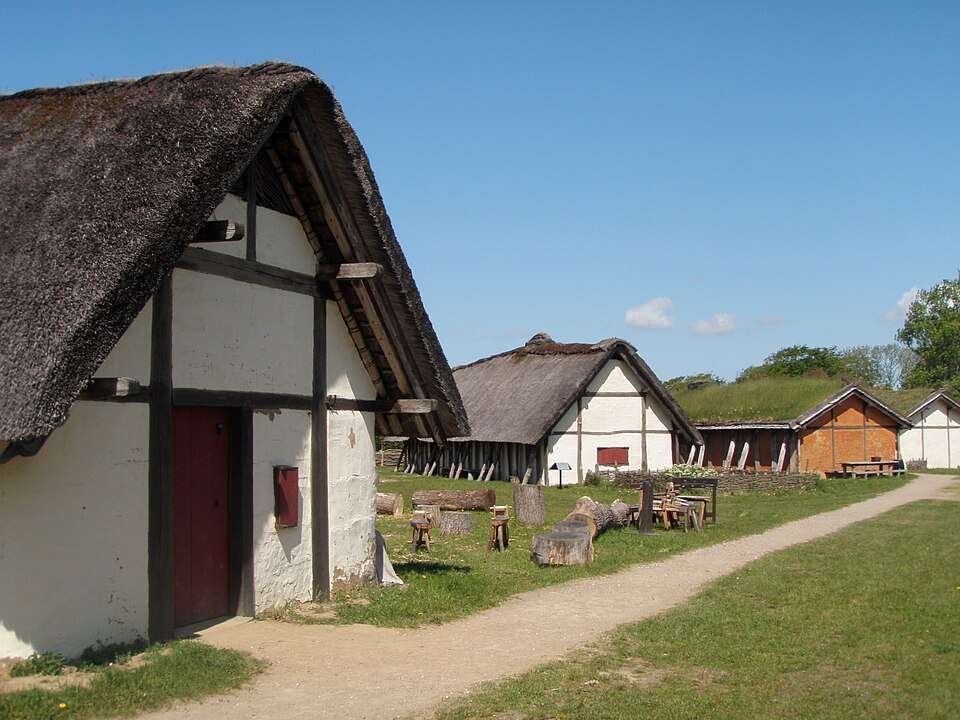
Ribe is one of the key places for anyone trying to understand early Denmark. It is often described as Denmark’s oldest town, but more important than the title is the meaning: Ribe was an early, stable centre of trade and craft. A town changes the rhythm of life. It lives by flow — incoming goods, outgoing goods, bargaining, news, reputation and dispute.
That is exactly the kind of environment in which states begin to matter. Markets require measure, law, protection and trust.
✝️ 826: Ansgar and the first Christian thread
The early Christian story in Scandinavia is closely tied to Ansgar, later called the “Apostle of the North.” Around 826, his mission became connected to Denmark through the figure of Harald Klak, a Danish claimant who was baptised at the Frankish court and briefly returned north with missionaries.
This did not mean that Denmark suddenly became Christian. But it did mean that Christianity entered Danish history through diplomacy, alliance and struggles for power. Urban centres like Ribe were natural ground for such change. New ideas spread more quickly in trading communities than in isolated rural worlds.
Ribe helps make that transition imaginable: here, Christianity may first be imagined not as a royal decree, but as a new voice heard among merchants, travellers and local elites.
🧱 The Danevirke and Hedeby: where Denmark learned to be a frontier
The south is the nerve of Danish history. Here Denmark faced the Continent. Here wealth, danger and strategy met.
🧱 Around 737: the Danevirke begins earlier than many imagine
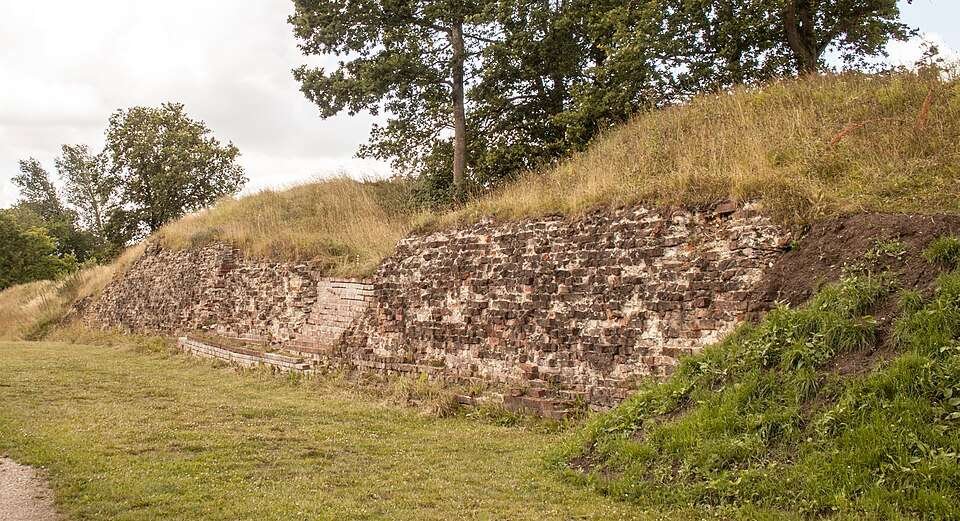
One of the striking things about the Danevirke is that it was not the project of a single king. Archaeology places early phases of the fortification around 737. That means the idea of controlling the southern isthmus appeared very early, well before the royal declarations of Jelling. The Danevirke represents a habit of thinking territorially.
⚓ 808: Gudfred and the politics of nodes at Hedeby
The episode associated with 808 and King Gudfred reveals a deeply Viking form of political logic: direct trade into zones that can be controlled. The story of merchants being shifted toward Hedeby is more than an anecdote. It shows power acting through trade routes, not only through war.
⚔️ 934 and 974: the south as a testing ground
The southern threshold was repeatedly tested by outside powers. In 934, the German king Henry the Fowler campaigned northward, reminding the region that borders demanded constant work. In 974, pressure intensified under Otto II, and the Danish south faced military and political strain around the Danevirke.
✝️ 948: bishoprics as a political sign
In 948, early bishoprics are usually associated with Ribe, Aarhus and Schleswig. This was important not only for the Christianization of Denmark, but because it connected Denmark more clearly to the institutional structures of Christian Europe. In the Middle Ages, the Church was not only a religious body. It was also a framework of communication, legitimacy and administration.
⚓ Hedeby: where trade demands rule
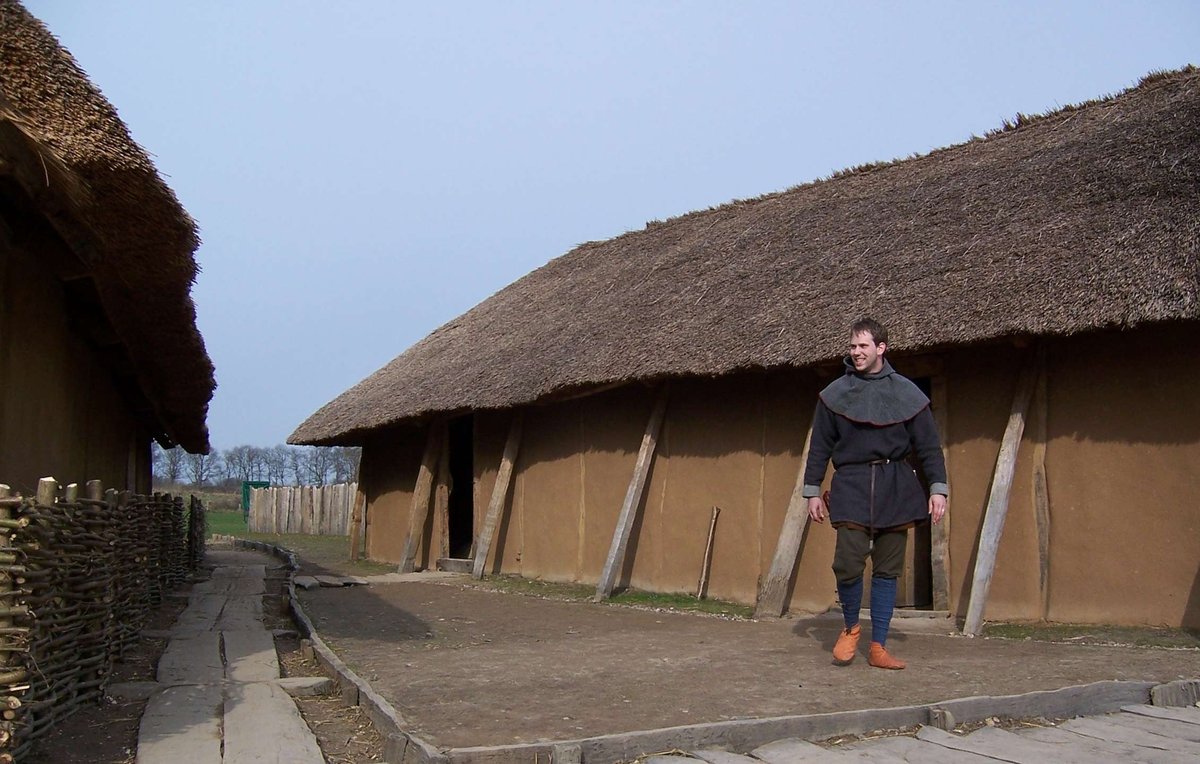
Hedeby was one of the great trading centres of the Viking Age in the southern region. It shows the classic formula of early statehood:
- wealth attracts people and goods,
- wealth attracts danger,
- danger requires power, rules and protection.
In that sense, Hedeby is one of the clearest places where trade itself appears to call a state into being.
🪨 Jelling and the Jelling Stones: when Denmark first spoke its name
There are monuments that illustrate history, and there are monuments that speak. The Jelling Stones belong to the second category. They are not just archaeology. They are a public declaration of power from the 10th century.
🏺 The royal stage at Jelling: mounds, church and runic stones
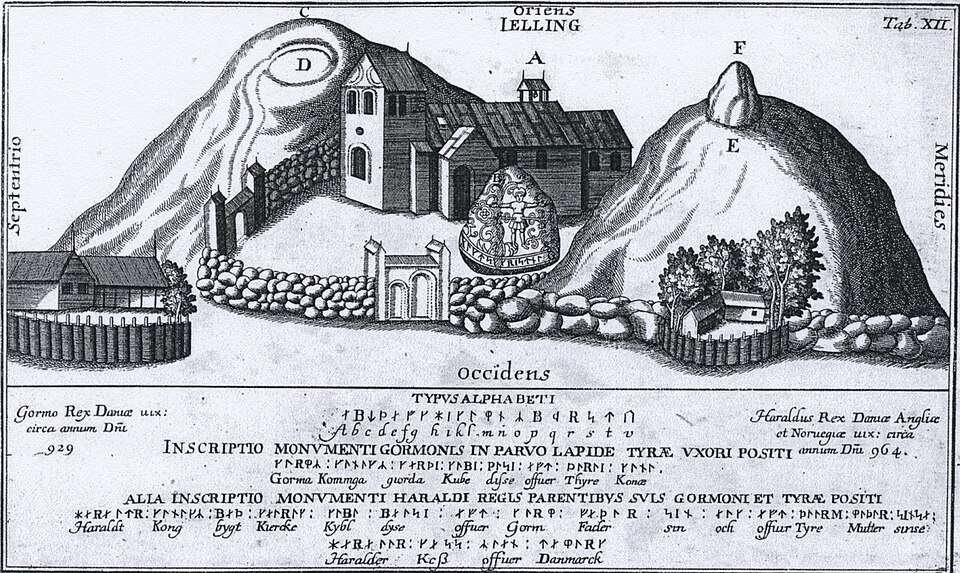
Jelling is not one object but a royal complex. It includes two huge burial mounds, two runic stones, a church and the traces of a monumental enclosure. Archaeological reconstructions also suggest a vast ship-shaped setting in the landscape — a visual statement of sea power and royal prestige.
Even now, standing between the mounds, it is easy to feel that this was not simply a place where people lived. It was a place where history was announced.
👑 The smaller stone: Gorm the Old and Queen Thyra — memory as dynastic politics
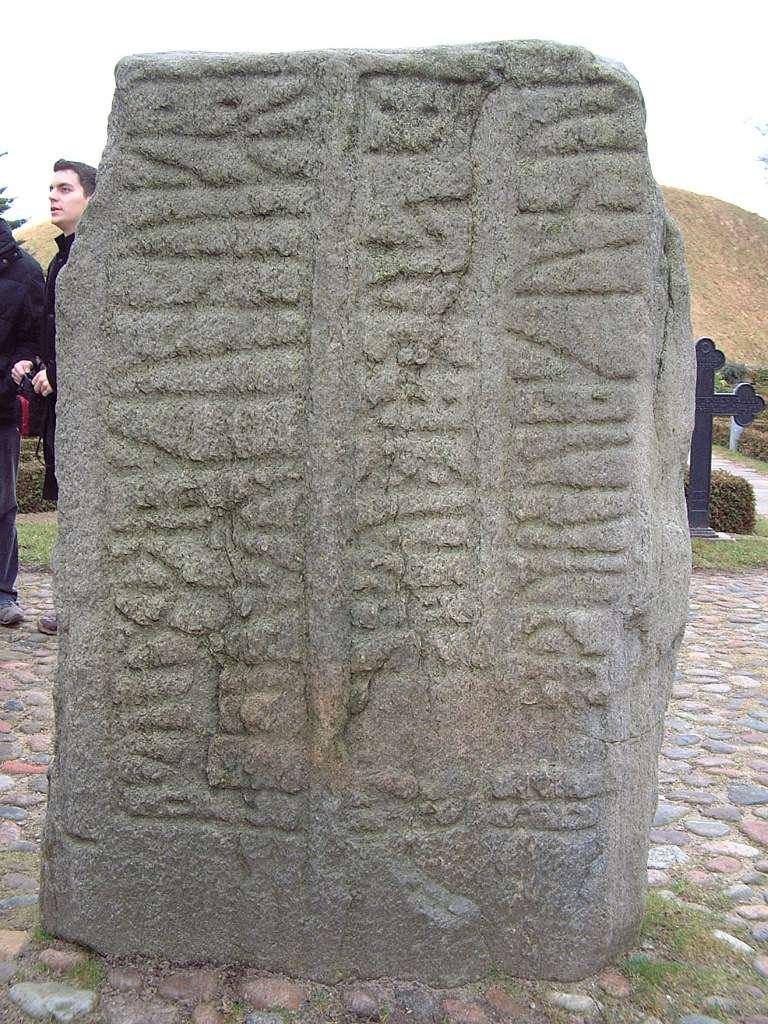
The smaller stone is linked to Gorm the Old. It was raised in honour of Queen Thyra. In the 10th century, that was never just a family gesture. It was dynastic politics. Royal power made memory public in order to make succession and legitimacy visible.
One detail matters especially for both history and search relevance: this stone contains one of the earliest written attestations of the name “Danmark”. Denmark here is not only a stretch of land. It is a name that can be spoken and carved.
✨ Around 965: the great stone as Harald Bluetooth’s declaration
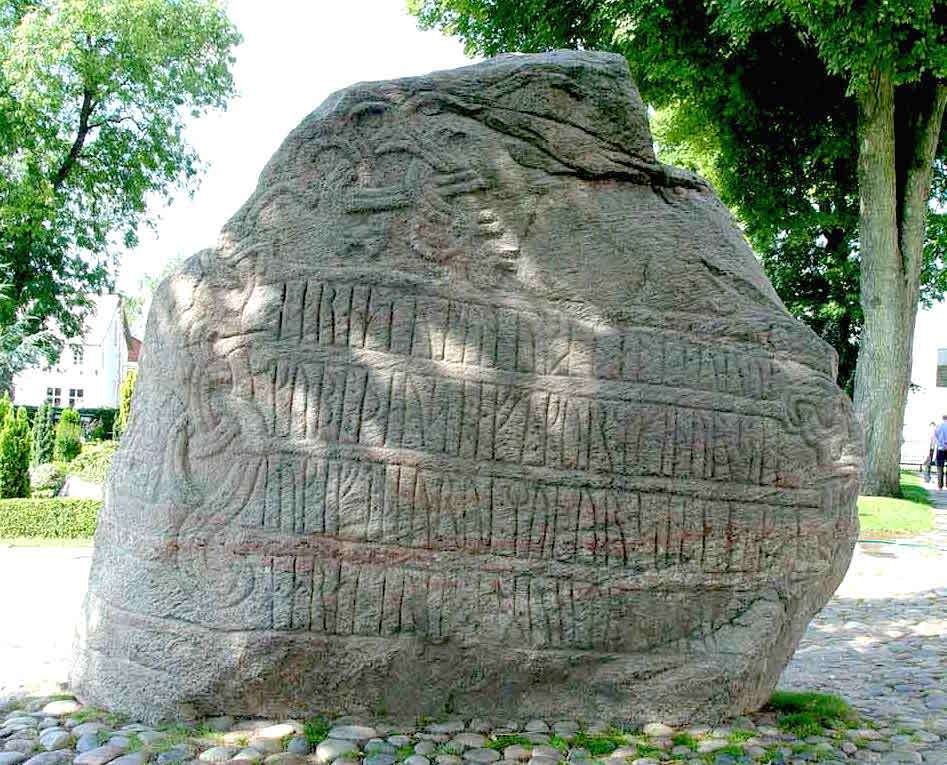
The larger stone is usually dated to the second half of the 10th century, around 965. It is the stone most often called Denmark’s birth certificate.
In the standard interpretation of the inscription, Harald Bluetooth says that he had the monument raised in memory of his parents, and then declares his achievements: rule over Denmark, influence beyond it, and the fact that he made the Danes Christian.
What matters is not only the wording, but the effect. The country is named. Power is described. A course is chosen. The stone turns rule into a formula: who rules, whose line continues, what has been achieved, and what order is now being proclaimed.
✝️ A stone of three languages: runes, beast and Christ
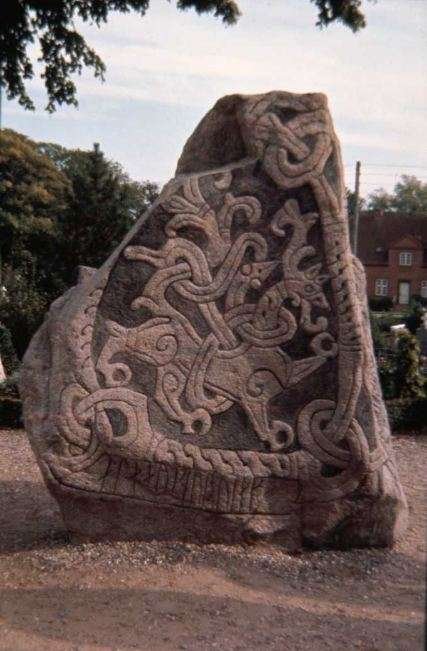
The larger stone is unusually powerful because it speaks in several visual languages at once.
- the runic inscription is the language of memory and authority,
- the intertwined animal is the language of the northern artistic tradition,
- the figure of Christ is the language of the new world.
This is why Jelling is so compelling. It is not a scene where one world has simply vanished and another has replaced it. It is a scene where both worlds stand side by side, and royal power attempts to bind them into one story.
✝️ Reburial and the transfer of memory
Jelling is also tied to one of the most evocative themes of the age: the possibility that the remains of Gorm were moved from a pagan funerary context into a Christian one. Even if some details remain debated, the broader meaning is crystal clear. When a kingdom changes course, it changes how it remembers its kings.
🔥 The legend of Poppo
Harald’s conversion is linked in later tradition to the priest Poppo, who supposedly proved the truth of Christianity by carrying red-hot iron unharmed. Whatever its strict factual status, the legend matters because it reveals the mentality of the age: the Viking world liked visible proof. A new religion needed a powerful story.
Jelling is where all these strands meet. Denmark has a name here. Denmark has a king here. Denmark has a new direction here.
👑 Harald Bluetooth: the king who built power as a system
If Jelling is the heart of symbols, Harald Bluetooth is the heart of action. His reign is often associated with the moment when power in Denmark became a project, not just a personal fortune. His rule is usually placed roughly in 958–986/987.
🧭 Between south and north: imperial pressure and a window of opportunity
In the 10th century, Denmark lived beside a major continental force: the Ottonian world of the Holy Roman Empire. The south was both a zone of diplomacy and a zone of danger. The episode of 974, when pressure from Otto II intensified in the south, demonstrated how vulnerable a frontier could be without organisation.
Then, after 983, the empire faced difficulties elsewhere, and that pressure eased. For Danish royal power, this created an opportunity: strengthen reforms, build more confidently, and turn crisis into consolidation.
✝️ Baptism and a new legitimacy
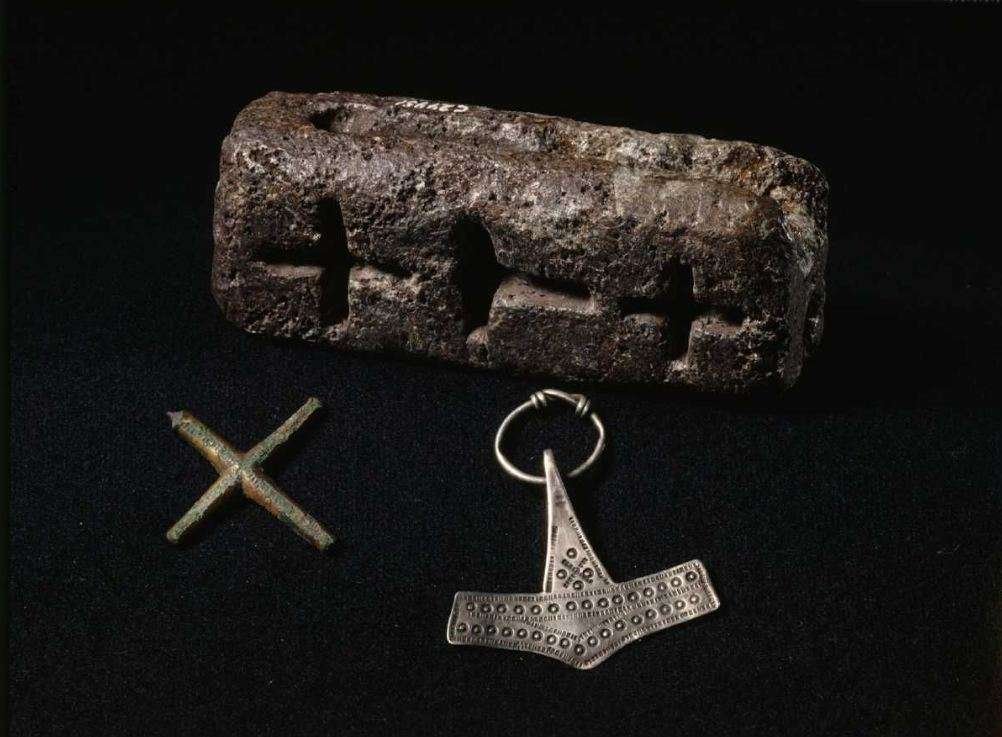
The Christianization of Denmark under Harald was not merely a religious episode. It gave royal power a new language of legitimacy. With Christianity came church institutions, literate clerics, wider diplomatic recognition and a more universal framework of rule.
That is why the great Jelling Stone binds together two themes that may seem separate to modern readers: unification and the Christianization of the Danes. For Harald, they belonged to the same story — the making of a whole country.
🏗️ A king of monuments, bridges and systems
Harald’s name is attached not only to Jelling but to large-scale building: roads, bridges, fortifications and, traditionally, the programme of ring fortresses known as the Trelleborg fortresses. That matters because it gives the traveller a rare privilege: Harald is not only a name in a text. He is visible in the landscape.
⚔️ Conflict with Sweyn Forkbeard: the price of centralisation
Late tradition links Harald’s final years with conflict against his son, Sweyn Forkbeard. Such conflicts are typical of states in formation. The stronger the centre becomes, the more resources and loyalties it controls, and the more bitter the struggle over succession becomes.
Harald’s death is usually dated to around 986–987. What followed matters even more than the death itself. The machinery of rule did not disappear with him. It continued. That is perhaps the clearest sign that kingship in Denmark had already become larger than one king.
🌀 The Trelleborg fortresses: rings of power built within one generation
The Viking ring fortresses are among the strongest arguments against reducing the birth of Denmark to legend. They exist. They can be visited. Their plans can still be walked. And that is exactly what makes them such a powerful part of the Danish travel and history experience.
The best-known Trelleborg-type fortresses are Aggersborg, Fyrkat, Nonnebakken, Trelleborg and Borgring. They are usually dated to the late 10th century, roughly the 970s and 980s, when royal power was growing rapidly.
🧱 The geometry of the “perfect circle”
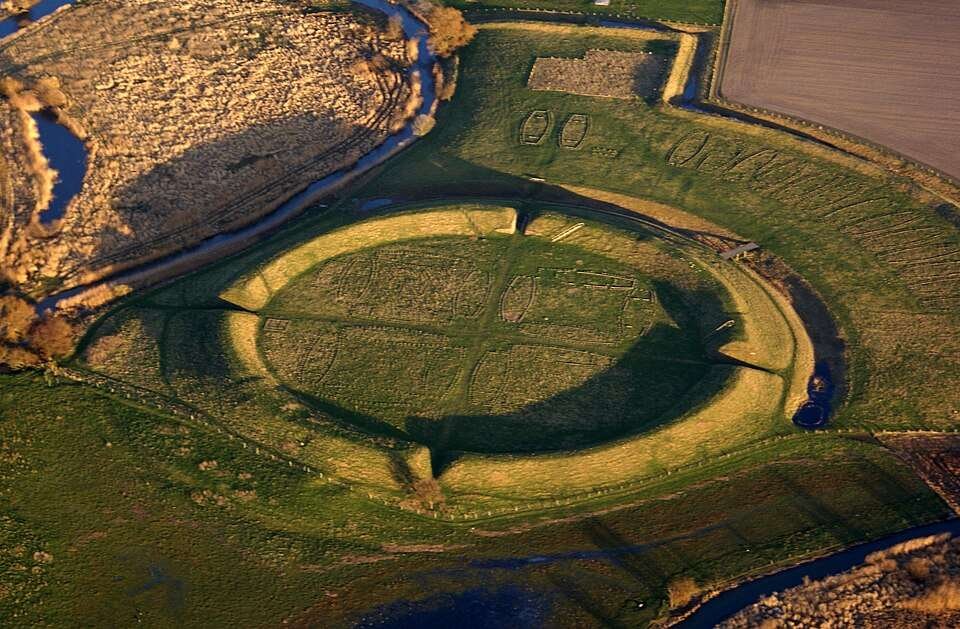
These fortresses are instantly recognisable: circular ramparts, ditches, gates, cross-axial roads dividing the interior into sectors, and longhouses standing in almost military regularity.
In the Middle Ages, that level of geometric order is rarely accidental. It implies:
- a single concept,
- a common measurement system,
- labour organised at scale,
- and a political centre able to repeat one model in different regions.
That is exactly why the fortresses matter for the birth of Denmark. They show power acting as a system.
🌊 Aggersborg: the largest circle and the control of a waterway
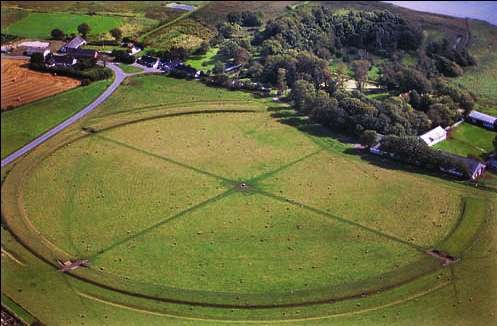
Aggersborg is often singled out by size. Its location near an important water route makes its meaning unusually clear: this was not simply a refuge, but a stronghold placed on a road — and in Viking Denmark, roads were made of water.
🔮 Fyrkat: the fortress and the “seeress” burial
Fyrkat is famous not only for its fortifications. Nearby, archaeologists found a richly furnished female grave often called the burial of a völva, or seeress. The objects found there — including a staff-like item — have made this burial one of the most evocative in Danish Viking archaeology.
This matters because it reveals the texture of the age. While kings strengthened Christian institutions and more centralised rule, older symbolic worlds were still alive. Denmark in the 10th century was not a clean break between old and new. It was a layered landscape of competing meanings.
🌀 Trelleborg, Nonnebakken and Borgring: the fortress as network
Trelleborg gives the whole type its name and remains one of the easiest places in which to visualise the logic of the system.
Nonnebakken reminds visitors that parts of Viking Age Denmark now lie under modern urban layers.
Borgring reinforces the idea of network: these are not isolated monuments but a distributed programme of rule.
🛡️ Why they were built
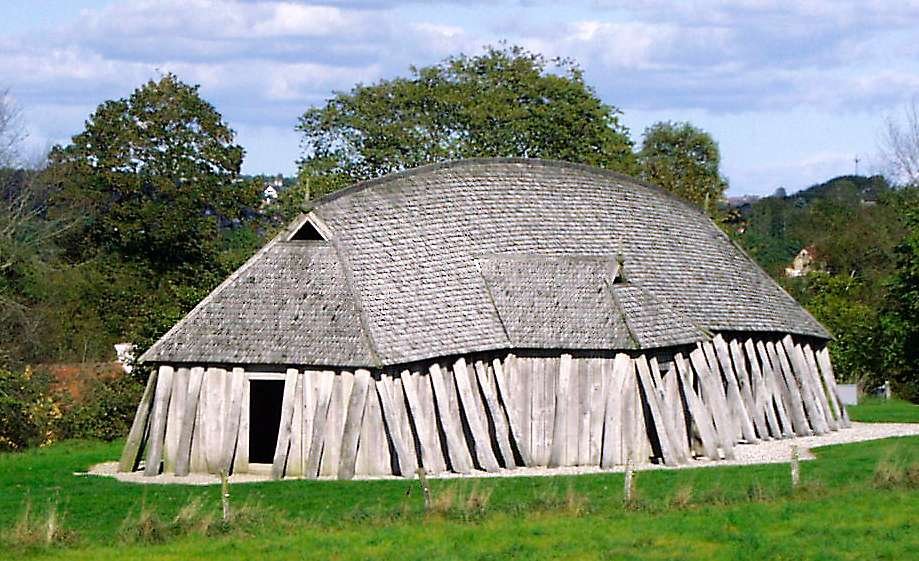
Historians continue to discuss the exact balance of functions: defence against external enemies, internal control, mobilisation, logistics, royal display. But the central point remains stable. The Trelleborg fortresses show a power that can plan, build, coordinate and maintain presence across the land. That is precisely what makes them so important to the story of Denmark becoming a kingdom.
🌊 The North Sea empire: Sweyn Forkbeard and Cnut the Great — when Denmark became a European power
If Harald Bluetooth represents the age of symbols and political consolidation, then Sweyn Forkbeard and Cnut the Great show that the kingdom had grown large enough to act beyond its own shores. This chapter is not separate from the birth of Denmark. It is its climax. A kingdom that learned to organise power at home began to project it across the sea.
⚔️ Sweyn Forkbeard: the sea as politics (c. 986–1014)
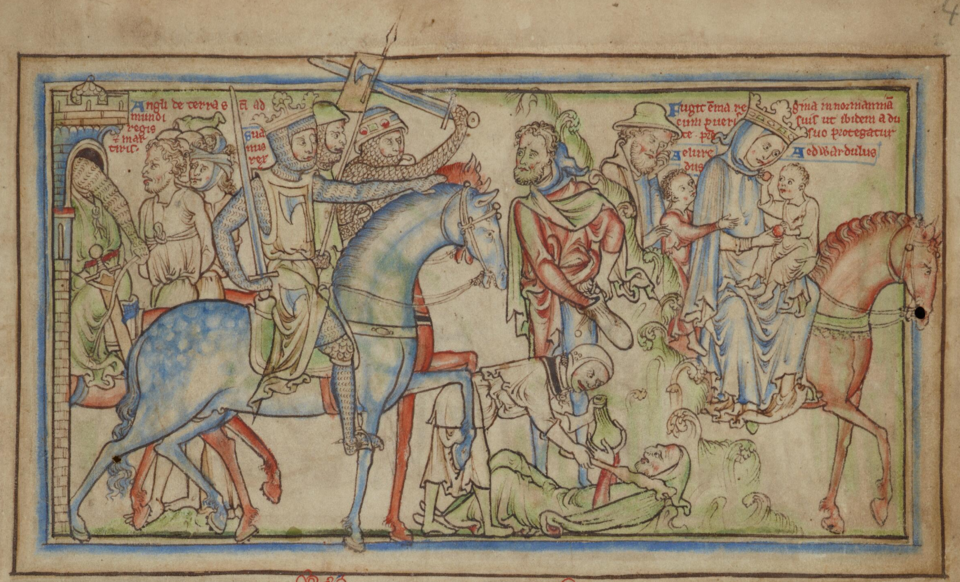
Sweyn’s reign is tied to the years when Danish pressure on England became sustained and strategic. Raids turned into policy.
In 994, Sweyn campaigned together with Olaf Tryggvason against England. The campaign ended with substantial payments. That alone says much: the sea had become not only a road to plunder, but a tool of diplomacy.
Then came 1000, the year of the Battle of Svolder, one of the defining naval confrontations of the Viking world. Here major rulers of Scandinavia collided, including Sweyn Forkbeard, and the outcome shifted the balance of power in Norway and across the North.
🏰 1013: England recognises a Danish king
The decisive turning point came in 1013. Sweyn launched the invasion that forced Æthelred the Unready to flee. Important parts of England recognised Sweyn as king. This was no longer tribute or maritime intimidation. It was conquest on a national scale.
Sweyn died in 1014, but something crucial had already been proved: a Danish king could claim a crown across the sea.
👑 Cnut the Great: conquest turned into kingship (1016–1035)
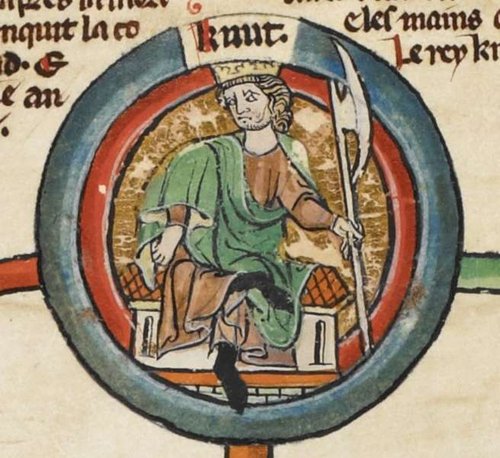
After Sweyn’s death, the struggle continued through his son Cnut. He first lost ground, then returned with a new fleet. In 1015 he launched another campaign, and 1016 became the decisive year.
That year saw war with Edmund Ironside, a series of battles, and finally the turning point often associated with the Battle of Assandun in October 1016. A political settlement followed, and when Edmund died soon afterwards, Cnut became king of all England.
In 1017, Cnut married Emma of Normandy. That marriage was diplomacy of the highest order: it strengthened his legitimacy and tied the Danish crown more closely to the great aristocratic houses of western Europe.
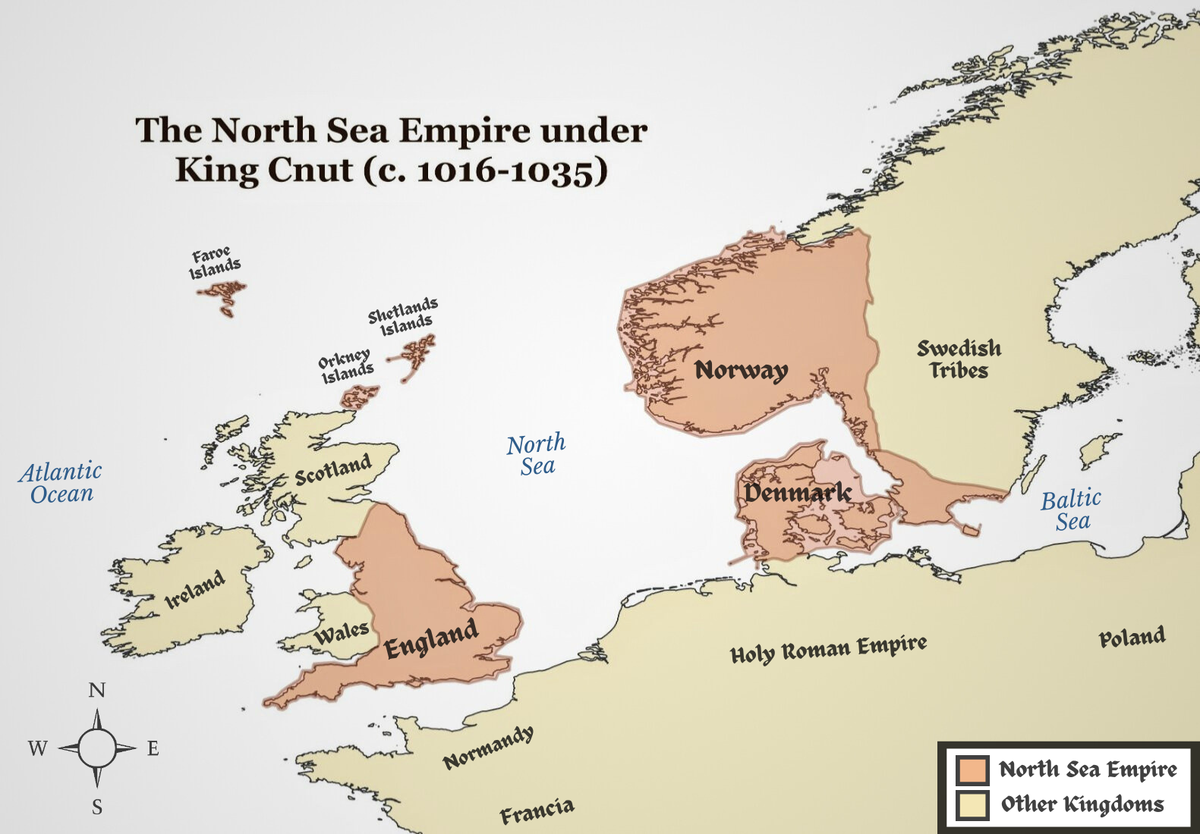
From there emerged what historians often call the North Sea empire:
- in 1018, Cnut became king of Denmark,
- in 1027, he travelled to Rome for the coronation of Emperor Conrad II, appearing unmistakably as a Christian ruler of European standing,
- in 1028, he secured power in Norway.
This was no longer the story of raiding. It was the story of a kingdom that briefly organised the North Sea as one political space.
Cnut died in 1035, and the wider construction began to weaken. Yet even the weakening proves the point: Denmark had learned to act in large-scale European politics. It had travelled a long road from a rune stone at Jelling to a sea-borne empire.
⏳ A short chronology to keep the story in view
- 793 — Lindisfarne, symbolic beginning of the Viking Age in Europe
- 804–811 — reign of Gudfred; 808 — politics of trade nodes; 811 — treaty with the Franks (Eider)
- 845 — expedition to Paris and tribute in silver
- 865–878 — Great Heathen Army and the emergence of the Danelaw
- c. 925 — Ladby ship burial
- 934 — campaign of Henry the Fowler to the north
- 948 — early bishoprics, a step in Christianisation and institution building
- c. 965 — the great Jelling Stone and Harald’s public formula of power
- 974 — pressure from Otto II in the south
- c. 980 — the bridge at Ravning Enge
- c. 986–987 — death of Harald Bluetooth
- 1000 — Battle of Svolder
- 1013 — Sweyn becomes king of England; 1014 — his death
- 1016 — Cnut becomes king of England; 1017 — marriage to Emma; 1018 — Denmark
- 1027 — Rome; 1028 — Norway
- 1035 — death of Cnut
- c. 1070 — barrier ships sunk in Roskilde Fjord
🧭 Where to see the birth of Denmark today: a five-stop route
Danish history is unusually generous to travellers: it can be read as a route, and each place contributes a different part of the story.
1) Jelling 🪨
The Jelling Stones, the mounds and the church form the single strongest symbol of Denmark’s birth and Christianization.
2) Ribe 🏙️
An early trading centre where the Viking Age becomes urban life, market rhythm and organised society.
3) The ring fortresses — Trelleborg, Fyrkat, Aggersborg and others 🌀
The geometry of power, and one of the clearest visible traces of centralisation.
4) The Danevirke 🧱
A border made of earth, labour and strategy — Denmark’s historical southern threshold.
5) Hedeby ⚓
A trading node that reveals how wealth, defence and rule created the need for statehood.
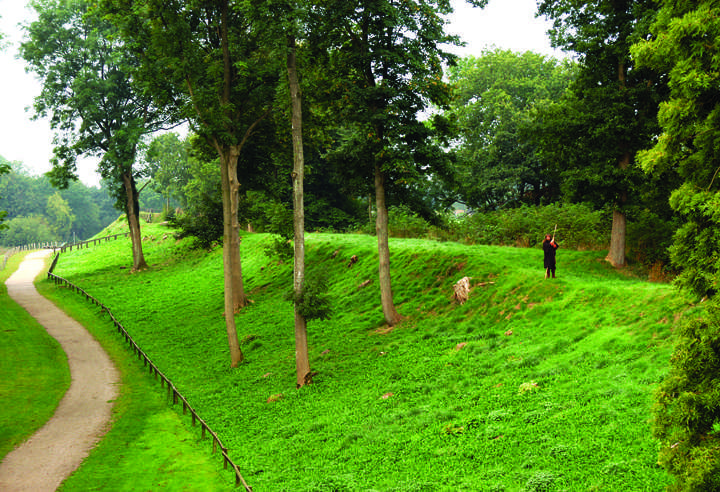
Even if only some of these places are visited, the larger pattern becomes clear: Denmark was born out of the sea, trade, borders, symbols and a new faith — and all of those layers can still be found in the landscape.
❓ FAQ
The Viking Age in Denmark was the period from roughly the late 8th century to the 11th century, when Danish lands were deeply involved in seafaring, trade, warfare and diplomacy, and when royal power gradually became more centralised.
Because this is the period when the key elements of early statehood appear: dynastic memory at Jelling, large-scale building projects, control of trade and borders, and the Christianization of Denmark as a new political and cultural framework.
Jelling brings together burial mounds, runic stones and a church — signs of both the pagan and Christian worlds. The Jelling Stones are associated with the early royal dynasty and preserve one of the earliest written references to the name “Denmark” (Danmark).
They are 10th-century runic monuments associated with Gorm the Old and Harald Bluetooth. They are important because they publicly preserve dynastic memory, the idea of political unity and the transition to Christianity.
Harald Bluetooth was a 10th-century Danish king associated with the strengthening of royal authority, an important stage in the Christianization of Denmark, and the public symbolism of unity expressed most clearly in the great Jelling Stone.
It was the gradual transition from traditional Scandinavian religion to Christianity. It did not happen overnight, but it transformed institutions, culture and the international standing of Danish rulers.
They are the famous Viking ring fortresses in Denmark — including Aggersborg, Fyrkat, Nonnebakken, Trelleborg and Borgring. Their strict geometry and repeated design show a high level of organisation and centralised power.
The Danevirke is a system of fortifications in the south that symbolises defence and frontier thinking. It shows that power in the region was willing to invest in long-term protection of strategic territory.
Sweyn Forkbeard became king of England in 1013, and his son Cnut the Great secured rule in England in 1016 and created a North Sea empire linking Denmark, England and Norway. Their reigns show how Denmark became a power of European significance.
Jelling, Ribe, one or more of the Trelleborg-type ring fortresses, and the southern region of the Danevirke and Hedeby. Together these places show how trade, defence, symbols and belief shaped the early Danish kingdom.

0 comments
Log in to leave a comment