


⛺❄️ A Winter Weekend in a Shelter: how to spend a night in the woods and stay warm
🎒 Prologue: romance versus reality
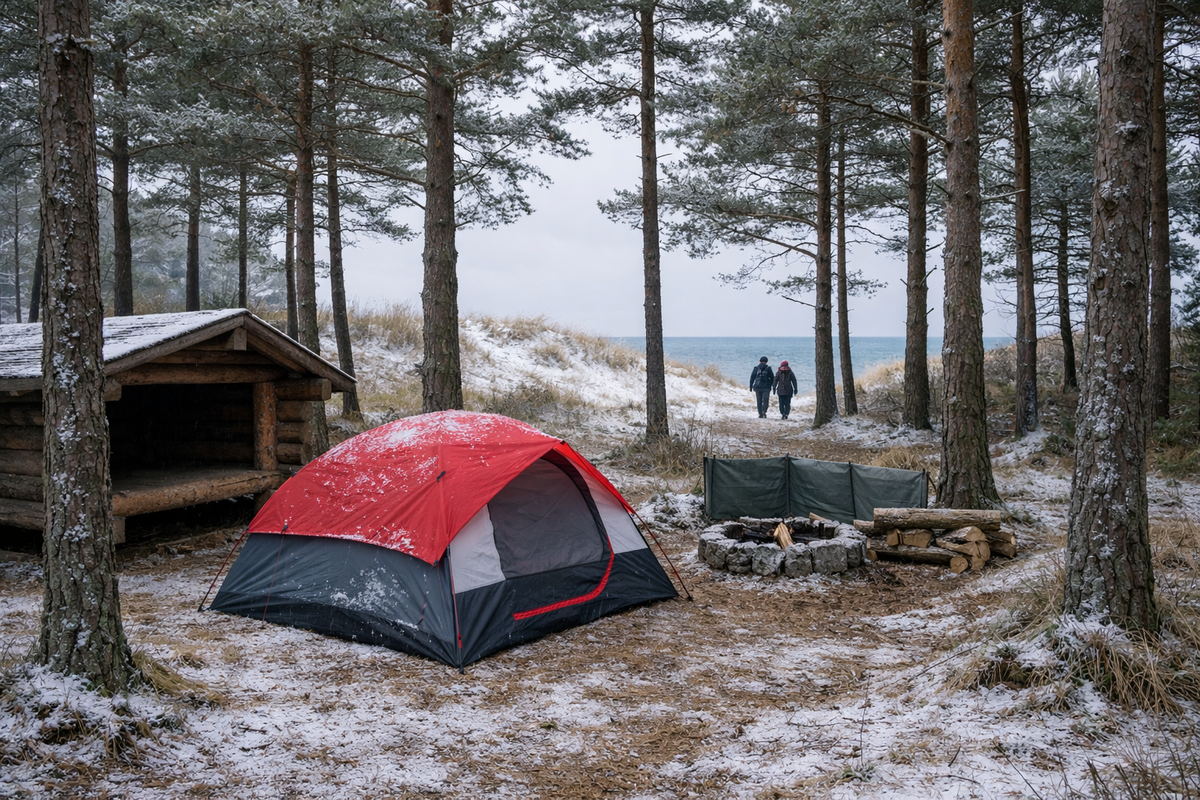
In a Danish forest, winter falls early. Trunks turn black, the air tastes faintly of sea salt, and the wind combs through the pines. In photos, a shelter looks like a tiny cabin; in reality it’s usually an open three‑walled wooden lean‑to where drafts wander freely beneath the roof. Warmth doesn’t happen by itself — you build it with a wind‑sheltered location, a proper sleep system, smart clothing, and a plan B for foul weather. This guide shows how to turn “let’s sleep in the woods” into a safe, warm weekend instead of a sleepless fight with the wind.
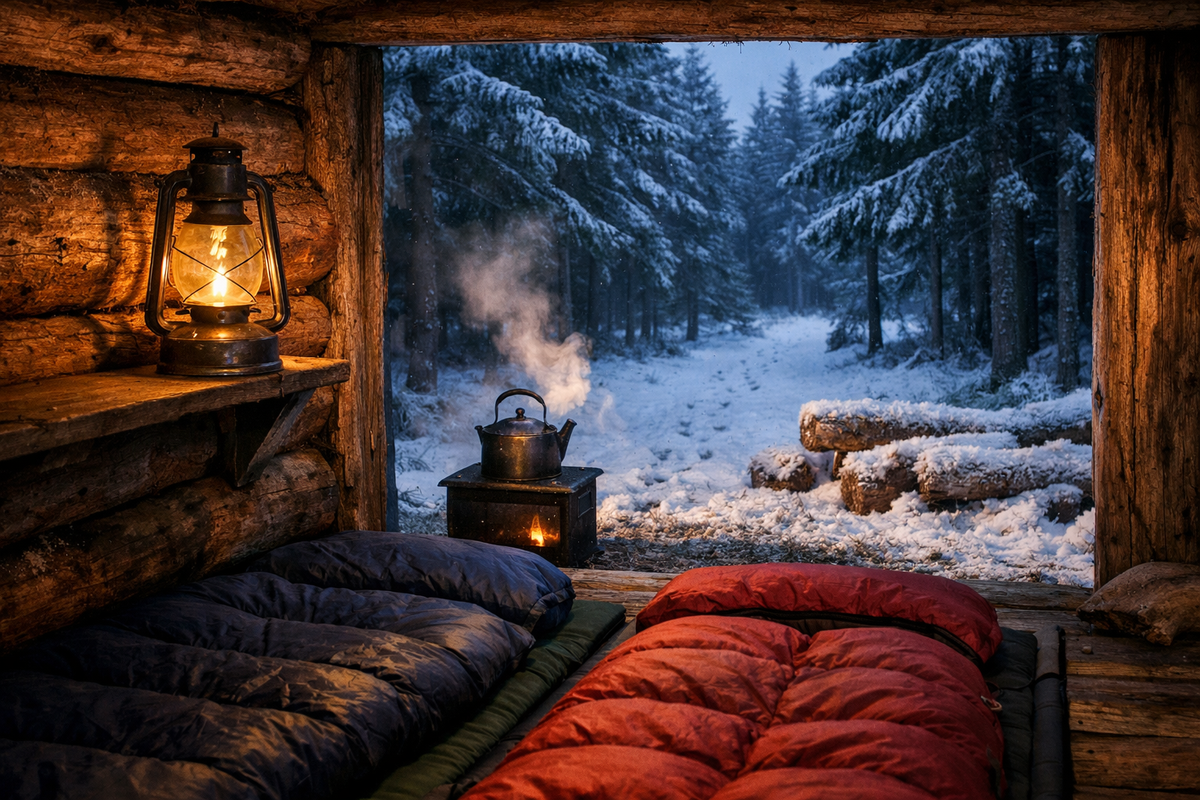
🪵 What a shelter is — and what it isn’t
- A shelter is a fixed wooden lean‑to with a raised platform, open at the front. Often there’s a fire ring and a picnic table; sometimes a basic toilet nearby.
- A primitive site is simply a tent spot and a fire ring; facilities are minimal.
- Winter twist: some facilities are switched off (water taps/faucets, summer sinks), access roads are cleared less frequently, and firewood is not guaranteed.
Where to find them: across public forests, parks and coastlines. The practical way is to use official nature maps, local camp networks, and information from national parks (for example, Mols Bjerge). For a warm fallback, keep a year‑round campsite with cabins in mind (the belt around Hanstholm is a reliable refuge when a storm rolls in).
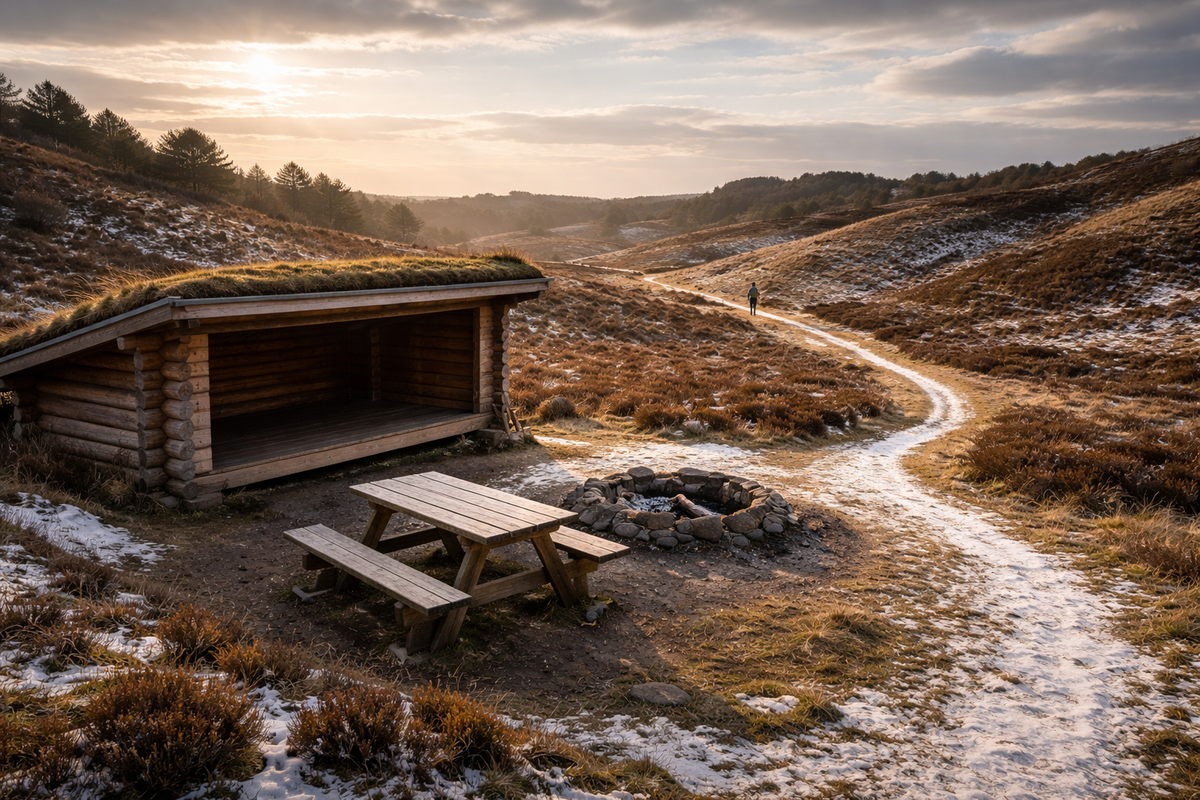
🔧 What actually works in winter
- 🔥 Fire ring: usually available, but wood is rarely provided — bring your own. In strong wind a fire won’t replace a warm sleep system.
- 🚰 Water: outdoor taps are often shut “for frost.” Carry 2–3 L per person per day.
- 🚻 Toilets: exist at some sites, but many go on “winter pause.” Have an alternative.
- ♨️ Summer sinks/kitchens: typically closed until spring.
- ⚡ No electricity — bring a headlamp and a power bank.
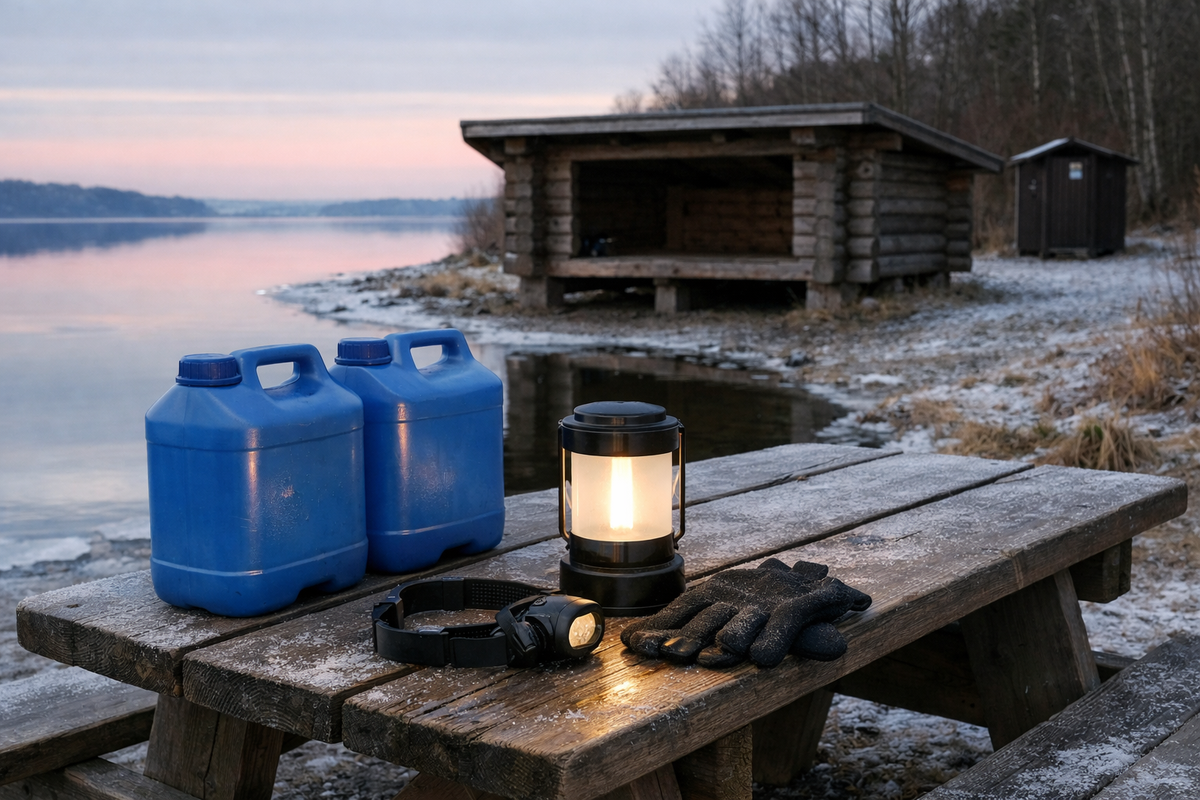
👇“Facilities by season”
🧰 Kit that actually keeps you warm
- 🛏 Sleeping bag comfort 0…–5 °C (not only “extreme”) + liner (fleece/silk adds ~2–4 °C).
- 🧊 Two layers under you: foam pad + inflatable (R‑value 3.5+).
- 🧥 Layering: base/thermal, fleece/down, windproof shell.
- 🧤 Backup gloves and socks (one set dries on your body/near heat, the other is in use).
- 🧦 “Dry night set” in a dry bag: thermal top/bottom + warm socks.
- 🥾 Footwear with grippy outsole; gaiters or simple bag covers for wet tracks.
- 🍲 Stove + winter gas, windscreen, fire steel/matches in a zip bag.
- 💡 Headlamp + spare cells; 10–20k mAh power bank.
- 🚰 Water 2–3 L pp/day + a thermos.
- 🧻 Hygiene/mini first‑aid: plasters, heat patch, light elastic bandage.
- 🗺 Plan B: nearest heated cabin/campsite, morning bus, quick exit to a road.
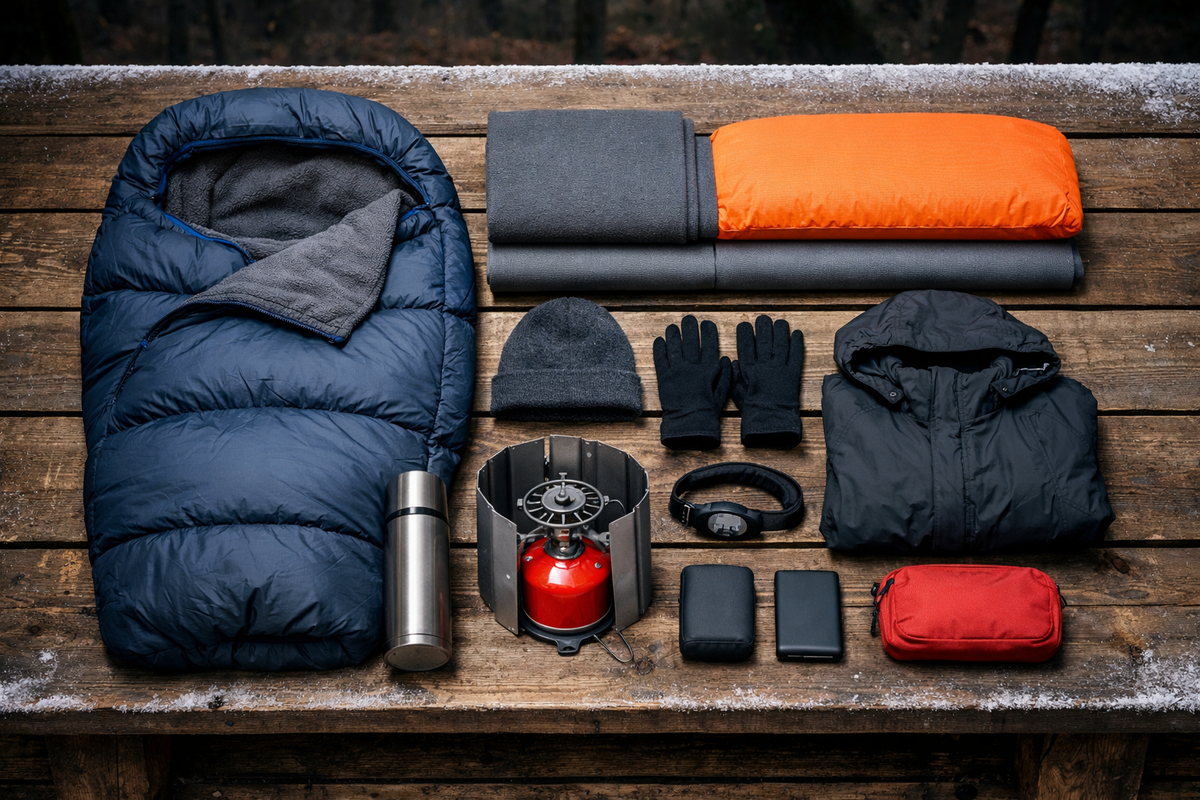
✅Checkbox packing list
- Sleeping bag 0…–5 °C + fleece/silk liner
- Foam + inflatable pad (R≥3.5)
- Thermals, fleece/down, windproof shell
- Backup gloves/socks; “dry night set”
- Winter gas, stove windscreen, fire steel/matches
- Headlamp + spare batteries, power bank
- Water 2–3 L pp/day, thermos
- Plan B: nearest heated sleep/transport
🌬️ Picking the spot: don’t let the wind steal your sleep
- 🧭 Leeward: use natural wind shadows — small hills, dense spruce, bends in a ravine. On the coast, settle behind dunes.
- 🏕 Shelter orientation: entrance away from prevailing wind; platform stays dry in slant rain.
- 🚶 Access: 20–60 min on a real trail from a road; in the dark you can reverse it.
- 🆘 Backup: a warm cabin/campsite within a short drive (northern Jutland/Hanstholm area works well).
- 🔥 Fire: wind‑shielded, simple menu (soup, porridge, tea) — winter is no time for fussy cooking.
- 🧹 Leave No Trace: pack out everything; don’t break deadwood off living trees.
🕒 Route planning: short day, short approach
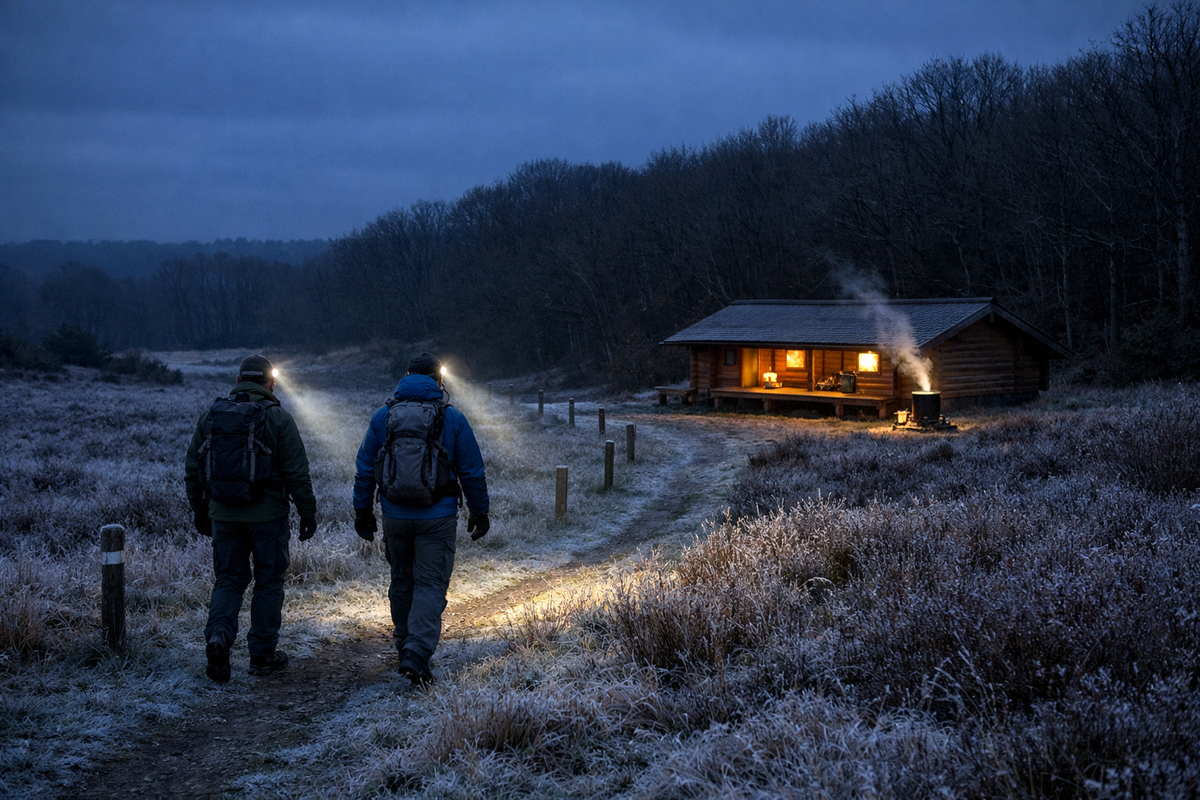
Danish winter daylight is brief. For a shelter weekend, choose short loops (6–10 km by day), arrive before dusk, and finish dinner before full dark. Morning: hot drink, quick breakfast, unhurried walk out. For a first try, do one overnight and two easy daytime walks.
🧭 Mini daylight loop calculator
🗓️ Two workable weekend patterns
🌲 “Forest & hills” (Mols Bjerge area)
Day 1 (evening): arrive, 30–45 min to shelter on a marked trail, camp before dusk. Hot soup, tea, early sleep.
Day 2: 8–10 km loop through hills and spruce; hot lunch from a thermos. Evening — a small, wind‑shielded fire.
Day 3: light breakfast, 30–45 min back to car/bus.
🌬️ “Sea + refuge” (northern Jutland: coast and nearby woods)
Day 1: if winds are calm, a short dune‑sheltered shoreline walk; overnight in a forest shelter.
Day 2: if a storm hits, move to a heated cabin nearby (campsites around Hanstholm help), then stroll the heather without being pounded by wind.
Day 3: return, coffee in the nearest town.
🛟 When a warm cabin beats a shelter
- Forecast says night rain + strong wind (12–18 m/s) with little forest shelter.
- Team is tired, someone’s bag/shoes got soaked, there’s no dry night set.
- It’s your first winter attempt — keep the experience positive.
♻️ Etiquette & safety
- Pack out everything. Don’t break branches off living trees.
- Dead out the fire; never dump embers into moss.
- Share route & return time with a contact. Keep phone/power bank warm in an inner pocket.
🧾 Summary
A Danish winter shelter night is about preparation and common sense. Choose a leeward spot, arrive before dusk, rely on a sleep system rather than a heroic fire, and keep a plan B. Then the wind becomes not a problem but a soundtrack — one of the clearest winter memories of your trip.
❓FAQ
Some sites are first‑come, others use booking/limits. Winter sees fewer people, but on popular loops keep a backup shelter within a 20–40 min walk.
For night + cooking + morning, carry 2–3 L per person. A thermos for dinner and breakfast dramatically boosts comfort.
It dries moods more than sleep systems. Real warmth comes from sleeping bag + pad + layers. The fire is for cooking and drying socks; wind has its own plans.
In winter — no. Bring duplicates: one set will get damp from condensation/snow.
For a first winter night, a forest shelter (less wind) + “dry night set” is sensible. If in doubt, take a cabin and save the tent for spring.
Aim for 6–12 km in daylight, reaching your shelter before dusk. Go longer only with perfect weather and a confident pace.

0 comments
Log in to leave a comment