


🎣 Winter fishing in Denmark: sea, fjords and lakes without rose‑tinted glasses
Winter fishing in Denmark is not about postcards with blue skies and bags of cod after every trip. It is about cold wind from the sea, long pauses between bites, the need for proper clothing and the ability to choose the right spot and the right day.
If you arrive thinking “I’ll fill the freezer in one weekend”, disappointment is almost guaranteed. If instead you treat fishing as part of a winter trip – a walk along the fjord, a couple of hours on a breakwater with a flask and the chance to bring home one or two honestly earned fish – Denmark can be a pleasant surprise.
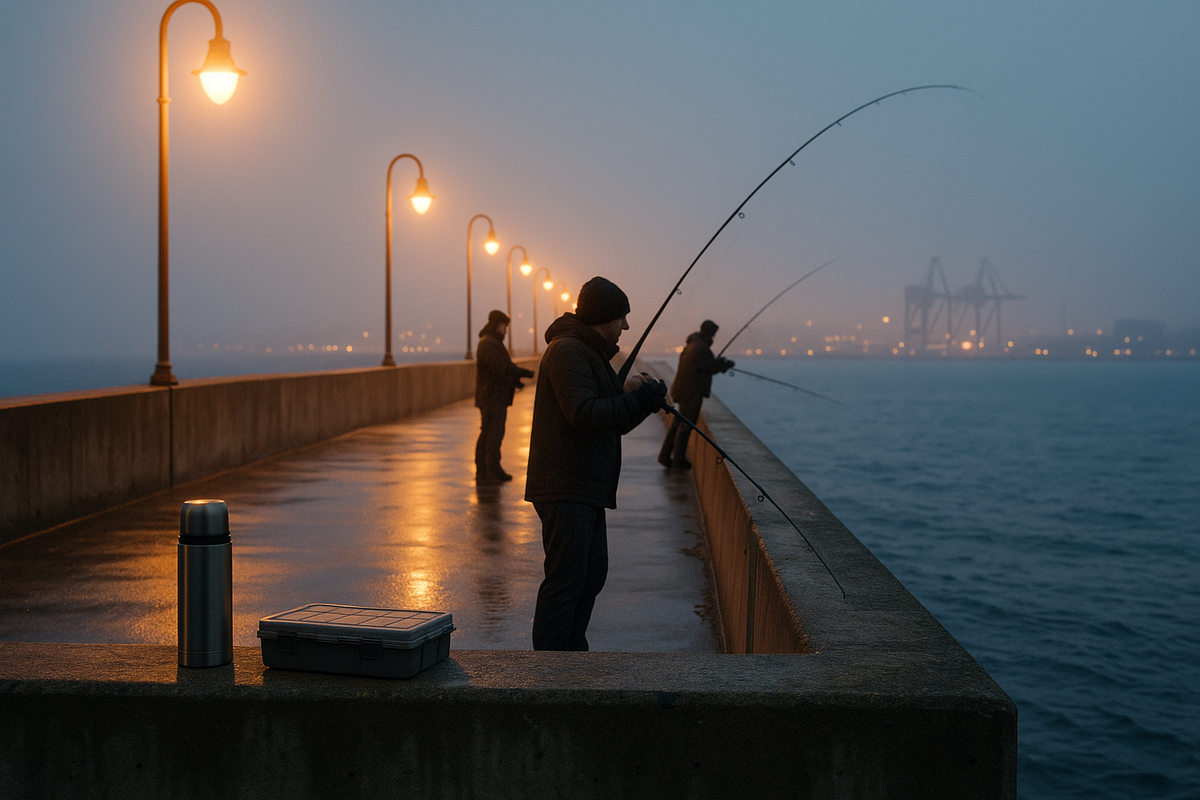
Below is an honest overview: which fish actually bite in winter, where the most convenient and “warm” spots are, what to know about licences and boat trips, and what to watch out for so you do not risk your health for a single bite.
🐟 What really bites in Denmark in winter
In winter the water gets colder, the days are short and the fish less active. That does not mean you have no chance at all.
Main winter targets:
• Sea trout (havørred) – the star of Danish shore fishing. In winter it is hunted along depth changes, rocky shores, in fjords and sheltered bays. Often responds during thaws and in overcast weather.
• Cod (torsk) – more often from boats and deep piers, especially in sounds and fjords. Do not expect a “bag per trip”, but several solid fish in a day is realistic.
• Pike (gedde) – in fresh water, quiet bays and lakes. In winter it is fished carefully, bearing in mind thin ice and very cold water.
• Perch (aborre) – in harbours, inland lakes and backwaters. Capricious in winter, but in calm, clear weather can be very rewarding.
By‑catch in winter sometimes includes flounder, small cod, roach and other smaller fish, but no one plans a dedicated trip just for those.
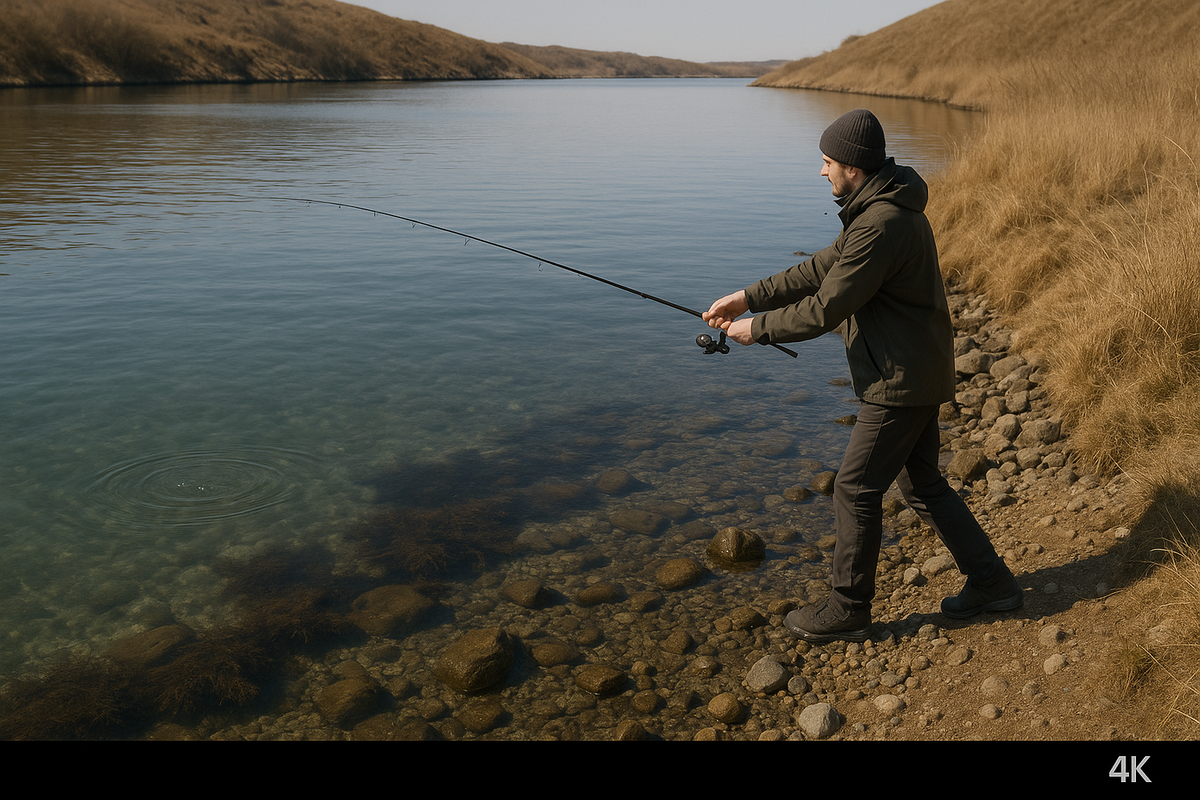
📍 Main winter fishing regions in Denmark
Below is a consolidated list of regions where tourists and locals most often fish in winter. It is not a full catalogue, but a good starting point.
| Region | Type of water | What bites in winter | Comfort and access |
|---|---|---|---|
| Øresund Strait (Copenhagen – Helsingør) |
|
|
|
| Isefjord and Roskilde Fjord |
|
|
|
| Lillebælt (around Middelfart) |
|
|
|
| Limfjord (Aalborg and western section) |
|
|
|
| Mariager Fjord |
|
|
|
| Silkeborg lakes and central Jutland |
|
|
|
| Major city harbours (Odense, Aarhus, Aalborg) |
|
|
|
🚤 Winter fishing methods in Denmark
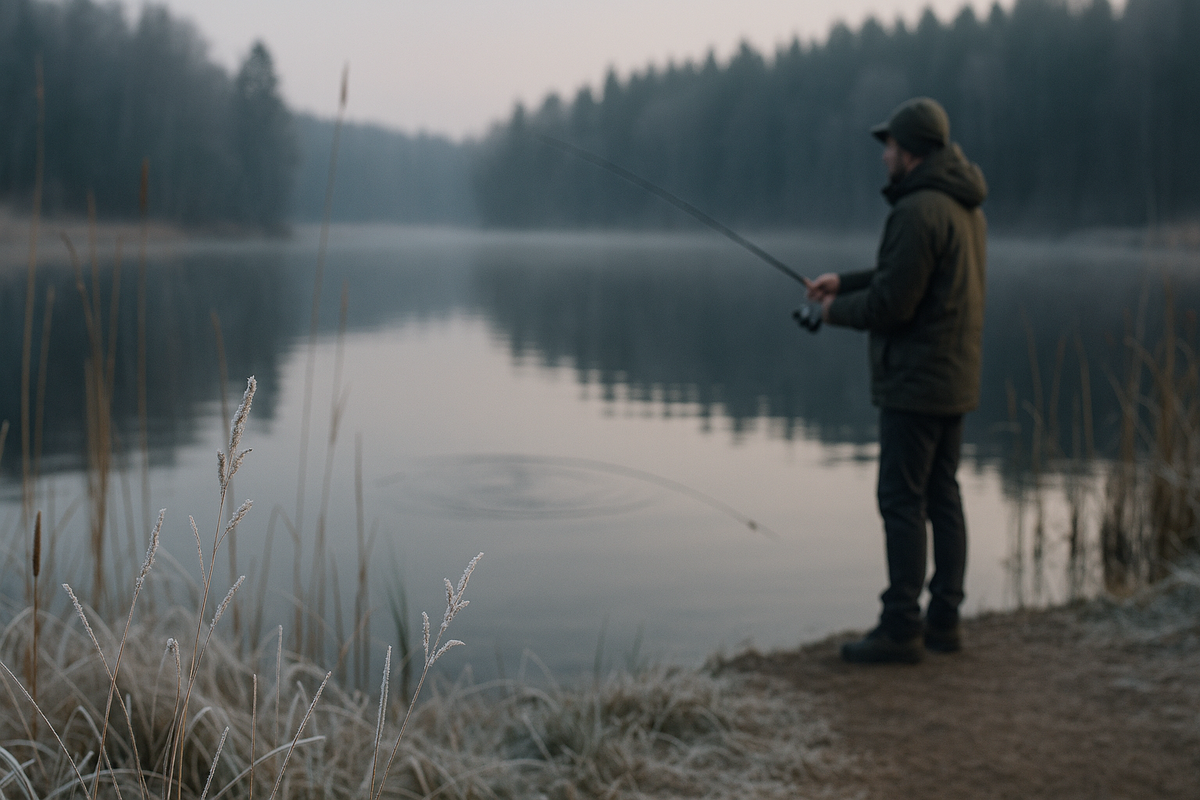
In winter it matters not only where you fish, but how. Some methods are more comfortable in the wind; others require experience and very warm clothing.
| Method | Where it is used | Pros and cons in winter |
|---|---|---|
| Shore spinning |
|
|
| Bottom fishing from piers |
|
|
| Boat/charter fishing |
|
|
| Spinning/jigging on lakes |
|
|
📜 Licences and day permits
In Denmark you almost always need documents to fish – even in winter.
Basic rules:
• National fishing licence (fisketegn). Required for all adults roughly between 18 and 65 when fishing in the sea, fjords and most natural rivers and lakes. It is bought for a period (day, week, year). Tourists can buy it online before the trip or once they arrive in Denmark.
• Private lakes and “put & take” waters. Here you pay a local fee instead of using the national licence: a day ticket or a few hours. These spots are often very convenient in winter: parking, toilets and sometimes a small hut for warming up.
• Protected and closed areas. Some spots have seasonal closures (for spawning) or restrictions on tackle. Always check whether your chosen place is inside such a zone.
For a tourist the simplest approach is:
• buy the national licence for the exact period you plan to fish;
• check whether the chosen lake or stretch of fjord is private (you may need an extra local permit);
• learn the basic rules: minimum sizes, bag limits, and that you cannot sell your catch.
🚢 Charters and boat trips: what it costs and what to expect
Winter sea charters are a separate story. They run less frequently than in summer and depend heavily on the forecast, but they open up depths you cannot reach from shore.
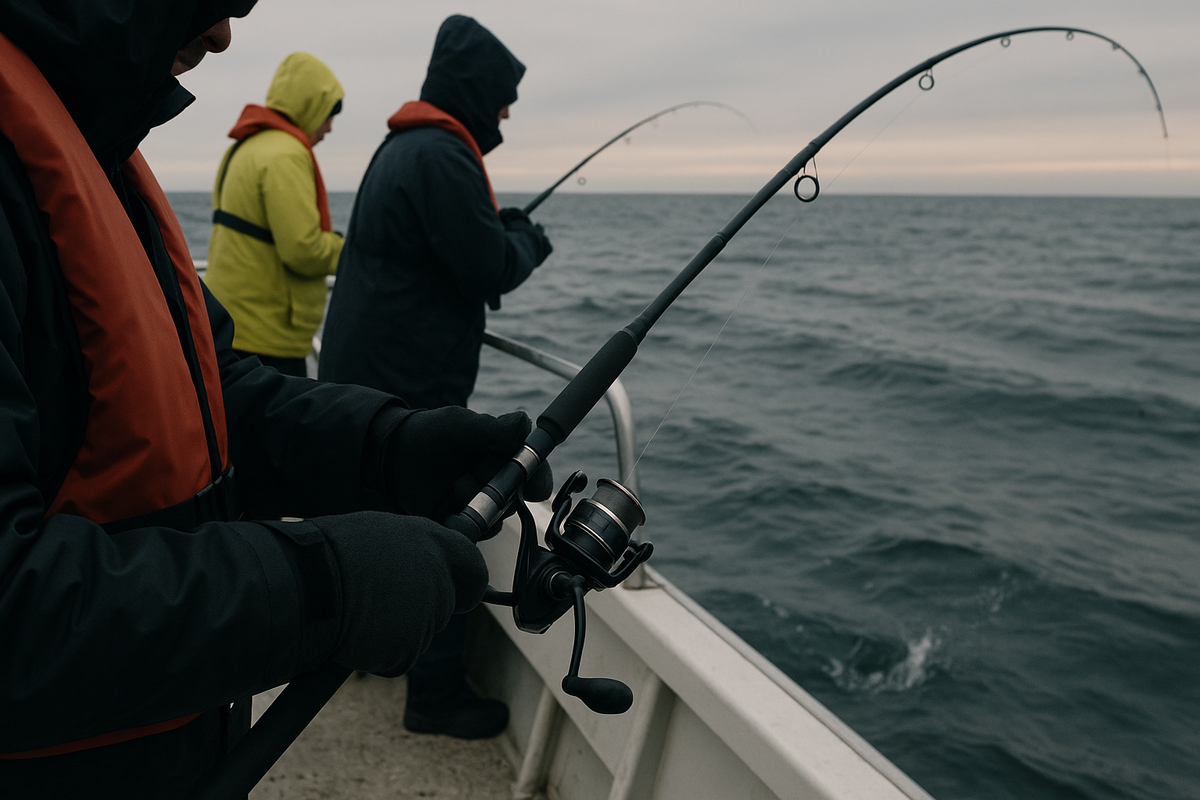
Typical format:
• Duration – from 4–5 hours up to a full day (6–8 hours) at sea or in a strait.
• Target species – cod and other bottom fish, sometimes mixed with jigging or pirking.
• Price – usually ranges from a few hundred to over a thousand DKK per person per day, depending on length, included gear and boat type.
• Tackle – some trips include rods and gear, others offer rental at extra cost. Always clarify in advance.
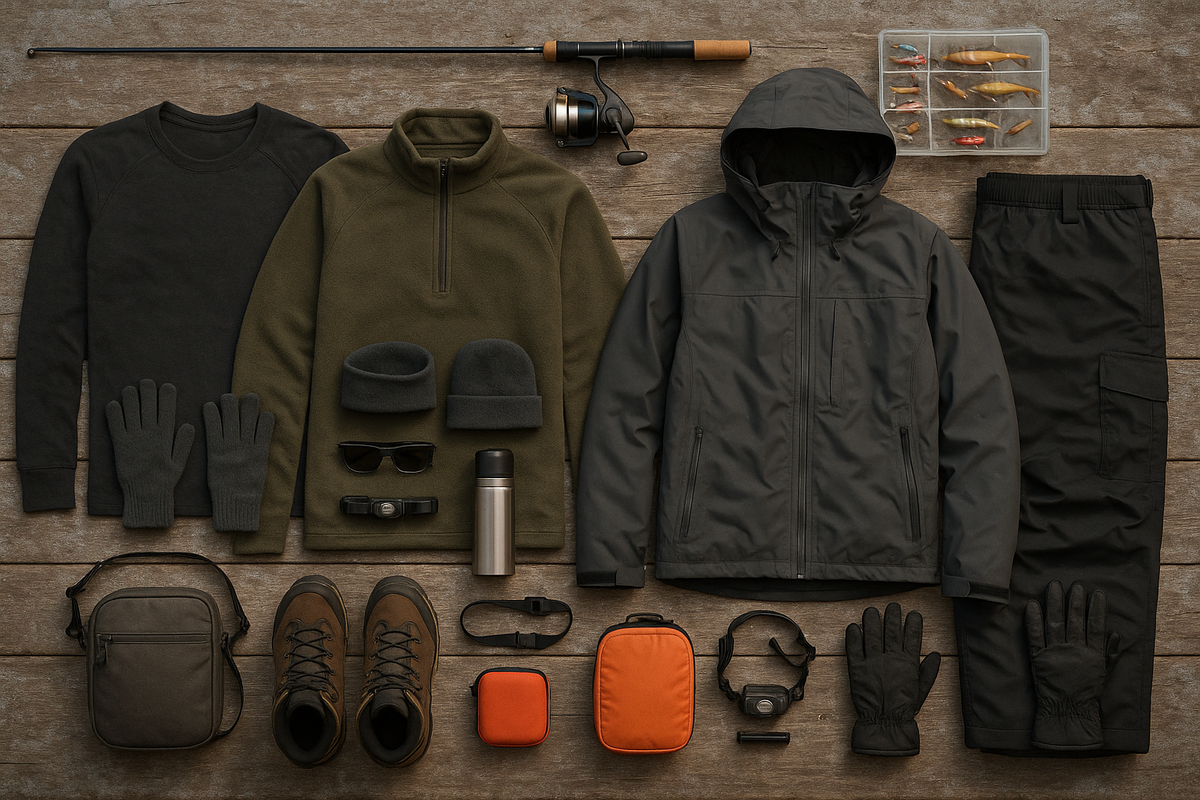
The key factor is clothing and weather. In winter even a light frost with moderate wind feels brutal on an open deck. You need:
• proper layering (thermal underwear, mid‑layer fleece/wool, warm jacket);
• wind‑ and waterproof trousers;
• warm hat and gloves – ideally two layers;
• non‑slip boots with thick soles;
• for longer trips – a small dry bag with spare socks, gloves and a second mid‑layer.
The operator has every right to cancel a trip because of storms. That is about safety, not “being awkward”.
🧳 Gear checklist for winter fishing in Denmark
Checklist: what to bring for winter fishing in Denmark
- Layered clothing: thermal underwear, mid‑layer and a warm jacket.
- Wind‑ and waterproof trousers.
- Warm waterproof boots with non‑slip soles.
- Hat, buff or scarf, spare gloves.
- Waterproof jacket with hood.
- Flask with a hot drink and a high‑calorie snack.
- Small rucksack or shoulder bag.
- Polarised sunglasses (even in winter, to cut glare).
- Head torch and spare batteries.
- Charged phone in a waterproof case.
- Small first‑aid kit and blister plasters.
- For boat trips – a light life jacket if you prefer your own.
🧭 “Warmer” winter spots: where the wind is less brutal
If you are not a fan of extreme cold, look for spots with:
• a lee shore (protected from the main wind direction);
• solid footing (piers, moles, quays with railings);
• infrastructure nearby (café, toilet, parking).
Practical examples:
• city harbours in Copenhagen, Aarhus, Odense and Aalborg – you can warm up in a café at any time;
• piers in Middelfart, Helsingør and smaller Jutland ports – a good compromise between depth and comfort when wind allows;
• small fjords and coves where the wind simply does not hit at full power.
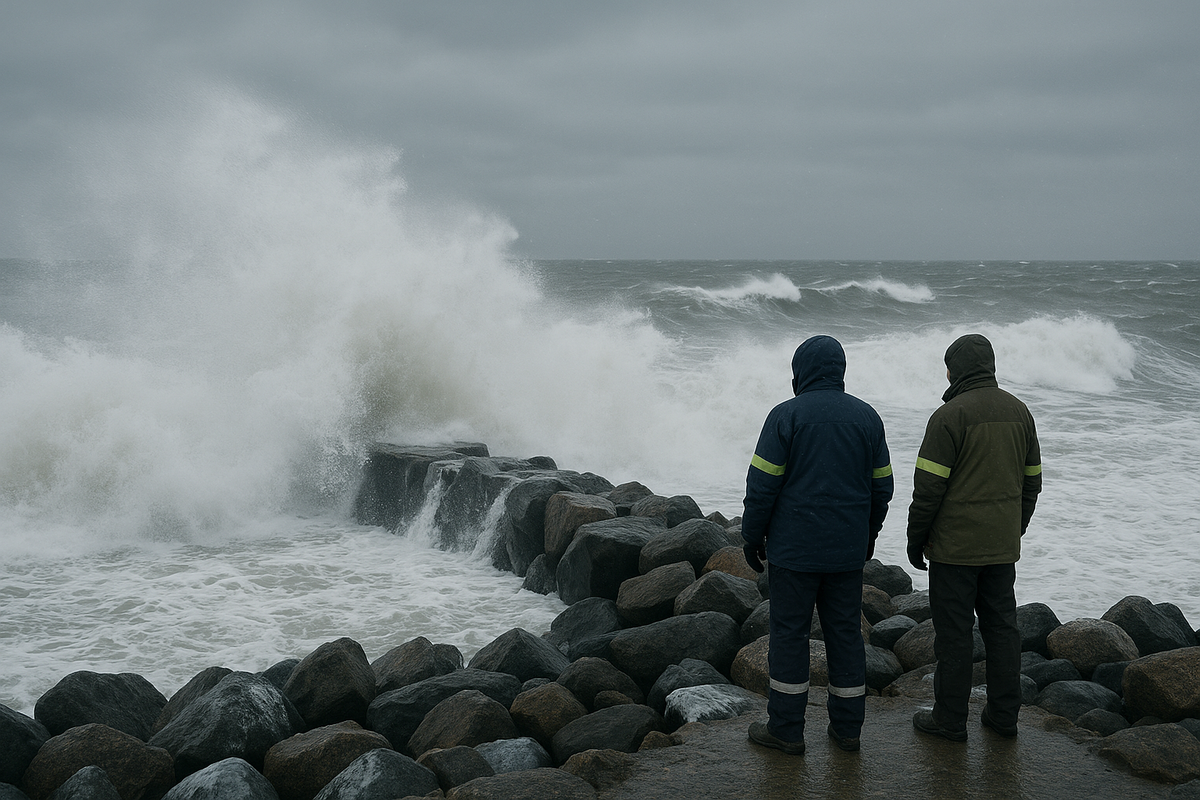
If you see heavy surf, ragged waves and people literally being blown sideways, this is not the day to experiment.
⚠️ Winter safety: the sea does not forgive overconfidence
The golden rule for winter in Denmark: no fish is worth serious risk. Even shallow water at +2 °C can become critical within minutes.
Key points:
• Storm warnings. Check wind and wave forecasts for the specific coast, not just the nearest city. Offshore winds can cool you down much faster than you expect.
• Tides and currents. In straits and fjords current can be very strong. Do not wade deep, avoid narrow slippery rocks and concrete ledges.
• Waders and wading. In winter, wading chest‑deep in open water is a bad idea even in good gear. With cold water stick to safe depth and the shoreline.
• Ice and icing. Stairs and boulders down to the water can ice over quickly. It is better to walk 50 metres more along the beach than use a single dangerous ladder.
• Fishing alone. If you go alone, tell someone where you are going and when you plan to be back. Keep your phone in a warm inner pocket, not in your rucksack.
🧩 How to choose a winter fishing format that suits you
👨👩👧 Family or couple with little experience
- Focus: short outings, “fishing as a walk”, not as a marathon.
- Format: harbour piers, city quays, private lakes.
- Bonus: café, toilets and warm indoor space nearby.
🎣 Experienced lure angler
- Focus: sea trout and cod from shore.
- Format: fjords, straits, remote points and rockier shores.
- Important: be able to read wind, tides and wave forecasts.
🛥️ Group of friends
- Focus: shared experience rather than just the catch.
- Format: sea charter, rental house with water access.
- Bonus: easy to mix fishing with sauna, walks and dinners.
❓FAQ
In theory yes, in practice winter often means a handful of good fish and sometimes no bites at all. It is better to set modest expectations and treat a big catch as a pleasant bonus, not a guaranteed outcome.
If you have little experience with cold‑season sea fishing, a guide makes life much easier: they know the marks, read the forecast and take responsibility for safety. Experienced anglers often go without a guide, but still check storm warnings and local regulations carefully.
Yes, if you choose harbour cities, straits with good public transport and private lakes near stations. But more remote fjords and “secret spots” almost always require a car.
In Denmark, clothing wins. You can catch fish on an older rod, but in wet jeans and trainers you will be frozen in half an hour and unlikely to enjoy any part of the day.
If you regularly fish at home and like your own rod and reel, taking them along is logical. If you are a beginner or do not want to travel with a rod tube and big tackle boxes, it is easier to book a trip with rental gear – especially for your first taste of winter fishing in Denmark.

0 comments
Log in to leave a comment