


⛺ Winter Camping & Shelters in Denmark: snow‑tinged romance or a weather‑beaten adventure?
🎯 Who this guide is for
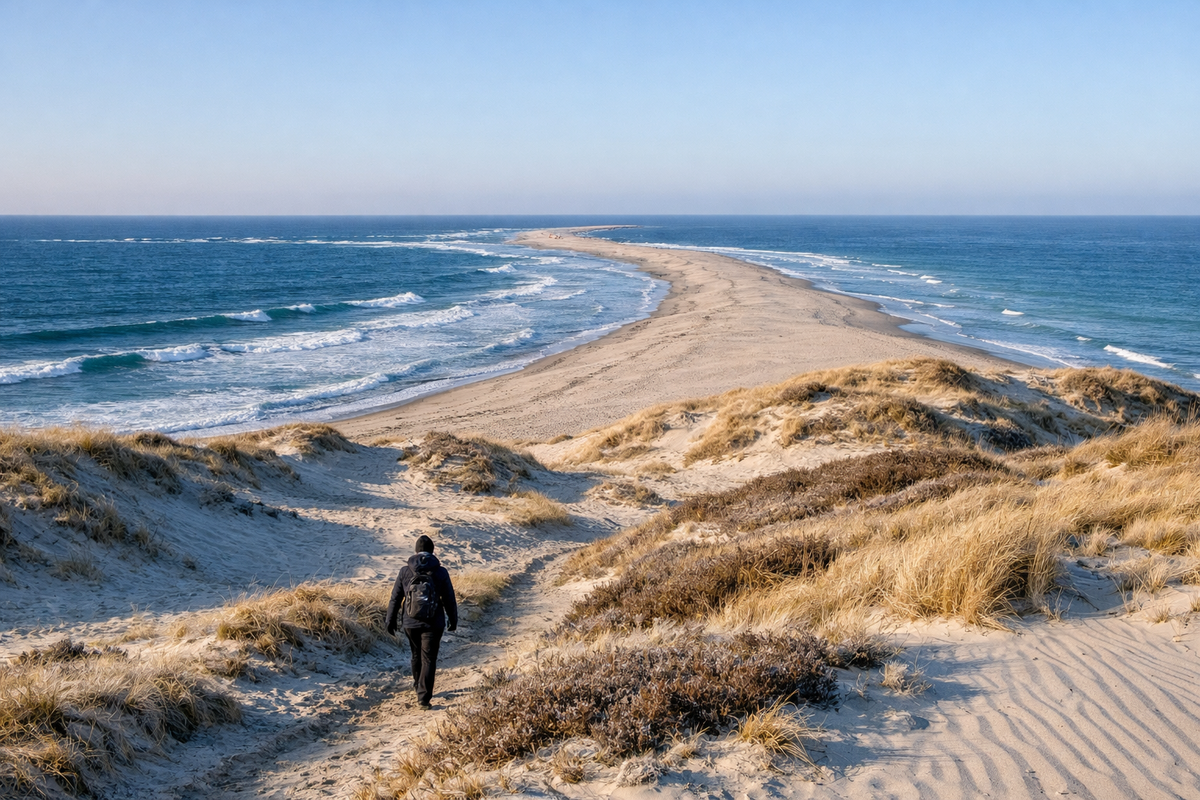
Danish winter camping is less about waist‑deep snow and more about Atlantic wind, long blue twilight and a mug of blazing‑hot tea by the fire. In January–February the beaches empty out, forest paths fall quiet, and the sea rumbles like a bass amp. It’s magical—yet tricky. Water taps can be shut “for frost”, summer kitchens closed, and a North Sea gust can turn a tent into a sail. Below you’ll find a practical, no‑nonsense guide: winter‑proof ways to overnight, regions that shine in the cold months, 14 campsites worth considering, what services usually stay open, gear that actually keeps you warm, and when to admit: “tonight a heated cabin beats a tent.”
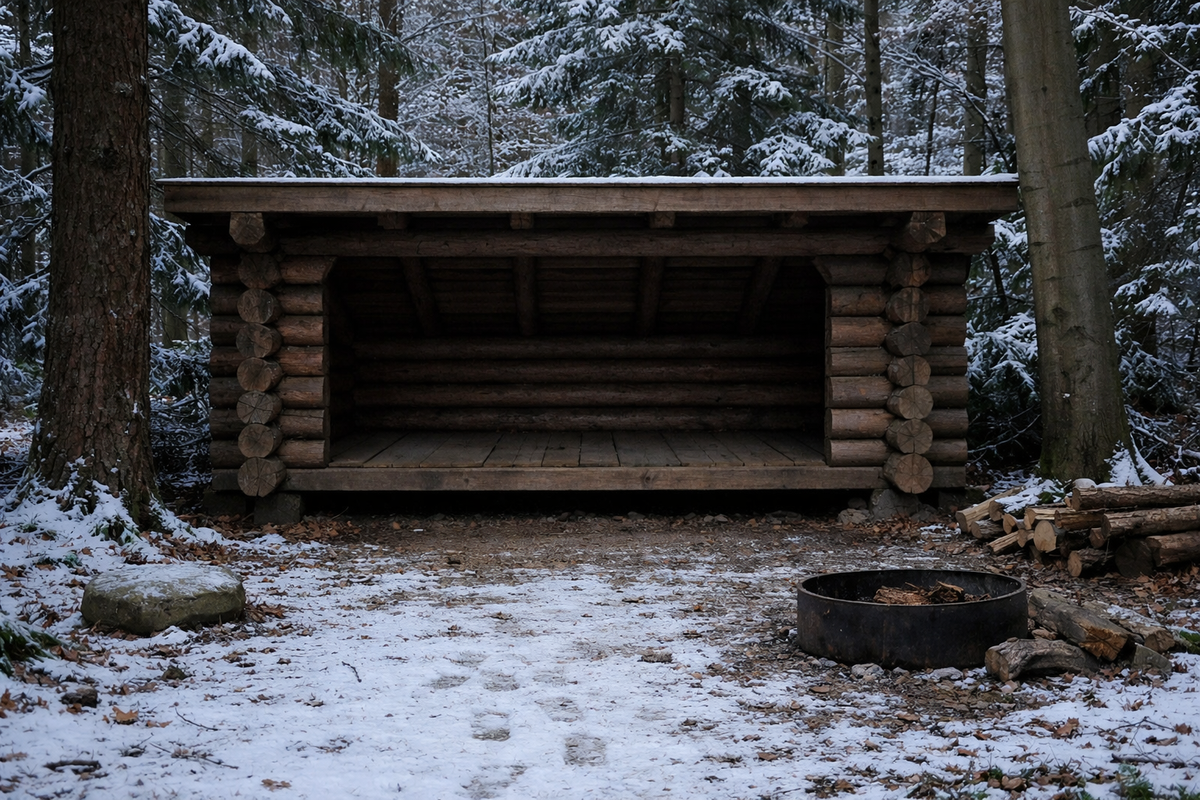
🧭 Winter overnights: pick your format
- Year‑round campsites (winter/open all year). Full facilities, electricity and heated wash blocks. Wellness areas often run on a shortened “winter schedule”, but the essentials work.
- Camper areas & city‑adjacent camps. Great “city+nature” base: if a storm hits, dive into museums and cafés, then return to a hot shower at night.
- Shelters (lean‑to) & primitive pitches. No electricity and often no water in winter—but you trade that for silence and immediate access to trails.
- Glamping tents/cabins. In cold season most people choose cabins: less wind exposure, better heat retention, a place to dry layers and charge devices.
🗺 Where winter camping really shines
- West Jutland / Vesterhavet. Dunes, endless beaches and “storm aesthetics.”
- Thy National Park. Pines plus dunes, many circular trails, wind‑sheltered forest pockets.
- Djursland / Mols Bjerge. Glacial hills, viewpoints, small cosy towns nearby.
- Rold Skov & Rebild Bakker. A vast forest—your “anti‑gale” refuge after the coast.
- Ribe & the Wadden Sea. Marshes, birds and big skies. Pure cinema in calm weather.
🏕 14 winter campsites in Denmark — details that matter
Expect “winter hours” everywhere and partial service reductions. Always check exact status for your dates.
1) Feddet Strand Resort (South Zealand)
Setting. A sandy peninsula with forest lanes; sea all around, strolls of any length.
Winter‑wise. Heated wash blocks, power, cabins; when the wind howls, retreat into the woods for calmer loops.
Quirks. Large resorts adjust spa/pool hours in winter; bring a thermos and a wind‑blocker for dune crests.
Nearby. Quiet fishing villages, sea bluffs and compact viewpoints.
Best for. First‑timers who want comfort + nature.
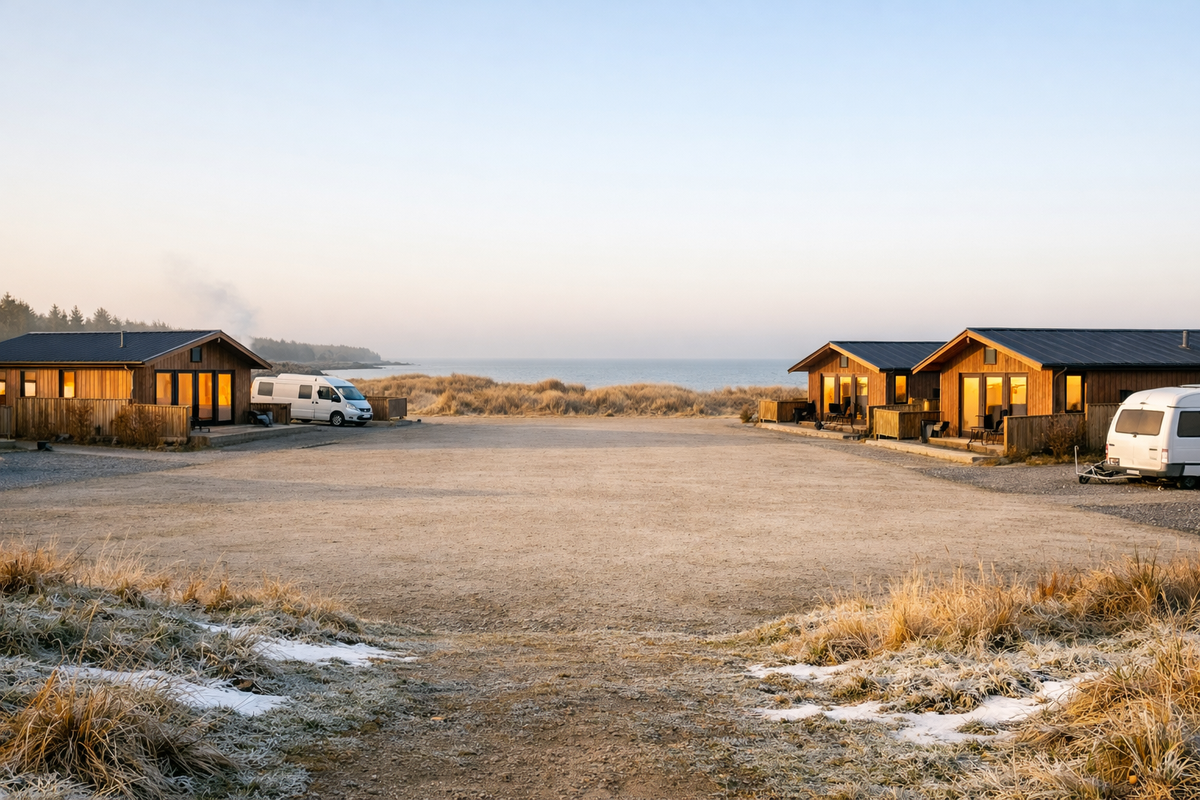
2) Hvidbjerg Strand Feriepark (Blåvand, West Jutland)
Setting. True North Sea drama: wide beaches, dunes, lighthouses on the horizon.
Winter‑wise. Full‑scale campsite, cabins and warm facilities; on calm days you get endless beach walks.
Quirks. Storms are real—pitch low behind dunes or go cabin.
Nearby. Dunes, art spaces, coastal viewpoints.
Best for. Families and anyone who wants a hot shower/sauna after a long walk.
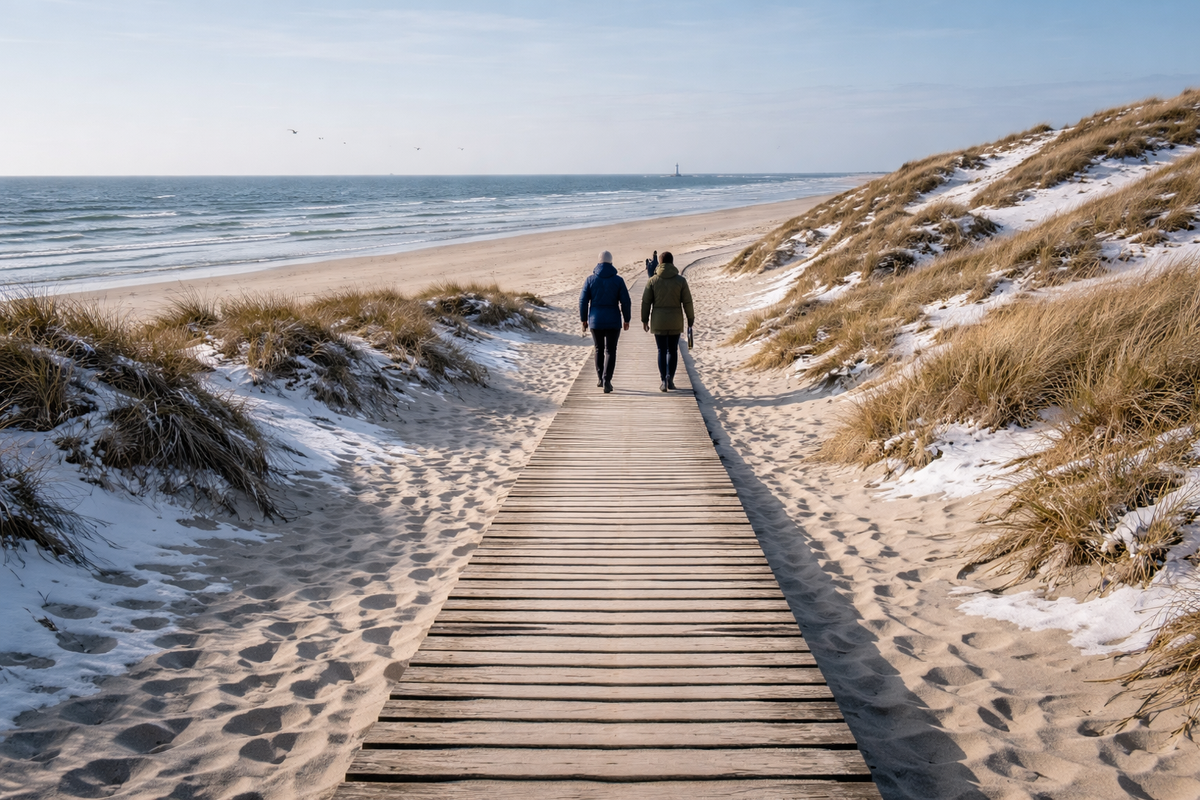
3) Marsk Camp (Wadden Sea)
Setting. Marshes, birds and low skies—haunting and cinematic.
Winter‑wise. Camper pitches and a good base for day trips to Ribe and the Wadden Sea promenades.
Quirks. Winds are “character‑building”; have a rainy‑day café plan in Ribe.
Nearby. Marsh trails, observation towers, old dikes, huge sunsets.
Best for. Drivers and lovers of big horizons.
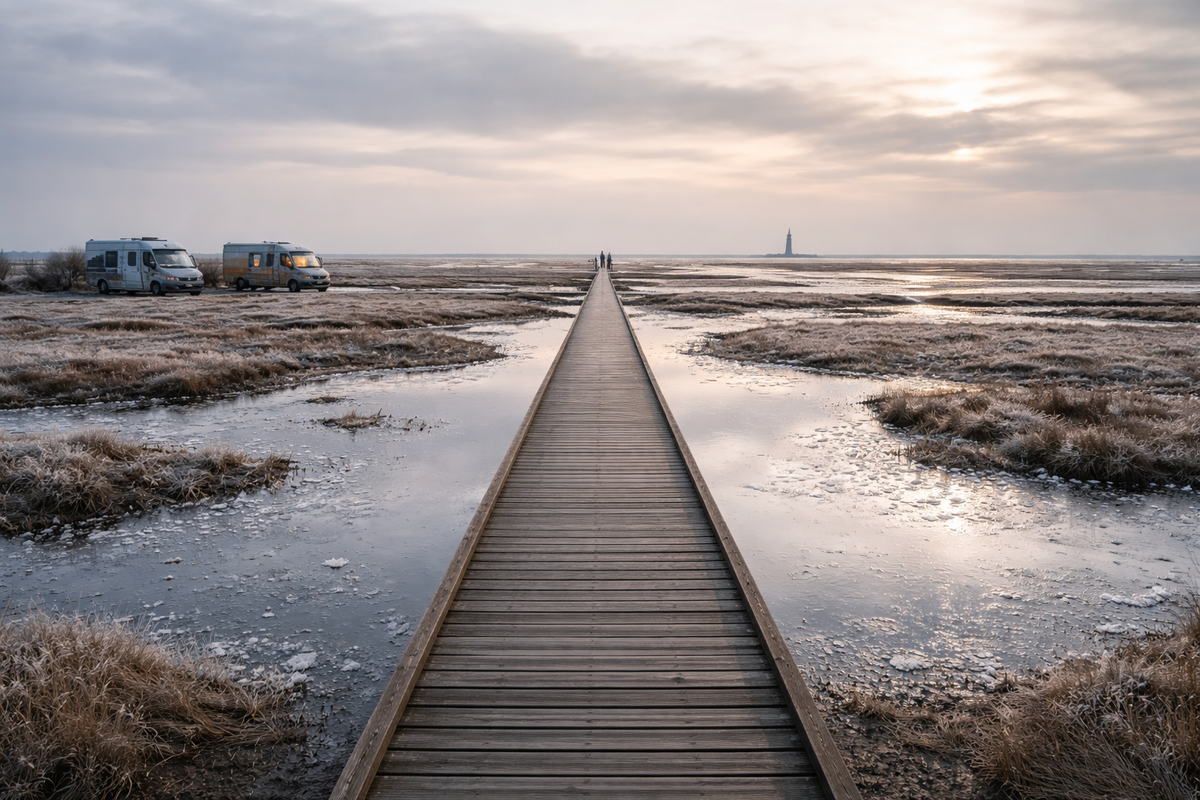
4) Ribe Camping (Ribe, South Jutland)
Setting. Fifteen minutes to Denmark’s oldest town—cobbles, cathedral, and wind that falls quiet among the roofs.
Winter‑wise. Ideal “city+nature” balance: marshes by day, warm medieval streets by night.
Quirks. When it’s gusty, sleep closer to the town side for quieter nights.
Nearby. Ribe’s old quarter, Wadden Sea viewpoints.
Best for. People who want Scandi atmosphere without going fully “wild”.
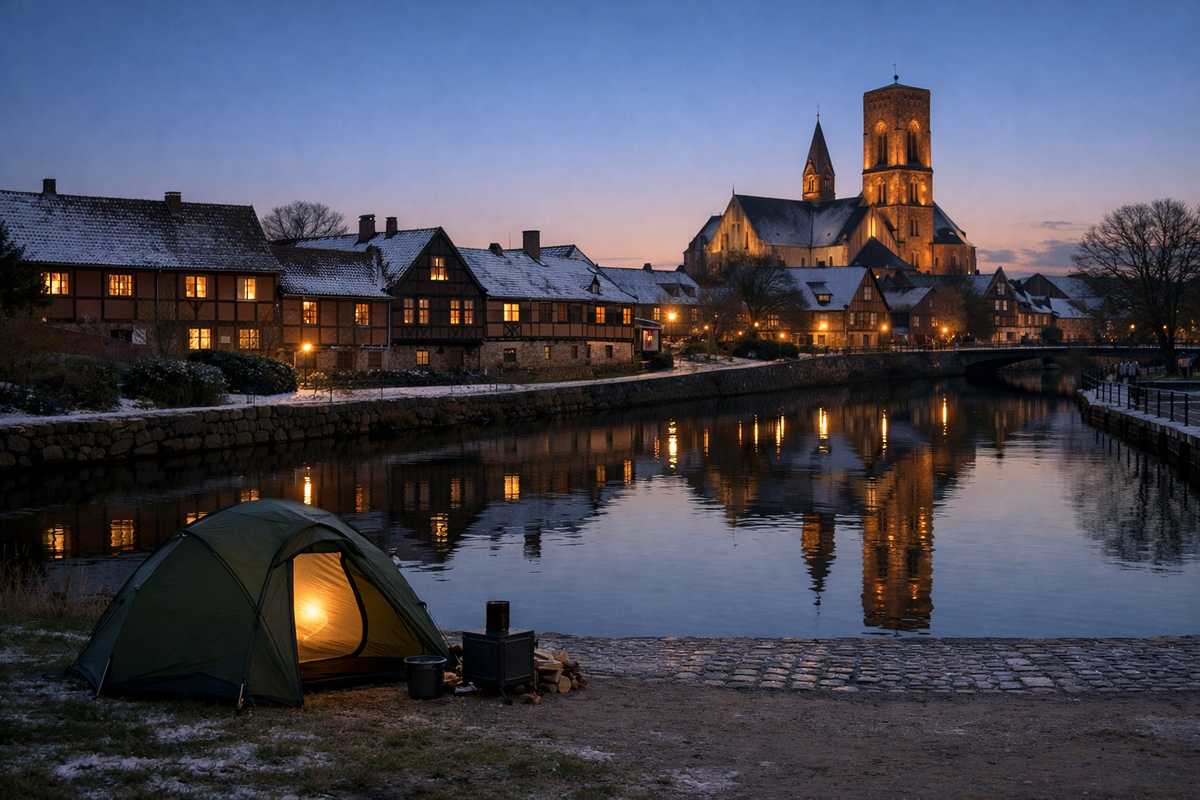
5) DCU Camping København – Absalon (Copenhagen)
Setting. A city camp with easy rail/metro, parks and waterfronts.
Winter‑wise. When the forecast turns foul: museums and bakeries save the day; evenings = hot shower and a fixed base.
Quirks. The urban location protects your itinerary from storms.
Nearby. Classic Copenhagen routes, covered food markets.
Best for. Mixed groups and first‑timers: nature by day, city by night.
6) DCU Camping Hornbæk (North Zealand)
Setting. Pale pine groves and sandy beaches—Scandinavia’s “Hamptons” vibe.
Winter‑wise. Long shoreline walks; forest belts act as windbreaks.
Quirks. Winter water/kitchens may be limited—pre‑plan a water stash.
Nearby. Helsingør, fortress/castle, waterfront promenades.
Best for. Sea views without dune battles.
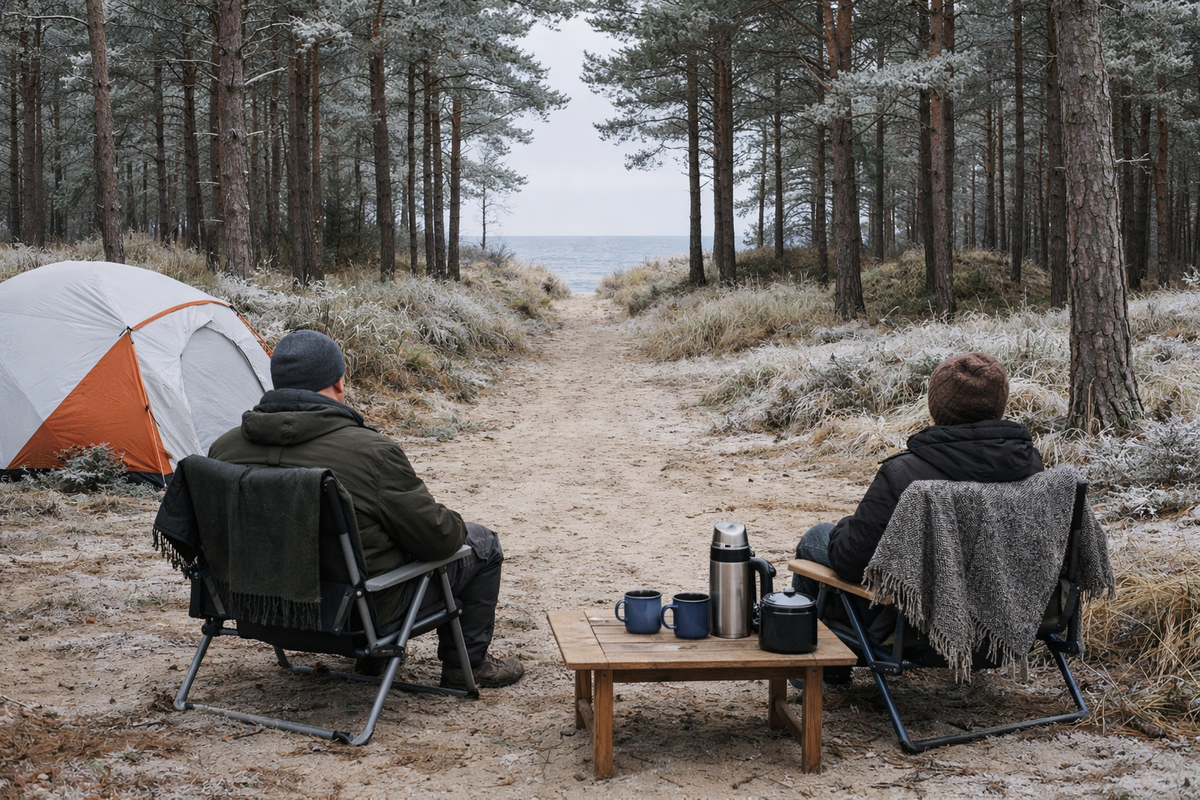
7) DCU Camping Rågeleje Strand (North Zealand)
Setting. Heatherhill’s sculpted coastal hills, big perspectives.
Winter‑wise. Compact, photogenic loops: sea, grasses, broken cliffs.
Quirks. It’s exposed—pitch in hollows or under the treeline.
Nearby. Hill paths, small resort villages, warm cafés.
Best for. Couples and photographers: postcard light.
8) DCU Camping Rørvig Strand (Odsherred)
Setting. Peninsula with sands and pines; a sleepy village rhythm.
Winter‑wise. Narrow forest lanes = perfect “anti‑gale” loops of 60–90 min.
Quirks. Water is often limited in winter—carry extra.
Nearby. Odsherred dunes, small galleries and bakeries.
Best for. Families and anyone who prefers low‑volume places.
9) DCU Camping Ebeltoft – Mols (Djursland)
Setting. Mols Bjerge’s hilly folds, bay views, and Ebeltoft’s cosy old town.
Winter‑wise. Hills give shelter; the town offers warm breaks.
Quirks. Uphill/downslope surfaces—bring shoes with good grip.
Nearby. Ruins on the narrow isthmus, multiple viewpoints.
Best for. Walkers who love scenic ridges.
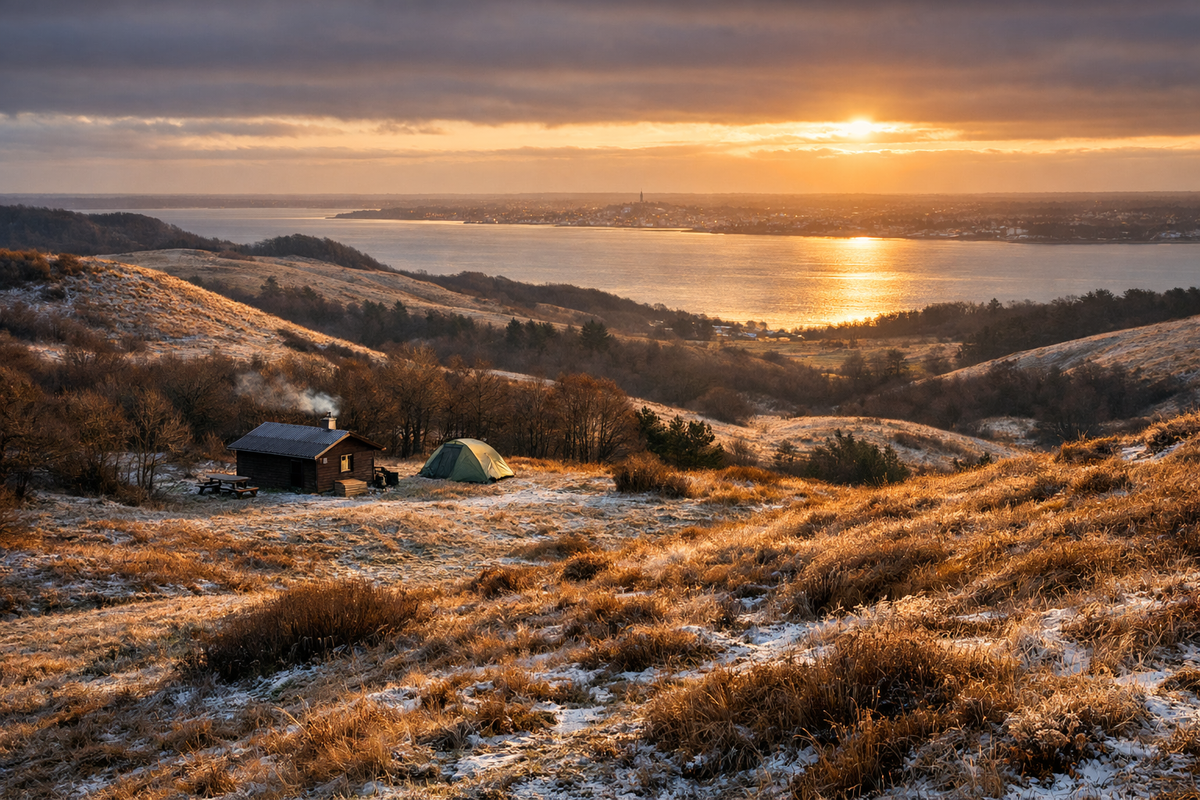
10) DCU Camping Tranum (North‑West Jutland)
Setting. Wild northwest: valleys, pines and the raw sea not far away.
Winter‑wise. Forests are calmer; the open shore shows “winter power.”
Quirks. In a blow, stick to the leeward forest edge.
Nearby. Jammerbugten vistas, traditional fishing hamlets.
Best for. People who like wind in the face—with a safe retreat.
11) DCU Camping Hesselhus (Silkeborg lake district)
Setting. Forests and lakes, gentle terrain—“Scandi Midlands.”
Winter‑wise. Trails stay usable after rain; many short circuits.
Quirks. Walk by day, dry layers in a cabin by night.
Nearby. Lake viewpoints, compact museums, harbourside paths.
Best for. Families and beginners who prefer forest calm.
12) DCU Camping Odense (Funen)
Setting. City + green belts: pair an Andersen‑themed centre with gentle island trails.
Winter‑wise. Softer winds than the North Sea coast; lots of indoor breaks.
Quirks. Winter kitchens/water may be partial—confirm beforehand.
Nearby. Historic quarters, riverside walks, parks.
Best for. City lovers who still want nature minutes away.
13) Hobro City Camping (Mariager Fjord)
Setting. Fjord views, low slopes and waterfront paths—Norway in miniature.
Winter‑wise. Fjords are calmer than open sea; long, steady walks.
Quirks. Reception often on “short hours”—arrive before dusk.
Nearby. Small museums, cafés, harbour areas.
Best for. Couples and fans of water landscapes without harsh wind.
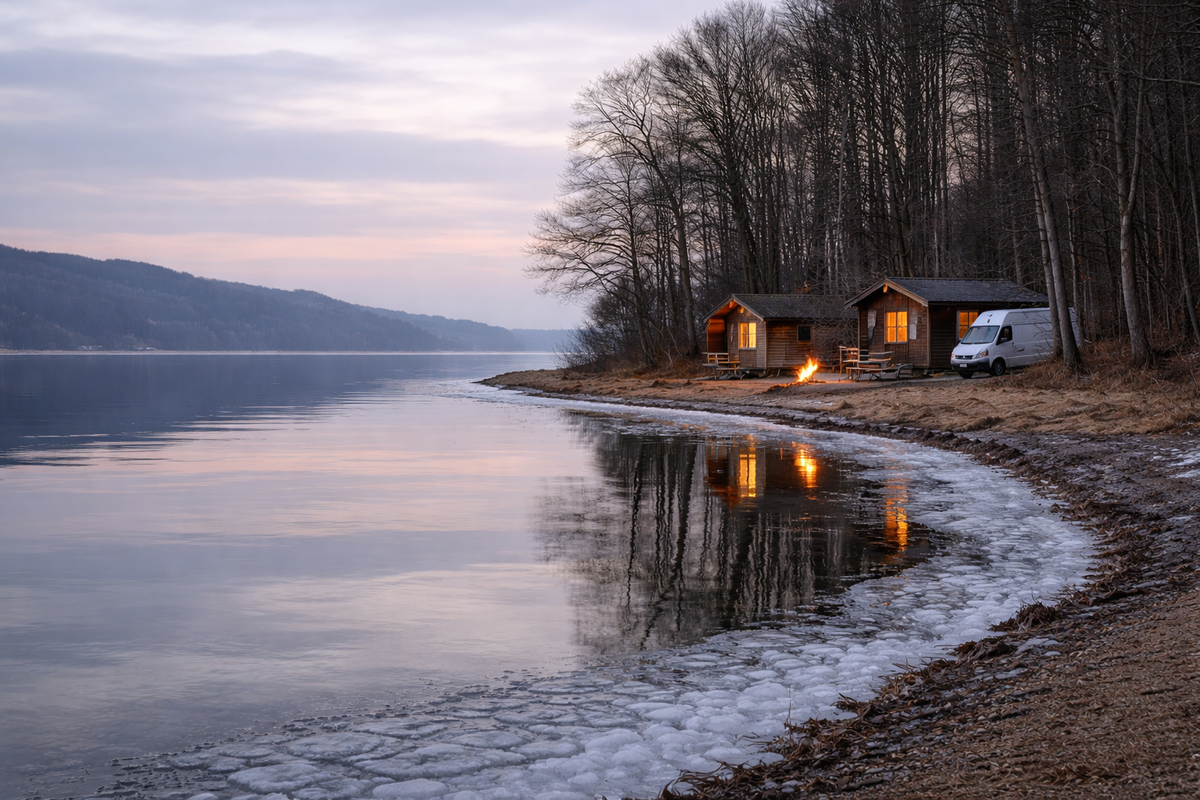
14) Skagen Camping (the far north)
Setting. Denmark’s tip—two seas meet; heather fields and luminous painter’s light.
Winter‑wise. Crisp blue days, lingering sunsets.
Quirks. Wind is the main character: anchor guy‑lines, seek wind‑shadow; many choose cabins.
Nearby. Dunes, sand tongues, Skagen’s old quarters.
Best for. Experienced campers and lovers of northern mood.
🗺️ Interactive map
🚿 What really works in winter (and what doesn’t)
Year‑round camps = heated wash blocks + electricity; spa/pools on a reduced schedule.
Shelters/primitive sites = often no water, no showers; toilets may be closed until spring; carry water.
📋 “Winter services” by overnight type
🧰 Gear & camp craft: your warm “minimum”
- 🛏 Sleeping bag comfort 0…–5 °C + warm liner.
- 🧊 Mat R‑value 3.5+, ideally two layers (foam + inflatable).
- 🧥 Layering: thermal, fleece/down, shell; liner gloves and a warm hat.
- 🔥 Winter gas/stove with windscreen; fire steel/matches in a zip bag.
- 💡 Headlamp + power bank; it gets dark early.
- 🚰 Water: 2–3 L pp/day—shelters/primitive sites often have taps off in winter.
- 🗺 Exit plan: nearest heated cabin/town, morning bus, a backup for storms.
⚠️ Safety & common sense
- 🌬 Coast = wind. Pitch in dune hollows, hide behind treelines.
- 🥶 Don’t be a hero. Prolonged rain + 12–18 m/s gusts = cabin night. Sleep comfort beats bragging rights.
- 🧭 Shelters = arrive in daylight. Forest access takes longer in winter dusk.
- 🚱 Assume toilets/water may be closed. Carry a surplus and alternatives.
✅ HTML insert: printable winter checklist
- Warm sleeping bag (comfort 0…–5 °C) + liner
- Two‑layer ground setup: foam + inflatable (R‑value 3.5+)
- Thermals, shell, liner gloves, warm hat
- Winter gas, windscreen, fire steel/matches
- Water 2–3 L pp/day
- Headlamp and power bank
- Storm backup: nearest heated cabin/transport
📌 Summary
- Comfort beats heroics in Danish winter.
- Year‑round camps = hot shower & power; shelters = stars & silence (but usually no water).
- The “swing route” works best: coast/forest by day → heated base at night.
Plan flexibly: check winter modes, carry water, keep a storm backup—and the season will reward you with more joy than hardship.
❓FAQ
Yes—on year‑round camps. Spa/pool hours are shorter, but heated blocks run.
Often no. Water is off “for frost,” summer kitchens/showers closed. Carry water and plan B.
If it’s windy/wet, go cabin: heat, drying, power. Use the tent on calm forest nights.
Vesterhavet for “storm mood”; Mols Bjerge & Rold Skov for shelter and gentle trails; Ribe/Wadden for big skies.
Forecast says all‑night rain + strong wind, no shelter, team is tired, gear is damp → choose a cabin and save the trip.

0 comments
Log in to leave a comment