


⛷️ Where to ski in Denmark in winter: small slopes, CopenHill and trips to Sweden
Imagine you are planning a winter trip to Scandinavia. You open forums and see the same phrases again and again: “Norway for skiing”, “Sweden or nothing”, “Denmark is too flat”. If Denmark appears at all, it is usually in one sentence about an artificial slope in Copenhagen. It looks as if there is nowhere to ski here and no reason to even try.
In reality things are more nuanced. Yes, Denmark has no real mountains. But there are several small snow slopes, CopenHill works all year, in good winters forest tracks are prepared for cross‑country, and Swedish resorts in Skåne and Halland are just one bridge or ferry away from Copenhagen. The question is not “are there mountains”, but “for which scenarios does this make sense at all”.
Below we break down where you can ski inside Denmark, when it is worth going to Sweden, how to manage without a car and what to do with equipment.
🌬️ Skiing in a “flat” country: what to expect from winter
The key feature of Danish winter is not hard frost but changeable weather and wind. Snow can fall beautifully and stay for weeks, or disappear overnight. Planning a whole week of intensive downhill skiing only in Denmark is therefore risky. But adding one to three active days to a city or nature trip is absolutely realistic.
The typical Danish winter‑ski approach is:
– short weekend outings to small slopes;
– evening sessions on CopenHill;
– cross‑country in the forest after a snowfall;
– a one‑ or two‑day trip to a Swedish resort if you want “real” pistes.
For these scenarios it is worth looking at the map and choosing locations.
🎢 CopenHill: a city slope above Copenhagen
CopenHill is the best‑known example of how Denmark treats winter with imagination. It is an artificial slope on the roof of a waste‑to‑energy plant on Amager island. You take the lift up, step out onto the roof and see chimneys, the sea and, in the distance, the Øresund Bridge to Sweden. Under your skis is not snow but a special plastic surface you can ski on all year.
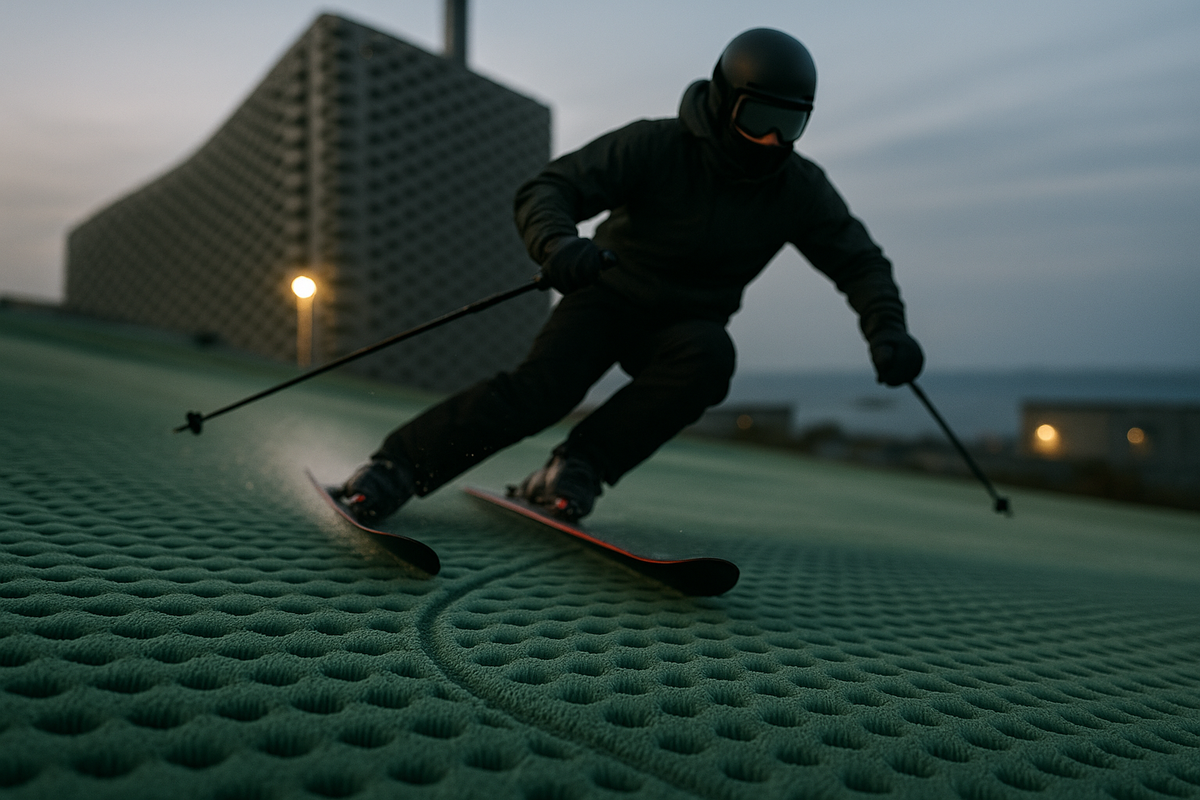
You will find here:
– several lines with different steepness;
– a learning area for beginners and children;
– working lifts;
– rental of skis, helmets and boots;
– the option to book a lesson with an instructor.
A typical traveller’s scenario: morning in Nyhavn and museums, 2–3 hours on CopenHill in the afternoon, dinner and hygge in the centre in the evening. This is not a ski resort and not a place for all‑day “ski safari”. But as a vivid, active element inside a city break, CopenHill works perfectly, especially for those who have never skied and want to try.
🎿 Small snow slopes: Hedeland and Bornholm
When winter in Denmark is kind and temperatures stay below zero, small snow slopes come into play. The best‑known is Hedeland Skicenter near Roskilde. It is a former gravel pit converted into several short runs. Vertical drop is around 45 metres, length up to about 250–280 metres, with gentle sections for beginners and slightly steeper ones for more confident skiers.
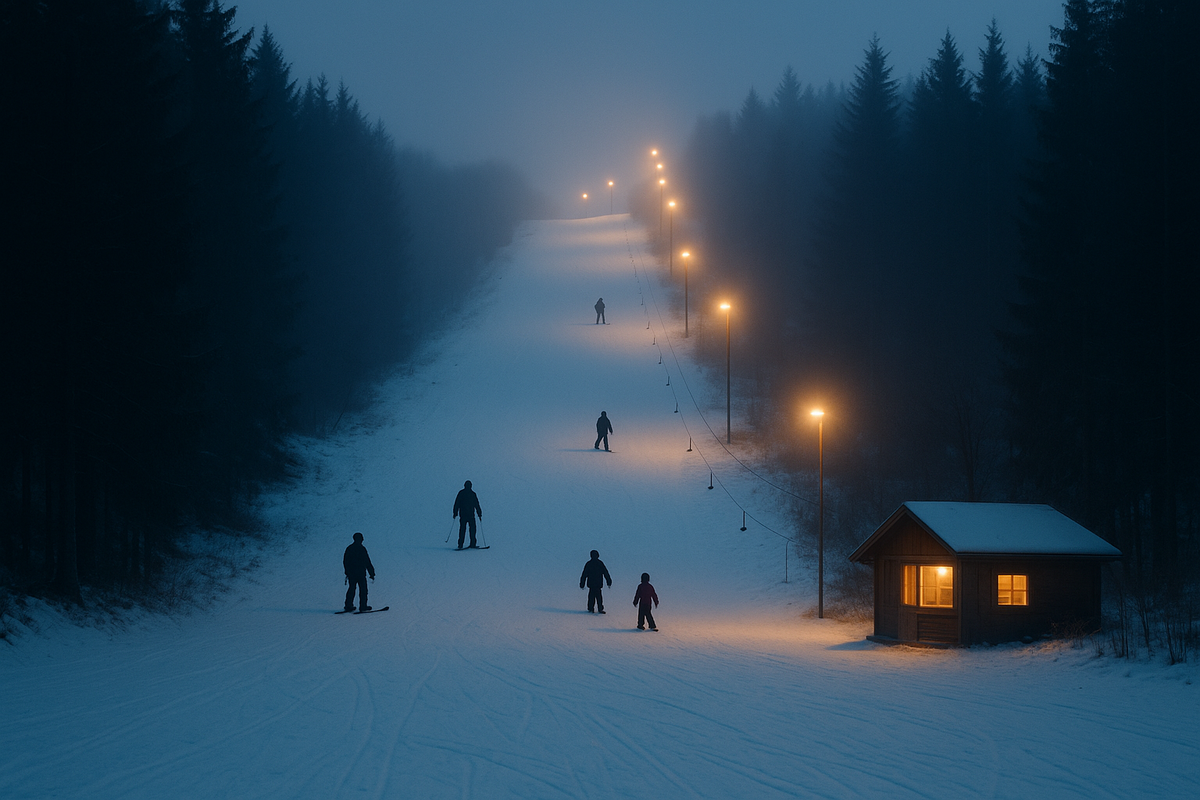
What to expect at Hedeland:
– simple drag lifts and modest infrastructure;
– floodlights and opening at weekends whenever conditions allow;
– a cosy local‑club atmosphere: many families, ski clubs, hot chocolate and pines all around.
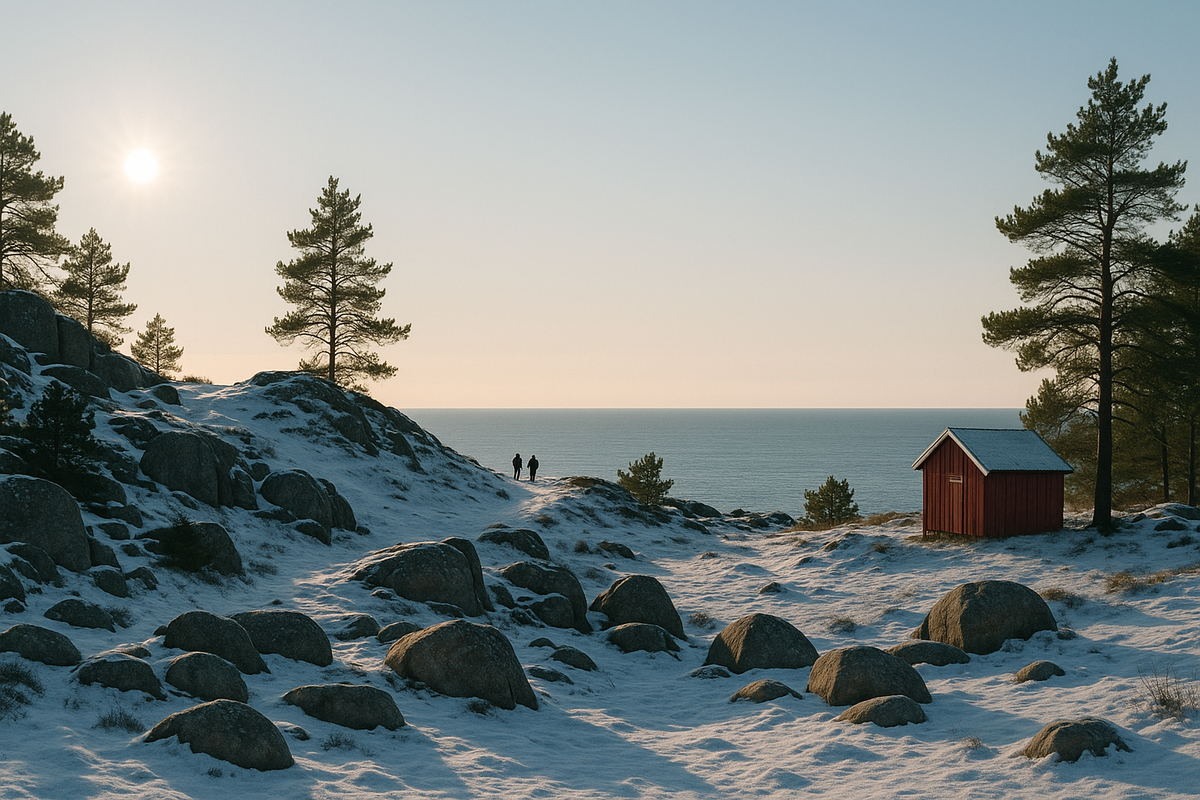
On Bornholm, if winter brings enough snow, enthusiasts prepare a small slope on one of the island’s hills. The setting is forest and stone fields, with the sea not far away. If you are already heading to the island for walking along granite cliffs and fishing villages, a snow day on skis is a nice bonus.
📊 Ski formats at a glance
🥾 Cross‑country: forest hygge instead of big mountains
For Denmark, cross‑country skiing feels more natural than downhill. The terrain is gentle, elevation modest and there are plenty of forests. When snow stays long enough, popular areas get prepared loops.
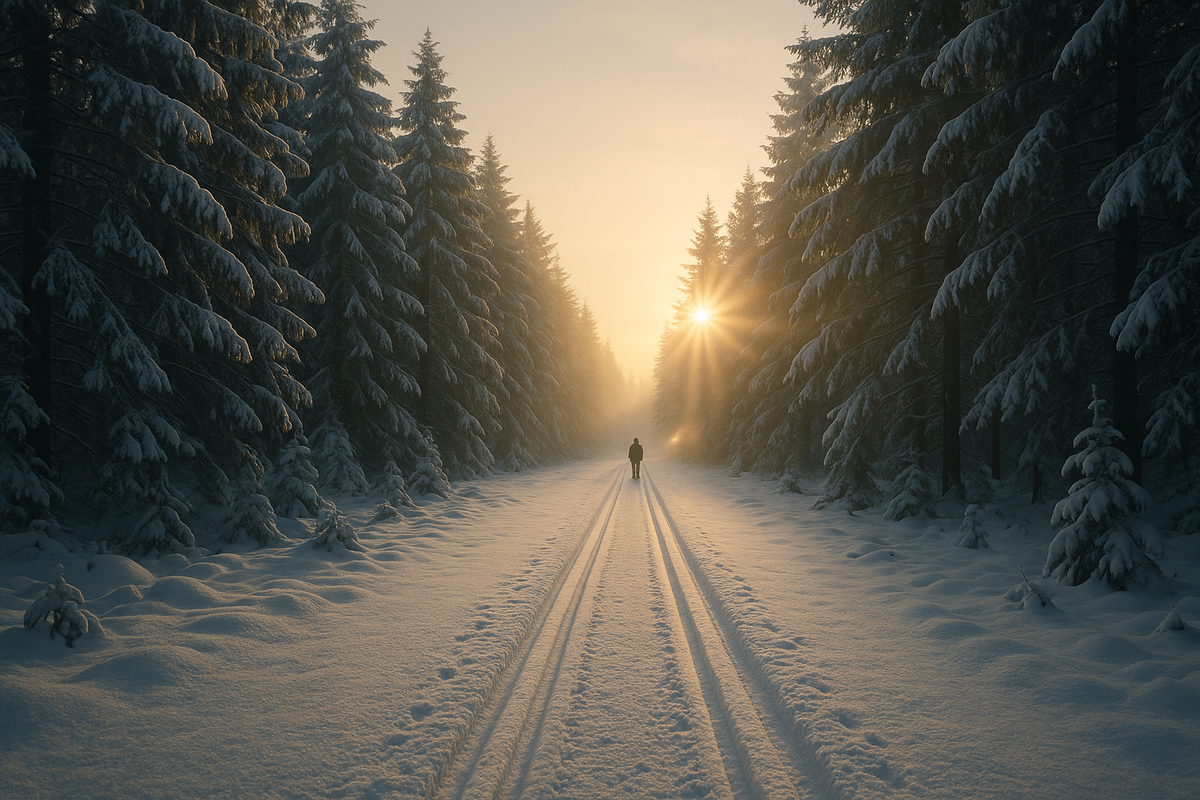
Good starting points include:
– Rold Skov and Rebild Bakker in northern Jutland: coniferous forests, hills, open fields and several car parks for 1–3 hour loops;
– Almindingen on Bornholm: a quiet central forest that combines easily with walks to rocky coasts;
– suburban forests on Zealand, reachable by regional trains and buses from Copenhagen when snow falls evenly.
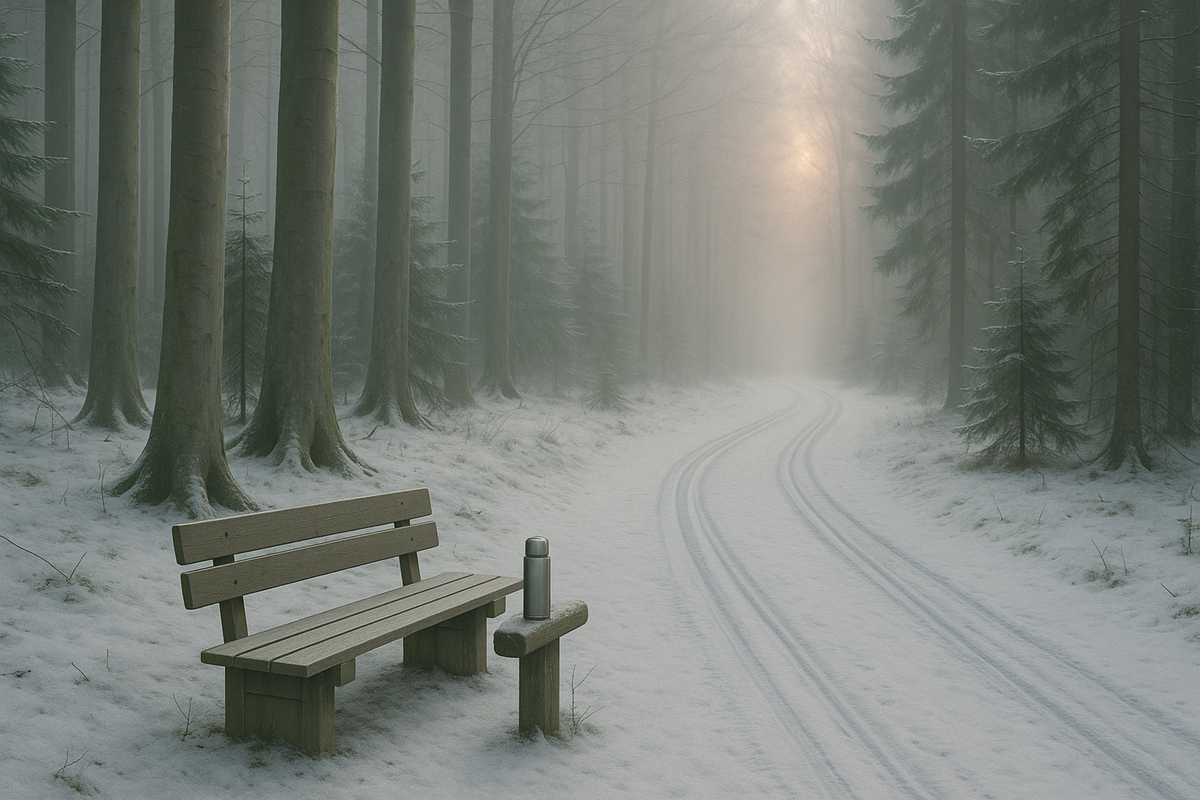
This format suits those who are not chasing speed but atmosphere: snow in branches, vapour from your breath, a thermos of coffee in the rucksack and the feeling of a fairy‑tale forest only 20–30 minutes from civilisation.
🧮 Mini‑configurator: which format suits you
⛴️ One‑day trips to Sweden: when do they make sense?
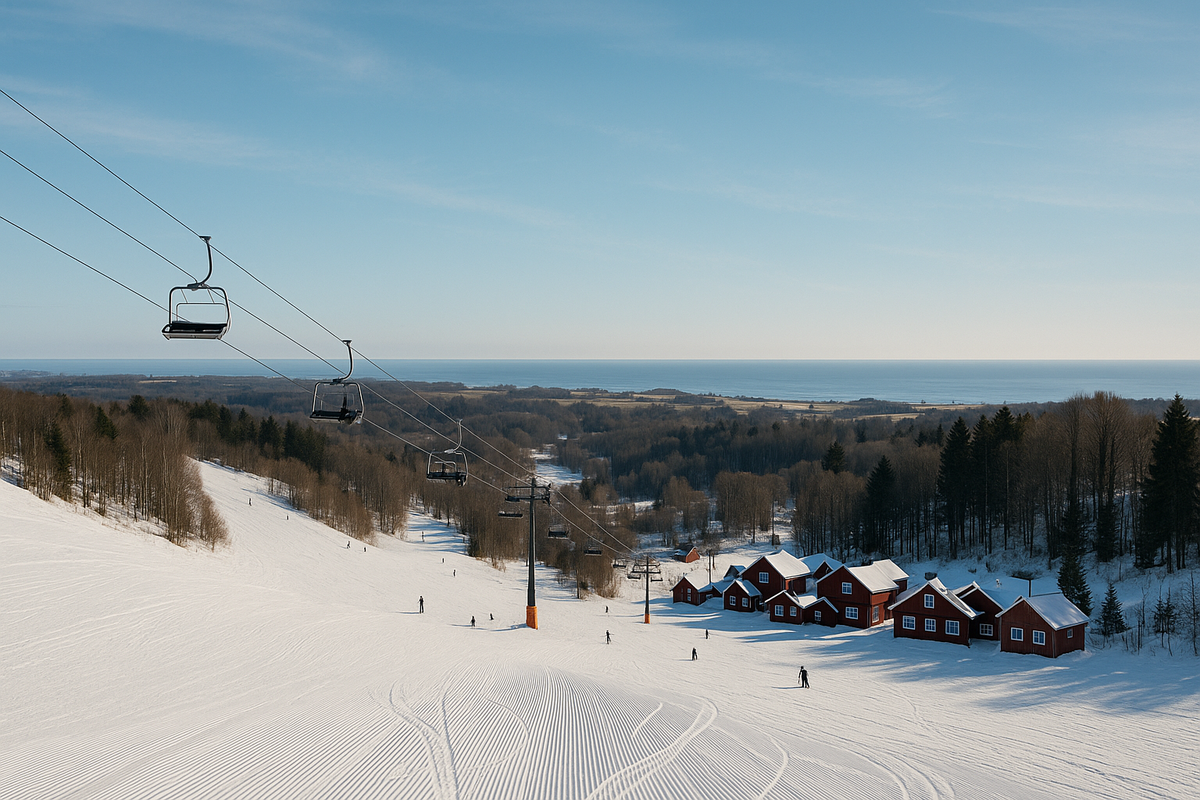
If you ski confidently and have outgrown short Danish runs, the natural next step is Swedish slopes in Skåne and Halland. From Copenhagen they are usually 2–3 hours away via the Øresund Bridge or a ferry. After that it is classic resort life: several lifts, blue and red pistes, cafés at the base, rental shops and school groups.
Typical day: early departure, arrival by opening time, skiing until mid or late afternoon, dinner and the drive back. Keep in mind:
– the return cost of bridge or ferry;
– fuel and parking;
– the forecast: strong wind and snow can make the drive home unpleasant;
– the short winter daylight: leave in the dark but try not to return too late.
This trip makes sense if you have already tried CopenHill and Danish hills and want more, but are not yet ready for a full week of skiing.
🧣 Gear and clothing: bring your own or rent?
The main advantage of Danish formats is that almost everywhere you can rely on rental. This is handy if you fly into Copenhagen with hand luggage and do not want to pay for sports baggage.
It is worth bringing your own skis and boots if:
– you combine Copenhagen with a week of skiing in Norway or Sweden;
– you have many seasons behind you and other people’s boots feel uncomfortable;
– you travel by car and are not limited in boot space.
In all other cases it is easier to rent and focus on clothing. In Denmark the thermometer may show around zero, but humidity and wind make it feel more like minus ten. Layers matter more than the number on the screen.
✅ Gear checklist
Gear checklist (ready to copy)
- Thermal underwear (top and bottom).
- Fleece or wool mid‑layer.
- Windproof jacket and trousers.
- 1–2 pairs of warm socks.
- Waterproof gloves or mittens.
- Hat and buff or balaclava.
- Goggles or sunglasses to protect from wind.
- Thermos with a hot drink.
- Snacks: nuts, bars, dried fruit.
- Power bank and cable for your phone.
- Small first‑aid kit and plasters.
- Whistle or small torch.
🚆 Is a car essential?
For a purely city‑based scenario the answer is no. You can reach CopenHill by metro and bus, and some forests with cross‑country tracks sit in the zone of suburban trains and regional buses. Just check evening and weekend timetables in advance so you do not stand shivering on a windy platform.
Hedeland and Swedish resorts are much more convenient by car. You are not dependent on connections, can bring more warm clothing and return when you are tired rather than when the train goes. A compromise is a one‑day car hire: live “without a car” for most of the trip but take one just for the ski day.

🎯 Who are Danish ski options really for?
– Families with children who need a safe, gentle start without long pistes and a heavy “sporty” atmosphere.
– Travellers based in Copenhagen or Aarhus in winter who are looking for one or two active days.
– Those who want to warm up before Norway or the Alps and test how they handle cold, boots and wind.
– Nature lovers who prefer cross‑country through forest to big‑mountain adrenaline.
❓FAQ
No. Everything depends on the winter: sometimes good cover stays for weeks, sometimes it melts in a couple of days. Only CopenHill with its plastic surface is guaranteed to work.
Yes. There is a beginners’ area, gentle gradient, instructors and children’s rental. The slope is low and the surface predictable, so fear of height and hard falls is minimal.
Usually not. It is easier to rent a full set on site and avoid paying for sports baggage. Bring your own gear if you combine Copenhagen with a week of skiing in Norway or Sweden or if you travel by car.
Yes, but it is a long day. You need an early start, advance tickets for the bridge or ferry, a careful look at the wind and snow forecast and a time buffer for the drive back, so you are not on the motorway in a night snowstorm.
The thermometer often shows around zero, but humidity and wind make it feel much colder. With proper layering, warm gloves and a hat it is comfortable; without gloves and a buff you can freeze very quickly.
Yes, and that is the charm of the Danish format. Spend the morning on a slope or in the forest, be back in Copenhagen, Aarhus or your sommerhus by evening, go to a café, light the fire and turn the ski day into part of a bigger winter hygge rather than a separate sports marathon.

0 comments
Log in to leave a comment