


🛷 Where to go sledging and tubing: winter hills near Copenhagen, Aarhus and Aalborg
Imagine a perfect Danish winter day: light frost, steady snowfall and the sound of children squealing as snow tubes scrape over the hard-packed snow. No complicated lifts, no expensive ski pass – just the nearest hill, a thermos of cocoa and a couple of hours of laughter.
This is exactly what families and groups of friends are looking for: close to the city, a safe slope, parking or a bus stop nearby, toilets and somewhere warm to hide for a while. In this article you will find specific places around Copenhagen, Aarhus and Aalborg plus several forest hills in Jutland that wake up as soon as the snow sticks.
We will look at where to go with small children and where it is better for adults, how to understand when there is enough snow and which simple safety rules are worth following so the day does not end at the emergency department.
🌙 How Danish winter hills work
Denmark rarely has deep, stable snow all winter, but almost every town has natural or artificial hills: coastal parks, man‑made mounds, forested slopes in Jutland. As soon as there is at least 5–10 cm of snow, the hills come alive – often without any formal “sledging area” status, purely by local tradition.
A few important features:
• snow can last only a few days;
• on most hills there is no staff and no rental – you bring your own sledge or tube;
• the gradient often varies across the hill: one side gentler, the other steeper, which is ideal for families with children of different ages;
• in city parks paths, trees and benches can be close, so it is worth choosing your line in advance.
Now to the locations.
🌙 Copenhagen and Zealand: city hills and family‑friendly parks
The capital region has dozens of spots where residents rush with sledges after the first proper snowfall. Below are those that are most convenient and understandable for visitors.
🏞️ Søndermarken and the hill by the zoo (Frederiksberg)
This is a classic Copenhagen sledge hill: a long, even slope dropping from the upper part of the park towards the zoo. In a good winter the whole lawn turns into a white amphitheatre – queues of sledges at the top, children sliding almost all the way down to the path.
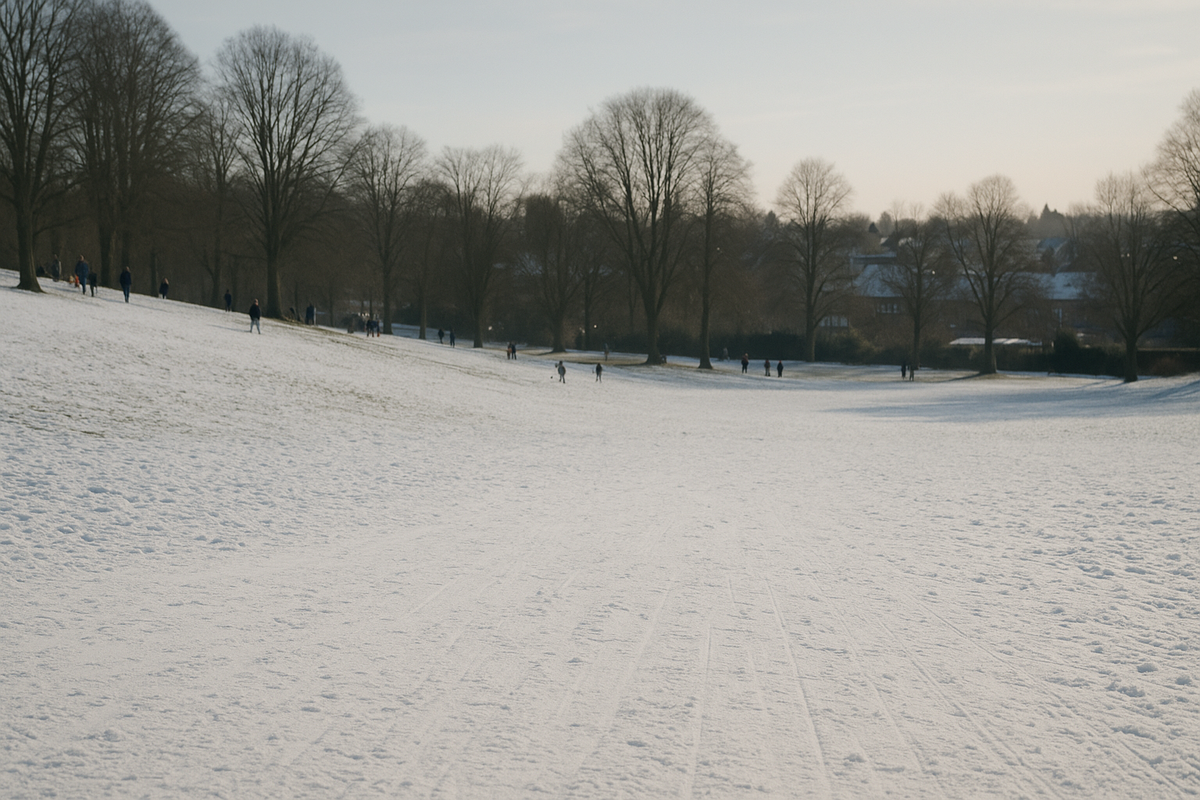
• For whom: families with children from about five years old and groups of friends. For toddlers you can use the gentler sides of the hill.
• Surface: grass, no stones; with a decent snowpack it is comfortable to ride.
• Facilities: toilets by the zoo and in the park; cafés and kiosks nearby, supermarkets along Frederiksberg Allé.
• How to get there: metro to Frederiksberg Allé or buses to the zoo, then a 5–10‑minute walk.
🌳 Valbyparken and Valby Bakke
Valbyparken is one of the largest parks in Copenhagen, and Valby Bakke is a prominent hill with a view over the city. When it snows, its slopes become a spacious playground for sledges and tubes.
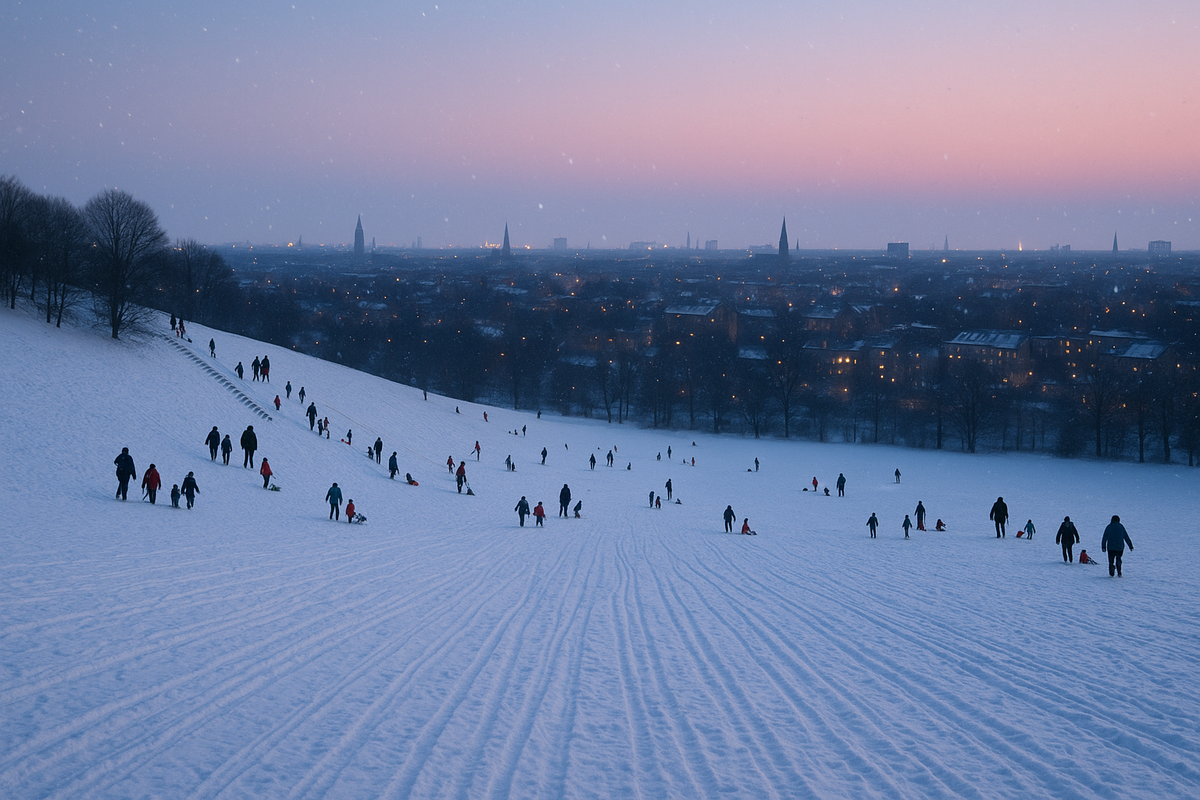
• For whom: families, beginners and everyone who wants to “let off steam” for a couple of hours.
• Features: several gradients; steeper at the top, gentle run‑out on the meadow below.
• Facilities: car parks by the park, playgrounds, toilets in season; a supermarket not far away.
• How to get there: S‑train to Valby, then a bus or a 15–20‑minute walk.
🌲 Utterslev Mose and Grøndalsparken
To the north‑west of Copenhagen there are a few small but pleasant slopes with views of the lakes and green belts. When the snow is good, there is less crowding here than in the central parks.
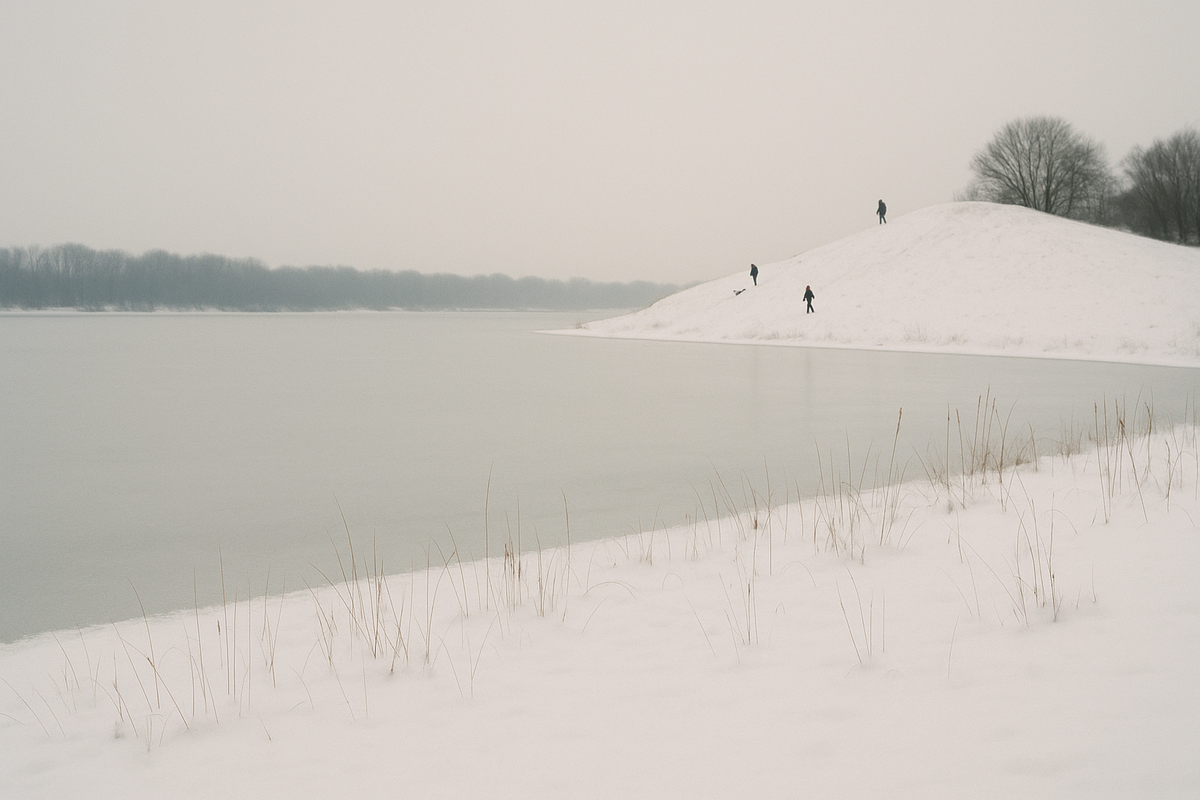
• For whom: those who prefer quiet spots and live or stay in the north‑west districts.
• Facilities: several small car parks, a couple of public toilets around the lakes, supermarkets in the residential streets.
• How to get there: buses from Nørrebro or Flintholm metro stations; also easy by bike.
⛷️ Hedeland Ski Centre as a tubing hill
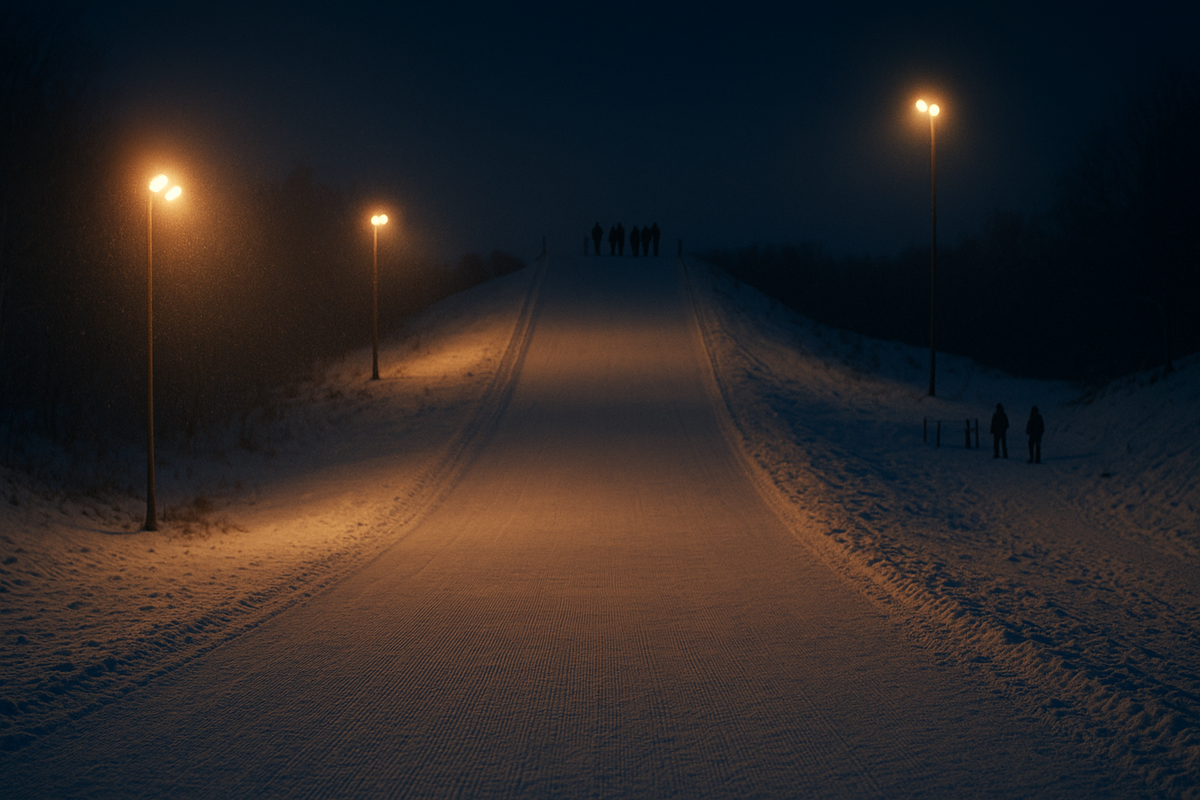
When the small ski hill in Hedeland opens, part of the slope is often used for sledges and tubes. The plus is reliable snow cover and controlled lines; the minus is that you almost certainly need a car and a bit more planning to get there.
📋 Overview of key sledging spots
| Location | Type of hill | Best for | What’s nearby |
|---|---|---|---|
| Søndermarken (Frederiksberg) | Long grassy slope, some parts fairly steep. | Families with children 5+, groups of friends. |
|
| Valbyparken / Valby Bakke | Wide hill with several runs of different steepness. | Beginners, mixed groups with children and adults. |
|
| Utterslev Mose / Grøndalsparken | Small slopes down towards lakes and green areas. | Those who dislike crowds and stay in the north‑west. |
|
| Hedeland (near Roskilde) | Part of the ski slope used for sledges and tubes. | Travellers ready to drive a bit further for more reliable snow. |
|
⛰️ Aarhus and Eastern Jutland: forest and sea
Aarhus has the advantage of being squeezed between hilly coastline and forest. As soon as the snow is sticky and deep enough, eastern Jutland turns into one big sledging area.
🌳 Marselisborg Skovene and the hills by Mindeparken
The forest belt along the bay and the park by the royal residence are classics of Aarhus winter. The slopes cascade from the tree line down towards the sea; some are fairly steep, others gentle.
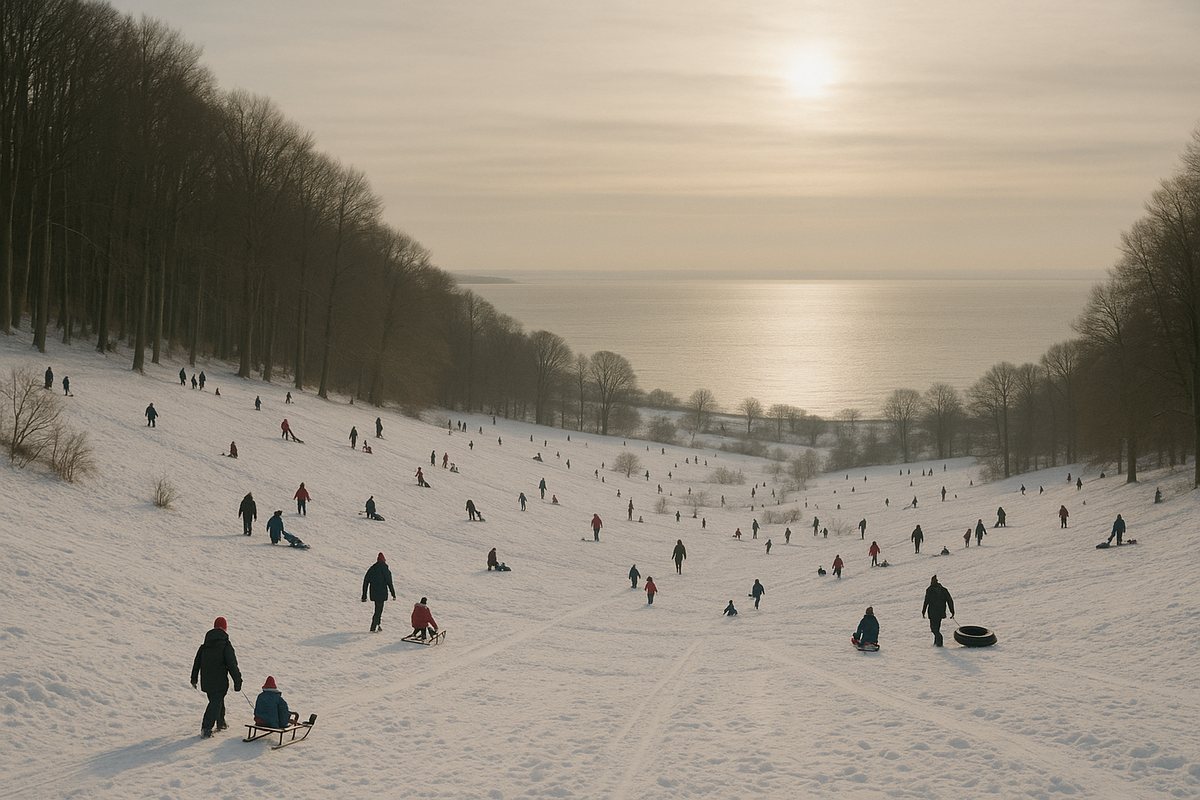
• For whom: families who want to combine a forest walk, sea views and sledging.
• How to get there: buses from the centre to Mindeparken or a 25–30‑minute stroll along the waterfront; parking can be busy at weekends.
🏞️ Hasle Bakker
Artificial hills to the west of the centre with views over the city and the bay. When it snows, people come here with sledges and tubes; in summer it is a popular MTB area.
• For whom: active groups and teenagers; some slopes are quite steep.
• Facilities: car park at the base, walking paths to the top, shops in the housing estates below.
🌲 Riis Skov and northern slopes
Riis Skov is not mountainous, but there are small slopes along the northern paths where local children happily slide on plastic trays and small sledges. For visitors it is more “winter walk with a bit of sledging” than a full‑blown destination – but if you are staying nearby, it is an easy bonus.
❄️ Aalborg and Northern Jutland
Further north the terrain becomes – by Danish standards – noticeably more dramatic: hills, bluffs towards the fjords, forested ravines.
🏕️ Lindholm Høje
A hill with ancient graves and a view over the fjord north of Aalborg. With snow, the gentler parts of the hill become pleasant, not too fast sledging slopes.
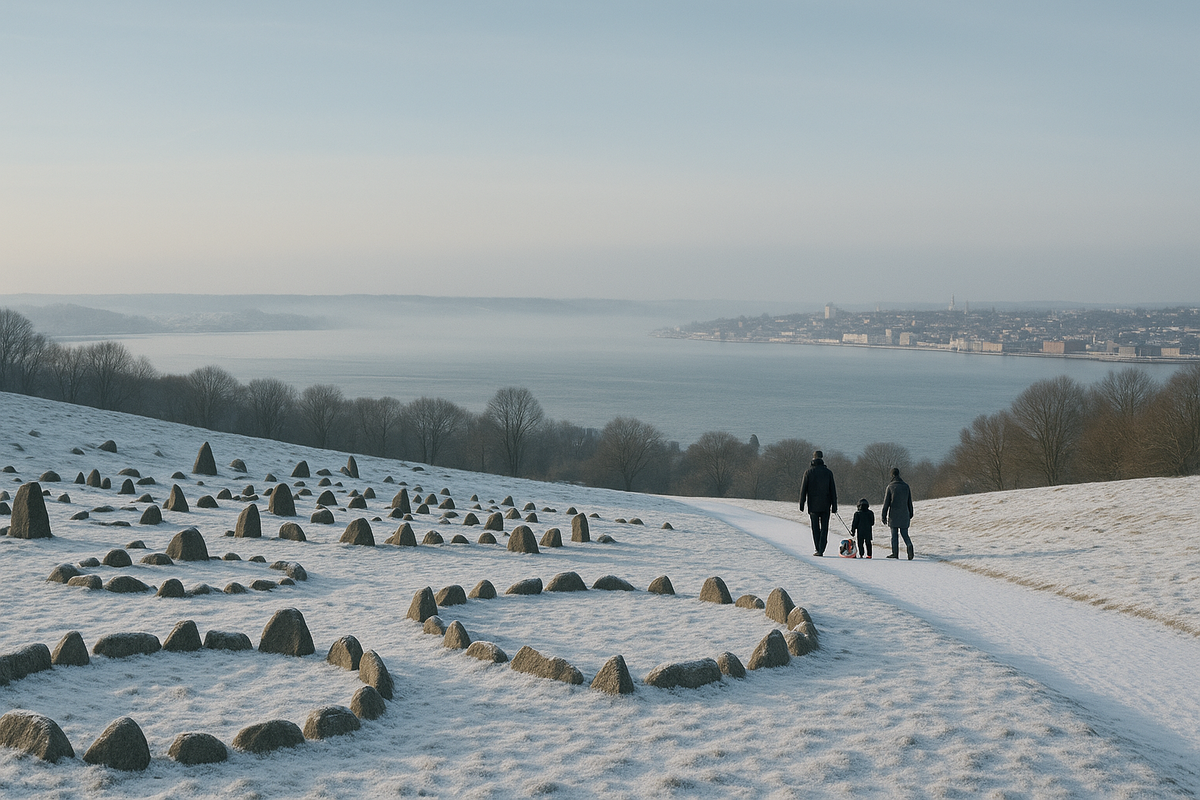
• For whom: families who want atmosphere and history as well as fun.
• Facilities: museum, car park, toilets.
🌿 Slopes around Rold Skov and Rebild Bakker
South of Aalborg, in the Rold Skov area, there are many natural slopes that locals use as “wild” sledging hills after a snowfall. Wide meadows, forest and, in places, decent elevation gain – but this also means more demands on judgement and skills. For family sledging it is often best to stick to the softer hills in Rebild Bakker and leave the steeper ones to adult tubing.
📅 How to know if there is snow: mini calendar and quick checks
In Denmark the snow forecast is often more important than the exact address: a perfect hill without snow is just a green mound.
Key points:
• watch not only the temperature but also the type of precipitation (wet snow vs rain);
• check local radars and snow cover maps;
• remember that coastal wind eats snow faster on open slopes;
• inland and northern Jutland are usually colder than Zealand.
The mini calendar below is not a precise forecast, but a month‑by‑month guide.
| Month | Copenhagen & Zealand | Aarhus & East Jutland | North Jutland |
|---|---|---|---|
| December | Unstable snow, often wet. Good for rare “snow days” in parks. | Higher chance of snow, but it melts quickly by the sea. | First more stable snowy days on the hills. |
| January | Best chance of 2–5 snowy days in a row. | Fair chances of snow, especially in forest areas. | Often the best month for sledging and tubing. |
| February | Either brilliant snow or almost none – big swings. | A lot of wet snow is possible; good days alternate with thaws. | Snow tends to last longer, especially away from the coast. |
| March | More of a bonus snowfall than a planned season. | Occasional snowy days but already long daylight hours. | Sometimes late snowfalls with strong sun. |
🦺 Safety on the hill: mini checklist
Even a small hill can be dangerous if it ends on a road or concrete path. Before you launch a tube at full speed, walk the run on foot.
Key rules:
• children should wear a helmet, and adults on steeper hills as well;
• choose sledges and tubes with handles and a solid bottom without sharp plastic “rails”;
• keep distance between runs; never send someone off while the previous rider is still in the landing zone;
• avoid slopes that end close to car parks, busy paths or water;
• make sure children never ride head first;
• check for ice, stones and roots hidden under the snow.
Sledging & tubing safety checklist
- Helmet on every child and ideally on adults.
- Gloves or mittens that fully cover the fingers.
- Warm waterproof boots with good grip.
- Sledge/tube with no sharp metal parts.
- Walk the run first: check for ice, stones and roots.
- Make sure the run does not end on a road, car park or water.
- Ride only sitting, never head first.
- Keep plenty of distance between runs.
- Agree simple signals within the group.
- Know the address of the hill and keep your phone charged.
🚆 Hills without a car: where public transport is enough
One of Denmark’s advantages is that several good hills are just a few stops from the city centre. Below is a guide to travel time from the main stations.
| City & hill | From where | How to get there |
|---|---|---|
| Copenhagen – Søndermarken | Central Station / City Hall Square |
|
| Copenhagen – Valbyparken | Central Station |
|
| Aarhus – Marselisborg Skovene | Aarhus H (main station) |
|
| Aarhus – Hasle Bakker | Aarhus H / bus terminal |
|
| Aalborg – Lindholm Høje | Aalborg station |
|
❓FAQ
There are very few classic tubing parks like those in alpine resorts. Most people use ordinary park hills and small ski slopes such as Hedeland.
For Zealand and the coasts it is very much “catch the day”: a handful of good snowfalls per season. Inland and northern Jutland usually see more snow that lasts longer, but there are still no guarantees.
Usually not. In most locations you must bring your own sledge or tube. Occasionally visitor centres by forests or museums may lend simple plastic sledges, but you should not rely on this.
There is no strict law, but a helmet is strongly recommended, especially on steeper slopes and when tubing. Many people use cycle or ski helmets.
If there is lighting and a group of adults, yes, but you need to watch out for ice and make sure you can clearly see the end of the run. In forests and on unlit slopes evening sledging is better avoided.
Warning signs include: a very steep slope that throws you onto a road or car park; stones and trees in the line of travel; concrete steps; and bare ice under a thin layer of snow. If in doubt, move to a gentler part of the hill or to another spot altogether.
It is safer not to. Braking is harder, and under the snow there may be ice and holes. Choose a slope that ends on a field or flat meadow instead.
Warm mittens, spare socks, a thermos with a hot drink, a small first‑aid kit, a rubbish bag and, if possible, a blanket or foam mat to sit on between runs.

0 comments
Log in to leave a comment